Mud, Sweat and Tractors
Similar Content
Browse content similar to Mud, Sweat and Tractors. Check below for episodes and series from the same categories and more!
Transcript
| Line | From | To | |
|---|---|---|---|
This is John Latham. | 0:00:14 | 0:00:17 | |
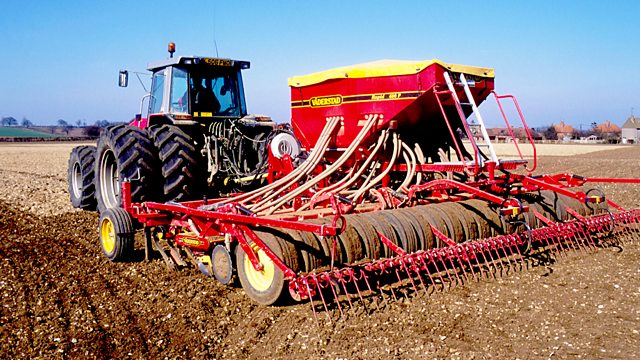
Although he may not look like it, he's a wheat farmer. | 0:00:17 | 0:00:21 | |
Most people wouldn't recognise me as a farmer... | 0:00:24 | 0:00:27 | |
That's because I'm not so hands-on as I used to be. | 0:00:27 | 0:00:31 | |
John farms 2,000 hectares in East Anglia, Britain's bread basket. | 0:00:35 | 0:00:40 | |
To do it, he uses the most advanced technology available. | 0:00:42 | 0:00:46 | |
This is farming as agri-business. | 0:00:48 | 0:00:52 | |
To understand how farmers like John Latham have come | 0:00:56 | 0:01:00 | |
to work in this way, we need to go back to the 1930s, | 0:01:00 | 0:01:03 | |
when his great-grandfather first started farming here. | 0:01:03 | 0:01:07 | |
Their story begins in 1933, when John's great-grandparents bought | 0:01:15 | 0:01:20 | |
a 25-hectare farm near Chelmsford in Essex. | 0:01:20 | 0:01:24 | |
Their home movies show just how much their way of life has changed | 0:01:26 | 0:01:29 | |
in three generations. | 0:01:29 | 0:01:32 | |
There were lots of horses for the heavy work, | 0:01:47 | 0:01:50 | |
and a small labour force. | 0:01:50 | 0:01:51 | |
John's father was born here in 1938. | 0:01:56 | 0:02:00 | |
This is him as a baby. | 0:02:00 | 0:02:03 | |
These home movies might paint an idyllic picture, | 0:02:03 | 0:02:05 | |
but the reality was somewhat different. | 0:02:05 | 0:02:08 | |
John's father takes up the story. | 0:02:08 | 0:02:10 | |
The start of the '30s saw the decline of farming in real terms. | 0:02:15 | 0:02:18 | |
I mean, the price of crops was desperate - | 0:02:18 | 0:02:22 | |
I think the price of wheat was anything between 24 shillings | 0:02:22 | 0:02:26 | |
and 30 shillings a quarter, which was a fairly low price, considering it | 0:02:26 | 0:02:32 | |
hit about 80 shillings a quarter as soon as the Second World War started. | 0:02:32 | 0:02:36 | |
So you can see the '30s were desperate times | 0:02:36 | 0:02:39 | |
and my grandfather and father found it very difficult to make ends meet. | 0:02:39 | 0:02:45 | |
They really were almost insolvent, | 0:02:45 | 0:02:47 | |
and the banks wanted to call the money in on the farms | 0:02:47 | 0:02:49 | |
and put us out of business. | 0:02:49 | 0:02:51 | |
But the outbreak of the Second World War in 1939 changed everything. | 0:02:51 | 0:02:57 | |
The country could no longer import enough food to feed the nation. | 0:03:03 | 0:03:08 | |
3 million extra acres of land were needed to grow more crops. | 0:03:08 | 0:03:13 | |
To help this initiative, | 0:03:13 | 0:03:16 | |
combine harvesters were brought in from America. | 0:03:16 | 0:03:18 | |
One of them was sent to the Lathams. | 0:03:18 | 0:03:22 | |
My father got a wonderful Massey Harris 21, | 0:03:22 | 0:03:26 | |
which was a 12-foot self-propelled combine, | 0:03:26 | 0:03:29 | |
and it was a wonderful tool for its time. | 0:03:29 | 0:03:33 | |
In 1943, he did all his farms with that, he did 800 acres with | 0:03:34 | 0:03:38 | |
one combine, which was almost unheard of. | 0:03:38 | 0:03:40 | |
By the end of the war, | 0:03:43 | 0:03:44 | |
these new machines had made a huge difference to productivity. | 0:03:44 | 0:03:48 | |
In order to sustain this growth, | 0:03:48 | 0:03:50 | |
the government decided to pay farmers a subsidy. | 0:03:50 | 0:03:54 | |
It encouraged them to invest in new machinery, | 0:03:54 | 0:03:57 | |
and, together with new agricultural chemicals and plant breeds, | 0:03:57 | 0:04:01 | |
they began to farm in a different way... | 0:04:01 | 0:04:05 | |
This was the birth of agribusiness. | 0:04:05 | 0:04:07 | |
This was the world that John Latham was born into. | 0:04:21 | 0:04:25 | |
Each decade of his childhood brought bigger | 0:04:26 | 0:04:30 | |
and more sophisticated machines. | 0:04:30 | 0:04:32 | |
He could not wait to have a go. | 0:04:35 | 0:04:38 | |
When I was 12, are combine driver went off sick with glandular fever, | 0:04:38 | 0:04:42 | |
so I was put on a combine as a 12 year-old, | 0:04:42 | 0:04:45 | |
and I did the whole harvest. | 0:04:45 | 0:04:47 | |
I was just in heaven. That is what I enjoy doing. | 0:04:47 | 0:04:50 | |
By the time he took over the farm in the 1990s, | 0:04:52 | 0:04:56 | |
the government subsidies of the post-war era had ended. | 0:04:56 | 0:05:00 | |
John's strategy to survive was strength the numbers. | 0:05:00 | 0:05:04 | |
So he joined forces with other farmers to try to cut costs. | 0:05:04 | 0:05:10 | |
What we managed to do was bring some five or six farming businesses | 0:05:10 | 0:05:14 | |
together, and while they are still trading as individual businesses, | 0:05:14 | 0:05:18 | |
the actual farms are run as if it is one big farm. | 0:05:18 | 0:05:21 | |
So we have one combine that that is doing it the word that five or | 0:05:22 | 0:05:27 | |
six combines did five or six years ago. | 0:05:27 | 0:05:30 | |
By joining together with other farmers, | 0:05:32 | 0:05:35 | |
John has reduced his costs by one third. | 0:05:35 | 0:05:38 | |
As with the generations before him, he has had to find a way to | 0:05:40 | 0:05:45 | |
make farm pay, including the need to adapt to survive. | 0:05:45 | 0:05:49 | |
I think you have up visions that things stay the same, | 0:05:49 | 0:05:54 | |
you carry on farming the way you always have done, | 0:05:54 | 0:05:57 | |
but of course it just doesn't happen like that. | 0:05:57 | 0:05:59 | |
The rate of change has been very fast in so many ways. | 0:05:59 | 0:06:04 | |
But does he miss the way they farmed when he was a boy? | 0:06:04 | 0:06:08 | |
I do miss it, yes. I would be lying if I said I didn't. | 0:06:08 | 0:06:11 | |
There is something great about getting on a combine | 0:06:11 | 0:06:14 | |
and bringing in a harvest. | 0:06:14 | 0:06:16 | |
Come on, Gary. Come on. Go on! | 0:06:24 | 0:06:28 | |
Dorset dairy farmer Will is having problems with a bull. | 0:06:28 | 0:06:32 | |
Any suggestions on how to move a ton and a half of bull? Come on! | 0:06:37 | 0:06:41 | |
Called Gary! | 0:06:41 | 0:06:44 | |
But it is not only his bull he is having problems with. | 0:06:44 | 0:06:48 | |
Will has also had difficulties just staying in business. | 0:06:48 | 0:06:53 | |
Difficulties he sorted out by doing a deal with one of Britain's | 0:06:53 | 0:06:57 | |
leading supermarkets. | 0:06:57 | 0:06:59 | |
Will grow up on the farm with his two brothers. | 0:07:04 | 0:07:07 | |
That has him on the left in the red jumper. | 0:07:07 | 0:07:11 | |
And here he is four years old, | 0:07:11 | 0:07:14 | |
herding cows in the same red pullover. | 0:07:14 | 0:07:16 | |
He began his farming career early. | 0:07:18 | 0:07:20 | |
Growing up on this farm I think was good fun. | 0:07:21 | 0:07:25 | |
Great fun, really. | 0:07:25 | 0:07:26 | |
Quite a young age, you were always out doing something on the farm. | 0:07:26 | 0:07:31 | |
He took over the farm from his father when he was in his early | 0:07:34 | 0:07:38 | |
twenties, and over the next few years doubled the cows' yield. | 0:07:38 | 0:07:43 | |
My father was probably producing 4,000 - 4,500 litres a cow. | 0:07:45 | 0:07:49 | |
And we eventually got from 8,000 to 8,100 litres per cow. | 0:07:49 | 0:07:55 | |
Will sold all his milk to a processing company. | 0:08:01 | 0:08:04 | |
From the 1920s, milk had been sold in a variety of ways - | 0:08:06 | 0:08:11 | |
by a large and small processes, by retailers and by farmers. | 0:08:11 | 0:08:15 | |
And 80 per cent of it was delivered directly to the customers' doorstep. | 0:08:15 | 0:08:20 | |
But by the 1980s, | 0:08:21 | 0:08:23 | |
this supply chain was being revolutionised | 0:08:23 | 0:08:27 | |
by the increasing dominance of the supermarkets. | 0:08:27 | 0:08:30 | |
And by the late 1990s, | 0:08:31 | 0:08:34 | |
they were selling over 75 per cent of all milk produced. | 0:08:34 | 0:08:39 | |
The supermarkets used their buying power to drive down prices to | 0:08:39 | 0:08:43 | |
processors and dairy farmers alike. | 0:08:43 | 0:08:46 | |
They can go to a big processor and say, | 0:08:46 | 0:08:49 | |
"I need so many litres of milk by tomorrow, please deliver it, | 0:08:49 | 0:08:54 | |
"thank you very much, this is what you will get paid". | 0:08:54 | 0:08:58 | |
The consequences for dairy farmers were profound. | 0:08:58 | 0:09:01 | |
In 1994, there had been more than 35,000 of them. | 0:09:01 | 0:09:06 | |
By 2000, the number had almost halved. | 0:09:06 | 0:09:10 | |
Organisations like the Women's Institute | 0:09:10 | 0:09:12 | |
and the National Farmers' Union began to campaign | 0:09:12 | 0:09:16 | |
about their concerns for the future of Britain's dairy industry. | 0:09:16 | 0:09:21 | |
Through the WI campaign, the NFU campaign, | 0:09:21 | 0:09:24 | |
and a period of time when dairy farmers in particular were | 0:09:24 | 0:09:28 | |
being paid rock-bottom prices, there was an impression that maybe | 0:09:28 | 0:09:33 | |
the milk supply would not be there in the future. | 0:09:33 | 0:09:38 | |
And not only that, but provenance, I.E. where all milk came from, | 0:09:38 | 0:09:43 | |
how the animals were kept and how farms were farmed, | 0:09:43 | 0:09:47 | |
became much more important in the public's eye. | 0:09:47 | 0:09:52 | |
And therefore, the supermarkets in particular decided to | 0:09:52 | 0:09:55 | |
go for a dedicated producer group where | 0:09:55 | 0:09:58 | |
they knew exactly where their milk was coming from. | 0:09:58 | 0:10:01 | |
Will decided to apply to join the dedicated producer group | 0:10:01 | 0:10:07 | |
set up by Britain's biggest milk seller, the supermarket chain Tesco. | 0:10:07 | 0:10:11 | |
Its co-ordinator is Emma Rutter. | 0:10:11 | 0:10:14 | |
We have very much been blamed for what has happened in the past, | 0:10:16 | 0:10:20 | |
but we are out there to change and to actually say | 0:10:20 | 0:10:22 | |
when not basing it on what is happening in the marketplace | 0:10:22 | 0:10:26 | |
any more, we do realise we were part of that before, | 0:10:26 | 0:10:29 | |
but now we're going to guarantee your cost prediction | 0:10:29 | 0:10:33 | |
and your milk price will not fall below that. | 0:10:33 | 0:10:36 | |
And as well as a commitment to giving farmers a better deal, | 0:10:36 | 0:10:40 | |
the supermarket was also responding to public concern | 0:10:40 | 0:10:44 | |
about animal welfare. | 0:10:44 | 0:10:45 | |
I was hoping that maybe, | 0:10:45 | 0:10:47 | |
with Liverpool University and all the rest, | 0:10:47 | 0:10:50 | |
that perhaps we'd be able to get some work done on | 0:10:50 | 0:10:53 | |
specific issues within lameness. | 0:10:53 | 0:10:55 | |
As you know within the first year of the project | 0:10:55 | 0:10:58 | |
they were looking very much at lameness issues | 0:10:58 | 0:11:00 | |
because that was one of the key issues affecting farmers. | 0:11:00 | 0:11:03 | |
And also consumers tend to notice | 0:11:03 | 0:11:06 | |
the lame cows at the end of the heard coming in last | 0:11:06 | 0:11:09 | |
because they've been waiting for the cows | 0:11:09 | 0:11:12 | |
to cross the road, so it was both a consumer issue and a producer issue. | 0:11:12 | 0:11:16 | |
I think that could be extremely worthwhile, particularly | 0:11:16 | 0:11:20 | |
if we roll it out to the wider industry. | 0:11:20 | 0:11:25 | |
For Will, the arrangement with the supermarket gave him | 0:11:25 | 0:11:28 | |
a level of security that he had never had. | 0:11:28 | 0:11:30 | |
It even made him reassess the way he farmed. | 0:11:30 | 0:11:34 | |
I decided to go for a low output system - more pasture based, | 0:11:34 | 0:11:40 | |
and produce not substantially but a little less milk. | 0:11:40 | 0:11:45 | |
All round, it will be easier for me | 0:11:45 | 0:11:47 | |
and easier for the animals that I farm. | 0:11:47 | 0:11:50 | |
Including that bull, Gary. | 0:11:50 | 0:11:52 | |
Its harvest time in East Anglia, | 0:12:09 | 0:12:12 | |
but farmer Andrew cannot work in heavy rain. | 0:12:12 | 0:12:16 | |
The straw is absolutely sodden, it won't cut | 0:12:19 | 0:12:24 | |
and it gets difficult to rub the grain out when it's wet. | 0:12:24 | 0:12:28 | |
You'll just absolutely crucify the machine. | 0:12:28 | 0:12:31 | |
It's not just Andrew's time that is being wasted, but his money also. | 0:12:35 | 0:12:41 | |
A field of wheat like this | 0:12:41 | 0:12:42 | |
represents a huge financial investment, | 0:12:42 | 0:12:45 | |
and the longer it stays out in the rain, | 0:12:45 | 0:12:48 | |
the greater its chances of being ruined. | 0:12:48 | 0:12:51 | |
It's a frustrating time for Andrew and other farmers in East Anglia. | 0:12:54 | 0:12:58 | |
All this great technology we have, and innovation, | 0:13:01 | 0:13:06 | |
but we still can't do anything because the weather is not with us. | 0:13:06 | 0:13:10 | |
Looking outside now, | 0:13:10 | 0:13:12 | |
it looks like the middle of winter instead of the middle of summer. | 0:13:12 | 0:13:15 | |
The technology isn't working outside, | 0:13:17 | 0:13:20 | |
but fortunately for Andrew, it is working inside. | 0:13:20 | 0:13:24 | |
He and his colleagues are looking at what is | 0:13:24 | 0:13:27 | |
happening on the International wheat market. | 0:13:27 | 0:13:30 | |
The prices aren't fixed, | 0:13:30 | 0:13:32 | |
but instead go up and down in response to supply and demand. | 0:13:32 | 0:13:37 | |
Things aren't looking too good. | 0:13:39 | 0:13:40 | |
The price of wheat at the moment is dropping away. | 0:13:42 | 0:13:45 | |
Due to the fact the world is having the biggest harvest it's had | 0:13:45 | 0:13:49 | |
for many years. | 0:13:49 | 0:13:50 | |
That's the reality for farmers like Andrew. | 0:13:50 | 0:13:53 | |
While his wheat waits in the field, | 0:13:53 | 0:13:57 | |
its value is being decided across the globe. | 0:13:57 | 0:14:01 | |
At his office in Cambridgeshire | 0:14:01 | 0:14:03 | |
John Latham, another of Andrew's colleagues, | 0:14:03 | 0:14:07 | |
is also keeping a close watch on wheat prices. | 0:14:07 | 0:14:10 | |
The fact wheat is a global commodity means that we will always have | 0:14:10 | 0:14:15 | |
to have an eye on global markets. | 0:14:15 | 0:14:18 | |
But probably more importantly we have to be aware that we are competing in that market place, | 0:14:18 | 0:14:22 | |
so there are other parts of the world | 0:14:22 | 0:14:24 | |
that can produce wheat more cheaply than we are - | 0:14:24 | 0:14:27 | |
we have to adapt to that, we have to be competitive. | 0:14:27 | 0:14:30 | |
Until relatively recently, | 0:14:36 | 0:14:39 | |
British wheat farmers only competed in a small way on the global market | 0:14:39 | 0:14:44 | |
because for many years, they did not produce enough. | 0:14:44 | 0:14:48 | |
That all changed in the 1970s, when a combination of science, | 0:14:48 | 0:14:53 | |
technology and plant breeding ushered in new varieties | 0:14:53 | 0:14:57 | |
of dwarf wheat that increased output considerably. | 0:14:57 | 0:15:01 | |
Since then, British wheat production | 0:15:03 | 0:15:06 | |
has trebled to around 14 billion tonnes a year. | 0:15:06 | 0:15:10 | |
And most of it is sold by dealers in trading rooms like this one in Lincolnshire. | 0:15:10 | 0:15:15 | |
And then it went down to about 25 and it closed around 35, 38. | 0:15:17 | 0:15:22 | |
I mean, it was all to do with the Fed bailing out. | 0:15:22 | 0:15:26 | |
..Liverpool market is December 260. | 0:15:26 | 0:15:30 | |
This is a centralised trading desk, | 0:15:30 | 0:15:32 | |
all wheat that we sell, we sell through this desk. | 0:15:32 | 0:15:36 | |
So we are selling from Aberdeen down to Cornwall. | 0:15:36 | 0:15:38 | |
The world's biggest wheat producers like Russia, the Ukraine, Canada | 0:15:41 | 0:15:45 | |
and the US dominate the market. | 0:15:45 | 0:15:48 | |
128, won 28. Between 128 and 130. | 0:15:48 | 0:15:52 | |
The size and quality of their harvests determine the price | 0:15:52 | 0:15:55 | |
the UK from a gets paid within Britain and abroad. | 0:15:55 | 0:15:59 | |
The UK produces a surplus of wheat, | 0:16:02 | 0:16:04 | |
so we have to be a competitive exporter. | 0:16:04 | 0:16:07 | |
Our main market is Spain, and it is the export market that sets | 0:16:08 | 0:16:12 | |
the prices that the farmer ultimately get paid. | 0:16:12 | 0:16:15 | |
-That's what we're looking for. -All right, cheers, goodbye. | 0:16:15 | 0:16:19 | |
-Good man, thank you. -The global marketplace never sleeps. | 0:16:19 | 0:16:24 | |
And there is no rest either for Andrew Tetlow. | 0:16:24 | 0:16:27 | |
It's past midnight, but the rain has stopped | 0:16:30 | 0:16:32 | |
and he needs to make the most of the dry spell to get the harvest in. | 0:16:32 | 0:16:36 | |
It's a juggling act when we go with the forecast as it is, | 0:16:36 | 0:16:40 | |
it looks like we will have to take every chance we've got. | 0:16:40 | 0:16:43 | |
Its upside-down, whatever it is. | 0:17:00 | 0:17:03 | |
And a leg tucked back. | 0:17:05 | 0:17:06 | |
Got some fun and games. | 0:17:08 | 0:17:12 | |
This is always a tense time on a dairy farm. | 0:17:12 | 0:17:14 | |
Nick and Chris Gosling are helping a cow give birth. | 0:17:14 | 0:17:20 | |
I think it's front... | 0:17:20 | 0:17:23 | |
Upside-down. | 0:17:23 | 0:17:25 | |
They are expanding their herd of pedigree Guernsey cows, but only | 0:17:25 | 0:17:28 | |
a few years ago they were on the verge | 0:17:28 | 0:17:31 | |
of giving up farming altogether. | 0:17:31 | 0:17:34 | |
She's still alive, or he. Calf's just bitten me. | 0:17:34 | 0:17:38 | |
What saved them was becoming organic. | 0:17:41 | 0:17:44 | |
We may have to do a proper calving | 0:17:44 | 0:17:47 | |
Nick grew up on a farm in Wiltshire. That's him as a young boy. | 0:17:50 | 0:17:55 | |
To go out with dad was a thrill. | 0:17:57 | 0:17:58 | |
I used to ride around with him everywhere. | 0:17:58 | 0:18:01 | |
I was just his apprentice, really. | 0:18:01 | 0:18:03 | |
And Chris, his wife, joined him in 1981. | 0:18:06 | 0:18:09 | |
As soon as we were married, | 0:18:09 | 0:18:11 | |
I was taught to milk and looked after the calves. | 0:18:11 | 0:18:14 | |
fell in love with this farm. | 0:18:16 | 0:18:18 | |
In those days, the family farmed in a conventional way. | 0:18:20 | 0:18:23 | |
They used chemical sprays | 0:18:23 | 0:18:25 | |
and fertilisers to help their crops grow. | 0:18:25 | 0:18:28 | |
If the cows had problems, they used antibiotics. | 0:18:28 | 0:18:33 | |
And they managed to get through any tough economic | 0:18:35 | 0:18:39 | |
times by processing and delivering their own milk door to door. | 0:18:39 | 0:18:43 | |
Farming goes in dips and troughs, highs and lows. | 0:18:47 | 0:18:49 | |
And whenever there was a trough, the milk rounds pulled us through. | 0:18:49 | 0:18:55 | |
And then went the good times were on, | 0:18:55 | 0:18:57 | |
we had the good times and the farm. | 0:18:57 | 0:19:00 | |
In the years following the Second World War, | 0:19:03 | 0:19:06 | |
80 per cent of milk was delivered in this way. | 0:19:06 | 0:19:09 | |
But things changed dramatically as the supermarket chains began | 0:19:09 | 0:19:14 | |
to dominate the high street. | 0:19:14 | 0:19:15 | |
By the late 1990s, they were selling 75 per cent of all milk produced. | 0:19:17 | 0:19:23 | |
With their enormous buying power, | 0:19:24 | 0:19:27 | |
supermarkets could control the price paid to farmers for their milk. | 0:19:27 | 0:19:32 | |
By 2000, it had dropped from 25-17p per litre. | 0:19:32 | 0:19:36 | |
Less than the cost of production. | 0:19:38 | 0:19:40 | |
Nick and Chris Gosling's Wiltshire farm faced bankruptcy. | 0:19:42 | 0:19:46 | |
By 2002, they'd had enough. | 0:19:46 | 0:19:49 | |
We actually had the heard up for sale. | 0:19:51 | 0:19:54 | |
And we were going to probably have to close the processing plant | 0:19:54 | 0:19:57 | |
and rent the buildings out. | 0:19:57 | 0:20:01 | |
And my wife and I sat up in bed one morning | 0:20:01 | 0:20:03 | |
and realised that we were only one month away from selling, | 0:20:03 | 0:20:06 | |
the brochure was ready to go out to the public, | 0:20:06 | 0:20:10 | |
and we suddenly thought, gosh, | 0:20:10 | 0:20:12 | |
we do know what else we can do other than dairy farming. | 0:20:12 | 0:20:15 | |
So I said, well, I'll give it one last chance | 0:20:15 | 0:20:17 | |
and try to find someone who wants our milk. | 0:20:17 | 0:20:21 | |
The plan to become organic was hatched. | 0:20:21 | 0:20:24 | |
I've always tested Nick, ever since we got married, that we | 0:20:26 | 0:20:29 | |
should be organic. | 0:20:29 | 0:20:32 | |
But it was his decision, his commercial decision, to go ahead. | 0:20:32 | 0:20:37 | |
We were actually given a grant, and things didn't change overnight. | 0:20:37 | 0:20:42 | |
It took us three years to become organic. | 0:20:42 | 0:20:46 | |
The farmers who farm organically will not used drugs or other | 0:20:46 | 0:20:50 | |
chemicals on their livestock. | 0:20:50 | 0:20:52 | |
And with the land, they will tend to fertilise naturally by a crop | 0:20:52 | 0:20:57 | |
rotations, seaweed additives, things like that, | 0:20:57 | 0:21:01 | |
rather than using insecticides and chemicals. | 0:21:01 | 0:21:05 | |
As the time has gone on, even Nick, | 0:21:05 | 0:21:08 | |
who can be quite cynical about these things, | 0:21:08 | 0:21:10 | |
he has actually decided that organic farming is the right way to go. | 0:21:10 | 0:21:15 | |
And he does prefer it. | 0:21:15 | 0:21:16 | |
In the way that we treat the animals, the way we treat the land. | 0:21:16 | 0:21:21 | |
On the land, I find it fascinating just to see how rotations work | 0:21:24 | 0:21:28 | |
and how you can control some of the horrible weeds that | 0:21:28 | 0:21:31 | |
I used to know this farm had, like black grass, | 0:21:31 | 0:21:34 | |
by just changing from a winter to a spring rotation. | 0:21:34 | 0:21:38 | |
We chose to go organic originally because of financial reasons, | 0:21:40 | 0:21:46 | |
but the more we have got involved with the organic movement and | 0:21:46 | 0:21:49 | |
farm organically, the more we realise that working with nature does work. | 0:21:49 | 0:21:54 | |
Farming organically is much more fun, it's more interesting. | 0:21:55 | 0:21:58 | |
I'm working in a stress-free environment, | 0:21:58 | 0:22:02 | |
you notice that with less stress on the cows, they are healthier. | 0:22:03 | 0:22:08 | |
We've noticed that all the way through, | 0:22:08 | 0:22:10 | |
and they are easier to manage, they do as you want. | 0:22:10 | 0:22:13 | |
I've changed my ways of farming and how we treat animals. | 0:22:16 | 0:22:19 | |
On certain things, you can treat their care without having to | 0:22:23 | 0:22:26 | |
use antibiotics and drugs that do tend to have long-term effects. | 0:22:26 | 0:22:31 | |
The goslings have made a success of organic farming | 0:22:33 | 0:22:37 | |
and their future now looks assured. | 0:22:37 | 0:22:40 | |
-Just as it does for this cow and her calf. -Job done. One live calf. | 0:22:40 | 0:22:45 | |
This is Harold Cooper. | 0:22:59 | 0:23:00 | |
He's been farming wheat in East Anglia since 1982. | 0:23:00 | 0:23:05 | |
Today, he is celebrating his 90th birthday along with his son | 0:23:05 | 0:23:09 | |
Ashley and nephew Oliver. | 0:23:09 | 0:23:11 | |
We're here today to celebrate and give thanks for this hugely | 0:23:12 | 0:23:16 | |
long life that you had an to applaud everything you've achieved. | 0:23:16 | 0:23:21 | |
Over the course of Harold's lifetime, | 0:23:24 | 0:23:27 | |
government agricultural policy has changed dramatically. | 0:23:27 | 0:23:32 | |
After the Second World War, new policies | 0:23:32 | 0:23:36 | |
and government subsidies encouraged farmers to grow more food | 0:23:36 | 0:23:40 | |
which would be made easier by the use of new technology and science. | 0:23:40 | 0:23:45 | |
Harold first learned of this at a lecture | 0:23:45 | 0:23:48 | |
he attended by a leading agricultural scientist. | 0:23:48 | 0:23:51 | |
He said that in a few years' | 0:23:53 | 0:23:55 | |
time we will all be growing two tons of wheat per acre. | 0:23:55 | 0:23:59 | |
And I foresee in the future that you will be able to grow perhaps | 0:24:00 | 0:24:04 | |
four tons an acre. | 0:24:04 | 0:24:06 | |
Well, I will never forget this, because hardly anyone believed it. | 0:24:08 | 0:24:14 | |
Which was not surprising, since British wheat farmers were | 0:24:14 | 0:24:18 | |
growing around half that amount in those days. | 0:24:18 | 0:24:21 | |
Yet the scientist was right. | 0:24:21 | 0:24:24 | |
Over the next 40 years, British wheat production trebled. | 0:24:24 | 0:24:28 | |
One of the ways this was achieved was in the use of new | 0:24:29 | 0:24:33 | |
agricultural chemicals. | 0:24:33 | 0:24:35 | |
Little was known of their potentially toxic effects. | 0:24:35 | 0:24:38 | |
This is Harold's nephew Oliver aged 13 in 1958. | 0:24:40 | 0:24:46 | |
He remembers vividly some of the first herbicides which | 0:24:46 | 0:24:51 | |
we used to control weeds. | 0:24:51 | 0:24:53 | |
One of my memories as a child was a chemical which was | 0:24:54 | 0:24:58 | |
a very yellow liquid, I'm sure it got very high toxicity levels. | 0:24:58 | 0:25:04 | |
But many of the products we used were quite nasty by today's standards. | 0:25:04 | 0:25:09 | |
You could smell some products | 0:25:09 | 0:25:10 | |
when you came in that were being used as herbicides in those days. | 0:25:10 | 0:25:15 | |
My father's generation had probably been the most exposed | 0:25:15 | 0:25:18 | |
generation in all in terms of actual physical contamination on their | 0:25:18 | 0:25:23 | |
hands, their skins, their eyes. | 0:25:23 | 0:25:25 | |
And it was only people like Oliver's father that were affected. | 0:25:26 | 0:25:31 | |
Gradually, evidence began to emerge about the damaging | 0:25:31 | 0:25:34 | |
effects on wildlife and the environment. | 0:25:34 | 0:25:37 | |
One of the most notorious was DDT, a man made insecticide | 0:25:38 | 0:25:43 | |
developed to kill a whole range of agricultural pests. | 0:25:43 | 0:25:46 | |
The ecologists were pointing out that DDT produced thin | 0:25:48 | 0:25:54 | |
shells in the eggs of the birds at the top of the food chain, | 0:25:54 | 0:26:00 | |
the raptors, things like peregrine falcons. | 0:26:00 | 0:26:05 | |
So a question began to rise | 0:26:05 | 0:26:08 | |
- are these pesticides actually always a good thing? | 0:26:08 | 0:26:12 | |
And the answer was, actually, No. | 0:26:12 | 0:26:15 | |
The government took action, and in 1984, DDT was banned. | 0:26:15 | 0:26:21 | |
This was followed in 1985 by the Food and Environment Protection Act. | 0:26:21 | 0:26:27 | |
The first in a series of regulations to control | 0:26:27 | 0:26:30 | |
the use of agricultural chemicals. | 0:26:30 | 0:26:32 | |
And it wasn't only chemicals which were having a detrimental | 0:26:33 | 0:26:38 | |
effect on the environment. | 0:26:38 | 0:26:40 | |
The post-war drive to produce ever more food | 0:26:40 | 0:26:43 | |
left its mark on the landscape to. | 0:26:43 | 0:26:46 | |
If you've got a big combine harvester you don't want it to make | 0:26:46 | 0:26:50 | |
a field to put it in. | 0:26:50 | 0:26:51 | |
So farmers tended to get rid of a lot of their hedgerows. | 0:26:51 | 0:26:57 | |
Likewise, if you can get paid a lot of money for producing wheat | 0:26:57 | 0:27:02 | |
and you've got a boggy bit of land, then you want to drain it. | 0:27:02 | 0:27:07 | |
The effect on wildlife was stark. | 0:27:07 | 0:27:10 | |
Populations of birds, | 0:27:10 | 0:27:12 | |
insects and wild plants began to decline sharply. | 0:27:12 | 0:27:16 | |
As evidence grew, government policy shifted towards reducing output. | 0:27:17 | 0:27:22 | |
From the 1990s onwards, schemes like Set Aside, | 0:27:24 | 0:27:27 | |
and Environmental Stewardship, were reduced which paid farmers to | 0:27:27 | 0:27:31 | |
take land out of production and increase biodiversity. | 0:27:31 | 0:27:36 | |
Harold Cooper's son Ashley was keen to sign up. | 0:27:36 | 0:27:40 | |
In total, we have about 10 per cent of our arable acreage | 0:27:42 | 0:27:46 | |
now in environmental schemes of one sort or another. | 0:27:46 | 0:27:50 | |
And what this means is we have six-metre margins planted with | 0:27:50 | 0:27:55 | |
a variety of grasses, and in some cases wild flowers around each field. | 0:27:55 | 0:28:02 | |
I've been able to replant the wood that my father removed. | 0:28:02 | 0:28:07 | |
I'm very lucky, because I love it, | 0:28:10 | 0:28:12 | |
so it is added enthusiasm to my farming career. | 0:28:12 | 0:28:16 | |
It's almost a complete reversal of farming policy | 0:28:17 | 0:28:20 | |
since Harold's career began 75 years ago. | 0:28:20 | 0:28:24 | |
No wonder he finds the future so hard to predict. | 0:28:24 | 0:28:29 | |
I find it terribly easy to look back | 0:28:29 | 0:28:31 | |
but awfully difficult to look forward. | 0:28:31 | 0:28:33 | |
# Happy birthday dear Harold | 0:28:33 | 0:28:37 | |
# Happy birthday to you. # | 0:28:37 | 0:28:41 | |
Subtitles by Red Bee Media Ltd | 0:29:01 | 0:29:05 |