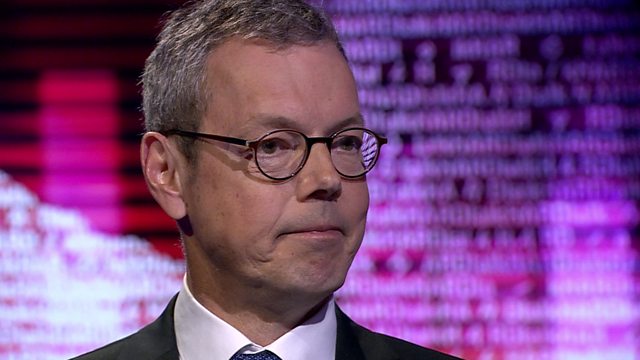
Peter Bofinger - Member of the German Council of Economic Experts HARDtalk
Similar Content
Browse content similar to Peter Bofinger - Member of the German Council of Economic Experts. Check below for episodes and series from the same categories and more!
Transcript
| Line | From | To | |
|---|---|---|---|
disease. It is now time for HARDtalk. | :00:00. | :00:11. | |
Welcome to HARDtalk. Is the Eurozone economy turning Japanese? | :00:12. | :00:15. | |
Flat`lining growth, depressed prices and a general air of economic | :00:16. | :00:18. | |
despondency are surely warning signs of a Japanese`style prolonged | :00:19. | :00:27. | |
stagnation. Can Europe's economic policymakers turn things around? My | :00:28. | :00:36. | |
guest today, Peter Bofinger, sits on Germany's Council of Economic | :00:37. | :00:38. | |
Experts. Is the dominance of Germany's economic model now | :00:39. | :01:10. | |
Europe's biggest problem? Peter Bofinger, welcome to HARDtalk. | :01:11. | :01:16. | |
I think it is fair to say you are one of Europe's influential | :01:17. | :01:22. | |
economist. How much trouble to you believe European economy is in right | :01:23. | :01:28. | |
now? The European economy is not in a good shape right now. Certainly | :01:29. | :01:34. | |
the crisis that we have been facing in the last few years is over. But | :01:35. | :01:38. | |
we are not yet in a stable situation. There are still many | :01:39. | :01:44. | |
risks. The main risk is we have a deflationary development in the | :01:45. | :01:48. | |
Eurozone. Mentioning Japan is fair, is it? I think this is fair. The | :01:49. | :01:56. | |
problem of the Rose and the adjustment is asymmetric. The | :01:57. | :02:01. | |
country's problems as they have tried to become more competitive by | :02:02. | :02:07. | |
not increasing or lowering wages. In Germany, the strongest economy, we | :02:08. | :02:12. | |
made no efforts to make more growth, to do something in addition | :02:13. | :02:19. | |
to allow semester `` symmetric adjustment. There will be talks on | :02:20. | :02:25. | |
the budget next year and there is no intention of German policymakers to | :02:26. | :02:28. | |
do something in addition to boost growth in the eurozone. I want to | :02:29. | :02:35. | |
talk about Germany's response to what is happening, or lack of | :02:36. | :02:41. | |
response as you might say. I just want to turn your attention west of | :02:42. | :02:44. | |
Germany to France. Right now there is some of attention on what is | :02:45. | :02:48. | |
happening in France. The Finance Minister, just the other day, said | :02:49. | :02:54. | |
Gross has broken down in France and Europe. If that is true, if there is | :02:55. | :03:00. | |
no prospect of growth in France, just how much of a drag is that on | :03:01. | :03:05. | |
the Eurozone? It is a huge challenge. The situation in France. | :03:06. | :03:11. | |
They are not doing the structural reforms that might be needed. On the | :03:12. | :03:17. | |
other hand, they also backed a dynamic environment which is needed | :03:18. | :03:21. | |
to make structural reforms to succeed. Germany in the last decade, | :03:22. | :03:27. | |
we did these structural reforms, which mainly was a policy of | :03:28. | :03:32. | |
renumeration, and it worked because there was a lot of momentum in the | :03:33. | :03:35. | |
west of Europe and the rest of the world. This was a policy that was | :03:36. | :03:41. | |
working in the economic environment. If you do the same thing in an | :03:42. | :03:47. | |
environment with little growth, it is more difficult to succeed. Just | :03:48. | :03:52. | |
to continue the broadbrush horizon for a minute, I wonder whether you | :03:53. | :04:01. | |
really believe that given the fragility in France, given the | :04:02. | :04:04. | |
overall lack of growth in the Eurozone, that it is possible to | :04:05. | :04:10. | |
imagine the darkest days of Eurozone crisis could reappear. We wanted to | :04:11. | :04:16. | |
think a year or so ago that we were over the worst. Do you think that is | :04:17. | :04:23. | |
not true? The risks are still there. The main problem is a relatively | :04:24. | :04:28. | |
unstable architecture of the Eurozone. This unstable architecture | :04:29. | :04:36. | |
means we have a fully integrated monetary policy, and all the member | :04:37. | :04:40. | |
states have responsibility for their own debt, they do not have a central | :04:41. | :04:46. | |
bank which can help them like the case of the UK where you the Bank of | :04:47. | :04:51. | |
England buying billions to make clear that there is no problem. | :04:52. | :04:59. | |
Europe does have a central bank. The chief of the central bank it than a | :05:00. | :05:07. | |
year ago, I will do what it takes to ensure that we emerge from this | :05:08. | :05:12. | |
crisis, that it will not re` occur. I use and that those words are no | :05:13. | :05:17. | |
longer comforting? It has never been tested. The main risk is a crisis of | :05:18. | :05:26. | |
confidence in Italy. The Italian economy is getting into recession, | :05:27. | :05:29. | |
you see unemployment going up. Maybe politicians are not able to produce | :05:30. | :05:36. | |
the reforms that might be needed. A crisis of confidence could happen. | :05:37. | :05:45. | |
We will not be able to buy Italian government bonds without limit. It | :05:46. | :05:47. | |
seems to be the biggest problem right now is far from the crisis | :05:48. | :05:52. | |
being on your's periphery, relatively small economies that | :05:53. | :06:00. | |
Greece, Portugal, Ireland, now the most concern focuses on two of the | :06:01. | :06:03. | |
biggest economies inside Europe, Italy and France. If one of those | :06:04. | :06:12. | |
were to suffer such a crisis of confidence that there really was a | :06:13. | :06:17. | |
sense of implosion, then the ECB and Eurozone generally would not have | :06:18. | :06:21. | |
the tools to fix it, would they? Of course you can buy government ones | :06:22. | :06:30. | |
without limit. If France is at a point where bond deals are going | :06:31. | :06:32. | |
through the roof and confidence is lost in France, there much? `` then | :06:33. | :06:39. | |
what? Investors have to go somewhere. If you go out to French | :06:40. | :06:45. | |
or Italian bonds, which bonds would you buy? You can get German bonds, | :06:46. | :06:53. | |
but the yield is close to zero. As an investor you would not go | :06:54. | :06:55. | |
completely outside the currency area. There is some limit of | :06:56. | :07:02. | |
confidence crisis. Investors have to put their money somewhere. If you | :07:03. | :07:10. | |
have a future `` huge financial markets at the French are, you can | :07:11. | :07:16. | |
get out of these bonds. These are relatively tiny slices of the whole | :07:17. | :07:20. | |
market. Eating out of French bonds, where the ago. There are limitations | :07:21. | :07:26. | |
for this kind of crisis of confidence. Look at the mismatch | :07:27. | :07:32. | |
between what is happening in Germany and France and the twin motor of | :07:33. | :07:38. | |
Europe. German public debt, 70% of GDP, France closer to 100%. There is | :07:39. | :07:45. | |
not a deficit in Germany. In France, 4.5%, and that will persist through | :07:46. | :07:51. | |
next year. The French are saying we will not meet the rules of the | :07:52. | :07:57. | |
fiscal stability pact. Unemployment, 4.9% in Germany. Over 10% in France. | :07:58. | :08:05. | |
How is that fundamental disconnect to in France and Germany going to be | :08:06. | :08:12. | |
addressed? That is the 1 million euros question. It is difficult to | :08:13. | :08:18. | |
change the French economy overnight. You also have to receive the effects | :08:19. | :08:24. | |
of these reforms are somewhat limited. The success of the German | :08:25. | :08:32. | |
economy is a success which is due to a very long tradition of German | :08:33. | :08:39. | |
manufacturing. That is what makes German competitive. We have small | :08:40. | :08:42. | |
and medium`sized companies, family owned enterprises, who are world | :08:43. | :08:48. | |
champions on the printed segments of the global markets. They are a very | :08:49. | :08:56. | |
special manufacturing base which other companies do not have. You | :08:57. | :09:02. | |
cannot copy this, saying we want to have this same culture. The point | :09:03. | :09:12. | |
is, if France and Germany cannot agree on a current strategy, then | :09:13. | :09:16. | |
the Eurozone is utterly dysfunctional. You are at the centre | :09:17. | :09:20. | |
of this problem. You sit in your Council of Economic Experts in | :09:21. | :09:24. | |
Germany and that is your main focus. You are also hired by the now fired | :09:25. | :09:31. | |
French trade and economy Minister to advise him advise the French. You | :09:32. | :09:35. | |
have got a perspective on both economies. The art wall. The Germans | :09:36. | :09:41. | |
are saying to the French, you have to make the reforms to abide by the | :09:42. | :09:45. | |
rules of the fiscal stability pact and if not we will punish you and | :09:46. | :09:50. | |
the French said, stop pushing us around. Stop pushing us around, you | :09:51. | :09:58. | |
have trapped as in an austerity policy which you are imposing across | :09:59. | :10:03. | |
Europe and which does not work for us. Which side of the argument are | :10:04. | :10:08. | |
you on? Both sides have their own rates. That is a copout, if I may | :10:09. | :10:16. | |
say so. They cannot both be right. Where are you siding? The German | :10:17. | :10:23. | |
view is right, you need structural reforms and make the economy more | :10:24. | :10:27. | |
flexible. That is something the French need. I think the French side | :10:28. | :10:32. | |
is also right that you need a certain degree of the school deficit | :10:33. | :10:38. | |
in order to keep the economy growing. The UK deficit is higher | :10:39. | :10:43. | |
than that in France. The UK had the advantage of a strong commemoration | :10:44. | :10:49. | |
of its currency. The central bank was much more aggressive. The ECB | :10:50. | :11:00. | |
have some growth. We need a positive environment for the structural | :11:01. | :11:04. | |
reforms to succeed. This kind of compromise is what is needed. There | :11:05. | :11:11. | |
needs to be some pressure in the economic system to make these | :11:12. | :11:15. | |
reforms work. It is all very well to talk about compromise and hoping | :11:16. | :11:19. | |
everybody will find their way through this, but there are direct | :11:20. | :11:24. | |
decisions that have to be taken. The Germans seem to want to punish | :11:25. | :11:29. | |
France for breaking the rules. And Italy as well. Do you think that is | :11:30. | :11:33. | |
the right thing to do, the right message to send? Definitely not. | :11:34. | :11:39. | |
What you need is a more relaxed approach to austerity. Anything that | :11:40. | :11:44. | |
is what we are observing. If you look at Spain, the commission has | :11:45. | :11:52. | |
given them much more time to reduce their deficits. Spain will have a | :11:53. | :11:59. | |
deficit of 5% this year. Ireland maybe also 5%. The commission, I | :12:00. | :12:04. | |
would also think the politicians in the Eurozone have realised you have | :12:05. | :12:12. | |
to give time for consolidations. Otherwise it becomes | :12:13. | :12:14. | |
counter`productive. I would assume that this is something which is | :12:15. | :12:18. | |
shared by the German government. They do not say it aloud. But there | :12:19. | :12:24. | |
is a more relaxed view on posterity. You think even Angela Merkel is | :12:25. | :12:31. | |
softening? Prepared to loosen the rules of that? I would think so. | :12:32. | :12:38. | |
Have they set it to you? No. Last year or this year, there is not this | :12:39. | :12:44. | |
same push for austerity that you could observe some years ago. Is | :12:45. | :12:49. | |
that not because you look at what is happening in Ireland and Portugal | :12:50. | :12:54. | |
and Spain and they seem with their own eyes a real commitment to | :12:55. | :12:58. | |
structural reform and they do not see that in Italy and France? You | :12:59. | :13:03. | |
have to see the deficits are much higher. That is a major difference | :13:04. | :13:13. | |
between these countries. Italy has a massive debt problem. Italy's | :13:14. | :13:17. | |
overall debt is 135% of national output. Italy has a huge debt | :13:18. | :13:26. | |
problem as well. My question is whether the pursestrings should be | :13:27. | :13:30. | |
loosened. But if the person string is loosened and are not tied to | :13:31. | :13:32. | |
structural reform, what good is it? completely right, we need both. `` | :13:33. | :13:47. | |
comeback in Italy, they are trying to do things. They changed the | :13:48. | :13:53. | |
political institutional framework to become more effective in the | :13:54. | :13:56. | |
political decision`making, changing the role of courts in Italy. I would | :13:57. | :14:03. | |
not say they don't do anything. There are efforts but there could be | :14:04. | :14:06. | |
more effort. They are there trying to do... What about Francois | :14:07. | :14:11. | |
Hollande and his efforts. How would you characterise them as Chamakh | :14:12. | :14:16. | |
there is not so much. He has tried to reduce social security. They are | :14:17. | :14:24. | |
not... Not too many efforts one can identify. You are a German | :14:25. | :14:31. | |
economist. You would agree with me that in many parts of Europe right | :14:32. | :14:36. | |
now, Germany is becoming deeply unpopular. You say, Angela Merkel | :14:37. | :14:42. | |
might be softening but to most Europeans, certainly in countries | :14:43. | :14:45. | |
with huge deficit problems, Germany is seen as unrelenting in its | :14:46. | :14:53. | |
obsession with austerity. Do you feel that when you travel around | :14:54. | :14:58. | |
Europe talking economics? Yes. That is the case. The problem is not so | :14:59. | :15:03. | |
much the German approach these are these the deficit in other | :15:04. | :15:08. | |
countries. `` visa be. The problem is German's approach to its own | :15:09. | :15:16. | |
fiscal policy. `` they expect more stimulus from Germany. More could be | :15:17. | :15:23. | |
needed to make the adjustment process more symmetric. Nothing is | :15:24. | :15:30. | |
happening as one can see from this budget proposal for next year. There | :15:31. | :15:37. | |
is no awareness in Germany that we are part of a larger system which | :15:38. | :15:44. | |
needs us to become a kind of locomotive for the whole system. | :15:45. | :15:49. | |
This awareness is absent with what we do in fiscal policy as if we were | :15:50. | :15:56. | |
an island. This seems to me where you are a fascinating figure in your | :15:57. | :16:01. | |
country, a maverick. You say the Germans, a wonderful phrase, Germany | :16:02. | :16:07. | |
is acting like a vampire in terms of global purchasing power, sucking out | :16:08. | :16:11. | |
money from companies, countries like the US, which are prepared to pump | :16:12. | :16:14. | |
their economies with stimulus packages. You benefit from that | :16:15. | :16:18. | |
because you can sell them all goods because they spend their money. | :16:19. | :16:23. | |
Germany, in its own zone, doesn't appear prepared to spend money at | :16:24. | :16:27. | |
all. In fact, Germans save money but don't spend it. That's a collective | :16:28. | :16:32. | |
problem. There is an obsession with debt. You can find that in our | :16:33. | :16:39. | |
fiscal policy. You can find it in our companies who are deleveraging | :16:40. | :16:44. | |
for many years, making huge profits but instead of investing the money, | :16:45. | :16:49. | |
they feel it reduces their debt, the same thing with the household | :16:50. | :16:53. | |
sector. This purchasing power that we don't spend is something that the | :16:54. | :16:56. | |
global economy might definitely need. When people say in France or | :16:57. | :17:05. | |
in the US, sent this message to Germany that you need to loosen your | :17:06. | :17:09. | |
own purse strings and Lauren how to spend a bit of money and stimulate | :17:10. | :17:13. | |
your economy and help others by consuming more, this is what Germany | :17:14. | :17:16. | |
says, you can't make Europe stronger by making Germany weaker. That was a | :17:17. | :17:22. | |
recent comment from the general secretary of the CSU. That seems the | :17:23. | :17:30. | |
reaction you get. I get many of these reactions every day. The | :17:31. | :17:36. | |
problem is the German philosophy of economic policy is shaped by the | :17:37. | :17:43. | |
so`called housewife. How do you as a German who believes that housewife | :17:44. | :17:49. | |
mentality has gone too far, how do you persuade your compatriots to | :17:50. | :17:53. | |
change their mindset? I tell them that even the housewife would take | :17:54. | :17:56. | |
an mortgage if she has found a good house to live in. And would say, | :17:57. | :18:03. | |
this debt isn't a bad thing. On a political basis, the problem with | :18:04. | :18:11. | |
Germany now, there is a lottery can invest in infrastructure to make it | :18:12. | :18:15. | |
more competitive `` and lot. It would make it good for the whole | :18:16. | :18:20. | |
economy `` there is a lot of Wii. The interest rate for Germany are | :18:21. | :18:24. | |
close to zero. If you take the real interest rate. There is a lot of | :18:25. | :18:31. | |
opportunity for our government to invest in the future and we would | :18:32. | :18:41. | |
that be better off and even our savers would be better off. You said | :18:42. | :18:46. | |
more should be spent on infrastructure projects. What many | :18:47. | :18:49. | |
Europeans want you to do is put money into infrastructure projects | :18:50. | :18:52. | |
in other parts of Europe as part of a collective effort to have a | :18:53. | :18:57. | |
Eurozone wide stimulus. The Polish for example are talking about a 700 | :18:58. | :19:01. | |
million euro strong infrastructure package over years. They would | :19:02. | :19:05. | |
obviously want Germany to come up with a lot of the funding for that. | :19:06. | :19:10. | |
You have to differentiate between financing other governments and | :19:11. | :19:15. | |
financing by private ` public partnerships. These are two | :19:16. | :19:18. | |
different things. One thing is that the governments themselves could do | :19:19. | :19:26. | |
more. I would say a comprehensive infrastructure programme in the | :19:27. | :19:30. | |
Eurozone financed by government is something which would be warranted. | :19:31. | :19:37. | |
Again, it says, kept away from this obsession with cutting deficits. If | :19:38. | :19:40. | |
you look at the UK or the US, deficit is much higher than the | :19:41. | :19:44. | |
Eurozone. You would have the same deficit like the UK or the US, we | :19:45. | :19:50. | |
could have 2.5% more deficit, use it for investment and it wouldn't be | :19:51. | :19:54. | |
worth than these two importing countries. Interestingly, one way in | :19:55. | :20:00. | |
which the government appears to be willing to change its philosophy | :20:01. | :20:02. | |
isn't necessarily by big spending projects, but by for example, | :20:03. | :20:09. | |
increasing, establishing at quite a high rate for the minimum rate of 8 | :20:10. | :20:15. | |
euros 50 per hour in Germany, which some industrialists say encourages | :20:16. | :20:20. | |
inefficiency, but also by lowering the end `` retirement age, agency | :20:21. | :20:25. | |
trend in Europe. Those are measures which to some would appear to be | :20:26. | :20:29. | |
encouraging economic inefficiency, even though they might stimulate | :20:30. | :20:35. | |
some spending. If you take the 8.5 euros 50 to the median wage, in | :20:36. | :20:43. | |
comparison, it is not very high. That is something that is adequate | :20:44. | :20:50. | |
for the German economy. As far as our manufacturing industry is | :20:51. | :20:52. | |
concerned, they paid much higher than that. The trade unions and the | :20:53. | :20:59. | |
minimum wages in this collective agreement are much higher than that. | :21:00. | :21:05. | |
This isn't a problem for our competitiveness and the reduction of | :21:06. | :21:10. | |
the retirement age to 63 is only for people with work experience or 45 | :21:11. | :21:15. | |
years. They have to work 45 years and then qualify for this early | :21:16. | :21:21. | |
retirement at 63. It costs about 1.5 billion euros per annum, this is | :21:22. | :21:29. | |
0.1% of GDP, so it is something we shouldn't exaggerate. One final | :21:30. | :21:35. | |
thought about Germany and Europe. I taught at the beginning of this | :21:36. | :21:40. | |
about French resentment. It was put that, it was said, stop pushing us | :21:41. | :21:46. | |
around. There is resentment the other way. German resentment of | :21:47. | :21:50. | |
being seen as those who are ultimately expected to bail out the | :21:51. | :21:56. | |
profligate members of the Eurozone. Some Germans are sick of it. You see | :21:57. | :22:04. | |
the rise of the AFD party, which seems to think a breakup of | :22:05. | :22:11. | |
Germany. Do you worry about that sentiment rising in your country? | :22:12. | :22:19. | |
Yes. It is a serious challenge. On the other hand, it is unfounded. So | :22:20. | :22:23. | |
far, we have not had to pay for other countries. Secondly, we are | :22:24. | :22:29. | |
profiting from extremely low interest rates. Germany has become a | :22:30. | :22:33. | |
safe haven for all of the funds coming from other countries. Our | :22:34. | :22:40. | |
long`term... (CROSSTALK). That is Germany becoming the vampire again. | :22:41. | :22:45. | |
It isn't sustainable. Nevertheless, so far, our finance minister has | :22:46. | :22:49. | |
been profiting form `` from these long`term rates. They are saving | :22:50. | :22:52. | |
about 20 billion euros per annum because of the low interest rates. | :22:53. | :22:59. | |
Third, of course, we are the country profiting most from | :23:00. | :23:02. | |
without the euro, we would have experienced huge appreciation and | :23:03. | :23:06. | |
might have ended up with a Japanese`style situation `` the | :23:07. | :23:11. | |
euro. That is the challenge in Japan. They had waves of | :23:12. | :23:16. | |
appreciation which really made the country non`competitive | :23:17. | :23:19. | |
internationally. That would have been the risk with its | :23:20. | :23:24. | |
in the financial market. Throughout the discussion, the undercurrent has | :23:25. | :23:28. | |
been that the Eurozone is no more in sync today than it was at the height | :23:29. | :23:33. | |
of the crisis in 2010 `2011. That is the fundamental problem, that | :23:34. | :23:37. | |
different countries and economies in the Eurozone are still fundamentally | :23:38. | :23:41. | |
out of sync. You are right. Two years have been wasted. The Eurozone | :23:42. | :23:49. | |
has been saved. That was in July 2012. Two years after, no | :23:50. | :23:55. | |
significant changes have been made to make the whole architecture more | :23:56. | :23:58. | |
stable. There haven't been efforts made to stimulate the Eurozone | :23:59. | :24:04. | |
economy to create this pressure it needed for structural reforms to | :24:05. | :24:13. | |
unfold their effects. I would say two years have been wasted. That is | :24:14. | :24:20. | |
a problem. Peter Bofinger, thank you for being on HARDtalk. Thank you. | :24:21. | :24:21. | |
Thank you very much indeed. Hello. Once again, I am going to | :24:22. | :24:49. | |
show you pressure chart has a familiar look to it. A big area of | :24:50. | :24:53. | |
high pressure dominating across Scandinavia. Also across Northern | :24:54. | :24:54. | |
Europe. But, in | :24:55. | :24:56. |