Treasures of the Louvre
Similar Content
Browse content similar to Treasures of the Louvre. Check below for episodes and series from the same categories and more!
Transcript
| Line | From | To | |
|---|---|---|---|
This programme contains some strong language. | 0:00:02 | 0:00:06 | |
My name's Andrew Hussey | 0:00:06 | 0:00:07 | |
and I'm the Dean of the University of London Institute in Paris. | 0:00:07 | 0:00:11 | |
I first came to the city as a teenager | 0:00:18 | 0:00:20 | |
and I have had a big connection with it ever since. | 0:00:20 | 0:00:23 | |
Now, I live and work here. | 0:00:24 | 0:00:26 | |
I still love the place and I'm still fascinated by it. | 0:00:26 | 0:00:29 | |
But these days, I travel around Paris not just for pleasure, | 0:00:31 | 0:00:34 | |
but also to explore the places that inspire my writing about the city. | 0:00:34 | 0:00:38 | |
But there's still one trip in Paris that I always make | 0:00:41 | 0:00:44 | |
with a fair amount of trepidation. | 0:00:44 | 0:00:46 | |
And that's here. | 0:00:47 | 0:00:50 | |
To the Louvre. | 0:00:50 | 0:00:52 | |
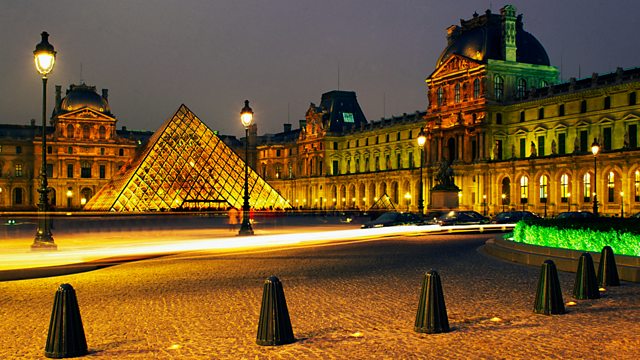
As you can see, the Louvre is big, brooding and vast. | 0:00:59 | 0:01:03 | |
To be honest, I've always been quite | 0:01:03 | 0:01:05 | |
intimidated by this most massive of museums. | 0:01:05 | 0:01:09 | |
But in this film, | 0:01:09 | 0:01:10 | |
I want to change the way that I, and maybe you, see it too. | 0:01:10 | 0:01:13 | |
So I want you to come with me | 0:01:13 | 0:01:15 | |
on a tour of this extraordinary institution, | 0:01:15 | 0:01:17 | |
and to do a little bit of time-travelling in French history. | 0:01:17 | 0:01:20 | |
On the way, I am going to try and make sense of a place | 0:01:22 | 0:01:25 | |
that's jam-packed with over 35,000 pieces of art | 0:01:25 | 0:01:28 | |
that you'll find in mile after mile after mile of galleries. | 0:01:28 | 0:01:33 | |
It's a building that's over 800 years old and bursting with history. | 0:01:36 | 0:01:40 | |
So come with me and see the Louvre transformed | 0:01:42 | 0:01:46 | |
from a medieval fortress to a royal palace, | 0:01:46 | 0:01:49 | |
and then to a modern-day museum. | 0:01:49 | 0:01:51 | |
We will look at the great art of da Vinci, | 0:01:52 | 0:01:55 | |
Rubens, | 0:01:55 | 0:01:58 | |
David | 0:01:58 | 0:01:59 | |
and Gericault. | 0:01:59 | 0:02:01 | |
We will enjoy the glories of antiquity | 0:02:01 | 0:02:05 | |
and explain why the magnificent artworks that you can see today | 0:02:05 | 0:02:09 | |
arrived in the museum, | 0:02:09 | 0:02:11 | |
and what they tell us about both the Louvre and France. | 0:02:11 | 0:02:15 | |
I want to argue that if you know the secrets of the Louvre, | 0:02:18 | 0:02:21 | |
know its history, know the glorious art within these walls, | 0:02:21 | 0:02:25 | |
then I think you can understand France. | 0:02:25 | 0:02:28 | |
The Louvre. | 0:02:40 | 0:02:41 | |
Well, there's lots and lots and lots and lots of art here. | 0:02:41 | 0:02:48 | |
So, where to begin? | 0:02:50 | 0:02:52 | |
Why not start with one of the oldest paintings in the museum? | 0:02:53 | 0:02:58 | |
From the 15th century, a work of art with a gruesome subject. | 0:02:58 | 0:03:02 | |
It will give us our first clue to the Louvre's long history. | 0:03:02 | 0:03:08 | |
Look at this. | 0:03:08 | 0:03:10 | |
This is a painting called La Crucifixion du Parlement de Paris. | 0:03:10 | 0:03:14 | |
There's a lot of interesting stuff going on here. | 0:03:14 | 0:03:17 | |
Here in the foreground, for example, | 0:03:17 | 0:03:19 | |
this bloke with his head in his hands. | 0:03:19 | 0:03:21 | |
That's Saint Denis, who was one of the patron saints of Paris. | 0:03:21 | 0:03:24 | |
Saint Denis was martyred in the third century, | 0:03:28 | 0:03:32 | |
beheaded on the high ground above the city, | 0:03:32 | 0:03:34 | |
the present-day quartier of Montmartre. | 0:03:34 | 0:03:36 | |
But his is not the only image of suffering. | 0:03:37 | 0:03:40 | |
At the centre of the painting is Christ on the cross. | 0:03:43 | 0:03:46 | |
On one side of him is the grieving Virgin Mother, | 0:03:47 | 0:03:50 | |
comforted by Mary Magdalene. On the other, St John the Evangelist. | 0:03:50 | 0:03:54 | |
And this is art with a purpose. | 0:03:57 | 0:04:00 | |
It was deliberately hung in the main chamber of the Parlement de Paris, | 0:04:00 | 0:04:05 | |
a reminder to lawmakers to show due humility | 0:04:05 | 0:04:08 | |
in the face of divine justice. | 0:04:08 | 0:04:10 | |
But one other detail provides an insight into more earthly | 0:04:14 | 0:04:17 | |
matters of bricks and mortar. | 0:04:17 | 0:04:19 | |
This is the best approximation of what the Louvre | 0:04:21 | 0:04:24 | |
would have looked liked to medieval Parisians. | 0:04:24 | 0:04:27 | |
What they saw was a fortress, a citadel of military power. | 0:04:29 | 0:04:33 | |
The medieval Louvre | 0:04:40 | 0:04:41 | |
was built strategically close to the River Seine, | 0:04:41 | 0:04:44 | |
along the walls of the medieval city. | 0:04:44 | 0:04:46 | |
A 30-metre tower looked out to the West and the enemy, | 0:04:49 | 0:04:53 | |
the English, on a border sometimes only 45 miles away. | 0:04:53 | 0:04:57 | |
The castle dominated the Parisian skyline, | 0:05:00 | 0:05:02 | |
a very visible, a very deliberate assertion of French power. | 0:05:02 | 0:05:06 | |
On the outside of today's museum, | 0:05:11 | 0:05:13 | |
there are a few clues to what lies underneath. | 0:05:13 | 0:05:15 | |
The opening of a well and a cesspit. | 0:05:17 | 0:05:20 | |
Below, there are the thick, strong walls and tall palisades | 0:05:24 | 0:05:28 | |
that defended the Capetian and Valois kings of France | 0:05:28 | 0:05:31 | |
from their enemies. | 0:05:31 | 0:05:32 | |
This is the Louvre entresol, the basement of the museum. | 0:05:34 | 0:05:38 | |
30 years ago, excavations took place which revealed these walls, | 0:05:39 | 0:05:44 | |
which show just how forbidding the Louvre was | 0:05:44 | 0:05:47 | |
in its original medieval incarnation. | 0:05:47 | 0:05:49 | |
Now, there's been a lot of debate | 0:05:49 | 0:05:52 | |
over the meaning of the word "Louvre". | 0:05:52 | 0:05:54 | |
But I'm going to go with the old French term, "louver", | 0:05:54 | 0:05:58 | |
which means "fortress" or "stronghold". | 0:05:58 | 0:06:00 | |
I think that pretty much sums up the place and its history. | 0:06:00 | 0:06:04 | |
When the Renaissance came to France in the 16th century, | 0:06:12 | 0:06:16 | |
this military fortress became | 0:06:16 | 0:06:17 | |
a royal palace of great style and culture. | 0:06:17 | 0:06:20 | |
In the museum today is the portrait | 0:06:25 | 0:06:27 | |
of the man who began this transformation. | 0:06:27 | 0:06:30 | |
This is Francois I, King of France, | 0:06:33 | 0:06:36 | |
and the first great builder of the Louvre. | 0:06:36 | 0:06:39 | |
It was painted around 1530 by the artist Jean Clouet. | 0:06:39 | 0:06:43 | |
It's a portrait of a real Renaissance man. He is a fighter. | 0:06:43 | 0:06:47 | |
Check out the hand on the sword ever ready. But he is also a lover... | 0:06:47 | 0:06:51 | |
of culture. And so it's a picture of refinement. | 0:06:51 | 0:06:55 | |
Check out the tasteful clothes. | 0:06:55 | 0:06:57 | |
He is every inch, as the French would say, a man "a la mode". | 0:06:57 | 0:07:01 | |
Francois I began the tradition that French kings should be both | 0:07:05 | 0:07:09 | |
connoisseurs of art and patrons of artists. | 0:07:09 | 0:07:11 | |
In 1516, he persuaded an elderly Leonardo da Vinci to leave Italy. | 0:07:16 | 0:07:21 | |
The painting days of the great genius were over, | 0:07:23 | 0:07:26 | |
but it is thought that he brought with him...you-know-who. | 0:07:26 | 0:07:30 | |
This painting that millions come to see today was the first-ever | 0:07:32 | 0:07:36 | |
work of art to enter the French royal collection. | 0:07:36 | 0:07:39 | |
# Mona Lisa | 0:07:41 | 0:07:43 | |
# Mona Lisa, men have named you... # | 0:07:43 | 0:07:46 | |
Ah, Mona Lisa. | 0:07:46 | 0:07:49 | |
Mona Lisa. | 0:07:49 | 0:07:51 | |
That smile, that smile. | 0:07:51 | 0:07:52 | |
Enigmatic, mysterious, tender or mocking? | 0:07:54 | 0:07:59 | |
"What is it about that smile?" | 0:08:02 | 0:08:03 | |
I asked the Louvre's curator of Renaissance art, Vincent Delieuvin. | 0:08:03 | 0:08:08 | |
La probleme que j'ai avec La Joconde, c'est... | 0:08:08 | 0:08:11 | |
-TRANSLATION: -'The problem I have got with the Mona Lisa | 0:08:11 | 0:08:14 | |
'is that she is such a big media star.' | 0:08:14 | 0:08:16 | |
THEY SPEAK FRENCH | 0:08:16 | 0:08:18 | |
TRANSLATION: 'What you have to do is | 0:08:22 | 0:08:24 | |
'to try and forget that she is such a big star | 0:08:24 | 0:08:26 | |
'and really get into the painting. | 0:08:26 | 0:08:29 | |
'Get up close and love it for what it is, | 0:08:29 | 0:08:31 | |
'and she definitely invites us to love her. | 0:08:31 | 0:08:34 | |
'It's such an incredible ability of the painter to portray that | 0:08:38 | 0:08:41 | |
'most difficult and subtle of human expressions, the smile. | 0:08:41 | 0:08:45 | |
'There are 1,000 ways of interpreting a smile, and that was the genius | 0:08:46 | 0:08:51 | |
'of Leonardo, to be able to capture | 0:08:51 | 0:08:53 | |
'such a subtle and rich human expression. | 0:08:53 | 0:08:55 | |
-'She is such a flirt. -Of course she's a huge flirt. | 0:08:58 | 0:09:02 | |
'The French like that sort of thing, | 0:09:02 | 0:09:04 | |
'but hey, you're not completely untouched by her, are you?' | 0:09:04 | 0:09:07 | |
# Mona Liiiii-saaaa. # | 0:09:07 | 0:09:13 | |
What else is there left to say about this painting? | 0:09:23 | 0:09:27 | |
Only that in the 16th century, La Joconde, as it's known | 0:09:27 | 0:09:30 | |
in France, was something quite new in Western art. | 0:09:30 | 0:09:33 | |
TRANSLATION: 'The idea of creating a sense of contact between the viewer | 0:09:36 | 0:09:39 | |
'and the subject had never been done before. | 0:09:39 | 0:09:42 | |
'Or the open posture with her hands turned towards us. | 0:09:43 | 0:09:47 | |
'She's greeting us as if we were in her palace, in her room, even. | 0:09:47 | 0:09:50 | |
'It's even smiling at us. | 0:09:52 | 0:09:53 | |
'That technique of drawing the viewer directly into the painting | 0:09:53 | 0:09:57 | |
'was hugely innovative. | 0:09:57 | 0:10:01 | |
-'Was all this a new departure for Western art? -Absolutely.' | 0:10:03 | 0:10:08 | |
'How many politicians' portraits have you seen in the style of La Joconde? | 0:10:08 | 0:10:13 | |
'Everyone uses Leonardo's style, from the framing to | 0:10:13 | 0:10:17 | |
'the posture, to the direct approach of the subject to the audience.' | 0:10:17 | 0:10:21 | |
So how influential was this approach to portraiture at the time? | 0:10:23 | 0:10:27 | |
Well, let's go back to the portrait of Francois. | 0:10:27 | 0:10:30 | |
Had its creator, Jean Clouet, seen the Mona Lisa? | 0:10:33 | 0:10:36 | |
We don't actually know. But Francois does look us straight in the eye. | 0:10:36 | 0:10:40 | |
His body is turned towards the viewer | 0:10:42 | 0:10:44 | |
and his hands face the same way | 0:10:44 | 0:10:45 | |
as da Vinci's Florentine lady. | 0:10:45 | 0:10:48 | |
And as with her, we are drawn towards the personality of the King. | 0:10:50 | 0:10:55 | |
Francois was not only a patron of the arts but a builder of palaces. | 0:11:02 | 0:11:06 | |
He'd spent some time in Italy | 0:11:08 | 0:11:10 | |
and he wanted to emulate the style of the Renaissance palazzi. | 0:11:10 | 0:11:13 | |
So the medieval tower was pulled down. | 0:11:14 | 0:11:18 | |
Moats were filled in and a courtyard built, the Cour Carree, | 0:11:18 | 0:11:23 | |
overlooked by this imposing and ornamented facade. | 0:11:23 | 0:11:26 | |
And within, the King demanded | 0:11:28 | 0:11:30 | |
a makeover of gloomy royal apartments. | 0:11:30 | 0:11:33 | |
This is the Salle des Caryatides. | 0:11:35 | 0:11:37 | |
I think it's a place that best captures the spirit | 0:11:37 | 0:11:40 | |
and feeling of the Renaissance Louvre. | 0:11:40 | 0:11:43 | |
It's a vision of science and nature in harmony, | 0:11:43 | 0:11:46 | |
and it signals the beginning of the French classical tradition. | 0:11:46 | 0:11:51 | |
You can see its expression in the four sculptures by Jean Goujon, | 0:11:51 | 0:11:54 | |
which give the room its name. | 0:11:54 | 0:11:57 | |
These are the four caryatides. | 0:11:57 | 0:11:59 | |
They have a function as pillars, | 0:12:03 | 0:12:07 | |
but they are also works of art in themselves - | 0:12:07 | 0:12:10 | |
beautifully sculpted forms, | 0:12:10 | 0:12:14 | |
every curve and fold capturing a fleshy allure. | 0:12:14 | 0:12:18 | |
And they stand sentinel to an elegant stairway that reveals to us | 0:12:19 | 0:12:23 | |
yet another treasure of the Louvre. | 0:12:23 | 0:12:26 | |
If we look around here, we see images also sculpted by Jean Goujon. | 0:12:29 | 0:12:33 | |
And they give us pointers to the man who commissioned this | 0:12:33 | 0:12:37 | |
passageway, between the first and second floors of the palace. | 0:12:37 | 0:12:40 | |
He and his mistress have a love of hunting. | 0:12:42 | 0:12:45 | |
And here, look at this letter H. | 0:12:48 | 0:12:50 | |
That's a royal monogram, a kind of graffiti tag chiselled in stone. | 0:12:51 | 0:12:55 | |
And H stands for Henri II, who succeeded Francois II. | 0:12:55 | 0:12:59 | |
Both within and without, every ruler who wanted to use the Louvre | 0:13:02 | 0:13:06 | |
as a symbol of their power would leave their mark in this way. | 0:13:06 | 0:13:09 | |
So, the walls read like an alphabet designed for posterity. | 0:13:09 | 0:13:15 | |
The Renaissance Louvre was a place of great culture | 0:13:24 | 0:13:26 | |
but it was also the location for great violence | 0:13:26 | 0:13:29 | |
during the infamous Saint Bartholomew's Eve massacre. | 0:13:29 | 0:13:32 | |
When religious war between Catholics | 0:13:34 | 0:13:37 | |
and Huguenot Protestants threatened to tear France apart, | 0:13:37 | 0:13:40 | |
the palace was witness to great horror that began with | 0:13:40 | 0:13:43 | |
that most familiar of sounds from | 0:13:43 | 0:13:45 | |
the nearby church of Saint Germain L'Auxerrois. | 0:13:45 | 0:13:47 | |
In the early hours of the 24th of August 1572, | 0:13:49 | 0:13:52 | |
the sound of monks tolling the bell for Matins could be | 0:13:52 | 0:13:55 | |
heard as usual throughout the streets of Paris. | 0:13:55 | 0:13:57 | |
But this particular morning, | 0:13:57 | 0:13:59 | |
this normally reassuring sound was the cue for slaughter to begin, | 0:13:59 | 0:14:05 | |
of Protestants by Catholics. | 0:14:05 | 0:14:07 | |
"Tuez-les tous!" was the battle cry. "Kill them all!" | 0:14:07 | 0:14:11 | |
Writer on the Louvre, Daniel Soulier, told me about the moment | 0:14:28 | 0:14:32 | |
the very heart of power in France became a killing field. | 0:14:32 | 0:14:35 | |
SPEAKS FRENCH | 0:14:39 | 0:14:40 | |
TRANSLATION: 'These windows were the Queen's rooms. | 0:14:40 | 0:14:43 | |
'So all the key decisions surrounding the Saint Bartholomew massacre | 0:14:43 | 0:14:48 | |
'would have taken place just metres above where we are now sat. | 0:14:48 | 0:14:51 | |
'We know that many people were killed here in the courtyards of the Louvre. | 0:15:00 | 0:15:05 | |
'They were slightly hesitant to kill people | 0:15:05 | 0:15:07 | |
'in the actual royal apartments, so we imagine that they | 0:15:07 | 0:15:11 | |
'dragged a lot of people out here in order to kill them. | 0:15:11 | 0:15:14 | |
'There is another story that people tell. | 0:15:18 | 0:15:21 | |
'The King at the time, Charles IX, | 0:15:21 | 0:15:24 | |
'sat in a balcony window with a crossbow, | 0:15:24 | 0:15:27 | |
'firing down upon Huguenots who were trying to escape on the River Seine.' | 0:15:27 | 0:15:31 | |
There was a survivor of this terrible day in the Louvre, | 0:15:38 | 0:15:41 | |
a Huguenot prince of the blood, Henri of Navarre. | 0:15:41 | 0:15:45 | |
Days before the massacre, | 0:15:51 | 0:15:52 | |
Henri had married the sister of Charles IX, Marguerite de Valois. | 0:15:52 | 0:15:57 | |
20 years later, the couple were King and Queen of France. | 0:15:58 | 0:16:01 | |
The last Valois king had died childless and Henri, | 0:16:04 | 0:16:08 | |
next in line to the throne, | 0:16:08 | 0:16:09 | |
became the first ruler of a new dynasty, the Bourbons. | 0:16:09 | 0:16:12 | |
But to become Henri IV for all of France, | 0:16:14 | 0:16:17 | |
and crowned as such in Paris, a deal needed to be struck. | 0:16:17 | 0:16:20 | |
Henri would have to convert to Catholicism. | 0:16:21 | 0:16:25 | |
He passed through here, the Rue St Honore, | 0:16:27 | 0:16:29 | |
which is just opposite the Louvre, heading for Notre Dame to hear Mass, | 0:16:29 | 0:16:33 | |
and this was the 22nd of March, 1594. | 0:16:33 | 0:16:36 | |
He did this because, as we know, to give France peace | 0:16:36 | 0:16:39 | |
and unity, it was worth a Mass. | 0:16:39 | 0:16:41 | |
"Paris vaut bien une messe." | 0:16:41 | 0:16:42 | |
A statue of Henri IV is on the Pont Neuf, which was itself completed | 0:16:46 | 0:16:50 | |
in his reign, to connect the right and left banks of the Seine. | 0:16:50 | 0:16:54 | |
But the King was also determined | 0:16:54 | 0:16:56 | |
to make his mark on the royal palace nearby. | 0:16:56 | 0:16:59 | |
Henri wanted to link the Louvre | 0:17:06 | 0:17:08 | |
to the recently built palace of the Tuileries nearby. | 0:17:08 | 0:17:12 | |
So to connect the two palaces, he ordered this built - | 0:17:12 | 0:17:15 | |
the Grande Galerie. | 0:17:15 | 0:17:16 | |
A name was now given to this grandiose vision of expansion. | 0:17:17 | 0:17:21 | |
Le Grand Dessein, the great plan. | 0:17:21 | 0:17:24 | |
As you can see, it's all conceived on the grandest scale. | 0:17:29 | 0:17:32 | |
It is half a mile from there to there, for example. | 0:17:32 | 0:17:35 | |
And the idea was that this is a place of entertainment | 0:17:35 | 0:17:38 | |
and magnificent spectacle. | 0:17:38 | 0:17:40 | |
You could come here, for example, | 0:17:40 | 0:17:42 | |
to watch the water pageants on the Seine. | 0:17:42 | 0:17:45 | |
But it's also a mystical space, a sacred space. | 0:17:45 | 0:17:48 | |
It's where Henri IV and the Bourbon kings who came after him, | 0:17:48 | 0:17:52 | |
literally believed that they had the divine touch. | 0:17:52 | 0:17:55 | |
They believed, most importantly, that they | 0:17:55 | 0:17:57 | |
could cure people of the disease of scrofula, | 0:17:57 | 0:18:01 | |
which is a really nasty kind of tuberculosis of the neck. | 0:18:01 | 0:18:04 | |
What would happen is that the King would receive people, | 0:18:04 | 0:18:07 | |
and say "The King touches you. God cures you." | 0:18:07 | 0:18:10 | |
Either way, I hope it worked. | 0:18:10 | 0:18:12 | |
Now, there is a clue to Henri's life and loves in the Louvre. | 0:18:23 | 0:18:26 | |
It's a painting that is not in one of the main galleries, | 0:18:28 | 0:18:31 | |
where thousands gather to look at the usual suspects. | 0:18:31 | 0:18:34 | |
But if you find this mysterious and striking work of art, | 0:18:35 | 0:18:39 | |
you won't be disappointed. | 0:18:39 | 0:18:40 | |
This is Gabrielle d'Estrees and her sister. | 0:18:45 | 0:18:48 | |
Gabrielle d'Estrees was the mistress of Henri IV. | 0:18:48 | 0:18:52 | |
As they say, every picture tells a story. Have a look at the gestures. | 0:18:53 | 0:18:59 | |
Gabrielle's sister is holding her nipple between thumb | 0:18:59 | 0:19:02 | |
and finger, to indicate that she is pregnant with the King's son, | 0:19:02 | 0:19:06 | |
the future Duc de Vendome. | 0:19:06 | 0:19:08 | |
Gabrielle is also holding a bejewelled hand of gold. | 0:19:11 | 0:19:15 | |
It's not worn on her finger to symbolise a marriage, | 0:19:15 | 0:19:17 | |
but it is thought to be the King's coronation ring, | 0:19:17 | 0:19:20 | |
a token of his love and his loyalty. | 0:19:20 | 0:19:22 | |
The two women are sitting in a bath, | 0:19:25 | 0:19:27 | |
perhaps filled with milk or wine, as was the aristocratic custom. | 0:19:27 | 0:19:31 | |
Both are beautifully made up to show off their white alabaster faces. | 0:19:32 | 0:19:37 | |
Women of the time, actually, | 0:19:37 | 0:19:39 | |
would crush up the innards of swallows | 0:19:39 | 0:19:41 | |
and mix them with lilies, ground pearls and camphor | 0:19:41 | 0:19:44 | |
and smear the paste on their faces to get this ghostly look. | 0:19:44 | 0:19:48 | |
This didn't seem to dampen the ardour of Henri, | 0:19:49 | 0:19:52 | |
who couldn't resist Gabrielle. | 0:19:52 | 0:19:54 | |
She bore him three other children before her sudden death in 1599. | 0:19:55 | 0:20:02 | |
Henri's own life also came to an abrupt end, | 0:20:02 | 0:20:05 | |
on the streets of Paris on the 14th of May, 1610. | 0:20:05 | 0:20:09 | |
One of his greatest achievements was to have guaranteed | 0:20:09 | 0:20:12 | |
the religious liberties of Protestant Huguenots. | 0:20:12 | 0:20:16 | |
But for such tolerance, he would never be forgiven by those who saw | 0:20:16 | 0:20:19 | |
themselves as holy warriors for the true faith of Rome. | 0:20:19 | 0:20:23 | |
The fun-loving Henri came to a gory and violent end. | 0:20:23 | 0:20:27 | |
It was here, on the Rue de la Ferronerie. | 0:20:27 | 0:20:30 | |
This was where a religious fanatic called Francois Ravaillac | 0:20:30 | 0:20:34 | |
pulled back the blinds of the carriage the King was travelling in | 0:20:34 | 0:20:37 | |
and plunged a long knife, three times, deep into his chest. | 0:20:37 | 0:20:40 | |
The assassination of Henri left uncertainty | 0:20:44 | 0:20:47 | |
over who would now rule France. | 0:20:47 | 0:20:49 | |
Here's the story in paint of the woman who did. | 0:20:53 | 0:20:55 | |
Here in the Louvre | 0:21:00 | 0:21:01 | |
are 24 canvases devoted to the life of Marie de Medici, | 0:21:01 | 0:21:04 | |
Henri's second wife. | 0:21:04 | 0:21:05 | |
As regent, the Queen had many enemies. | 0:21:07 | 0:21:09 | |
She needed to legitimise her grip on power. | 0:21:10 | 0:21:13 | |
So she turned to the weapon of art | 0:21:13 | 0:21:15 | |
and the greatest painter of the day, Peter Paul Rubens. | 0:21:15 | 0:21:18 | |
I talked to curator Blaise Ducos | 0:21:21 | 0:21:23 | |
about the biggest painting here showing the Queen's coronation. | 0:21:23 | 0:21:27 | |
TRANSLATION: 'Here, the first big impression is one of a great movement | 0:21:28 | 0:21:33 | |
'over towards the main focus of the painting, which is, of course, | 0:21:33 | 0:21:37 | |
'Marie de Medici in the process of being crowned | 0:21:37 | 0:21:40 | |
'in the Saint-Denis Basilica | 0:21:40 | 0:21:41 | |
'the day before the assassination of Henri IV. | 0:21:41 | 0:21:44 | |
'You can even see him in the background, | 0:21:48 | 0:21:50 | |
'but very much recognisable, watching the Queen. | 0:21:50 | 0:21:54 | |
'And in the process, giving her the sense of legitimacy that without, | 0:21:54 | 0:21:58 | |
'she wouldn't have been able to govern and rule as regent.' | 0:21:58 | 0:22:01 | |
This is painting on the grandest of scales. | 0:22:09 | 0:22:13 | |
This the art of the Baroque, | 0:22:13 | 0:22:16 | |
with its extravagant use of movement and colour | 0:22:16 | 0:22:20 | |
and its feeling of sensuality. | 0:22:20 | 0:22:23 | |
And all of this simply leaps out here. | 0:22:23 | 0:22:27 | |
SPEAKS FRENCH | 0:22:29 | 0:22:31 | |
TRANSLATOR: 'It's a piece of theatre in many senses, | 0:22:33 | 0:22:36 | |
'and you have to look at it that way. | 0:22:36 | 0:22:40 | |
'They're very theatrical paintings, very...Baroque. | 0:22:40 | 0:22:43 | |
'And, of course, Rubens was the great Baroque painter.' | 0:22:43 | 0:22:47 | |
And it was the sheer ornamentality of the Baroque | 0:22:53 | 0:22:55 | |
that fired the imagination of the next ruler Of France | 0:22:55 | 0:22:58 | |
to mould the Louvre in his own image. | 0:22:58 | 0:23:01 | |
This is the famous portrait of Louis XIV by Hyacinthe Rigaud. | 0:23:18 | 0:23:22 | |
He was the Sun King, | 0:23:23 | 0:23:24 | |
the L'Etate C'est Moi - champion of bling. | 0:23:24 | 0:23:27 | |
He was the Bourbon who brought | 0:23:27 | 0:23:29 | |
new levels of pomp and grandeur to the Louvre. | 0:23:29 | 0:23:32 | |
But to my mind there's something over-the-top, | 0:23:32 | 0:23:35 | |
even desperately camp about this painting. | 0:23:35 | 0:23:39 | |
Have a look at the big hair, the shoes, the clothes, | 0:23:39 | 0:23:43 | |
the rich, rich colours. | 0:23:43 | 0:23:45 | |
All of it seems to be screaming luxury and power, | 0:23:45 | 0:23:49 | |
but, after all, that was what it was all about. | 0:23:49 | 0:23:52 | |
During the early years of Louis' reign, | 0:23:55 | 0:23:57 | |
the Louvre echoed to the sounds of thousands of labourers, | 0:23:57 | 0:24:00 | |
masons and joiners, working to create new facades - | 0:24:00 | 0:24:03 | |
stuccos, elaborately carved ceilings and wood panelling. | 0:24:03 | 0:24:08 | |
Work started on an opposing facade on the outside of the Cour Carree. | 0:24:08 | 0:24:12 | |
This colonnade would look out. | 0:24:13 | 0:24:14 | |
A Parisian would look up to the palace with due deference and awe. | 0:24:14 | 0:24:19 | |
Here, in the Cour Carree, | 0:24:21 | 0:24:23 | |
Louis completed the building work begun by his father. | 0:24:23 | 0:24:27 | |
He quadrupled the size of this courtyard | 0:24:27 | 0:24:29 | |
to the dimensions you see today. | 0:24:29 | 0:24:31 | |
And with one express aim - | 0:24:31 | 0:24:33 | |
to make the Louvre a bigger and more imposing place. | 0:24:33 | 0:24:37 | |
And inside a royal waiting room was built - the Rotonde d'Apollon - | 0:24:43 | 0:24:48 | |
to wow impressionable visitors to the palace. | 0:24:48 | 0:24:50 | |
Just off the Rotonde, a spectacular gallery was built - | 0:24:54 | 0:24:57 | |
the Galerie d'Apollon, designed by the King's architect, Louis Le Vau. | 0:24:57 | 0:25:02 | |
I'm looking around because everything here | 0:25:03 | 0:25:05 | |
has a kind of mystical or allegorical meaning, | 0:25:05 | 0:25:08 | |
and all of that is literally revolving around the King himself. | 0:25:08 | 0:25:12 | |
And just look at this place! | 0:25:12 | 0:25:14 | |
It's splendid, it's glittering with all this gold glory - | 0:25:14 | 0:25:17 | |
it really is the personification of what it means to be the Sun King. | 0:25:17 | 0:25:23 | |
Every image here reinforces | 0:25:27 | 0:25:29 | |
the assertion that the King was god-like - | 0:25:29 | 0:25:33 | |
the centre of the universe. | 0:25:33 | 0:25:37 | |
Looking down from high, on a country where he, and he alone, | 0:25:37 | 0:25:41 | |
had absolute power. | 0:25:41 | 0:25:43 | |
With a rule over France, | 0:25:43 | 0:25:45 | |
that could never ever be questioned by mere mortals. | 0:25:45 | 0:25:50 | |
And like his illustrious predecessor Francois, | 0:25:53 | 0:25:56 | |
Louis was not only a builder, | 0:25:56 | 0:25:57 | |
but someone with a huge appetite for collecting art - | 0:25:57 | 0:26:00 | |
the Charles Saatchi, if you like, of the 17th century. | 0:26:00 | 0:26:03 | |
During his reign, the size of the royal collection | 0:26:04 | 0:26:07 | |
expanded from 150 to exactly 2,376 paintings. | 0:26:07 | 0:26:11 | |
He bought the best French art of his time - | 0:26:13 | 0:26:16 | |
32 Poussin, 11 Claude, 26 Le Brun and 17 Mignard. | 0:26:16 | 0:26:22 | |
And foreign masterpieces like this lovely but sombre painting, | 0:26:25 | 0:26:28 | |
The Death of the Virgin by Caravaggio. | 0:26:28 | 0:26:30 | |
All now hang here in what was HIS Louvre. | 0:26:33 | 0:26:36 | |
The Louvre was a luxurious plaything for Louis XIV, | 0:26:42 | 0:26:46 | |
but there was one big problem - it was in Paris, and he hated Paris. | 0:26:46 | 0:26:50 | |
But, funny enough, the Parisians also hated him. | 0:26:50 | 0:26:53 | |
So what happened in 1670 was that Louis XIV left Paris for Versailles | 0:26:53 | 0:26:58 | |
in a great, big, splendid, royal huff. | 0:26:58 | 0:27:01 | |
And he hardly ever set foot in the place again. | 0:27:01 | 0:27:04 | |
But he didn't leave empty-handed - | 0:27:04 | 0:27:07 | |
he took all of his artworks with him. | 0:27:07 | 0:27:09 | |
With the exit of Louis XIV to Versailles, | 0:27:13 | 0:27:15 | |
the Grand Dessein was put on hold. | 0:27:15 | 0:27:18 | |
Much of the building work remained unfinished. | 0:27:20 | 0:27:23 | |
The colonnade was left without a roof. | 0:27:23 | 0:27:25 | |
Throughout the 18th century, | 0:27:28 | 0:27:30 | |
the Louvre had a much more ramshackle feel to it. | 0:27:30 | 0:27:33 | |
And it echoed to a more plebeian cacophony of sounds and voices. | 0:27:33 | 0:27:37 | |
The Grande Galerie changed from the preserve of royals and aristocrats, | 0:27:40 | 0:27:45 | |
and became instead the centre for artistic hustling in Paris. | 0:27:45 | 0:27:50 | |
This is where you'd find engravers hard at work, furniture-makers, | 0:27:50 | 0:27:54 | |
makers of the very finest hats - | 0:27:54 | 0:27:56 | |
it was a place of great energy, bustle and commerce. | 0:27:56 | 0:28:00 | |
But the most important thing that happened here, | 0:28:00 | 0:28:02 | |
was that by royal warrant, artists were allowed to come and live here, | 0:28:02 | 0:28:05 | |
and they copied paintings, and then they made their own art. | 0:28:05 | 0:28:10 | |
And this was the moment when the Louvre properly became | 0:28:10 | 0:28:13 | |
a centre of cultural exchange in the endless carnival of Parisian life. | 0:28:13 | 0:28:19 | |
As the palace began to open its doors to vulgar outsiders, | 0:28:23 | 0:28:27 | |
the presence of the Royal Academy of Painting and Sculpture | 0:28:27 | 0:28:30 | |
in the King's former apartments, | 0:28:30 | 0:28:32 | |
still preserved a sense of decorum and gravitas in the Louvre. | 0:28:32 | 0:28:36 | |
First in the Grande Galerie, and here in the Salle Carree, | 0:28:41 | 0:28:45 | |
the Academy held an annual, then biennial, exhibition. | 0:28:45 | 0:28:49 | |
Starting on St Louis' day 25th of August, | 0:28:50 | 0:28:53 | |
the Salon was open to the public. | 0:28:53 | 0:28:55 | |
The idea of showing art to all who wish to come was novel, | 0:28:55 | 0:29:00 | |
and proved fantastically popular. | 0:29:00 | 0:29:02 | |
Events at the Salon were something | 0:29:05 | 0:29:08 | |
to be argued about in another institution, | 0:29:08 | 0:29:10 | |
for ever dear to all Parisians. | 0:29:10 | 0:29:12 | |
This was the first-ever coffee house in Paris, | 0:29:16 | 0:29:19 | |
opening to customers in 1686. | 0:29:19 | 0:29:22 | |
From the word go, the Cafe Procope attracted intellectuals. | 0:29:22 | 0:29:25 | |
In the 18th century, the philosophes of the Enlightenment came here - | 0:29:25 | 0:29:29 | |
and amongst them was someone very important to our story. | 0:29:29 | 0:29:32 | |
Behind me here - this is Denis Diderot. | 0:29:32 | 0:29:35 | |
Now Diderot wrote penetrating critiques of the Salon, | 0:29:35 | 0:29:38 | |
and in doing so he effectively invented art criticism. | 0:29:38 | 0:29:41 | |
And he threw down a challenge to artists with an ambition | 0:29:43 | 0:29:47 | |
to impress him in the Salon - | 0:29:47 | 0:29:49 | |
"First of all move me, surprise me, rend my heart, | 0:29:49 | 0:29:53 | |
"make me tremble, weep, shudder, outrage me, | 0:29:53 | 0:29:57 | |
"and delight my eyes afterwards, if you can." | 0:29:57 | 0:30:00 | |
Diderot was delighted by one artist, whose wonderful and poignant | 0:30:09 | 0:30:12 | |
self-portraits you can find in the Louvre. | 0:30:12 | 0:30:15 | |
And this is the painter, Jean-Baptiste Simeon Chardin. | 0:30:18 | 0:30:21 | |
Chardin did this pastel drawing of himself when he was 76, | 0:30:25 | 0:30:28 | |
and the infirmity of old age had stopped him painting in oils. | 0:30:28 | 0:30:32 | |
In his still lives, | 0:30:35 | 0:30:37 | |
Chardin was painting on a much smaller scale than a Rubens. | 0:30:37 | 0:30:40 | |
And the canvases of Chardin have an apparent simplicity about them. | 0:30:41 | 0:30:45 | |
But this art is not simplistic, and in these paintings | 0:30:47 | 0:30:50 | |
small, not big, is beautiful. | 0:30:50 | 0:30:54 | |
The work of Chardin mesmerised Diderot | 0:30:56 | 0:30:59 | |
who saw something magical at work. | 0:30:59 | 0:31:01 | |
"Oh, Chardin, it's not white, red and black | 0:31:03 | 0:31:06 | |
"that you are mixing on your palette, | 0:31:06 | 0:31:08 | |
"it's the very substance of objects. | 0:31:08 | 0:31:11 | |
"It's the very air and light that you put on the tip of your brush, | 0:31:11 | 0:31:15 | |
"and place on the canvas." | 0:31:15 | 0:31:17 | |
I talked to curator Marie Catherine Sahut about Chardin | 0:31:20 | 0:31:23 | |
and what he taught Diderot. | 0:31:23 | 0:31:25 | |
SPEAKS FRENCH | 0:31:28 | 0:31:31 | |
TRANSLATOR: 'All Chardin's efforts went into the magic | 0:31:31 | 0:31:34 | |
'of turning inanimate everyday objects into beautiful artwork. | 0:31:34 | 0:31:38 | |
'And for Diderot, I think, it was all about entering into the paintings | 0:31:40 | 0:31:44 | |
'and the mind-set of Chardin, | 0:31:44 | 0:31:46 | |
'and trying to find out what it was that made it so magical. | 0:31:46 | 0:31:52 | |
'The word "magic" is, in fact, used a number of times by Diderot, | 0:31:53 | 0:31:57 | |
'and Chardin taught him to go right up to a painting, | 0:31:57 | 0:32:01 | |
'as, when you get up close to a painting, | 0:32:01 | 0:32:03 | |
'it ceases to have any significant meaning. | 0:32:03 | 0:32:07 | |
'It becomes just streaks of paint. | 0:32:07 | 0:32:10 | |
'And then gradually, as you move away from it, | 0:32:10 | 0:32:14 | |
'everything slowly creeps into focus.' | 0:32:14 | 0:32:19 | |
There is one painting of Chardin | 0:32:25 | 0:32:27 | |
that I especially wanted to look at here - | 0:32:27 | 0:32:30 | |
the one that is considered his masterpiece - The Ray. | 0:32:30 | 0:32:33 | |
Yes, it's a still life. | 0:32:35 | 0:32:37 | |
But with such energy and motion - | 0:32:40 | 0:32:43 | |
look at the cat about to pounce on the oysters! | 0:32:43 | 0:32:46 | |
And what really draws the eye, | 0:32:52 | 0:32:54 | |
is the eviscerated form of the ray fish. | 0:32:54 | 0:32:56 | |
TRANSLATOR: 'I think Chardin created a true character of the ray, | 0:33:01 | 0:33:04 | |
'personified in many senses with a seemingly tragic character. | 0:33:04 | 0:33:09 | |
'He uses the form of the ray, this triangular shape that you see, | 0:33:09 | 0:33:14 | |
'but also its whiteness to construct his painting. | 0:33:14 | 0:33:17 | |
'And then there's the semblance of a face, | 0:33:17 | 0:33:20 | |
'that many people read into the painting. | 0:33:20 | 0:33:22 | |
'Which is, in fact, neither the mouth, nor the eyes, but the gills. | 0:33:22 | 0:33:26 | |
'It's a sort of anthropomorphic vision of this ray. | 0:33:26 | 0:33:29 | |
'Which is, of course, also rather dramatic, | 0:33:29 | 0:33:33 | |
'with his insides coming out, reddened.' | 0:33:33 | 0:33:35 | |
Whatever genius we now recognise in the still lives of Chardin, | 0:33:39 | 0:33:43 | |
this style of art was seen by the Academy as inferior | 0:33:43 | 0:33:45 | |
to the more high-minded genre of history painting. | 0:33:45 | 0:33:49 | |
Works inspired by the past can be seen in the Salle Rouge... | 0:33:55 | 0:33:59 | |
..where hang the creations of one artist from the last 18th century | 0:34:01 | 0:34:04 | |
who received the acclaim of the Salon | 0:34:04 | 0:34:06 | |
with paintings that looked back to antiquity | 0:34:06 | 0:34:09 | |
as a source of moral instruction to the present. | 0:34:09 | 0:34:11 | |
This is a self-portrait of the artist who features | 0:34:24 | 0:34:28 | |
in the next part of our story - | 0:34:28 | 0:34:30 | |
Jacques Louis David - | 0:34:30 | 0:34:31 | |
and it captures him at a bad moment in his life | 0:34:31 | 0:34:33 | |
when he was in prison during the French Revolution. | 0:34:33 | 0:34:36 | |
But the curious thing is the expression on his face. | 0:34:36 | 0:34:40 | |
Is he angry? Is he frightened? | 0:34:40 | 0:34:42 | |
Or is this the self-regard of the tormented artist? | 0:34:42 | 0:34:45 | |
He was certainly vain enough, but we're getting ahead of ourselves. | 0:34:45 | 0:34:49 | |
In 1784, David painted this - The Oath of the Horatii. | 0:34:52 | 0:34:57 | |
And he did it for the man who'd given him a studio and lodgings | 0:34:57 | 0:35:00 | |
in the Louvre - Louis XVI. | 0:35:00 | 0:35:02 | |
It tells the story of three brothers sworn to defend Rome. | 0:35:07 | 0:35:11 | |
Look at the outstretched arms reaching towards the father | 0:35:14 | 0:35:17 | |
who holds the weapons of war in his hand. | 0:35:17 | 0:35:20 | |
And look at the way the picture splits in two - | 0:35:22 | 0:35:24 | |
between its masculine and feminine characters. | 0:35:24 | 0:35:27 | |
The style is simple, austere with sombre colours. | 0:35:29 | 0:35:34 | |
The painting took the Salon of 1785 by storm - | 0:35:35 | 0:35:39 | |
hailed as an instant masterpiece of neoclassical art. | 0:35:39 | 0:35:42 | |
But what meaning did it have for the monarch who paid for it, | 0:35:45 | 0:35:48 | |
and the others who saw it? | 0:35:48 | 0:35:49 | |
Everyone agreed it was a patriotic painting. | 0:35:51 | 0:35:53 | |
But was there something more subversive going on here, | 0:35:53 | 0:35:56 | |
addressed to those now seeing themselves as citizens? | 0:35:56 | 0:35:59 | |
Because this was a painting whose message would change | 0:36:01 | 0:36:04 | |
during a turbulent decade of French history. | 0:36:04 | 0:36:06 | |
Just in the ten years after David had painted The Oath of Horatii, | 0:36:08 | 0:36:12 | |
his patron, the King, was dead. | 0:36:12 | 0:36:14 | |
He was sent to the guillotine here in the Place de la Concorde. | 0:36:14 | 0:36:17 | |
This was the most shocking moment yet in the drama of the Revolution | 0:36:17 | 0:36:21 | |
that had begun with the storming of the Bastille. | 0:36:21 | 0:36:24 | |
On a windy morning, on January 21st, 1793, | 0:36:24 | 0:36:29 | |
Louis the XVI mounted the scaffold, watched by thousands. | 0:36:29 | 0:36:32 | |
There was a roll of drums... | 0:36:35 | 0:36:37 | |
..and then the 12 inch blade fell. | 0:36:38 | 0:36:40 | |
CROWD ROAR | 0:36:42 | 0:36:43 | |
As was the custom, the severed head dripping with blood, was held aloft | 0:36:43 | 0:36:48 | |
for display to the citizens of the first French Republic. | 0:36:48 | 0:36:51 | |
As so began the Terror, | 0:36:56 | 0:36:57 | |
when 18,000 men and women were sent to the guillotine, | 0:36:57 | 0:37:02 | |
and David, now an elected deputy to the National Convention, | 0:37:02 | 0:37:06 | |
was up to his neck in it. | 0:37:06 | 0:37:07 | |
David voted for the killing of the King, | 0:37:07 | 0:37:11 | |
and eagerly signed arrest warrants so others could go to their deaths. | 0:37:11 | 0:37:15 | |
When Robespierre's great rival Danton went to his death, | 0:37:16 | 0:37:19 | |
David was there shouting out mockingly... | 0:37:19 | 0:37:22 | |
"Le voila, le scelerat ! C'est ce scelerat qui est le Grand-juge !" | 0:37:22 | 0:37:26 | |
"Here, look at the criminal who thinks he's the big judge." | 0:37:26 | 0:37:30 | |
David became Robespierre's cultural commissar. | 0:37:32 | 0:37:36 | |
He demanded that artists be at the service of the people, | 0:37:36 | 0:37:39 | |
the meaning of their art appropriated for the Revolution. | 0:37:39 | 0:37:42 | |
David included his own art in this command. | 0:37:42 | 0:37:45 | |
So, when his masterpiece The Oath of the Horatii was shown again, | 0:37:46 | 0:37:51 | |
it was interpreted as a work of revolutionary virtue, | 0:37:51 | 0:37:54 | |
with oaths to La Patrie, much "fraternite", | 0:37:54 | 0:37:58 | |
and a taste for martyrdom. | 0:37:58 | 0:38:00 | |
But what paintings like this needed was a public place | 0:38:03 | 0:38:06 | |
to educate loyal citizens of the Republic. | 0:38:06 | 0:38:08 | |
So David and fellow revolutionaries, turned to an idea | 0:38:11 | 0:38:14 | |
proposed by Enlightenment thinkers like Diderot, | 0:38:14 | 0:38:16 | |
who'd advocated that a permanent exhibition space be created - | 0:38:16 | 0:38:21 | |
a museum. So, where? | 0:38:21 | 0:38:24 | |
On the 10th of August, 1793, | 0:38:29 | 0:38:31 | |
exactly 12 months after the fall of the Ancien Regime, | 0:38:31 | 0:38:34 | |
the Louvre was declared Musee de la Nation, "the people's museum". | 0:38:34 | 0:38:39 | |
And the ceremony took place here in the Grande Galerie. | 0:38:39 | 0:38:42 | |
What actually happened was that all art in France was nationalised, | 0:38:43 | 0:38:46 | |
all art in fact in the territories that France also had its eye on. | 0:38:46 | 0:38:49 | |
So what happened really was that | 0:38:49 | 0:38:51 | |
from the royal collection in Versailles, from churches, | 0:38:51 | 0:38:53 | |
from aristocrats, from exiles - | 0:38:53 | 0:38:56 | |
all art now belonged to the people, "la grande patrie". | 0:38:56 | 0:39:00 | |
This was brutal and necessary, | 0:39:00 | 0:39:02 | |
argued the likes of David and his fellow revolutionaries. | 0:39:02 | 0:39:05 | |
But what was really happening was a seismic shift in European history. | 0:39:05 | 0:39:08 | |
This was the moment when art ceased to be | 0:39:08 | 0:39:10 | |
the preserve of the rich and the wealthy | 0:39:10 | 0:39:13 | |
and was really at the service of the people. | 0:39:13 | 0:39:15 | |
The new museum worked to the revolutionary 10-day week. | 0:39:22 | 0:39:27 | |
The first six were reserved for artists who were at liberty | 0:39:27 | 0:39:30 | |
to take paintings off walls to copy, | 0:39:30 | 0:39:32 | |
free to put chalk marks on the canvases. | 0:39:32 | 0:39:34 | |
Then the Louvre was open three days for the public. | 0:39:36 | 0:39:39 | |
With the last day for cleaning and repairs. | 0:39:39 | 0:39:42 | |
And to add to the galleries of confiscated art, | 0:39:48 | 0:39:51 | |
the revolutionary army was given the order to seize new treasures | 0:39:51 | 0:39:54 | |
during the campaigns abroad. | 0:39:54 | 0:39:56 | |
On the 27th of July, 1798, | 0:40:00 | 0:40:03 | |
on the anniversary of the fall of Robespierre, | 0:40:03 | 0:40:05 | |
an extraordinary procession of revolutionary booty from Italy | 0:40:05 | 0:40:09 | |
made its way across Paris. | 0:40:09 | 0:40:11 | |
And it ended up here on the Champs des Mars. | 0:40:11 | 0:40:14 | |
There were 80 wagons stuffed to the gills with books, manuscripts, | 0:40:14 | 0:40:18 | |
rare plants and exotic animals. | 0:40:18 | 0:40:20 | |
And there were also lots of paintings | 0:40:20 | 0:40:21 | |
from church and aristocratic collections - | 0:40:21 | 0:40:24 | |
including Titian and Raphael - | 0:40:24 | 0:40:26 | |
whose ultimate destination was the Louvre. | 0:40:26 | 0:40:29 | |
On a banner proclaimed the slogan of the day - | 0:40:30 | 0:40:33 | |
"Ils sont enfin sur une terre libre." | 0:40:33 | 0:40:34 | |
"At last, they're in a free country." | 0:40:34 | 0:40:37 | |
Today there are works of extraordinary beauty | 0:40:43 | 0:40:46 | |
for us to enjoy in the Louvre, | 0:40:46 | 0:40:47 | |
and all because of this revolutionary plundering. | 0:40:47 | 0:40:50 | |
There are sculptures by Michelangelo - | 0:40:53 | 0:40:56 | |
The Dying and The Rebellious Slaves. | 0:40:56 | 0:40:58 | |
They were taken from the Vatican in Rome. | 0:40:58 | 0:41:01 | |
And from the Benedictine monastery of San Giorgio Maggiore in Venice, | 0:41:05 | 0:41:09 | |
was seized this vast canvas - | 0:41:09 | 0:41:11 | |
The Wedding Feast at Cana by Veronese. | 0:41:11 | 0:41:14 | |
Its life-size figures | 0:41:16 | 0:41:18 | |
had been dominating the refectory for over 200 years. | 0:41:18 | 0:41:21 | |
The painting was so big it had to be cut into two | 0:41:25 | 0:41:29 | |
to make the journey by mule across the Alps. | 0:41:29 | 0:41:31 | |
Vincent Delieuvin knows the painting intimately. | 0:41:37 | 0:41:40 | |
THEY CONVERSE IN FRENCH | 0:41:40 | 0:41:44 | |
TRANSLATOR: 'When we take step back and get a sense of the perspective, | 0:41:45 | 0:41:49 | |
'there are the columns reaching out at the back, which give it amplitude, | 0:41:49 | 0:41:54 | |
'and, of course, there's the colour - the greens, the blues and the reds. | 0:41:54 | 0:41:58 | |
'All bouncing off and complementing each other. | 0:41:58 | 0:42:00 | |
'It's extraordinary. | 0:42:00 | 0:42:02 | |
'Across the painting, it's the little hidden gems that I love. | 0:42:04 | 0:42:09 | |
'All the little details. | 0:42:09 | 0:42:12 | |
'There's even a musical performance going here in the foreground. | 0:42:12 | 0:42:16 | |
'And there's a woman over here that's looking straight at us, | 0:42:21 | 0:42:25 | |
'as if...flirting with us! | 0:42:25 | 0:42:28 | |
'Next to the one picking her teeth. | 0:42:28 | 0:42:30 | |
'All of these amusing little bits and pieces. | 0:42:31 | 0:42:34 | |
'Even the slightly sterner men - you can see this chap over here, | 0:42:34 | 0:42:38 | |
'who is holding himself very distant and severe. | 0:42:38 | 0:42:42 | |
'Those that look like they're about to fall asleep | 0:42:42 | 0:42:44 | |
'because of the alcohol. | 0:42:44 | 0:42:46 | |
'It's such a vibrant painting - almost noisy, if you will. | 0:42:48 | 0:42:52 | |
'But in the end, | 0:42:56 | 0:42:57 | |
'what I find extraordinary | 0:42:57 | 0:42:59 | |
'is the figure smack bang in the middle of the painting. | 0:42:59 | 0:43:01 | |
'This is the haloed figure of Jesus Christ | 0:43:04 | 0:43:07 | |
'with the Virgin Mary by his side. | 0:43:07 | 0:43:09 | |
'Staring into space, oblivious to the revelry around him.' | 0:43:09 | 0:43:14 | |
Perhaps the message here is simple - | 0:43:16 | 0:43:19 | |
all this pleasure around me is ephemeral, | 0:43:19 | 0:43:23 | |
what I bring you is eternal. | 0:43:23 | 0:43:25 | |
By 1798, when this booty reached Paris, | 0:43:34 | 0:43:38 | |
the revolutionary ardour of David, indeed of France, had cooled. | 0:43:38 | 0:43:42 | |
After the fall of Robespierre, David was arrested | 0:43:42 | 0:43:45 | |
and put in prison where this self-portrait was painted. | 0:43:45 | 0:43:48 | |
So perhaps this gaze shows a certain scepticism | 0:43:51 | 0:43:53 | |
and distaste for the rough old trade of politics. | 0:43:53 | 0:43:58 | |
But if David was anything, he was a survivor. | 0:43:58 | 0:44:02 | |
On his release, the painter was ready to ride | 0:44:02 | 0:44:05 | |
the next wave of history. | 0:44:05 | 0:44:06 | |
Time to offer his talents to the next strong man of France. | 0:44:06 | 0:44:11 | |
TRUMPET FANFARE | 0:44:13 | 0:44:20 | |
David found himself at the beck and call of a man | 0:44:38 | 0:44:41 | |
who said that he didn't know much about art and architecture, | 0:44:41 | 0:44:44 | |
but he did know exactly what it meant | 0:44:44 | 0:44:46 | |
when it came to buffing up his image. | 0:44:46 | 0:44:48 | |
This was a man who'd been a military hero during the Revolution. | 0:44:48 | 0:44:51 | |
Then after the coup d'etat that ended the Directory, | 0:44:51 | 0:44:54 | |
he was the First Consul. | 0:44:54 | 0:44:56 | |
He was the despot who crowned himself Emperor. | 0:44:56 | 0:44:59 | |
Yes, Napoleon Bonaparte. | 0:44:59 | 0:45:01 | |
If you visit Napoleon's Tomb here at Les Invalides in Paris, | 0:45:25 | 0:45:29 | |
you can see enshrined in marble | 0:45:29 | 0:45:31 | |
evidence that the Louvre was important to Napoleon. | 0:45:31 | 0:45:35 | |
I love this. This is the celebration of Napoleon's public achievements, | 0:45:41 | 0:45:45 | |
it's, "Look upon my works, ye tourists, and be impressed." | 0:45:45 | 0:45:50 | |
And either side is a list of everything that he's achieved | 0:45:50 | 0:45:53 | |
as public works. | 0:45:53 | 0:45:55 | |
And in the centre of it is the Travaux du Louvre, the Louvre. | 0:45:55 | 0:45:58 | |
Once Napoleon had absolute power in France, he wasted little time | 0:46:01 | 0:46:04 | |
in using the Louvre for the purposes of self-promotion. | 0:46:04 | 0:46:09 | |
The dictator ordered that the Revolutionary Museum | 0:46:12 | 0:46:15 | |
now be called the Musee Napoleon. | 0:46:15 | 0:46:17 | |
And he had this mini and first Arc de Triomphe erected here | 0:46:17 | 0:46:21 | |
in front of the Louvre on the Carrousel | 0:46:21 | 0:46:23 | |
as a monument to his martial glory. | 0:46:23 | 0:46:26 | |
On top were beautiful bronze statues of horses | 0:46:28 | 0:46:31 | |
plundered from St Mark's Square in Venice. | 0:46:31 | 0:46:34 | |
Friezes celebrated Napoleon's many military campaigns. | 0:46:35 | 0:46:39 | |
And there's this inscription dedicated to the Austrian Campaign, | 0:46:39 | 0:46:43 | |
and the decisive French victory at the Battle of Austerlitz. | 0:46:43 | 0:46:46 | |
Napoleon put his imprint on walls and ceilings with the letter N, | 0:46:48 | 0:46:52 | |
and his chosen images of bees and eagles. | 0:46:52 | 0:46:55 | |
And he needed a painter to immortalise the most sacred | 0:47:00 | 0:47:03 | |
moments of his life in the most sacred spaces. | 0:47:03 | 0:47:06 | |
On the 18th of December 1803, a proclamation declared, | 0:47:08 | 0:47:11 | |
"Nous avons nommes M David notre premier peintre." | 0:47:11 | 0:47:15 | |
Much to the immense self-satisfaction of David, | 0:47:15 | 0:47:18 | |
he was now "our" first painter, | 0:47:18 | 0:47:21 | |
and in 1804, "we" had a job for him. | 0:47:21 | 0:47:24 | |
Napoleon made sure that David, his court painter, | 0:47:26 | 0:47:29 | |
witnessed the moment that he crowned himself Emperor | 0:47:29 | 0:47:32 | |
here in Notre Dame on the 2nd of December 1804. | 0:47:32 | 0:47:36 | |
Originally, David had a ringside view for his sketching, | 0:47:38 | 0:47:41 | |
but then the master of ceremonies, | 0:47:41 | 0:47:43 | |
an aristocrat called Louis-Philippe de Segur, | 0:47:43 | 0:47:46 | |
who was very conscious of class and rank, | 0:47:46 | 0:47:48 | |
moved David right up into the galleries, | 0:47:48 | 0:47:50 | |
right high up where he could neither see the procession | 0:47:50 | 0:47:53 | |
nor, crucially, could he see the crowning. | 0:47:53 | 0:47:56 | |
When this happened, David exploded, he went mad, | 0:47:56 | 0:47:58 | |
there was a fight, real fisticuffs, and it was only after this punch-up | 0:47:58 | 0:48:02 | |
that David got his rightful place back. | 0:48:02 | 0:48:04 | |
The rest, of course, is art history, but, you know, | 0:48:04 | 0:48:07 | |
talk about an artistic temperament! | 0:48:07 | 0:48:09 | |
The finished work's in the Louvre, | 0:48:11 | 0:48:14 | |
and it's a piece of work on a huge scale. | 0:48:14 | 0:48:18 | |
It's the detail that's important, and this is what preoccupied | 0:48:19 | 0:48:23 | |
David and Napoleon when they met to discuss the painting. | 0:48:23 | 0:48:27 | |
David captured the moment that Napoleon crowned Josephine queen, | 0:48:30 | 0:48:34 | |
not his own coronation. | 0:48:34 | 0:48:36 | |
Her kneeling figure was copied | 0:48:36 | 0:48:38 | |
from Rubens' Coronation of Marie de' Medici. | 0:48:38 | 0:48:41 | |
By the way, she's had years taken off her | 0:48:41 | 0:48:44 | |
by David's painterly facelift. | 0:48:44 | 0:48:46 | |
Originally, David had painted the Pope with his hands | 0:48:47 | 0:48:50 | |
folded in his lap, until the Emperor explained that he hadn't got | 0:48:50 | 0:48:53 | |
the Pontiff all the way from the Vatican just to sit and do nothing. | 0:48:53 | 0:48:58 | |
So, David changed this to Pope Pius VII blessing the coronation. | 0:48:58 | 0:49:03 | |
And there's mischief here too. | 0:49:09 | 0:49:11 | |
Look at the wily survivor Talleyrand and his turned up nose. | 0:49:11 | 0:49:15 | |
This is the man that Bonaparte famously called, | 0:49:15 | 0:49:17 | |
"a piece of shit in a silk stocking." | 0:49:17 | 0:49:20 | |
The female figure on the balcony, | 0:49:22 | 0:49:24 | |
that's Napoleon's mother, who couldn't stand Josephine | 0:49:24 | 0:49:27 | |
and actually wasn't there on the big day. | 0:49:27 | 0:49:30 | |
But on instruction, David put her in the picture anyway. | 0:49:30 | 0:49:33 | |
And there, of course, sketchbook in hand, is the great artist himself. | 0:49:35 | 0:49:40 | |
Despite the success of this painting, | 0:49:44 | 0:49:47 | |
there was a prickly relationship between David | 0:49:47 | 0:49:50 | |
and the courtiers around the Emperor. | 0:49:50 | 0:49:52 | |
This picture was meant to be | 0:49:52 | 0:49:54 | |
the first of four celebrating the coronation, | 0:49:54 | 0:49:57 | |
but the project was never completed after squabbles about money. | 0:49:57 | 0:50:01 | |
So it's perhaps no coincidence that in 1806, the great general | 0:50:02 | 0:50:06 | |
gave David and fellow painters their marching orders. | 0:50:06 | 0:50:09 | |
They had just 24 hours | 0:50:09 | 0:50:11 | |
to pack up their studios in the Cour Carree and get out. | 0:50:11 | 0:50:15 | |
And when Napoleon married for the second time in 1810, | 0:50:17 | 0:50:20 | |
David wasn't asked to record the ceremony | 0:50:20 | 0:50:23 | |
when it took place in the Louvre. | 0:50:23 | 0:50:25 | |
The close relationship between painter and despot was over | 0:50:27 | 0:50:31 | |
as their fortunes declined, | 0:50:31 | 0:50:33 | |
David to new rivals with new ideas about art, | 0:50:33 | 0:50:37 | |
Napoleon to the hubris that led to his fall from power | 0:50:37 | 0:50:40 | |
and the return of the Bourbon monarchy. | 0:50:40 | 0:50:43 | |
The rule of Napoleon was ended in 1815 with the Battle of Waterloo, | 0:50:46 | 0:50:50 | |
and the Restoration of the Bourbon dynasty was secured. | 0:50:50 | 0:50:54 | |
The Louvre was renamed Le Musee Royal, | 0:50:54 | 0:50:57 | |
and all of the visual propaganda changed too. | 0:50:57 | 0:51:00 | |
Out went the Napoleonic N | 0:51:00 | 0:51:01 | |
and the bees and the eagles that had been his symbol, | 0:51:01 | 0:51:03 | |
and in came the image of the lily and the monogram LL for Louis XVIII, | 0:51:03 | 0:51:07 | |
and there was other interesting stuff. | 0:51:07 | 0:51:10 | |
If you look up here, you can see that this is the face of Napoleon. | 0:51:10 | 0:51:13 | |
What happened was that the new King | 0:51:13 | 0:51:15 | |
had a wig placed on Bonaparte's head, | 0:51:15 | 0:51:17 | |
transforming him into the image of his illustrious forebear, Louis XIV. | 0:51:17 | 0:51:21 | |
The Restoration was a challenging period for the Louvre, forced | 0:51:28 | 0:51:32 | |
to concede to demands that 5,000 pieces of plundered art be returned. | 0:51:32 | 0:51:37 | |
The bronze horses on top of the Arc de Triomphe went back to Venice, | 0:51:37 | 0:51:41 | |
and were replaced by these grey imitations. | 0:51:41 | 0:51:44 | |
Some treasures did remain. | 0:51:47 | 0:51:49 | |
The Wedding at Cana was kept, simply too big to be moved again, | 0:51:50 | 0:51:54 | |
the museum argued. | 0:51:54 | 0:51:55 | |
An elderly David was now in exile like his former patron Bonaparte, | 0:51:58 | 0:52:03 | |
but a new generation of painters was emerging | 0:52:03 | 0:52:06 | |
and producing stunning works of art. | 0:52:06 | 0:52:08 | |
One is to be found in the Salle Rouge. | 0:52:10 | 0:52:13 | |
This painting, Le Radeau de la Meduse, The Raft of the Medusa | 0:52:19 | 0:52:23 | |
by Gericault, is one of the great treasures of the Louvre. | 0:52:23 | 0:52:27 | |
It was the talk of the Salon when it was first exhibited in 1819, | 0:52:27 | 0:52:30 | |
and it was very quickly acquired by the then-director of the Louvre, | 0:52:30 | 0:52:33 | |
the Compte de Forbin. I think it's an extraordinary, complex painting. | 0:52:33 | 0:52:38 | |
It's realistic but it's not quite real, | 0:52:38 | 0:52:41 | |
you've got these human bodies constructed as a kind of pyramid. | 0:52:41 | 0:52:45 | |
It's very romantic, it's about human suffering | 0:52:47 | 0:52:50 | |
but also about the impossibility of hope. | 0:52:50 | 0:52:52 | |
But what you really feel is that you're in the painting, | 0:52:55 | 0:52:59 | |
you're in that pyramid of human suffering. | 0:52:59 | 0:53:03 | |
And you can see the kind of forensic nature of Gericault's work. | 0:53:03 | 0:53:06 | |
He was the kind of man who spent hours in mortuaries | 0:53:06 | 0:53:08 | |
and hospitals sketching out dead bodies | 0:53:08 | 0:53:10 | |
and he wasn't even afraid to take home the limbs to work out the | 0:53:10 | 0:53:14 | |
tricky bits, and that's what makes this painting so stark, so powerful. | 0:53:14 | 0:53:19 | |
There was no bigger scandal | 0:53:21 | 0:53:23 | |
than the shipwreck of the frigate Meduse off the West African coast, | 0:53:23 | 0:53:27 | |
captained by the hapless Viscount Chaumareys. | 0:53:27 | 0:53:30 | |
Of the 147 crew, only 13 survived. | 0:53:30 | 0:53:34 | |
This was headline news, | 0:53:34 | 0:53:36 | |
and the public lapped up lurid tales of cannibalism and madness. | 0:53:36 | 0:53:40 | |
Such a juicy story translated to canvas could only be | 0:53:44 | 0:53:47 | |
good for the career of the 20-year-old artist. | 0:53:47 | 0:53:51 | |
I asked curator Sebastien Allard about the painting. | 0:53:51 | 0:53:54 | |
HE SPEAKS FRENCH | 0:53:57 | 0:53:59 | |
TRANSLATOR: 'It was, and has been taken as a form of allegory, | 0:53:59 | 0:54:02 | |
'since Gericault's depicting a ship that was wrecked | 0:54:02 | 0:54:06 | |
'as a direct result of the incompetence of its captain. | 0:54:06 | 0:54:10 | |
'Survivors were stranded on a raft without food, water or hope, | 0:54:10 | 0:54:16 | |
'and people took all this as an allusion to the French State | 0:54:16 | 0:54:19 | |
'after the fall of the Empire, governed by incompetence.' | 0:54:19 | 0:54:23 | |
There are more intense, romantic sensibilities at work here. | 0:54:28 | 0:54:32 | |
TRANSLATOR: 'We can see here a taste for rather dark and sinister painting | 0:54:36 | 0:54:42 | |
'that's in stark contrast to the relatively clear and bright paintings | 0:54:42 | 0:54:46 | |
'of David, and which, of course, | 0:54:46 | 0:54:48 | |
'acts as a tool towards the dramatic effect of the painting. | 0:54:48 | 0:54:51 | |
'And it's a rather macabre style, | 0:54:51 | 0:54:55 | |
'with a penchant for death and corpses.' | 0:54:55 | 0:54:58 | |
As well as bringing the best of contemporary art into the Louvre, | 0:55:07 | 0:55:10 | |
these decades of the Restoration saw the arrival from Egypt | 0:55:10 | 0:55:14 | |
of mysterious and magical objects that were old yet very new. | 0:55:14 | 0:55:19 | |
On the 25th of October 1836, | 0:55:22 | 0:55:24 | |
the great obelisk behind me here was unveiled. | 0:55:24 | 0:55:28 | |
It came from a temple in Luxor | 0:55:28 | 0:55:30 | |
and was the gift of the Khedive of Egypt. | 0:55:30 | 0:55:32 | |
Its original base featured monkeys | 0:55:32 | 0:55:34 | |
who had suspiciously large erections, | 0:55:34 | 0:55:37 | |
and obviously this had to be replaced by something | 0:55:37 | 0:55:40 | |
much more austere, in granite and fashioned in Brittany. | 0:55:40 | 0:55:44 | |
But nonetheless, this latest monument was a great success, | 0:55:44 | 0:55:47 | |
and the most important thing was | 0:55:47 | 0:55:49 | |
that it announced a new mania in France for all things Oriental. | 0:55:49 | 0:55:53 | |
The man who arranged the passage of the obelisk to Paris, | 0:55:55 | 0:55:58 | |
and who brought so much to the story of the Louvre, | 0:55:58 | 0:56:01 | |
was Jean-Francois Champollion. | 0:56:01 | 0:56:03 | |
Now Champollion worked here in the Louvre, and he established | 0:56:08 | 0:56:11 | |
the superb and stunning collection that we see here today. | 0:56:11 | 0:56:15 | |
But not only that, Champollion was the first person to decipher | 0:56:15 | 0:56:19 | |
hieroglyphics, and in doing so, he invented the science of Egyptology. | 0:56:19 | 0:56:24 | |
Inspired by Napoleon's Egyptian Campaigns, | 0:56:28 | 0:56:32 | |
Champollion devoted his life to understanding this ancient culture. | 0:56:32 | 0:56:35 | |
By the age of 16, he knew a dozen ancient languages, | 0:56:37 | 0:56:40 | |
and with this extraordinary facility, | 0:56:40 | 0:56:42 | |
he began the long task of deciphering hieroglyphs. | 0:56:42 | 0:56:45 | |
In 1824, in the Precis du systeme hieroglyphique, | 0:56:47 | 0:56:52 | |
Champollion revealed that he had cracked these hidden codes. | 0:56:52 | 0:56:56 | |
By this time, Champollion had persuaded the King to buy three | 0:56:58 | 0:57:01 | |
private collections for the Louvre, | 0:57:01 | 0:57:03 | |
and these were housed in a dedicated Musee Egyptien. | 0:57:03 | 0:57:07 | |
When it opened, Champollion wrote an open letter to visitors saying, | 0:57:10 | 0:57:15 | |
"I'm thrilled just thinking about what I have to show you." | 0:57:15 | 0:57:18 | |
And he was dead right to be thrilled. | 0:57:18 | 0:57:20 | |
Along with statues of Egyptian pharaohs, | 0:57:23 | 0:57:26 | |
there were religious artefacts and everyday objects. | 0:57:26 | 0:57:29 | |
Today, we take these for granted, | 0:57:31 | 0:57:33 | |
but in 1826, this was the shock of the new. | 0:57:33 | 0:57:37 | |
We should pause to reflect on this moment in our story, | 0:57:40 | 0:57:44 | |
because it signals another important transformation | 0:57:44 | 0:57:47 | |
for the Louvre. | 0:57:47 | 0:57:49 | |
Before, it was a palace with paintings. | 0:57:51 | 0:57:54 | |
Now, it's what we recognise properly as a museum, | 0:57:54 | 0:57:58 | |
full of works of art from all ages and cultures, | 0:57:58 | 0:58:01 | |
and a place for scholarly investigation. | 0:58:01 | 0:58:05 | |
In its way, this was a cultural revolution. | 0:58:07 | 0:58:11 | |
And speaking of revolution, | 0:58:16 | 0:58:18 | |
what had happened to the French taste for it? | 0:58:18 | 0:58:20 | |
MUSIC: "La Marseillaise" | 0:58:20 | 0:58:22 | |
After 15 years of monarchy, the barricades went up in Paris. | 0:58:30 | 0:58:35 | |
For three days, between the 27th and 29th of July 1830, | 0:58:35 | 0:58:39 | |
there was street-fighting across the city to challenge | 0:58:39 | 0:58:42 | |
the autocratic rule of Charles X. | 0:58:42 | 0:58:45 | |
"Les Trois Glorieuses", | 0:58:45 | 0:58:47 | |
as it was known in revolutionary folklore, is naturally commemorated | 0:58:47 | 0:58:50 | |
here with this fine and thrusting monument at Place de la Bastille. | 0:58:50 | 0:58:55 | |
But one young French artist wanted to do things his own way | 0:58:56 | 0:58:59 | |
to commemorate this July Revolution. | 0:58:59 | 0:59:02 | |
He wanted something more sweeping, more daring, | 0:59:02 | 0:59:05 | |
something more epic, and what he did is in the Louvre. | 0:59:05 | 0:59:09 | |
28th of July, Liberty Leading the People by Eugene Delacroix, | 0:59:13 | 0:59:18 | |
is to be found in the Salle Rouge. | 0:59:18 | 0:59:20 | |
In 1830, Delacroix had written to his brother that he was | 0:59:24 | 0:59:27 | |
taking on a modern subject, a barricade. | 0:59:27 | 0:59:30 | |
"If I haven't fought for my country, at least I'll paint for her." | 0:59:30 | 0:59:35 | |
The painting that emerged from his studio was the hit of the Salon. | 0:59:35 | 0:59:39 | |
It's realistic. | 0:59:41 | 0:59:42 | |
Delacroix used real people as models to depict real events, | 0:59:42 | 0:59:45 | |
but it's also allegorical. | 0:59:45 | 0:59:47 | |
There's bare-breasted Marianne, bayoneted musket in one hand, | 0:59:49 | 0:59:53 | |
the Tricolour flag of the Republic in the other, | 0:59:53 | 0:59:56 | |
the personification of Liberty in revolution. | 0:59:56 | 0:59:59 | |
This Republican Amazon leads young and old | 1:00:00 | 1:00:02 | |
and all classes to the barricades. | 1:00:02 | 1:00:04 | |
Here, the top-hatted figure of some means, | 1:00:06 | 1:00:09 | |
and here the pistol-packing student. | 1:00:09 | 1:00:12 | |
At their feet, the dead, | 1:00:14 | 1:00:16 | |
a Royalist National Guardsman and this semi-naked figure, | 1:00:16 | 1:00:21 | |
surely copied from Gericault's Raft of the Medusa | 1:00:21 | 1:00:24 | |
that Delacroix knew so well. | 1:00:24 | 1:00:26 | |
And it all takes place against the smoking backdrop of Paris, | 1:00:28 | 1:00:31 | |
the Republican flag hanging from Notre Dame in the distance. | 1:00:31 | 1:00:36 | |
And the colours used here, red, white and blue of course. | 1:00:38 | 1:00:43 | |
There is, perhaps, no more iconic image in all of French history. | 1:00:45 | 1:00:49 | |
And it didn't take long for the street-fighting men and women, | 1:00:54 | 1:00:58 | |
commemorated by Delacroix, to be at it again. | 1:00:58 | 1:01:02 | |
As Karl Marx observed, "History was repeating itself." | 1:01:02 | 1:01:05 | |
Revolution in 1848 was, in that very French way, | 1:01:07 | 1:01:11 | |
followed by reaction. | 1:01:11 | 1:01:12 | |
The nephew of Napoleon, Louis Bonaparte, | 1:01:15 | 1:01:17 | |
came to power by coup d'etat | 1:01:17 | 1:01:19 | |
that ended the short-lived Second Republic, | 1:01:19 | 1:01:22 | |
and like his uncle, declared himself Emperor of a Second Empire. | 1:01:22 | 1:01:27 | |
At the heart of this Empire would be a city of Grands Boulevards | 1:01:34 | 1:01:38 | |
and buildings built by Baron Haussmann. | 1:01:38 | 1:01:41 | |
And the Louvre was to become the symbol of a modernised Paris. | 1:01:41 | 1:01:47 | |
In 1852, a new Louvre Project was announced that would complete | 1:01:47 | 1:01:51 | |
the Grand Dessein by connecting both sides of the Louvre | 1:01:51 | 1:01:54 | |
to the Palace of the Tuileries. | 1:01:54 | 1:01:56 | |
The old tenement buildings and stalls | 1:02:00 | 1:02:02 | |
that had been part of the site for centuries were | 1:02:02 | 1:02:04 | |
bulldozed to make way for this vision of the future. | 1:02:04 | 1:02:07 | |
The Louvre was once more to be a focus for political power. | 1:02:12 | 1:02:16 | |
The Emperor would rule from here. | 1:02:16 | 1:02:18 | |
It would be the site of government, with bureaucrats in the new wings | 1:02:18 | 1:02:21 | |
working away for France, | 1:02:21 | 1:02:23 | |
and it would be a symbol of French cultural power, | 1:02:23 | 1:02:26 | |
with its magnificent museum. | 1:02:26 | 1:02:28 | |
The sheer ambition of this project was explained to me | 1:02:29 | 1:02:32 | |
by Daniel Soulie. | 1:02:32 | 1:02:33 | |
HE SPEAKS FRENCH | 1:02:34 | 1:02:37 | |
TRANSLATOR: 'We say in France | 1:02:37 | 1:02:39 | |
'that Napoleon really gave "the full packet". | 1:02:39 | 1:02:41 | |
'It was a full-on Imperial project. | 1:02:41 | 1:02:44 | |
'He threw limitless money, limitless people and limitless resources at it. | 1:02:44 | 1:02:50 | |
'The Emperor had a hand in everything that happened in the Louvre, | 1:02:51 | 1:02:55 | |
'so all possibilities were open. | 1:02:55 | 1:02:57 | |
'He ordered that where the little town had sprung up here behind us, | 1:03:00 | 1:03:04 | |
'the Richelieu Wing should be built, | 1:03:04 | 1:03:07 | |
'and the Denon Wing on the other side over here. | 1:03:07 | 1:03:10 | |
'With these two new wings, he was able to enclose the space and create | 1:03:12 | 1:03:17 | |
'a courtyard of vast proportions, right at the centre of the building.' | 1:03:17 | 1:03:21 | |
Grandeur on the outside was reinforced by opulence within. | 1:03:27 | 1:03:32 | |
Again, no expense was spared. | 1:03:32 | 1:03:35 | |
Just look at all this luxury. | 1:03:37 | 1:03:39 | |
The walls, the fittings, the carpets and the furniture. | 1:03:39 | 1:03:42 | |
What does it remind you of? | 1:03:45 | 1:03:47 | |
Yes, Louis XIV, and that was deliberate. | 1:03:47 | 1:03:50 | |
This Second Empire style was a self-conscious | 1:03:52 | 1:03:55 | |
and some said vulgar way of aping the Sun King. | 1:03:55 | 1:03:58 | |
But Louis Bonaparte wanted everybody to know that his Louvre | 1:04:00 | 1:04:04 | |
was as much a glittering reflection of his Imperial eminence | 1:04:04 | 1:04:07 | |
as any in the past. | 1:04:07 | 1:04:08 | |
But the destruction of the old Louvre | 1:04:13 | 1:04:15 | |
was mourned by one poet and critic. | 1:04:15 | 1:04:17 | |
Charles Baudelaire was a regular visitor to the museum. | 1:04:19 | 1:04:23 | |
It was a warm and comfortable place to meet his mother. | 1:04:26 | 1:04:30 | |
He once took a five franc whore to look at the ancient statues. | 1:04:33 | 1:04:37 | |
She professed to be scandalised by the nudity. | 1:04:37 | 1:04:40 | |
Baudelaire was a great admirer and friend of Delacroix, | 1:04:45 | 1:04:48 | |
who in 1851, had completed this ceiling in the Galerie d'Apollon. | 1:04:48 | 1:04:55 | |
They were romantic soul brothers. | 1:04:55 | 1:04:59 | |
Of the painter he wrote, | 1:04:59 | 1:05:00 | |
"Delacroix was passionately in love with passion | 1:05:00 | 1:05:03 | |
"but coldly determined to express passion as clearly as possible." | 1:05:03 | 1:05:08 | |
But while Baudelaire loved the art inside the Louvre with passion, | 1:05:11 | 1:05:15 | |
he hated what had happened outside. | 1:05:15 | 1:05:17 | |
In 1857, a collection of his poems was published, The Flowers of Evil. | 1:05:20 | 1:05:25 | |
In it there's one poem, The Swan, which captures his melancholy | 1:05:28 | 1:05:32 | |
over what had been lost here and elsewhere in Paris. | 1:05:32 | 1:05:36 | |
The rickety tenements, the market stalls and the poor in pocket | 1:05:36 | 1:05:41 | |
but rich in heart. | 1:05:41 | 1:05:42 | |
HE RECITES IN FRENCH | 1:05:43 | 1:05:45 | |
-TRANSLATION: -'Paris changes! But in my melancholy nothing has moved | 1:05:49 | 1:05:54 | |
'New palaces, blocks, scaffoldings, old neighbourhoods | 1:05:54 | 1:05:57 | |
'Everything for me is allegory | 1:05:57 | 1:05:59 | |
'And my dear memories are heavier than stone | 1:05:59 | 1:06:03 | |
'And so outside the Louvre an image gives me pause | 1:06:03 | 1:06:07 | |
'I think of my great swan His gestures pained and mad | 1:06:07 | 1:06:11 | |
'Like other exiles both ridiculous and sublime | 1:06:11 | 1:06:15 | |
'Gnawed by his endless longing.' | 1:06:15 | 1:06:17 | |
Baudelaire had lost his beloved Paris, but the city created | 1:06:34 | 1:06:37 | |
by Haussmann for Louis-Napoleon is one that you can still enjoy today. | 1:06:37 | 1:06:42 | |
And I for one never fail to be impressed by its scale, | 1:06:43 | 1:06:47 | |
its straight lines and symmetry. | 1:06:47 | 1:06:49 | |
But it wouldn't take long for the Emperor to lose the capital, | 1:06:51 | 1:06:54 | |
and with it, his Louvre. | 1:06:54 | 1:06:56 | |
In 1870, he entered into a disastrous war with Prussia. | 1:07:00 | 1:07:05 | |
France was occupied and Paris put under siege. | 1:07:05 | 1:07:08 | |
After military defeat, | 1:07:09 | 1:07:11 | |
Louis Bonaparte left the Louvre for the last time and went into exile. | 1:07:11 | 1:07:15 | |
In Paris, barricades went up for one final time, | 1:07:17 | 1:07:21 | |
as a Commune was declared. | 1:07:21 | 1:07:23 | |
The Communards took control of the city in the spring of 1871. | 1:07:25 | 1:07:29 | |
At first, it was all done in a traditionally festive mood. | 1:07:33 | 1:07:36 | |
En fete. | 1:07:36 | 1:07:37 | |
On the 16th of May, the Communards knocked down the mock Roman column, | 1:07:37 | 1:07:41 | |
here on the Place Vendome that had been erected | 1:07:41 | 1:07:44 | |
as yet another tribute to Napoleon's military exploits. | 1:07:44 | 1:07:48 | |
Then, around midnight, the revolutionary fiesta moved on. | 1:07:48 | 1:07:52 | |
Around 300 Communards broke into the cellars of the grand Hotel du Louvre | 1:07:52 | 1:07:55 | |
where they helped themselves to the finest wines and smoked... | 1:07:55 | 1:08:00 | |
the most expensive and hugest cigars they could find. | 1:08:00 | 1:08:04 | |
But these May days of hope were also accompanied | 1:08:09 | 1:08:12 | |
by intense fighting around the Louvre, | 1:08:12 | 1:08:15 | |
as civil war between left and right turned bloody. | 1:08:15 | 1:08:18 | |
On 23 May, the Palace of the Tuileries was set on fire | 1:08:21 | 1:08:26 | |
and its dome blown up with explosives. | 1:08:26 | 1:08:29 | |
The place that had been home to kings, queens and emperors | 1:08:29 | 1:08:33 | |
burned for 48 hours. | 1:08:33 | 1:08:35 | |
The destruction of the Tuileries | 1:08:47 | 1:08:49 | |
left a gaping hole that created this skyline, | 1:08:49 | 1:08:52 | |
with its clear views all the way to the Arc de Triomphe. | 1:08:52 | 1:08:56 | |
As for the Louvre, I think that this was a defining moment. | 1:08:59 | 1:09:04 | |
The residence of royals and emperors, the Tuileries | 1:09:04 | 1:09:06 | |
had always been the symbol of autocratic rule to Parisians. | 1:09:06 | 1:09:10 | |
Yet the Louvre was by now a different place | 1:09:10 | 1:09:13 | |
in the eyes of the people, so it was spared the torch. | 1:09:13 | 1:09:16 | |
Perhaps the presence of publicly available art | 1:09:17 | 1:09:20 | |
guaranteed its survival. | 1:09:20 | 1:09:21 | |
Why destroy the People's Museum? | 1:09:23 | 1:09:26 | |
That would be vandalism. | 1:09:26 | 1:09:28 | |
And by the time a Third Republic was established in 1870s, | 1:09:30 | 1:09:33 | |
there was much more to be enjoyed in the museum. | 1:09:33 | 1:09:37 | |
There were wonderful new paintings donated by benefactors | 1:09:37 | 1:09:40 | |
like the generous Dr Lacaze. | 1:09:40 | 1:09:42 | |
One of these is The Club Foot by Jusepe de Ribera, | 1:09:43 | 1:09:47 | |
a 17th-century portrait of disability. | 1:09:47 | 1:09:51 | |
The boy smiles and reveals his broken teeth. | 1:09:53 | 1:09:56 | |
He looks us straight in the eye, he wants something. | 1:09:56 | 1:09:59 | |
So look at his hand holding a piece of paper, a begging letter. | 1:09:59 | 1:10:04 | |
"For the love of God, give me alms," it reads. | 1:10:04 | 1:10:08 | |
And visitors could marvel at this fabulous marble statue, | 1:10:11 | 1:10:15 | |
the Winged Victory of Samothrace, | 1:10:15 | 1:10:17 | |
which had arrived from an excavation in the Aegean. | 1:10:17 | 1:10:21 | |
Over 2,000 years old, it's a depiction of the Greek goddess Nike, | 1:10:23 | 1:10:27 | |
thought to be celebrating a naval battle. | 1:10:27 | 1:10:30 | |
She's got a kind of still beauty and grace, | 1:10:30 | 1:10:33 | |
but her flowing drapery gives a dynamism and movement. | 1:10:33 | 1:10:37 | |
I feel as if she could take wing at any time | 1:10:38 | 1:10:41 | |
and fly through the miles of galleries. | 1:10:41 | 1:10:44 | |
The Louvre was now established as a democratic space | 1:10:58 | 1:11:01 | |
open free to the public six days a week. | 1:11:01 | 1:11:04 | |
And visitors from all over France and beyond | 1:11:06 | 1:11:09 | |
were eager to visit this must-see part of the Paris experience. | 1:11:09 | 1:11:14 | |
By the late 19th century, | 1:11:17 | 1:11:19 | |
there was no question that Paris was the cultural capital of the world. | 1:11:19 | 1:11:23 | |
And that the Louvre was the most potent symbol of this domination. | 1:11:23 | 1:11:27 | |
By now, it was well established as a public space | 1:11:27 | 1:11:29 | |
open to all who wished to visit. | 1:11:29 | 1:11:31 | |
The artists of the day would congregate in places like this, | 1:11:31 | 1:11:34 | |
Cafe La Palette. | 1:11:34 | 1:11:36 | |
And the Impressionists were the most regular visitors to the museum, | 1:11:36 | 1:11:40 | |
taking their inspiration from the past, to look, learn and copy. | 1:11:40 | 1:11:44 | |
Here in the Louvre is a pastel drawing by Degas, La Sortie Du Bain. | 1:11:57 | 1:12:01 | |
Here's a Monet. | 1:12:05 | 1:12:07 | |
At the time, works like these were considered avant-garde, | 1:12:07 | 1:12:11 | |
scandalous even, | 1:12:11 | 1:12:13 | |
and as such, were rejected by the Academy | 1:12:13 | 1:12:16 | |
that still controlled the Salon. | 1:12:16 | 1:12:18 | |
So these painters were forced to exhibit in a Salon des Refuses. | 1:12:20 | 1:12:24 | |
Here's a Pissarro. | 1:12:25 | 1:12:27 | |
He once said to Cezanne that he'd be glad to see the Louvre burn down. | 1:12:27 | 1:12:32 | |
But Cezanne himself valued the museum. | 1:12:32 | 1:12:35 | |
He wrote to a friend, "Keep the best company, | 1:12:35 | 1:12:38 | |
"spend your days at the Louvre." Which is just what he did. | 1:12:38 | 1:12:42 | |
Cezanne loved to contemplate the work of Chardin - | 1:12:44 | 1:12:48 | |
his visual language, his depiction of nature, | 1:12:48 | 1:12:51 | |
simplicity of his composition. | 1:12:51 | 1:12:53 | |
And all of this he put into his own work. | 1:12:54 | 1:12:58 | |
But composers could be similarly inspired. | 1:13:03 | 1:13:06 | |
Claude Debussy stood in front of this painting, | 1:13:06 | 1:13:10 | |
Embarkation For Cythera, by Jean-Antoine Watteau. | 1:13:10 | 1:13:13 | |
Who wouldn't be captivated by | 1:13:16 | 1:13:18 | |
the playful flirtatiousness of the couples? | 1:13:18 | 1:13:21 | |
And who wouldn't be mesmerised by its mystery? | 1:13:22 | 1:13:25 | |
Debussy saw all of this and wrote a piece for piano, | 1:13:27 | 1:13:31 | |
L'Isle Joyeuse. | 1:13:31 | 1:13:33 | |
And writers too enjoyed the museum. | 1:13:40 | 1:13:43 | |
Not only as a place of culture, but also as somewhere to meet friends. | 1:13:43 | 1:13:47 | |
And even sometimes to meet lovers. | 1:13:47 | 1:13:51 | |
The Louvre was a place of amorous assignation | 1:13:54 | 1:13:57 | |
for the American writer Edith Wharton. | 1:13:57 | 1:14:00 | |
This is where she met her lover, | 1:14:00 | 1:14:01 | |
the Paris correspondent of The Times, Morton Fullerton. | 1:14:01 | 1:14:05 | |
They used to send each other secret notes in the Paris postal system. | 1:14:05 | 1:14:09 | |
It was a kind of early 20th-century form of text messaging. | 1:14:09 | 1:14:13 | |
One from Edith simply said, | 1:14:14 | 1:14:15 | |
"At the Louvre, one o'clock, under the shadow of Diana." | 1:14:15 | 1:14:20 | |
But speaking of mysterious ladies... | 1:14:23 | 1:14:25 | |
..after all these many years, what had happened to you-know-who? | 1:14:27 | 1:14:31 | |
The Mona Lisa remained in the royal collection until the Revolution. | 1:14:33 | 1:14:37 | |
Then, in 1800, Napoleon demanded | 1:14:37 | 1:14:40 | |
that she join him in his bedroom in the Palace of the Tuileries. | 1:14:40 | 1:14:44 | |
So, not tonight, Josephine. | 1:14:44 | 1:14:46 | |
But in the 19th century, La Joconde was back in the Louvre. | 1:14:48 | 1:14:52 | |
Now scrutinised by tortured aesthetes. | 1:14:52 | 1:14:55 | |
That smile on her face was surely | 1:14:55 | 1:14:57 | |
the oh-so cruel and mocking pout of the femme fatale. | 1:14:57 | 1:15:01 | |
Then, on 21 August 1911, the painting was nicked. | 1:15:03 | 1:15:07 | |
The heist was both daft and daring. | 1:15:14 | 1:15:17 | |
What actually happened was that a young Italian workman, | 1:15:17 | 1:15:19 | |
a painter and decorator called Vincenzo Peruggia, | 1:15:19 | 1:15:22 | |
just walked out off the building with the Mona Lisa under his coat, | 1:15:22 | 1:15:25 | |
presumably whistling a cheery aria as Italian workmen are wont to do. | 1:15:25 | 1:15:30 | |
He took it back to Mama Italia. | 1:15:30 | 1:15:33 | |
Pandemonium broke out. | 1:15:34 | 1:15:37 | |
The museum was closed for a week, the director was sacked, | 1:15:37 | 1:15:40 | |
and two new guard dogs were appointed, Jacques and Milord. | 1:15:40 | 1:15:44 | |
The whole of Paris had a right good laugh | 1:15:48 | 1:15:51 | |
at the expense of a red-faced Louvre. | 1:15:51 | 1:15:54 | |
New lyrics were set to favourite melodies | 1:15:54 | 1:15:56 | |
which satirised the cheeky abduction. | 1:15:56 | 1:15:59 | |
And these were sung in musical halls and cabaret clubs across the city. | 1:15:59 | 1:16:03 | |
One dirty ditty found the Mona Lisa in a place of ill repute. | 1:16:03 | 1:16:07 | |
"Mon poteau. | 1:16:07 | 1:16:10 | |
"Embrasses-moi, je suis pas begueule. | 1:16:10 | 1:16:13 | |
"Mais je m'ennuyais beaucoup dans ce palais. | 1:16:13 | 1:16:15 | |
"Un soir que le gardian criait, | 1:16:15 | 1:16:18 | |
"'On ferme!' J'ai repondu, 'Ta gueule!' | 1:16:18 | 1:16:21 | |
"Et je suis carbatte toute seule." | 1:16:21 | 1:16:23 | |
Which roughly translates as, "Hey, mate, give us a kiss, I'm not fussy, | 1:16:24 | 1:16:27 | |
"but I was so bored in that palace. So one night when the guard cried, | 1:16:27 | 1:16:31 | |
"'Closing time!' I just said, 'Fuck you, mate!' and scarpered." | 1:16:31 | 1:16:34 | |
The year the painting returned to the Louvre, | 1:16:44 | 1:16:46 | |
after being found in Italy, was the first of a World War | 1:16:46 | 1:16:50 | |
when a generation bled to death for France. | 1:16:50 | 1:16:53 | |
Then, in 1940, a second war erupted, | 1:16:56 | 1:16:58 | |
bringing humiliation and occupation. | 1:16:58 | 1:17:01 | |
And after that, there was the loss of empire. | 1:17:01 | 1:17:05 | |
So after all this, | 1:17:06 | 1:17:07 | |
how to project the prestige of France in diminished times? | 1:17:07 | 1:17:12 | |
Why, with art, of course. | 1:17:12 | 1:17:14 | |
And the Louvre had a role to play in a piece of cultural diplomacy. | 1:17:14 | 1:17:19 | |
In 1962, General De Gaulle decreed | 1:17:21 | 1:17:24 | |
that the Mona Lisa should visit the USA. | 1:17:24 | 1:17:27 | |
So La Joconde left Le Havre | 1:17:27 | 1:17:29 | |
on the luxury transatlantic liner SS France in a first-class cabin, | 1:17:29 | 1:17:34 | |
cocooned in a waterproof container that would float if the boat sank. | 1:17:34 | 1:17:38 | |
On her arrival in New York, she was received by President Kennedy | 1:17:39 | 1:17:42 | |
like a head of state, before doing her duty for France | 1:17:42 | 1:17:46 | |
and becoming a massive hit with the American public. | 1:17:46 | 1:17:49 | |
KENNEDY: Monsier Malraux, I know that the last time the Mona Lisa | 1:17:51 | 1:17:55 | |
was exhibited outside Paris in Florence, | 1:17:55 | 1:18:00 | |
a crowd of 30,000 people packed the gallery on a single day, | 1:18:00 | 1:18:05 | |
while large crowds outside smashed the windows. | 1:18:05 | 1:18:10 | |
I can assure you that if our own reception is more orderly, | 1:18:11 | 1:18:17 | |
though perhaps as noisy, it contains no less enthusiasm or gratitude. | 1:18:17 | 1:18:23 | |
APPLAUSE AND LAUGHTER | 1:18:23 | 1:18:25 | |
By the 1960s, and despite the treasures within, | 1:18:28 | 1:18:31 | |
the Louvre was showing its age. It was stuck in the past. | 1:18:31 | 1:18:34 | |
So perhaps that's why new wave film director Jean-Luc Godard decided | 1:18:37 | 1:18:41 | |
to shoot a sequence for his 1964 film Bande A Part there | 1:18:41 | 1:18:45 | |
to show his heroine, Odile, and would-be criminals Arthur and Franz | 1:18:45 | 1:18:49 | |
attempting to beat the world record for running through the museum. | 1:18:49 | 1:18:53 | |
Obviously they're up for a bit of fun in the stuffy museum. | 1:18:56 | 1:18:59 | |
But I also think this is an artful piece of satire by Godard. | 1:19:01 | 1:19:04 | |
A quick critique of the French cultural establishment. | 1:19:04 | 1:19:08 | |
So, how could the museum get a new lease of life? | 1:19:14 | 1:19:17 | |
Well, return to the idea of building again. | 1:19:17 | 1:19:20 | |
Return to the spirit of the "Grand Dessein". | 1:19:22 | 1:19:26 | |
In the 1980s, it was the creation of this structure behind me here | 1:19:28 | 1:19:32 | |
which symbolised the transformation of the Louvre | 1:19:32 | 1:19:35 | |
into a museum for the modern world. | 1:19:35 | 1:19:37 | |
This is the glass Pyramid designed by American architect IM Pei. | 1:19:37 | 1:19:41 | |
Finished in 1989, | 1:19:45 | 1:19:46 | |
it's the most visible expression of the grand projet | 1:19:46 | 1:19:50 | |
of the then President of France, Francois Mitterrand. | 1:19:50 | 1:19:53 | |
And it's now the Pyramid that defines the Louvre to the world. | 1:19:53 | 1:19:57 | |
The Louvre was perfect for Mitterrand. | 1:20:01 | 1:20:04 | |
NEWSREADER: 'The inauguration of the new entrance to the Louvre | 1:20:04 | 1:20:07 | |
'by President Mitterrand this afternoon means the public...' | 1:20:07 | 1:20:09 | |
Mitterrand was a politician with an acute sense of history. | 1:20:09 | 1:20:13 | |
And a vanity to match. | 1:20:13 | 1:20:14 | |
When elected in 1981, he was looking for projects that would be | 1:20:16 | 1:20:19 | |
lasting testaments to his presidency. | 1:20:19 | 1:20:21 | |
His culture Minister, Jack Lang, | 1:20:22 | 1:20:24 | |
suggested radical change for the museum. | 1:20:24 | 1:20:27 | |
Passant et repassant... | 1:20:27 | 1:20:30 | |
TRANSLATION: 'I was going past the Louvre every day. | 1:20:30 | 1:20:33 | |
'And I remember being shocked by the dirtiness of the place | 1:20:33 | 1:20:37 | |
'and its general state of disrepair, | 1:20:37 | 1:20:40 | |
'with all the dust covering everything. | 1:20:40 | 1:20:42 | |
'And I was shocked by the presence of a large car park, | 1:20:42 | 1:20:46 | |
'right in the middle of the Cours Napoleon, for all the civil servants. | 1:20:46 | 1:20:51 | |
'So in, I think, July 1981, I added a little note to Mitterrand | 1:20:52 | 1:20:57 | |
'titled "Le Grand Louvre". | 1:20:57 | 1:21:00 | |
'I said to him, "What if we totally completed | 1:21:00 | 1:21:05 | |
'"the transformation from palace the museum?"' | 1:21:05 | 1:21:08 | |
Before things Egyptian | 1:21:13 | 1:21:15 | |
were the shock of the new in a previous century, | 1:21:15 | 1:21:17 | |
plans for a pyramid structure | 1:21:17 | 1:21:19 | |
reflecting the ambitions of Mitterrand | 1:21:19 | 1:21:22 | |
as a modern-day pharaoh created a storm. | 1:21:22 | 1:21:24 | |
Le Monde's critic accused the government of turning | 1:21:26 | 1:21:29 | |
the courtyard of the Louvre into an annexe of Disneyland. | 1:21:29 | 1:21:32 | |
"Ooh-la-la! Quelle horreur!" | 1:21:32 | 1:21:35 | |
But I actually think that the Louvre came out of all this | 1:21:37 | 1:21:39 | |
smelling of roses. | 1:21:39 | 1:21:41 | |
This time, the modernists have won. | 1:21:41 | 1:21:43 | |
When I look at the Pyramid, I feel like I'm looking at | 1:21:48 | 1:21:51 | |
a great work of modern art in steel and glass. | 1:21:51 | 1:21:54 | |
Still, I'm curious to know | 1:21:56 | 1:21:57 | |
what the Louvre's great pioneering Egyptologist, Champollion, | 1:21:57 | 1:22:01 | |
might have made of this tribute to an ancient culture. | 1:22:01 | 1:22:05 | |
What strikes me, in this city of most meaningful monuments, | 1:22:08 | 1:22:12 | |
is that this says we are a modern country, we are go-ahead. | 1:22:12 | 1:22:17 | |
"Nous sommes la France tres cool." | 1:22:17 | 1:22:20 | |
But it's not only the outside that impresses. | 1:22:22 | 1:22:25 | |
The Pyramid illuminates a huge reception area underground. | 1:22:28 | 1:22:31 | |
And new areas of the Louvre | 1:22:31 | 1:22:33 | |
have been opened up to the shining light of culture. | 1:22:33 | 1:22:37 | |
Including the new Richelieu Galleries in the East Wing, | 1:22:39 | 1:22:42 | |
formerly occupied by the men from the Ministry of Finance. | 1:22:42 | 1:22:45 | |
The palace would now be all museum. | 1:22:48 | 1:22:51 | |
I'm in the Cours Marly, and I'm surrounded by statues. | 1:22:54 | 1:22:58 | |
This courtyard area used to be open to the elements. | 1:22:59 | 1:23:02 | |
But now it's all glassed over, | 1:23:03 | 1:23:05 | |
letting the light of the Parisian skies flood in. | 1:23:05 | 1:23:08 | |
And that makes it a really comfortable | 1:23:10 | 1:23:12 | |
and airy place to view art. | 1:23:12 | 1:23:14 | |
Visit today and you understand | 1:23:20 | 1:23:22 | |
that the Grand Louvre project has been a runaway success. | 1:23:22 | 1:23:26 | |
Before the '80s, 2 million people visited the Louvre every year. | 1:23:28 | 1:23:32 | |
Now, the figure is closer to 9 million. | 1:23:32 | 1:23:35 | |
And this grandest of "grands projets" continues. | 1:23:38 | 1:23:42 | |
In September 2012, a new gallery opened | 1:23:51 | 1:23:54 | |
to house the riches of the museum's collection of Islamic art. | 1:23:54 | 1:23:58 | |
Here are 3,000 works in 3,000 square feet of exhibition space. | 1:24:00 | 1:24:05 | |
All housed in the most radical piece of architecture | 1:24:09 | 1:24:13 | |
to grace the museum since the Pyramid. | 1:24:13 | 1:24:15 | |
There's a wonderful elusiveness | 1:24:16 | 1:24:18 | |
to the Islamic gallery's roof and ceiling. | 1:24:18 | 1:24:21 | |
Is it a golden veil? Undulating sand dunes? | 1:24:21 | 1:24:25 | |
Or perhaps even a flying carpet? | 1:24:25 | 1:24:28 | |
Under this covering, there are great treasures. | 1:24:32 | 1:24:35 | |
With Islamic strictures against representations of the human form, | 1:24:35 | 1:24:39 | |
everyday objects become art. | 1:24:39 | 1:24:42 | |
A candlestick adorned with ducks. | 1:24:44 | 1:24:47 | |
A perfume burner in the shape of a cat. | 1:24:50 | 1:24:53 | |
Both from 11th century central Asia. | 1:24:53 | 1:24:58 | |
And these calligraphic delights with their messages from the past. | 1:25:01 | 1:25:05 | |
A lamp that shines the wisdom of Islam. | 1:25:07 | 1:25:10 | |
A ninth century vase with a love letter written on its side. | 1:25:12 | 1:25:16 | |
And a plate from Samarkand with an inscription which reads, | 1:25:18 | 1:25:23 | |
"At first, magnanimity has a bitter taste. | 1:25:23 | 1:25:26 | |
"But in the end it feels as sweet as honey." | 1:25:26 | 1:25:30 | |
And in the lower galleries, I'm looking for a special work | 1:25:34 | 1:25:38 | |
because it gives us one last reminder of the story of the Louvre. | 1:25:38 | 1:25:43 | |
And here it is - the Baptistere de Saint Louis. | 1:25:52 | 1:25:56 | |
A masterpiece in brass, inlaid with gold and silver. | 1:25:56 | 1:25:59 | |
It was made in Syria in the 14th century, | 1:26:01 | 1:26:05 | |
the work of Mohammed ibn al-Zain. | 1:26:05 | 1:26:08 | |
It's beautiful in its detail. | 1:26:08 | 1:26:10 | |
And here, a coat of arms seemingly hammered on at a later date. | 1:26:21 | 1:26:26 | |
This is the fleur de lys of the Bourbon Kings. | 1:26:26 | 1:26:30 | |
How this extraordinary object got into their hands is not known, | 1:26:32 | 1:26:36 | |
but it was used to baptise Louis XIII, son of Henry IV | 1:26:36 | 1:26:40 | |
and father of the Sun King, those great builders of the Louvre. | 1:26:40 | 1:26:45 | |
And it made its way to the museum in 1793, | 1:26:45 | 1:26:48 | |
confiscated from the royal collection | 1:26:48 | 1:26:51 | |
by David and the revolutionaries. | 1:26:51 | 1:26:54 | |
But, for this magnificent art, there's also a much bigger picture. | 1:26:58 | 1:27:03 | |
This shows that the museum is sensitive and aware, | 1:27:03 | 1:27:06 | |
building a bridge between France and the Muslim world. | 1:27:06 | 1:27:10 | |
And this fulfils France's historical role as an influence there, | 1:27:10 | 1:27:13 | |
"une puissance musulmane". | 1:27:13 | 1:27:15 | |
So, under the canny piece of cultural diplomacy | 1:27:15 | 1:27:18 | |
to project just the right image of France in today's world. | 1:27:18 | 1:27:23 | |
But let's end where we started, with the word, | 1:27:28 | 1:27:31 | |
with a medieval word, "louver", meaning stronghold. | 1:27:31 | 1:27:35 | |
Because when I began this journey, | 1:27:35 | 1:27:37 | |
the Louvre did feel very much like a cultural fortress. | 1:27:37 | 1:27:40 | |
But time-travelling through its art and history, | 1:27:42 | 1:27:44 | |
what I've tried to do is open it all up, literally to "ouvrir le Louvre". | 1:27:44 | 1:27:49 | |
And in the process, I've come to realise that there's another word | 1:27:49 | 1:27:53 | |
which sums the place up much, much better. | 1:27:53 | 1:27:56 | |
And this is a very French one, very Gallic - | 1:27:58 | 1:28:00 | |
"la gloire". | 1:28:00 | 1:28:02 | |
Now, this is a word | 1:28:02 | 1:28:03 | |
which is a little bit difficult to translate into English. | 1:28:03 | 1:28:07 | |
But what it's about is power, splendour and beauty. | 1:28:07 | 1:28:11 | |
And that for me, cher telespectateur, | 1:28:11 | 1:28:13 | |
is the real treasure of the Louvre, | 1:28:13 | 1:28:15 | |
buried deep here in the heart of Paris. | 1:28:15 | 1:28:19 | |
Subtitles by Red Bee Media Ltd | 1:28:47 | 1:28:51 |