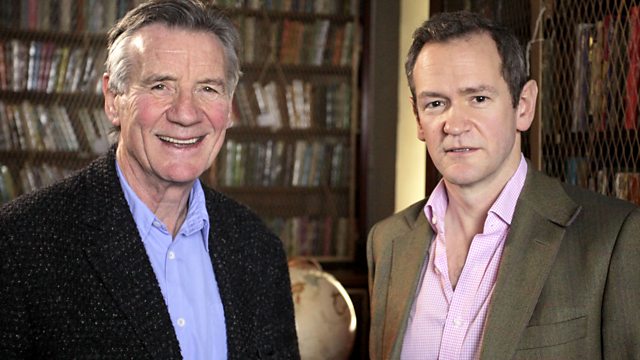
Alexander Armstrong's Real Ripping Yarns
Similar Content
Browse content similar to Alexander Armstrong's Real Ripping Yarns. Check below for episodes and series from the same categories and more!
Transcript
| Line | From | To | |
|---|---|---|---|
Good evening. | 0:00:09 | 0:00:11 | |
London, England, a busy, modern city. | 0:00:11 | 0:00:15 | |
I want to ask you, if I may, tonight, to join me in an experiment. | 0:00:15 | 0:00:19 | |
An experiment to turn back time, | 0:00:19 | 0:00:22 | |
to suspend belief in the here and now, | 0:00:22 | 0:00:25 | |
and journey into the past. | 0:00:25 | 0:00:27 | |
Come with me now, to a London before two wars, | 0:00:27 | 0:00:30 | |
when the city was very different to the one we live in now. | 0:00:30 | 0:00:34 | |
And this house you see behind me | 0:00:34 | 0:00:36 | |
was the London home of one of the most powerful men of this century. | 0:00:36 | 0:00:39 | |
-We're filming! -LAUGHTER | 0:00:39 | 0:00:41 | |
After the success of Monty Python, | 0:00:41 | 0:00:43 | |
Michael Palin and Terry Jones decided to embark | 0:00:43 | 0:00:46 | |
on a radical, new comedy series. | 0:00:46 | 0:00:48 | |
Set in the heyday of empire, | 0:00:51 | 0:00:53 | |
Ripping Yarns was a series of nine glorious comedy dramas, | 0:00:53 | 0:00:57 | |
broadcast between 1976 and 1979. | 0:00:57 | 0:01:00 | |
Well played, boy, well played! | 0:01:02 | 0:01:04 | |
It featured schoolboys, | 0:01:09 | 0:01:11 | |
soldiers, explorers... | 0:01:11 | 0:01:13 | |
We only left Paddington at 4.30, and I've already lost three men. | 0:01:13 | 0:01:18 | |
..spies... | 0:01:18 | 0:01:19 | |
..and a whole host of mad colonial characters... | 0:01:20 | 0:01:24 | |
Excellent. | 0:01:24 | 0:01:25 | |
..from a long-lost era. | 0:01:25 | 0:01:26 | |
Set her free, Mrs Angell. | 0:01:26 | 0:01:28 | |
LAUGHTER | 0:01:28 | 0:01:29 | |
She is free, dear. | 0:01:29 | 0:01:31 | |
There's been no slavery in this country for donkey's years. | 0:01:31 | 0:01:33 | |
We've used a lot of very conventional establishment attitudes | 0:01:33 | 0:01:37 | |
but undermined them. | 0:01:37 | 0:01:39 | |
-Sir. -Morrison, I think you know what to do. | 0:01:39 | 0:01:42 | |
A way you could deal with it was with humour. | 0:01:42 | 0:01:44 | |
SINGLE GUNSHOT | 0:01:46 | 0:01:47 | |
THUD | 0:01:47 | 0:01:48 | |
Ripping Yarns took its inspiration from the boys' books and magazines | 0:01:48 | 0:01:51 | |
that were popular up until the Second World War. | 0:01:51 | 0:01:55 | |
I think we were celebrating the British Empire, | 0:01:55 | 0:01:59 | |
and the Boy's Own stories, really. I think they were celebrating that. | 0:01:59 | 0:02:03 | |
Before the days of video games and cartoons, | 0:02:03 | 0:02:07 | |
these stories fuelled the imaginations | 0:02:07 | 0:02:09 | |
of generations of young people. | 0:02:09 | 0:02:12 | |
They were tales full of empire, adventure, | 0:02:12 | 0:02:14 | |
British pluck, danger, derring-do. | 0:02:14 | 0:02:17 | |
And these colossal, larger-than-life heroes. | 0:02:17 | 0:02:21 | |
These are the real ripping yarns. | 0:02:21 | 0:02:23 | |
Until relatively recently, being a boy meant certain things. | 0:02:39 | 0:02:42 | |
You explored the outdoors. | 0:02:44 | 0:02:47 | |
I used to cycle all over the place, without anybody worrying. | 0:02:47 | 0:02:51 | |
We were in the forest, in the woodlands, we knew every tree. | 0:02:51 | 0:02:58 | |
We went wild. We'd be out all day. | 0:02:58 | 0:03:00 | |
'Nowadays, I think people are so worried about letting their children | 0:03:02 | 0:03:06 | |
'go off and do something on their own.' | 0:03:06 | 0:03:09 | |
You had hobbies. | 0:03:09 | 0:03:11 | |
I've got some very good stamps, actually, in my... | 0:03:11 | 0:03:15 | |
I used to get lots of stamps on approval. | 0:03:17 | 0:03:19 | |
Then, I realised, if I didn't write back within a week, I'd bought them. | 0:03:19 | 0:03:23 | |
So my father had to take me to one side and say, | 0:03:23 | 0:03:26 | |
stamp collecting can lead you into dangerous, dangerous ways, | 0:03:26 | 0:03:31 | |
rack and ruin. | 0:03:31 | 0:03:33 | |
St Kitts and Nevis. Natal. | 0:03:33 | 0:03:37 | |
Falkland Islands, unmarked. | 0:03:37 | 0:03:40 | |
You were expected to be resilient. | 0:03:40 | 0:03:43 | |
After the war, there was very little around. | 0:03:43 | 0:03:47 | |
And life was pretty grim. | 0:03:47 | 0:03:49 | |
I think that was very much the ethos to deal with the difficult times, | 0:03:49 | 0:03:54 | |
to make yourself a man, harden yourself up. | 0:03:54 | 0:03:58 | |
You respected the establishment, and you were proud to be British. | 0:03:58 | 0:04:01 | |
It was inculcated into us | 0:04:03 | 0:04:06 | |
at primary school that we were right at the heart of this empire. | 0:04:06 | 0:04:11 | |
We were told it was the biggest empire ever. | 0:04:11 | 0:04:14 | |
So, when they sat down to write what would become Ripping Yarns, | 0:04:14 | 0:04:19 | |
Palin and Jones looked back to their childhoods. | 0:04:19 | 0:04:21 | |
Compared to the groovy '70s, | 0:04:22 | 0:04:24 | |
the world they grew up in, | 0:04:24 | 0:04:26 | |
so steeped in old-fashioned pluck and Victorian values, | 0:04:26 | 0:04:30 | |
seemed ripe for mockery. | 0:04:30 | 0:04:31 | |
It was my brother who suggested we do stories from Boy's Own Paper. | 0:04:32 | 0:04:37 | |
All this stuff that I'd giggled at, at the back of the class in school, | 0:04:39 | 0:04:43 | |
these heroic attitudes. | 0:04:43 | 0:04:45 | |
Actually, you can see it all from a different perspective. | 0:04:45 | 0:04:48 | |
There's quite a lot in it which was ridiculous, absurd, | 0:04:48 | 0:04:51 | |
which humour could deal with. | 0:04:51 | 0:04:53 | |
-CLASS SINGS: -# My school, my school... # | 0:05:00 | 0:05:05 | |
The first of the Ripping Yarns was Tomkinson's Schooldays. | 0:05:05 | 0:05:09 | |
Sorry, Grayson. | 0:05:09 | 0:05:10 | |
You can call me School Bully. | 0:05:10 | 0:05:12 | |
You miserable little tick. | 0:05:14 | 0:05:15 | |
I went to a public school, and I remember | 0:05:17 | 0:05:19 | |
I was given a book before I went there. | 0:05:19 | 0:05:23 | |
My father said, "This is a book about the school, old boy." | 0:05:23 | 0:05:25 | |
It was called The Bending of a Twig. ALEXANDER LAUGHS | 0:05:25 | 0:05:27 | |
And it was all about some boy, | 0:05:27 | 0:05:29 | |
some young lad of initiative and individuality, | 0:05:29 | 0:05:33 | |
who had been sent to the school. | 0:05:33 | 0:05:36 | |
And then, gradually, been worn down | 0:05:36 | 0:05:39 | |
to become the useful member of society he was to be later on. | 0:05:39 | 0:05:42 | |
It was called The Bending of a Twig. | 0:05:42 | 0:05:44 | |
It was all really about what the schools were about, | 0:05:44 | 0:05:46 | |
which was getting people and giving them discipline. | 0:05:46 | 0:05:49 | |
CANE THWACKS | 0:05:49 | 0:05:50 | |
'Everything about the place seemed designed to crush the soul, | 0:05:50 | 0:05:54 | |
'and break down any reserve of pride I ever had.' | 0:05:54 | 0:05:58 | |
Thank you, Foster. | 0:05:59 | 0:06:02 | |
Next, please. | 0:06:02 | 0:06:03 | |
'Beating the headmaster was just one of those ghastly...' | 0:06:03 | 0:06:06 | |
Changing their nature, very slightly. | 0:06:06 | 0:06:09 | |
Well, turning them into, sort of, conformists. | 0:06:09 | 0:06:13 | |
-Useful cogs. -Yeah, yeah, exactly. | 0:06:13 | 0:06:16 | |
I think Tomkinson's Schooldays came out of Mike being horrified | 0:06:18 | 0:06:24 | |
when his parents sent him to boarding school. | 0:06:24 | 0:06:28 | |
I think there's a lot of bile in that, you know. | 0:06:28 | 0:06:32 | |
And I think that's what it came from. | 0:06:32 | 0:06:36 | |
The cruelty of it. | 0:06:36 | 0:06:39 | |
Oh, Lord, we give thee humble and hearty thanks for this, | 0:06:39 | 0:06:42 | |
thy gift of discipline. | 0:06:42 | 0:06:44 | |
Knowing that it is only through the constraints of others | 0:06:44 | 0:06:47 | |
that we come to know ourselves. | 0:06:47 | 0:06:48 | |
And only through true misery can we find true contentment. | 0:06:48 | 0:06:51 | |
LAUGHTER | 0:06:51 | 0:06:53 | |
Tomkinson's Schooldays pokes fun at the school story. | 0:06:53 | 0:06:57 | |
These tales, usually set in boys' public schools, | 0:06:57 | 0:07:00 | |
were popularised by the legendary Boy's Own Paper, | 0:07:00 | 0:07:03 | |
but appeared in hundreds of other books and magazines too. | 0:07:03 | 0:07:07 | |
Whether written in 1910 or 1950, | 0:07:07 | 0:07:09 | |
the school story never strayed far from a tried-and-tested formula. | 0:07:09 | 0:07:13 | |
The school story has only a few ingredients. | 0:07:17 | 0:07:20 | |
Public school. | 0:07:20 | 0:07:21 | |
Group of chums. | 0:07:21 | 0:07:22 | |
And an arch enemy, usually an evil headmaster, | 0:07:22 | 0:07:26 | |
or possibly a school bully. | 0:07:26 | 0:07:27 | |
There were always a few scrapes and, quite often, | 0:07:27 | 0:07:30 | |
a bit of healthy sporting rivalry. | 0:07:30 | 0:07:32 | |
And that's pretty much it. | 0:07:32 | 0:07:33 | |
These ingredients remain unchanged | 0:07:33 | 0:07:35 | |
for decade after decade after decade, | 0:07:35 | 0:07:38 | |
as comforting and reassuring as a mug of hot cocoa. | 0:07:38 | 0:07:42 | |
It's hard to convey just how popular these stories were. | 0:07:44 | 0:07:47 | |
They appeared weekly in The Boy's Own Paper, | 0:07:47 | 0:07:49 | |
and in scores of copycat magazines, like Magnet, Gem and Chums. | 0:07:49 | 0:07:54 | |
We need to understand what a central part of youth culture they were. | 0:07:56 | 0:08:02 | |
We have one survey from St Pancras in the 1930s | 0:08:06 | 0:08:10 | |
which found that 86% of boys were reading at least one magazine a week | 0:08:10 | 0:08:17 | |
and an astonishing 15% said that they were reading | 0:08:17 | 0:08:21 | |
six boys' weeklies every week. | 0:08:21 | 0:08:23 | |
Typically, stories were serialised first in the boys' weeklies, | 0:08:23 | 0:08:27 | |
and later published in book form, thus launching a writer's career. | 0:08:27 | 0:08:31 | |
One bestselling writer, almost totally forgotten today, | 0:08:32 | 0:08:35 | |
was Talbot Baines Reed, known as Tibbie. | 0:08:35 | 0:08:38 | |
He wrote the wildly popular Fifth Form At St Dominic's. | 0:08:38 | 0:08:42 | |
I say wildly popular, this sold over a quarter of a million copies | 0:08:42 | 0:08:44 | |
in 1907 alone. Absolutely fantastic book. | 0:08:44 | 0:08:47 | |
I'm going to read you a little bit from chapter four. | 0:08:47 | 0:08:50 | |
' "Well bowled, Sir, shouted Master Paul," | 0:08:50 | 0:08:52 | |
'as a very swift ball from Ricketts | 0:08:52 | 0:08:55 | |
'took Bullinger's middle stump clean out of the ground. | 0:08:55 | 0:08:58 | |
' "Rattling well bowled, I say." ' | 0:08:58 | 0:09:00 | |
You see, to us, that sounds very comical. | 0:09:00 | 0:09:02 | |
This is a dashed bad show, I must say. | 0:09:02 | 0:09:04 | |
But you have to remember, at the time, | 0:09:04 | 0:09:06 | |
this kind of language of the school stories was widely copied. | 0:09:06 | 0:09:09 | |
That's it, good egg, good egg. | 0:09:09 | 0:09:11 | |
Much like American slang might be picked up, like "toodley" | 0:09:11 | 0:09:15 | |
by children watching cartoons today. | 0:09:15 | 0:09:17 | |
There were "bounders of the remove" and "rotters of the fourth". | 0:09:20 | 0:09:24 | |
Boys "swanked" and "gassed", | 0:09:24 | 0:09:26 | |
and said things like, "I say", "ripping" and... | 0:09:26 | 0:09:28 | |
Oh, my hat! | 0:09:28 | 0:09:30 | |
This was a private language, | 0:09:30 | 0:09:31 | |
that set children apart from the boring world of adults. | 0:09:31 | 0:09:34 | |
The most prolific writer of school stories was Charles Hamilton, | 0:09:39 | 0:09:43 | |
also known as Frank Richards, Clifford Owen, Owen Conquest, | 0:09:43 | 0:09:46 | |
and several other pseudonyms. | 0:09:46 | 0:09:48 | |
Charles, Frank, Martin, whatever you want to call him, | 0:09:52 | 0:09:55 | |
is estimated to have written 100 million words in his lifetime. | 0:09:55 | 0:10:00 | |
He began a lengthy career in 1908 | 0:10:00 | 0:10:02 | |
with a story written for the Magnet magazine, later published as a book. | 0:10:02 | 0:10:07 | |
Richards' character, Billy Bunter, the Fat Owl of the Remove, | 0:10:07 | 0:10:11 | |
is probably the most famous of all his creations. | 0:10:11 | 0:10:14 | |
Look out, here comes Quelch. | 0:10:14 | 0:10:15 | |
We look at someone like Charles Hamilton, Frank Richards, | 0:10:15 | 0:10:18 | |
and look at how much he is writing. It is absolutely extraordinary. | 0:10:18 | 0:10:22 | |
-Bunter! -Argh! | 0:10:22 | 0:10:24 | |
We're talking about, over his lifetime, | 0:10:24 | 0:10:26 | |
the equivalent of 1,000 full-length novels. | 0:10:26 | 0:10:29 | |
He's said to have invented somewhere between 50 and 100 different schools | 0:10:29 | 0:10:33 | |
using his various pseudonyms. | 0:10:33 | 0:10:35 | |
He's got these whole school stories, churning out thousands of words, | 0:10:35 | 0:10:38 | |
perhaps 70,000 words a week. | 0:10:38 | 0:10:40 | |
He is absolutely extraordinary. How can that not be pap? | 0:10:40 | 0:10:44 | |
'How I long to be able to hop like the second-year boys. | 0:10:45 | 0:10:49 | |
'And not to have to ask permission to breathe out after 10.30.' | 0:10:49 | 0:10:52 | |
Much of the magic of the school story came from its depiction | 0:10:52 | 0:10:55 | |
of arcane rules and rituals. | 0:10:55 | 0:10:58 | |
'There was also the compulsory fight with the grizzly bear | 0:10:58 | 0:11:00 | |
'which all new boys had to go through.' | 0:11:00 | 0:11:02 | |
You have this idea that the boy arrives on day one | 0:11:04 | 0:11:07 | |
and has to be broken, frankly. | 0:11:07 | 0:11:10 | |
Whether it's the bullying or the fagging, | 0:11:10 | 0:11:14 | |
or being made to stand on a table and sing a solo, | 0:11:14 | 0:11:17 | |
all that kind of thing is all about eradicating | 0:11:17 | 0:11:19 | |
what the boy was like before. | 0:11:19 | 0:11:21 | |
Just get rid of all of that, begin again, | 0:11:21 | 0:11:24 | |
and you can be made, remade in the image of the school. | 0:11:24 | 0:11:27 | |
Physical hardship and the occasional flogging | 0:11:33 | 0:11:36 | |
were all part of the fabric of school life. | 0:11:36 | 0:11:38 | |
Corporal punishment wasn't just regarded as | 0:11:43 | 0:11:45 | |
a necessary evil in schools, | 0:11:45 | 0:11:47 | |
but as an actual benefit to the boys. | 0:11:47 | 0:11:49 | |
It was character forming. | 0:11:49 | 0:11:51 | |
No pupil could hope to gain the respect of his peers | 0:11:51 | 0:11:54 | |
until he had been given six of the best. | 0:11:54 | 0:11:57 | |
Hello, Mumsy. | 0:11:57 | 0:11:58 | |
-What he needs is a damned good thrashing. -Clive, please. | 0:11:58 | 0:12:02 | |
He needs the skin taken off his back | 0:12:02 | 0:12:04 | |
with a triple-thonged, bamboo-backed leather strip. | 0:12:04 | 0:12:09 | |
That's what he needs. | 0:12:09 | 0:12:12 | |
'And there was St Tadger's Day when, by an old tradition, | 0:12:12 | 0:12:15 | |
'boys who had been at the school for less than two years, | 0:12:15 | 0:12:17 | |
'were allowed to be nailed to the walls by senior pupils. | 0:12:17 | 0:12:20 | |
I dare say, there was no nailing to the walls going on? | 0:12:26 | 0:12:30 | |
No nailing to the walls, but | 0:12:30 | 0:12:31 | |
they only stopped just short of that. THEY LAUGH | 0:12:31 | 0:12:33 | |
But what I liked in Tomkinson's Schooldays was that | 0:12:33 | 0:12:37 | |
you could do it with a twist, | 0:12:37 | 0:12:39 | |
so it wasn't that the boys were nailed to the walls, | 0:12:39 | 0:12:42 | |
-it was that the boys were ALLOWED to be nailed to the walls. -Yes. | 0:12:42 | 0:12:46 | |
That was a privilege. That was good, you got on in school. | 0:12:46 | 0:12:49 | |
PHONE RINGS | 0:12:49 | 0:12:51 | |
School bully. | 0:12:52 | 0:12:54 | |
Casting a dark shadow over the proceedings was the school bully. | 0:12:54 | 0:12:58 | |
'He had twice won the Public Schools Bullying Cup. | 0:12:58 | 0:13:00 | |
'And, last year, beat the extraordinarily vicious | 0:13:00 | 0:13:03 | |
'Ackroyd of Charterhouse at a kick-in of fags at the Hurlingham Club.' | 0:13:03 | 0:13:07 | |
In those days, people would say bullying was part of school, | 0:13:07 | 0:13:10 | |
"You'll find that, old boy, you'll have to deal with it." | 0:13:10 | 0:13:14 | |
Thank you, thank you, bully. | 0:13:14 | 0:13:15 | |
In Tomkinson, parents sent their children to that school | 0:13:15 | 0:13:19 | |
to be bullied by him, because he had won the Public Schools Bullying Cup. | 0:13:19 | 0:13:23 | |
So that was an observation, really, on where we were | 0:13:23 | 0:13:25 | |
with the kind of social attitudes at the time. | 0:13:25 | 0:13:28 | |
BICYCLE BELL | 0:13:39 | 0:13:41 | |
SPORTS TEAMS SHOUT | 0:13:41 | 0:13:44 | |
Of course, many a school story centres around | 0:13:55 | 0:13:58 | |
some kind of sporting contest. | 0:13:58 | 0:14:00 | |
Encouraging fair play and hard, physical combat | 0:14:00 | 0:14:04 | |
was seen as a vital part of education. | 0:14:04 | 0:14:07 | |
Oh! | 0:14:10 | 0:14:12 | |
CRASH | 0:14:12 | 0:14:13 | |
He won! | 0:14:13 | 0:14:14 | |
He's bloody won! | 0:14:14 | 0:14:17 | |
HE WHIMPERS | 0:14:17 | 0:14:18 | |
HE SHOUTS WITH JOY | 0:14:21 | 0:14:23 | |
The very first issue of The Boy's Own Paper in 1879 | 0:14:27 | 0:14:30 | |
kicked off with a story called My First Football Match. | 0:14:30 | 0:14:34 | |
For the next 90-odd years, | 0:14:35 | 0:14:37 | |
the paper ran articles on almost every sport you can think of. | 0:14:37 | 0:14:41 | |
From the obvious ones - cricket, rugby and hockey - | 0:14:43 | 0:14:46 | |
to the more obscure, like Harrow Footer and the Eton Wall Game. | 0:14:46 | 0:14:51 | |
'Both sides push and shove, and heave and tug.' | 0:14:51 | 0:14:56 | |
There was this tremendous emphasis on physical education and on games. | 0:15:02 | 0:15:06 | |
That's why there's so much about rugby and cricket | 0:15:06 | 0:15:09 | |
because these are believed to be healthy. | 0:15:09 | 0:15:12 | |
And in the correspondence column of the Boy's Own Paper, | 0:15:12 | 0:15:15 | |
you get so many requests about, "How can I get stronger? | 0:15:15 | 0:15:18 | |
"How can I grow to be a taller boy? | 0:15:18 | 0:15:21 | |
"How can I become more muscular?" | 0:15:21 | 0:15:23 | |
And so on, so there's a terrific concern there about manliness - | 0:15:23 | 0:15:26 | |
how can we become more manly? | 0:15:26 | 0:15:28 | |
After 12 and a half miles, | 0:15:30 | 0:15:31 | |
I saw Venner of 5A fall and die of exhaustion. | 0:15:31 | 0:15:35 | |
And after 17 miles, | 0:15:39 | 0:15:41 | |
he was joined by Apsley, Critworth PE, Spitwell, | 0:15:41 | 0:15:44 | |
Emerson and Zappa Major. | 0:15:44 | 0:15:46 | |
This interest in sport was all part of a more general | 0:15:48 | 0:15:51 | |
pre-occupation with the physical. | 0:15:51 | 0:15:53 | |
I'm going to read you this fantastic little thing, Gorilla Hunters by | 0:15:56 | 0:15:59 | |
RM Ballantyne, and there's a passage here that sums it up pretty well. | 0:15:59 | 0:16:02 | |
He says, "Boys ought to practise leaping off heights into deep water. | 0:16:02 | 0:16:07 | |
"They ought never to hesitate to cross a stream on a narrow, | 0:16:07 | 0:16:10 | |
"unsafe plank for fear of a ducking. | 0:16:10 | 0:16:12 | |
"They ought never to decline to climb a tree to pull fruit, | 0:16:12 | 0:16:15 | |
"merely because there is a possibility of their falling off | 0:16:15 | 0:16:18 | |
"and breaking their necks. | 0:16:18 | 0:16:20 | |
"I firmly believe that boys were intended to encounter | 0:16:20 | 0:16:23 | |
"all kinds of risks in order to prepare them to meet | 0:16:23 | 0:16:25 | |
"and grapple with the risks | 0:16:25 | 0:16:27 | |
"and dangers incident to man's career with cool, | 0:16:27 | 0:16:29 | |
"cautious self-possession - | 0:16:29 | 0:16:30 | |
"a self-possession founded on experimental knowledge | 0:16:30 | 0:16:33 | |
"of the character and powers of their own spirits and muscles." | 0:16:33 | 0:16:36 | |
Of course, risk-taking these days in the 21st century | 0:16:38 | 0:16:41 | |
is something that is thought to be avoided at all costs. | 0:16:41 | 0:16:44 | |
It's a big part of the Boy's Own literature as well, actually, | 0:16:45 | 0:16:49 | |
the necessity of risk and embracing risk, | 0:16:49 | 0:16:52 | |
-facing up to it and not avoiding it. -Yeah, it was definitely part of it. | 0:16:52 | 0:16:57 | |
You should learn these things, and you learn the hard way. | 0:16:57 | 0:17:00 | |
I mean discomfort was very important | 0:17:00 | 0:17:02 | |
because life is going to be uncomfortable. | 0:17:02 | 0:17:05 | |
-What are those, Uncle Jack? -Oh, they're buboes, lad. | 0:17:05 | 0:17:08 | |
A touch of bubonic plague I picked up at the weekend. | 0:17:08 | 0:17:10 | |
Gosh, weren't you scared? | 0:17:10 | 0:17:12 | |
A bit of bubonic plague? I should say not. | 0:17:12 | 0:17:15 | |
As long as you get a rabid dog to lick the poison out. | 0:17:15 | 0:17:17 | |
-Do you want to see the rats? -Oh, rather. -Go on, then. | 0:17:17 | 0:17:21 | |
Oh, that's rather good. | 0:17:22 | 0:17:25 | |
'Alongside school stories and sport, | 0:17:25 | 0:17:27 | |
'one of the big features of the Boy's Own Paper | 0:17:27 | 0:17:29 | |
'was the hobbies pages.' | 0:17:29 | 0:17:31 | |
What is that, Tomkinson? | 0:17:33 | 0:17:35 | |
It's a model icebreaker, sir. | 0:17:37 | 0:17:39 | |
It's a bit big for a model, isn't it? | 0:17:39 | 0:17:41 | |
It's a full-scale model, sir. | 0:17:41 | 0:17:43 | |
The Boy's Own Paper had a very high kind of interactive quality to it. | 0:17:45 | 0:17:51 | |
You could turn to the pages of how to make things, do-it-yourself, | 0:17:52 | 0:17:56 | |
and in these, you could make a toy yacht, a toy fire engine, furniture. | 0:17:56 | 0:18:02 | |
They have to make their own patterns, diagrams, | 0:18:03 | 0:18:05 | |
cut things out, heat wood, bend it, do all kinds of things with | 0:18:05 | 0:18:10 | |
apparatus that we would have no idea how to use today. | 0:18:10 | 0:18:14 | |
Hobbies were very important, | 0:18:14 | 0:18:16 | |
they were part of the established sort of way of growing up. | 0:18:16 | 0:18:20 | |
My father had been a great collector of birds' eggs which, | 0:18:21 | 0:18:24 | |
of course, now you wouldn't be allowed to take... | 0:18:24 | 0:18:26 | |
-No, absolutely not. -..these little birds' eggs. | 0:18:26 | 0:18:29 | |
I went for the more predictable things. I was a trainspotter. | 0:18:29 | 0:18:34 | |
I also collected cheese labels. | 0:18:35 | 0:18:37 | |
Dad was a keen collector of stamps, so he got me going. | 0:18:42 | 0:18:47 | |
I collected only stamps in the British Empire. | 0:18:48 | 0:18:53 | |
There was no room for dullards on the hobbies pages. | 0:18:53 | 0:18:56 | |
They provided a stern test for the boy reader. | 0:18:56 | 0:18:58 | |
One of the things that I love about the Boy's Own Paper | 0:18:59 | 0:19:03 | |
is the way that it assumes that boys are really competent | 0:19:03 | 0:19:07 | |
and can be trusted with all kinds of equipment in ways that health | 0:19:07 | 0:19:12 | |
and safety in schools today would find absolutely shocking. | 0:19:12 | 0:19:15 | |
When they're preserving insects, for instance, | 0:19:15 | 0:19:18 | |
they're told from the very beginning that the chemist might not | 0:19:18 | 0:19:21 | |
sell you this because it's a dangerous poison and if he does | 0:19:21 | 0:19:25 | |
sell it to you, you have to be careful about how you store it | 0:19:25 | 0:19:27 | |
and make sure that nobody else can get it. | 0:19:27 | 0:19:29 | |
The Boy's Own Paper's hobbies pages had a particular | 0:19:37 | 0:19:40 | |
focus on science, | 0:19:40 | 0:19:42 | |
although there was nothing dry or classroom-y | 0:19:42 | 0:19:44 | |
in the way they wrote about it. | 0:19:44 | 0:19:47 | |
They cleverly wrapped up scientific concepts in articles | 0:19:47 | 0:19:50 | |
about popular hobbies | 0:19:50 | 0:19:51 | |
so you would learn about fluid dynamics in an article | 0:19:51 | 0:19:54 | |
about boat-building, or about zoology in an article about collecting insects | 0:19:54 | 0:19:58 | |
and, of course, it was all done with such breathless enthusiasm | 0:19:58 | 0:20:02 | |
that no boy could fail to be captivated. | 0:20:02 | 0:20:04 | |
Now, I've come here to the Royal Institution in London to conduct | 0:20:04 | 0:20:08 | |
an experiment that was first written up in the Boy's Own Paper in the 1880s. | 0:20:08 | 0:20:12 | |
-So, what do you make of my spiders? -I think they're fantastic. | 0:20:25 | 0:20:29 | |
'I'm joined by Dr Peter Wothers, | 0:20:29 | 0:20:31 | |
'from Cambridge University no less, | 0:20:31 | 0:20:33 | |
'to have a go at making exploding spiders.' | 0:20:33 | 0:20:37 | |
We're sort of following a recipe from a Boy's Own Paper | 0:20:37 | 0:20:40 | |
from the 1880s. | 0:20:40 | 0:20:41 | |
This is written by a chemist, John Scoffern. | 0:20:41 | 0:20:44 | |
And it's sold as a jape. | 0:20:44 | 0:20:46 | |
Basically, you make your spider here and he even says, | 0:20:46 | 0:20:49 | |
"You can stick it by means of a gum to the wall," and then | 0:20:49 | 0:20:52 | |
when your maiden aunt comes in and thinks there's | 0:20:52 | 0:20:54 | |
a spider on the wall, she reaches for her parasol, | 0:20:54 | 0:20:56 | |
gives it a prod and the result is very funny. | 0:20:56 | 0:21:00 | |
Now, we need the chemical part which is trying to make these things | 0:21:01 | 0:21:04 | |
-explode. -What is the compound we're going to be putting in there? | 0:21:04 | 0:21:07 | |
So, it's something called nitrogen triiodide, which is | 0:21:07 | 0:21:10 | |
an incredibly sensitive explosive. | 0:21:10 | 0:21:13 | |
I mean, in fact, it can't be used as an explosive | 0:21:13 | 0:21:15 | |
because you can't move it once it's been made. | 0:21:15 | 0:21:18 | |
So, how are you going to do that? What's the process? | 0:21:19 | 0:21:22 | |
So, I'm going to go away and make it and prepare it wet, | 0:21:22 | 0:21:25 | |
but as soon as it's dried, it's pretty unstable stuff. | 0:21:25 | 0:21:29 | |
Now, what's extraordinary, and I think laudable, | 0:21:29 | 0:21:32 | |
is that in a Boy's Own Paper, they're being entrusted with | 0:21:32 | 0:21:35 | |
the recipe for making this extremely unstable compound. | 0:21:35 | 0:21:41 | |
I mean, would you ever get this happening now? | 0:21:41 | 0:21:43 | |
Would any child be allowed to put this together themselves now? | 0:21:43 | 0:21:47 | |
I can't see today's chemistry sets telling you exactly how to | 0:21:47 | 0:21:51 | |
make this sort of compound. | 0:21:51 | 0:21:52 | |
We can't show you how the compound is made - | 0:21:53 | 0:21:56 | |
it's apparently too dangerous - | 0:21:56 | 0:21:59 | |
so you're going to have to look at a picture of spiders now. | 0:21:59 | 0:22:02 | |
And another picture. | 0:22:03 | 0:22:05 | |
And another. Good, aren't they? | 0:22:07 | 0:22:10 | |
You see, in the 1880s, | 0:22:12 | 0:22:13 | |
they didn't really bother with health and safety. | 0:22:13 | 0:22:17 | |
Once Peter returns with the explosive compound, | 0:22:17 | 0:22:20 | |
it's time to load up our spiders. | 0:22:20 | 0:22:22 | |
-Careful not to drop any little bits. -Right. | 0:22:22 | 0:22:25 | |
Is that a good quantity in there, do you think, | 0:22:25 | 0:22:27 | |
or should we do a bit more? | 0:22:27 | 0:22:28 | |
Let's have a little bit more, just don't knock the other ones. | 0:22:28 | 0:22:31 | |
And I wouldn't scrape too hard. | 0:22:31 | 0:22:33 | |
PETER LAUGHS | 0:22:33 | 0:22:35 | |
That's a nervous laugh, isn't it? | 0:22:35 | 0:22:37 | |
It's a "I've seen this before" laugh. | 0:22:37 | 0:22:40 | |
OK, good. Right. | 0:22:40 | 0:22:43 | |
So, Peter, we've both been issued with a standard issue | 0:22:54 | 0:22:58 | |
maiden aunt's parasol with which to prod the spiders. | 0:22:58 | 0:23:02 | |
-So, shall I attack the first one? -Yeah, attack the first one. | 0:23:02 | 0:23:05 | |
OK, let's give it a prod, then. | 0:23:07 | 0:23:09 | |
Oh! | 0:23:09 | 0:23:10 | |
THEY LAUGH | 0:23:10 | 0:23:15 | |
Yeah, that worked. | 0:23:15 | 0:23:16 | |
-I tell you what, it's upset this one here but these... -Here's a leg. | 0:23:16 | 0:23:20 | |
Oh, there we are, a little memento for me. Yeah. | 0:23:20 | 0:23:24 | |
You need a bit of a... Oh! | 0:23:27 | 0:23:30 | |
I wasn't doing it hard enough. | 0:23:30 | 0:23:32 | |
You're getting good at it now. | 0:23:34 | 0:23:36 | |
And if the boy reader made a mistake - | 0:23:41 | 0:23:43 | |
he couldn't get his spiders to explode, | 0:23:43 | 0:23:45 | |
or he had some other burning question, | 0:23:45 | 0:23:48 | |
he would send a letter to the editors of the paper, | 0:23:48 | 0:23:50 | |
asking for help. | 0:23:50 | 0:23:52 | |
They'd never publish the letters, so you'd just get the reply | 0:23:52 | 0:23:55 | |
so you had to kind of try | 0:23:55 | 0:23:57 | |
and work out what the query might have been and this is from | 0:23:57 | 0:24:01 | |
Boy's Own Paper, it must have been about sort of just before the war. | 0:24:01 | 0:24:04 | |
First War, that is, and there's just a couple here cos they're | 0:24:04 | 0:24:08 | |
so wonderful. "Fred L..." They'd always identify the writer. | 0:24:08 | 0:24:12 | |
"Fred L, one, by all means remove your moustache | 0:24:12 | 0:24:16 | |
"if you're only five feet high. | 0:24:16 | 0:24:18 | |
"It may not help your growth, but there's no harm in trying it." | 0:24:18 | 0:24:22 | |
What are we doing here? | 0:24:22 | 0:24:24 | |
"At any rate, you're sure of a little fresh air when you let it grow." | 0:24:24 | 0:24:28 | |
And then, "Two, it makes no difference | 0:24:28 | 0:24:31 | |
-"if you do not overtire yourself." -That's it. | 0:24:31 | 0:24:33 | |
So, they're just wonderful | 0:24:33 | 0:24:34 | |
and there's a last one here which is just, again, a lovely non-sequitur. | 0:24:34 | 0:24:38 | |
It's called Swallow and it has one - | 0:24:38 | 0:24:41 | |
"The birds must have been included in the catalogue in error. | 0:24:41 | 0:24:44 | |
"They're certainly not British..." It was always a very admonitory term. | 0:24:44 | 0:24:47 | |
"..and have never been recognised as such." | 0:24:47 | 0:24:50 | |
And then, "Two, have a cold bath every morning. | 0:24:50 | 0:24:53 | |
"Wash yourself all over, head and all." | 0:24:53 | 0:24:56 | |
What's that got to do with swallows? But, anyway. | 0:24:56 | 0:24:59 | |
The idea of the cold bath, so beloved by the Boy's Own Paper, | 0:25:00 | 0:25:04 | |
was first popularised by its no-nonsense correspondent | 0:25:04 | 0:25:08 | |
Dr Gordon Stables. | 0:25:08 | 0:25:09 | |
A former Arctic explorer, naval surgeon, and fanatical caravanner, | 0:25:11 | 0:25:15 | |
Stables had some very trenchant opinions. | 0:25:15 | 0:25:18 | |
He was a health nut - advocating fresh air, | 0:25:22 | 0:25:25 | |
lifting dumb-bells, never smoking... | 0:25:25 | 0:25:28 | |
..and, of course, endless cold bathing. | 0:25:30 | 0:25:33 | |
Take a cold tub, sir. | 0:25:33 | 0:25:34 | |
This is what Stables would recommend to all his readers | 0:25:34 | 0:25:37 | |
on a very regular basis. | 0:25:37 | 0:25:38 | |
In fact, a cold bath was his remedy for any kind of affliction, | 0:25:38 | 0:25:42 | |
whether psychological or physical. | 0:25:42 | 0:25:44 | |
In fact, he even advised working boys to rise at five, | 0:25:44 | 0:25:47 | |
scrub themselves down in a cold tub so they could get dressed, | 0:25:47 | 0:25:50 | |
comb their hair and be at work for six. | 0:25:50 | 0:25:53 | |
Ah! That is... | 0:25:53 | 0:25:56 | |
Ah! | 0:25:56 | 0:25:57 | |
OK, here goes. | 0:25:59 | 0:26:00 | |
ALEXANDER GASPS | 0:26:02 | 0:26:05 | |
Nee! | 0:26:07 | 0:26:08 | |
Ah! | 0:26:08 | 0:26:10 | |
Jeez-ha-ha! | 0:26:11 | 0:26:13 | |
I can feel my character building before your very eyes. | 0:26:15 | 0:26:19 | |
I think that's probably enough of that. | 0:26:19 | 0:26:21 | |
Time to get dressed, comb my hair and I can be at work by six. | 0:26:21 | 0:26:25 | |
The cold tub was something he advised as a remedy | 0:26:29 | 0:26:32 | |
for another sort of problem that worried many of his teenage readers. | 0:26:32 | 0:26:36 | |
Stables speaks of nervousness and certain debilitating habits | 0:26:41 | 0:26:45 | |
learnt at school that led to trouble that can never be shaken off. | 0:26:45 | 0:26:50 | |
He was referring, of course, to the menace of self-abuse. | 0:26:50 | 0:26:53 | |
The correspondence pages of the Boy's Own Paper are filled | 0:26:53 | 0:26:57 | |
with dire warnings of what might happen to boys who gave in to | 0:26:57 | 0:27:00 | |
these dangerous and unnatural urges. | 0:27:00 | 0:27:02 | |
"Those habits lead thousands to misery and illness, | 0:27:11 | 0:27:14 | |
"and often to death or insanity. | 0:27:14 | 0:27:17 | |
"You will ruin your constitution | 0:27:17 | 0:27:18 | |
"and earn for yourself a miserable manhood. | 0:27:18 | 0:27:22 | |
"Such habits often end in lunacy and suicide. | 0:27:22 | 0:27:25 | |
"Don't trust to quacks or men who send out pamphlets and advertise. | 0:27:25 | 0:27:29 | |
"Banish madness from your mind and leave the dog alone." | 0:27:30 | 0:27:35 | |
To our modern ears, these letters make for pure comedy, | 0:27:36 | 0:27:40 | |
but at the time, this was serious stuff. | 0:27:40 | 0:27:42 | |
The whole of British society was worried. | 0:27:42 | 0:27:45 | |
I will not have the trappings of whoremongery | 0:27:45 | 0:27:47 | |
-and free-loveism under this roof. -No, don't touch it. -Turn away, woman. | 0:27:47 | 0:27:51 | |
Unless it arouses you to unseemly lubricity. | 0:27:51 | 0:27:54 | |
This is the devil's work! | 0:27:54 | 0:27:56 | |
People tried all sorts of weird and wonderful means | 0:27:57 | 0:28:00 | |
to prevent themselves becoming aroused. | 0:28:00 | 0:28:02 | |
-These are called Jugum penises and... -They're called what? | 0:28:04 | 0:28:07 | |
SHE LAUGHS | 0:28:07 | 0:28:08 | |
-The great name of Jugum penises. -Jugum? | 0:28:08 | 0:28:11 | |
Jugum, and they were designed to prevent what the Victorians | 0:28:11 | 0:28:14 | |
called "spermatorrhoea", a slightly deadly term that essentially | 0:28:14 | 0:28:18 | |
means the unnecessary loss of semen. | 0:28:18 | 0:28:21 | |
I suppose they felt there was a finite supply. | 0:28:21 | 0:28:24 | |
Well, it was held in very high regard | 0:28:24 | 0:28:26 | |
and what they thought was this unnecessary loss would make you ill, | 0:28:26 | 0:28:30 | |
so spermatorrhoea caused a very wide range | 0:28:30 | 0:28:33 | |
of debilitating diseases, both physical and mental. | 0:28:33 | 0:28:36 | |
And how does this work? Let's just get down to the nitty-gritty. | 0:28:36 | 0:28:40 | |
It's got a kind of bicycle clip. | 0:28:40 | 0:28:43 | |
It would've been worn at night and the idea being that, | 0:28:43 | 0:28:46 | |
should the sleeper become unnaturally aroused, | 0:28:46 | 0:28:49 | |
shall we say, the pain would wake you up | 0:28:49 | 0:28:52 | |
because you would engage with these teeth round the edge. | 0:28:52 | 0:28:55 | |
Right, OK. | 0:28:55 | 0:28:57 | |
There were a number of different contraptions all along similar | 0:28:57 | 0:29:00 | |
lines, through to whole body suits that you could wear to | 0:29:00 | 0:29:04 | |
bed at night, we think, that had flaps at various strategic | 0:29:04 | 0:29:08 | |
points that could be closed or opened, accordingly. | 0:29:08 | 0:29:11 | |
What are you making, mother? | 0:29:11 | 0:29:13 | |
Something that will cover the entire human body, dear. | 0:29:13 | 0:29:16 | |
You say there was a school of thought, | 0:29:16 | 0:29:18 | |
it becomes almost more than that, | 0:29:18 | 0:29:20 | |
it becomes almost the rule that you must, at all costs, avoid. | 0:29:20 | 0:29:24 | |
So, this was really taken up, not just within medical circles, | 0:29:24 | 0:29:27 | |
but by moralists, educators... | 0:29:27 | 0:29:30 | |
The word we come across again and again is self-pollution. | 0:29:30 | 0:29:33 | |
-Self-pollution. -Self-pollution. | 0:29:33 | 0:29:35 | |
So, here we've got, representing the last stage of mental | 0:29:35 | 0:29:40 | |
and bodily exhaustion from onanism or self-pollution. | 0:29:40 | 0:29:43 | |
I mean, surely, that just passes though. | 0:29:43 | 0:29:45 | |
That's only for a couple of days...and then he's | 0:29:45 | 0:29:47 | |
back on his feet again. | 0:29:47 | 0:29:49 | |
I mean, it could kill you, the effects could be... | 0:29:49 | 0:29:51 | |
But this is just, I mean, this is nonsense, isn't it? | 0:29:51 | 0:29:54 | |
How extraordinary. Or is it? Are you here to tell me otherwise? | 0:29:54 | 0:29:57 | |
Well, no, I think it sort of fuelled this anxiety and it snowballed | 0:29:57 | 0:30:01 | |
so everybody was terrified of the effects that this might have. | 0:30:01 | 0:30:04 | |
Over the years, the tone of the letters pages mellowed a little. | 0:30:06 | 0:30:09 | |
In the '30s, | 0:30:09 | 0:30:10 | |
personal issues were dealt with in a column called The Padre's Talk, | 0:30:10 | 0:30:14 | |
and in the '40s, by Between Ourselves. | 0:30:14 | 0:30:17 | |
But the advice remained much the same. | 0:30:17 | 0:30:20 | |
-May I touch you, Captain? -No! | 0:30:20 | 0:30:23 | |
It's bad enough with a girl, but you're a...you're a man. | 0:30:23 | 0:30:26 | |
Sexual thoughts were to be avoided. | 0:30:26 | 0:30:28 | |
Part of what the Ripping Yarns were were the things that were | 0:30:28 | 0:30:31 | |
unexpressed, you know. | 0:30:31 | 0:30:33 | |
There was a certain level of repression, | 0:30:33 | 0:30:35 | |
a certain level of real sexual hang-ups, that we | 0:30:35 | 0:30:38 | |
just touched on because you weren't allowed to touch on them | 0:30:38 | 0:30:41 | |
so even just referring to them made them funny. | 0:30:41 | 0:30:45 | |
Well, Mr Russell, since you are a man, | 0:30:45 | 0:30:49 | |
maybe it'll be all right for me to... | 0:30:49 | 0:30:52 | |
rub something on them. | 0:30:52 | 0:30:54 | |
Keeping boys' energies focused on innocent and improving pursuits | 0:30:56 | 0:31:00 | |
was one of the aims of the boys' weeklies. | 0:31:00 | 0:31:02 | |
In the Boy's Own Paper, much was made of the importance of bracing | 0:31:04 | 0:31:07 | |
outdoor activities, such as natural history, gardening and hiking. | 0:31:07 | 0:31:13 | |
They wanted to produce a kind of wholesome image of boyhood | 0:31:14 | 0:31:17 | |
that was exciting as well. | 0:31:17 | 0:31:20 | |
They wanted the boys to go out, to exercise, to play games, | 0:31:20 | 0:31:23 | |
to get involved in sport, to climb trees with jack-knifes, | 0:31:23 | 0:31:26 | |
to take risks, to be what we now think of as proper boys. | 0:31:26 | 0:31:31 | |
This focus on the great outdoors | 0:31:33 | 0:31:35 | |
had grown out of turn-of-the-century concerns | 0:31:35 | 0:31:38 | |
about the malign influence of cities. | 0:31:38 | 0:31:40 | |
Many people believed the country was going to the dogs, | 0:31:52 | 0:31:55 | |
locked into a toxic cycle of physical and moral degeneration. | 0:31:55 | 0:32:00 | |
After decades of industrialisation, the cities were growing | 0:32:00 | 0:32:03 | |
and, along with them, a huge urban underclass - poorly fed, | 0:32:03 | 0:32:08 | |
unfit and, it was believed, steeped in crime and immorality. | 0:32:08 | 0:32:13 | |
There was a kind of question in society, you know, | 0:32:13 | 0:32:15 | |
had the grit of the modern boy become somehow diminished? | 0:32:15 | 0:32:20 | |
Hello, you, boy, in the corner there. You ought to be a Boy Scout. | 0:32:20 | 0:32:25 | |
You're a fine-looking fella and I know you would make a jolly, | 0:32:25 | 0:32:28 | |
good backwoodsman by the look of you. | 0:32:28 | 0:32:30 | |
You're ugly enough, anyway. | 0:32:30 | 0:32:31 | |
Robert Baden-Powell, a columnist for the Boy's Own Paper, | 0:32:33 | 0:32:36 | |
founded the Scout Movement in 1908 with | 0:32:36 | 0:32:38 | |
the explicit intention of improving the calibre of the modern boy. | 0:32:38 | 0:32:42 | |
Baden-Powell hoped that by creating a youth movement | 0:32:44 | 0:32:50 | |
built around the countryside, about camping and wood craft, | 0:32:50 | 0:32:55 | |
that this would counteract the evil effects of the city | 0:32:55 | 0:33:00 | |
and improve the health of the nation's youth. | 0:33:00 | 0:33:03 | |
As well as encouraging their readers to get outdoors, | 0:33:10 | 0:33:13 | |
the boys' weeklies provided plenty of manly role models | 0:33:13 | 0:33:17 | |
to inspire them. | 0:33:17 | 0:33:18 | |
The strong, intrepid, outdoorsy hero is a recurring figure in boys' | 0:33:20 | 0:33:24 | |
fiction and, of course, nobody was more celebrated than the explorer. | 0:33:24 | 0:33:28 | |
Whether he was conquering the Arctic wastes or fighting his way | 0:33:28 | 0:33:31 | |
through the Amazon, the explorer's every move was minutely | 0:33:31 | 0:33:34 | |
charted by boys' books and magazines. | 0:33:34 | 0:33:36 | |
So, what's your expedition looking for? | 0:33:36 | 0:33:39 | |
Well, we're looking to see if there's a channel, a river | 0:33:39 | 0:33:42 | |
passage, linking the Ganges with the Brahmaputra River through Bhutan. | 0:33:42 | 0:33:47 | |
But this is Maidenhead. | 0:33:47 | 0:33:48 | |
The figure of the explorer loomed large in popular culture | 0:33:53 | 0:33:57 | |
until well into the 20th century. | 0:33:57 | 0:33:59 | |
I wanted to be an explorer from very early on, | 0:34:03 | 0:34:06 | |
I mean, nine or ten years old, that's what I wanted to do. | 0:34:06 | 0:34:09 | |
And I read stories of great explorers, | 0:34:11 | 0:34:14 | |
especially people who disappeared. | 0:34:14 | 0:34:16 | |
I don't know why I was fascinated by people who were never seen again. | 0:34:16 | 0:34:19 | |
There were stories like Fawcett, Colonel Fawcett. | 0:34:19 | 0:34:22 | |
He went to the Amazon and was never seen again. | 0:34:22 | 0:34:26 | |
As someone said, "Dead, believed eaten." | 0:34:26 | 0:34:28 | |
In 1953, I was ten years old, and that's when Everest was climbed. | 0:34:29 | 0:34:33 | |
Someone had gotten to the top of the highest mountain. | 0:34:33 | 0:34:35 | |
They'd found the source of the Amazon and the Nile | 0:34:35 | 0:34:38 | |
and that sort of thing, so there was very little left. | 0:34:38 | 0:34:42 | |
But the idea of exploration appealed to me greatly and I think it was not | 0:34:42 | 0:34:47 | |
just because they were brave men | 0:34:47 | 0:34:51 | |
but they were going to places that no-one had ever seen before. | 0:34:51 | 0:34:54 | |
The Boy's Own Paper published stirring tales like | 0:34:57 | 0:34:59 | |
In the Power Of The Pygmies and Nearly Eaten | 0:34:59 | 0:35:03 | |
in which a professor escapes | 0:35:03 | 0:35:04 | |
from a horde of voodoo-worshipping cannibals in Haiti. | 0:35:04 | 0:35:08 | |
Explorer novels like King Solomon's Mines | 0:35:12 | 0:35:15 | |
were a fixture on every boy's bookshelf. | 0:35:15 | 0:35:19 | |
Tales like these, usually set in remote outposts of the Empire, | 0:35:21 | 0:35:25 | |
provided readers with a heady mix of exoticism and danger. | 0:35:25 | 0:35:30 | |
The polar explorer, Rear Admiral Sir Vincent Smythe-Obelson. | 0:35:32 | 0:35:37 | |
Applause! Applause! | 0:35:37 | 0:35:39 | |
Polar exploration was a recurring theme for the Boy's Own Paper. | 0:35:41 | 0:35:45 | |
It printed no less than 17 articles on Scott of the Antarctic, | 0:35:45 | 0:35:50 | |
particularly the ill-fated Terra Nova expedition which took | 0:35:50 | 0:35:53 | |
the lives of Scott and his comrades. | 0:35:53 | 0:35:55 | |
Scott and Oates, in particular, | 0:35:56 | 0:35:58 | |
were really raised as the pre-eminent heroes in Britain | 0:35:58 | 0:36:02 | |
on the eve of the First World War | 0:36:02 | 0:36:04 | |
and the Boy's Own Paper played a significant part in that process. | 0:36:04 | 0:36:09 | |
They actually published a special plate of Captain Oates with | 0:36:11 | 0:36:16 | |
a line saying, "This plate of Captain Oates should find | 0:36:16 | 0:36:20 | |
"an honoured place in the den of every BOP reader." | 0:36:20 | 0:36:25 | |
And not all these explorer heroes were grown men. | 0:36:29 | 0:36:32 | |
In the 1920s, | 0:36:32 | 0:36:34 | |
we were introduced to James Marr, the 18-year-old boy scout | 0:36:34 | 0:36:38 | |
who accompanied Ernest Shackleton on a trip to the Antarctic. | 0:36:38 | 0:36:41 | |
The story of the expedition written by Marr himself was serialised | 0:36:46 | 0:36:50 | |
in Chums magazine and then later published as a book in 1923. | 0:36:50 | 0:36:55 | |
It must have been the most incredible adventure for this | 0:36:55 | 0:36:58 | |
young 18-year-old scout, but I imagine no picnic. | 0:36:58 | 0:37:02 | |
He was working as a normal member of the crew, working day and night. | 0:37:02 | 0:37:06 | |
Judging by the way he's writing it, | 0:37:06 | 0:37:08 | |
he's certainly in the teeth of it all, | 0:37:08 | 0:37:10 | |
he's getting the full experience. | 0:37:10 | 0:37:11 | |
Listen to this, "Wednesday, 28th December, 1921. | 0:37:11 | 0:37:14 | |
"The gale had increased to hurricane violence. | 0:37:14 | 0:37:17 | |
"It was a grand sight to watch those foam-decked mountains of water | 0:37:17 | 0:37:20 | |
"bear down upon us." I bet it was. | 0:37:20 | 0:37:23 | |
"The ship rose on top of them like a cork | 0:37:23 | 0:37:26 | |
"and then down the other side." Woo-hoo! | 0:37:26 | 0:37:28 | |
That's tough, that's really tough. | 0:37:29 | 0:37:32 | |
And remember, as I say, he's 18 years old. | 0:37:32 | 0:37:34 | |
I suppose if anyone questioned the sense of sending an 18-year-old | 0:37:34 | 0:37:37 | |
scout off on a trip like this, I suppose here's your answer. | 0:37:37 | 0:37:40 | |
He's getting a fantastic education sort of borne out | 0:37:40 | 0:37:43 | |
through his even-handed prose. | 0:37:43 | 0:37:45 | |
Unless, of course, maybe he was actually just writing, | 0:37:45 | 0:37:47 | |
"O-M-G, I was bricking it last night in those high seas," | 0:37:47 | 0:37:51 | |
and maybe it just got back to base and somebody just put a red line | 0:37:51 | 0:37:53 | |
through it and wrote it in a slightly more Boy's Own style. | 0:37:53 | 0:37:56 | |
But I doubt it. | 0:37:56 | 0:37:57 | |
It's explorers like these - | 0:37:59 | 0:38:01 | |
cool to the last and indifferent to danger - | 0:38:01 | 0:38:04 | |
that Palin and Jones' affectionately sent up in the fifth Yarn. | 0:38:04 | 0:38:08 | |
In 1927, Captain Walter Snetterton, | 0:38:08 | 0:38:12 | |
least loved of all English explorers, | 0:38:12 | 0:38:14 | |
decided to go across the Andes by frog. | 0:38:14 | 0:38:19 | |
We are the expedition from England. I'm Captain Snetterton. | 0:38:21 | 0:38:25 | |
Wonderful characters. | 0:38:25 | 0:38:26 | |
Pervious to anything. | 0:38:27 | 0:38:30 | |
Mr Gregory, those frogs have been in training for months. | 0:38:30 | 0:38:33 | |
They're mentally and physically at their peak, a delay could be fatal. | 0:38:33 | 0:38:36 | |
The thing about Snetterton was, actually, that he | 0:38:36 | 0:38:39 | |
represents a certain type of traveller and explorer, of which | 0:38:39 | 0:38:44 | |
there are many around still who want to make it difficult for themselves. | 0:38:44 | 0:38:48 | |
I shall stay here until this frog expedition has achieved | 0:38:48 | 0:38:51 | |
everything it set out to achieve. | 0:38:51 | 0:38:53 | |
Everyone wants to be the first to do something to do something really, | 0:38:53 | 0:38:56 | |
really difficult which is actually, in a way, quite admirable. | 0:38:56 | 0:38:59 | |
I think there's something very British | 0:38:59 | 0:39:01 | |
and something rather good about the British kind of... | 0:39:01 | 0:39:04 | |
Well, we could call it... | 0:39:04 | 0:39:05 | |
Some would call it silliness, others would say it's independence | 0:39:05 | 0:39:08 | |
and testing yourself, | 0:39:08 | 0:39:11 | |
so he was just really that kind of explorer who'd chosen to do the most | 0:39:11 | 0:39:17 | |
difficult thing which was to actually ride across the Andes on a frog. | 0:39:17 | 0:39:21 | |
The glory days of British exploration may be over, | 0:39:23 | 0:39:26 | |
but there are still a few explorers out there. | 0:39:26 | 0:39:29 | |
I've come to Dorset to meet | 0:39:34 | 0:39:36 | |
the founder of Operation Raleigh, John Blashford Snell. | 0:39:36 | 0:39:40 | |
In his time, he's fought bandits, searched for meteorites in Bolivia, | 0:39:40 | 0:39:44 | |
and taken a grand piano through the South American jungle. | 0:39:44 | 0:39:47 | |
Careful with the frogs! | 0:39:48 | 0:39:50 | |
-Ah, Alexander, I presume. -Good morning. How very good to meet you. | 0:39:57 | 0:40:01 | |
Wow! | 0:40:03 | 0:40:06 | |
How many expeditions have you been on? Do you keep a tally? | 0:40:06 | 0:40:10 | |
I don't keep a tally, | 0:40:10 | 0:40:12 | |
-but somebody told me the other day it's over 100 now. -Over 100. | 0:40:12 | 0:40:16 | |
Do you have a particular favourite expedition? | 0:40:16 | 0:40:18 | |
The most dramatic one, without a doubt, | 0:40:18 | 0:40:21 | |
was the Blue Nile in 1968 where we literally had to fight our way | 0:40:21 | 0:40:25 | |
out from bandits and so on and there were crocodile attacks | 0:40:25 | 0:40:29 | |
and that type of thing. | 0:40:29 | 0:40:31 | |
You are very much in the tradition of the Great British explorer. | 0:40:31 | 0:40:34 | |
-Do you see yourself in that? -Not really, no! A nutcase, I think! | 0:40:34 | 0:40:39 | |
No, I suppose going back to the days of Stanley and Livingstone, | 0:40:39 | 0:40:45 | |
they were a little bit eccentric, probably, by modern standards. | 0:40:45 | 0:40:50 | |
'John's inspiration was General Gordon | 0:40:50 | 0:40:53 | |
'and the great Victorian explorers Stanley and Livingstone.' | 0:40:53 | 0:40:57 | |
These are some great heroes that I had as a young man, | 0:40:57 | 0:41:01 | |
who featured in the Boy's Own Paper and so on. | 0:41:01 | 0:41:04 | |
-I remember my grandmother used to read it to me. -Really? | 0:41:04 | 0:41:07 | |
And there were lots of things I learned from it. | 0:41:07 | 0:41:11 | |
I can remember in particular with Boy's Own Paper, | 0:41:11 | 0:41:14 | |
-they taught you about making things. -Yes. | 0:41:14 | 0:41:16 | |
I remember making a crystal radio with the instructions that | 0:41:16 | 0:41:20 | |
-were given. -You found the bits and pieces you needed? | 0:41:20 | 0:41:23 | |
Yeah, you made them and you can buy a few bits, but you didn't need much. | 0:41:23 | 0:41:27 | |
The other thing was photography. | 0:41:27 | 0:41:29 | |
I developed an early interest in photography and my mother, | 0:41:29 | 0:41:32 | |
as a result of that, gave me my first camera and there it is. | 0:41:32 | 0:41:36 | |
With that, I took all my first pictures. | 0:41:36 | 0:41:39 | |
Then, of course, everyone had to have a knife. | 0:41:39 | 0:41:42 | |
Nowadays, that would be frowned on. | 0:41:42 | 0:41:43 | |
And my first knife was given to me by my mother again. | 0:41:43 | 0:41:48 | |
This was a very old sheath knife, as a Boy Scout. | 0:41:48 | 0:41:51 | |
-Yeah. -And Scouts were very much part of... | 0:41:51 | 0:41:53 | |
My father had been a Scoutmaster and my mother had been a Guide Mistress. | 0:41:53 | 0:41:57 | |
A friend of mine had one of these on the Blue Nile in 2005 | 0:41:57 | 0:42:01 | |
when his inflatable boat was attacked by a crocodile. | 0:42:01 | 0:42:05 | |
And so that was very useful in defence. | 0:42:05 | 0:42:08 | |
'During the Second World War, | 0:42:08 | 0:42:10 | |
'the young John made his own contribution to the war effort.' | 0:42:10 | 0:42:14 | |
Tell me about your Home Guard. | 0:42:14 | 0:42:17 | |
Well, where I was brought up, in Herefordshire, of course, | 0:42:17 | 0:42:21 | |
we were very concerned with making sure the Hun didn't overrun | 0:42:21 | 0:42:24 | |
Herefordshire and so we recruited a gang of choirboys | 0:42:24 | 0:42:28 | |
and choirgirls and armed them to the teeth. | 0:42:28 | 0:42:31 | |
Of course, Boy's Own Paper had taught us all how to make bows | 0:42:31 | 0:42:35 | |
and arrows, and we had spears, and we would go off everywhere, | 0:42:35 | 0:42:38 | |
looking for any signs of the Hun and we were... | 0:42:38 | 0:42:42 | |
The ARP, as they were called, used to encourage us to look for spies. | 0:42:42 | 0:42:47 | |
I imagine the ARP were rather glad. | 0:42:47 | 0:42:50 | |
Well, our job was to... If the Germans had invaded, | 0:42:50 | 0:42:54 | |
our job was to carry messages on our bicycles | 0:42:54 | 0:42:57 | |
and we had a little pouch and you were told that you had to take | 0:42:57 | 0:43:01 | |
this message from A to B if all the telephones stopped working. | 0:43:01 | 0:43:04 | |
Luckily, it didn't get to that state. | 0:43:04 | 0:43:06 | |
It was rather frustrating at the end of the war | 0:43:06 | 0:43:09 | |
when the Germans hadn't invaded! | 0:43:09 | 0:43:11 | |
'The Boy's Own paper was more than mere entertainment. | 0:43:16 | 0:43:20 | |
'It taught real practical life lessons | 0:43:20 | 0:43:23 | |
'to boys like the young John.' | 0:43:23 | 0:43:24 | |
Such was Victoria's empire, a way of life, a state of mind, | 0:43:28 | 0:43:33 | |
and whatever one thought of it, a mighty powerful, | 0:43:33 | 0:43:37 | |
impressive structure, millions upon millions, all together, | 0:43:37 | 0:43:43 | |
under the flag upon which the sun never sets. | 0:43:43 | 0:43:46 | |
But while Boy's Own tales inspired and improved | 0:43:48 | 0:43:51 | |
generations of readers, there was a more troubling aspect to them. | 0:43:51 | 0:43:55 | |
Set in far flung parts of the empire, many stories featured exotic | 0:43:55 | 0:44:00 | |
foreign people who were rarely seen in a very flattering light, | 0:44:00 | 0:44:05 | |
compared to the British. | 0:44:05 | 0:44:07 | |
What's the matter with them? | 0:44:07 | 0:44:09 | |
Ah, yes. Um... I'm not quite sure, actually. | 0:44:09 | 0:44:12 | |
One of the tricks, | 0:44:14 | 0:44:16 | |
if you like, of the stories is that fair play is endlessly | 0:44:16 | 0:44:21 | |
repeated as an English quality, or a British quality, | 0:44:21 | 0:44:26 | |
so it is characteristic of the portrayal of foreigners in | 0:44:26 | 0:44:31 | |
the boys' weeklies that they are duplicitous, that they | 0:44:31 | 0:44:34 | |
are scheming, that they are liars, and this is endlessly | 0:44:34 | 0:44:39 | |
contrasted with the upstanding proper English gentleman. | 0:44:39 | 0:44:44 | |
The papers had story after story featuring plucky | 0:44:45 | 0:44:49 | |
British Empire gents bestowing wisdom | 0:44:49 | 0:44:52 | |
and benevolence on grateful native populations. | 0:44:52 | 0:44:55 | |
There is something just a little bit maddening about this constant | 0:44:57 | 0:45:00 | |
hectoring tone that you get in some of the writing. | 0:45:00 | 0:45:03 | |
By no means all of it, but just a tone that suggests that | 0:45:03 | 0:45:06 | |
Britain knows best and the rest of the world should jolly well | 0:45:06 | 0:45:09 | |
be grateful for her civilising influence. | 0:45:09 | 0:45:11 | |
Oh, cor. I thought you were one of the nig-nogs, sir. | 0:45:11 | 0:45:14 | |
I wish you wouldn't call them nig-nogs, Sergeant Major. | 0:45:14 | 0:45:17 | |
They're rational human beings with an indigenous culture | 0:45:17 | 0:45:20 | |
-as worthy of respect as our own. -Yes, sir. | 0:45:20 | 0:45:22 | |
Of course, we have to put such attitudes into their historical context, | 0:45:22 | 0:45:26 | |
which is very different to our own, but even at the time, | 0:45:26 | 0:45:30 | |
some of the magazines were accused of aggressive imperialism. | 0:45:30 | 0:45:34 | |
For all their racism, | 0:45:35 | 0:45:36 | |
the boys' weeklies are at least quite even-handed | 0:45:36 | 0:45:40 | |
in their treatment of foreigners, | 0:45:40 | 0:45:42 | |
because they disparage all of them. | 0:45:42 | 0:45:45 | |
So an endless cast of foreigners appear. | 0:45:46 | 0:45:50 | |
George Orwell is pretty withering in this brilliant essay | 0:45:52 | 0:45:55 | |
he writes on boys' weeklies. He complains that, | 0:45:55 | 0:45:58 | |
"Foreigners are comics who are put there for us to laugh at. | 0:45:58 | 0:46:01 | |
"They're classified in much the same way as insects." | 0:46:01 | 0:46:03 | |
Then he goes on to list the characteristics | 0:46:03 | 0:46:06 | |
you will invariably find in boys' weeklies. "Frenchman - excitable. | 0:46:06 | 0:46:09 | |
"Wears beard, gesticulates wildly. | 0:46:09 | 0:46:11 | |
"Spaniard, Mexican, etc - sinister, treacherous. | 0:46:11 | 0:46:15 | |
"Arab, Afghan, etc - sinister, treacherous. | 0:46:15 | 0:46:19 | |
"Chinese - sinister, treacherous. Wears pigtail. | 0:46:19 | 0:46:24 | |
"Italian - excitable. Grinds barrel organ or carries stiletto." | 0:46:24 | 0:46:28 | |
These snooty, patronising, | 0:46:28 | 0:46:30 | |
even racist attitudes, | 0:46:30 | 0:46:32 | |
are key to the comedy in Ripping Yarns. | 0:46:32 | 0:46:35 | |
Nice shot, father. | 0:46:38 | 0:46:39 | |
APPLAUSE | 0:46:39 | 0:46:41 | |
Making people laugh is a way of dealing with | 0:46:41 | 0:46:43 | |
a lot of attitudes that we find difficult, and that, I think, is | 0:46:43 | 0:46:48 | |
what sort of pushed us into making them the kind of stories they are. | 0:46:48 | 0:46:53 | |
In many Boy's Own stories | 0:46:59 | 0:47:00 | |
lay a deep-rooted suspicion that Johnny Foreigner was up to no good. | 0:47:00 | 0:47:05 | |
This anxiety reached fever pitch in the early 20th century. | 0:47:05 | 0:47:08 | |
GUNSHOT | 0:47:08 | 0:47:10 | |
The Pathans. | 0:47:10 | 0:47:11 | |
Dave and Edna? | 0:47:12 | 0:47:13 | |
No! | 0:47:13 | 0:47:14 | |
The violent but proud tribe of hill people | 0:47:14 | 0:47:16 | |
who threaten our very existence. | 0:47:16 | 0:47:18 | |
-I must go and be kind to them. -Don't be silly, dear. | 0:47:19 | 0:47:22 | |
The servants have orders to come and tell us | 0:47:22 | 0:47:24 | |
if there's a Pathan uprising. | 0:47:24 | 0:47:26 | |
LAUGHTER | 0:47:26 | 0:47:28 | |
From the 1890s onwards, there was a growing worry about the threat | 0:47:28 | 0:47:31 | |
of invasion - from France, from Russia, even from the planet Mars, | 0:47:31 | 0:47:36 | |
and these paranoias played out on the pages of boys' literature. | 0:47:36 | 0:47:41 | |
This wonderful magazine, Chums, here, in 1908, | 0:47:41 | 0:47:44 | |
features a story called The Perils Of The Motherland, | 0:47:44 | 0:47:46 | |
a story of war in 1911 - set in the near future - and sees Britain | 0:47:46 | 0:47:51 | |
invaded by Russia. Look at the front cover, here. You can see | 0:47:51 | 0:47:55 | |
the plucky workers of Cradley Heath in the Midlands | 0:47:55 | 0:47:57 | |
fighting off the Russians with staves and hammers, | 0:47:57 | 0:48:01 | |
the Russians, meanwhile, with their rifles and bayonets. | 0:48:01 | 0:48:04 | |
There are these bricks hurling through the air. | 0:48:04 | 0:48:07 | |
You've got to admire those plucky Brits, | 0:48:07 | 0:48:09 | |
some of them just in shirtsleeves. | 0:48:09 | 0:48:12 | |
We have a highly trained force waiting to move into England. | 0:48:13 | 0:48:17 | |
-600 vicars, 1,000 shepherds. -Two divisions of cockneys. | 0:48:17 | 0:48:21 | |
44 drudges, a dozen eccentrics, 850 private nannies. | 0:48:21 | 0:48:27 | |
'There were lots of stories about spies. | 0:48:27 | 0:48:29 | |
'Almost the best example of this' | 0:48:29 | 0:48:31 | |
are the stories about Billy Bunter and Greyfriars School, | 0:48:31 | 0:48:35 | |
and a lot of those stories, published by The Magnet, around 1910, | 0:48:35 | 0:48:41 | |
are about the peculiar behaviour of people | 0:48:41 | 0:48:44 | |
who are walking along the coast, and they are seen flashing lights, | 0:48:44 | 0:48:48 | |
or they are speaking in funny languages. | 0:48:48 | 0:48:51 | |
It appears in all the papers. | 0:48:54 | 0:48:55 | |
It appears in the newspapers, it appears in public speeches and so on. | 0:48:55 | 0:48:58 | |
There was tremendous anxiety. | 0:48:58 | 0:49:01 | |
And born out of this pre-war paranoia was a new genre of fiction, | 0:49:02 | 0:49:06 | |
the espionage thriller, where one or two resourceful Brits | 0:49:06 | 0:49:09 | |
single-handedly saved the nation from a shadowy foreign threat. | 0:49:09 | 0:49:14 | |
LAUGHTER | 0:49:14 | 0:49:16 | |
-MAN WHISPERS: -My God, the Kaiser! | 0:49:16 | 0:49:19 | |
You see it in everything, from Erskine Childers' 1903 novel | 0:49:20 | 0:49:24 | |
Riddle Of The Sands... | 0:49:24 | 0:49:25 | |
100,000 German troops towed across the North Sea in barges | 0:49:25 | 0:49:29 | |
and landing on the flats of the Wash on the undefended | 0:49:29 | 0:49:32 | |
east coast of England with a whole grand fleet in support, | 0:49:32 | 0:49:36 | |
and a total element of surprise. Perfect. | 0:49:36 | 0:49:39 | |
..to John Buchan's classic, The 39 Steps... | 0:49:39 | 0:49:43 | |
..the wildly popular | 0:49:44 | 0:49:45 | |
Bulldog Drummond stories... | 0:49:45 | 0:49:47 | |
..and Ian Fleming's James Bond. | 0:49:48 | 0:49:50 | |
And let's not forget Winfrey's Last Case. | 0:49:52 | 0:49:56 | |
In the last four months, I've brought the Balkan wars to end, | 0:49:56 | 0:49:59 | |
averted a revolution in Russia for the second year running, | 0:49:59 | 0:50:02 | |
started a civil war in Persia, | 0:50:02 | 0:50:04 | |
annexed two new colonies... | 0:50:04 | 0:50:07 | |
I've been saving this country every year since 1898 and I need a holiday. | 0:50:07 | 0:50:10 | |
Winfrey is one of those people who, you know, | 0:50:10 | 0:50:14 | |
was very common in comics and literature then. | 0:50:14 | 0:50:16 | |
Someone who'd just solve all the problems of the world just like that, | 0:50:16 | 0:50:19 | |
was so incredibly competent and good and efficient. | 0:50:19 | 0:50:22 | |
Well done, Gerald! You've saved us again. | 0:50:22 | 0:50:25 | |
'And what I quite liked about that is that you've got | 0:50:25 | 0:50:27 | |
'all the top brass of the Army, you know,' | 0:50:27 | 0:50:29 | |
huge amounts of money spent on an army and an air force, | 0:50:29 | 0:50:32 | |
a navy and all that, and yet he just comes in and says, | 0:50:32 | 0:50:35 | |
"You're all wrong. I can do this." | 0:50:35 | 0:50:36 | |
Surely there won't be a war now. I've, er, caught them all for you. | 0:50:36 | 0:50:39 | |
Oh, there will, Gerald. | 0:50:39 | 0:50:41 | |
And it'll be a proper one, thanks to you. | 0:50:41 | 0:50:44 | |
And if this one's successful, they'll want to do a follow-up. | 0:50:44 | 0:50:47 | |
And when war broke out in July 1914, | 0:50:57 | 0:51:00 | |
it started a wave of war stories that would dominate | 0:51:00 | 0:51:03 | |
boys' literature through the next war and beyond. | 0:51:03 | 0:51:05 | |
Famously, or infamously, these magazines have thought, | 0:51:08 | 0:51:12 | |
and rightly thought, I think, to be very jingoistic, | 0:51:12 | 0:51:15 | |
very martial in their attitude to war | 0:51:15 | 0:51:17 | |
and the idea that boys would find war exciting, that they would see | 0:51:17 | 0:51:21 | |
it as an opportunity for adventure and to go off and be boys together. | 0:51:21 | 0:51:25 | |
Across the North Sea steamed the British fleet, | 0:51:28 | 0:51:30 | |
and off the coast of Jutland, they met. | 0:51:30 | 0:51:34 | |
There were inspirational tales of true life heroes, | 0:51:38 | 0:51:41 | |
like 16-year-old Jack Cornwell, fatally wounded | 0:51:41 | 0:51:45 | |
in the Battle of Jutland in 1916, and posthumously awarded a VC. | 0:51:45 | 0:51:49 | |
There were informational articles about uniforms, weapons, | 0:51:56 | 0:52:00 | |
historical battles... | 0:52:00 | 0:52:01 | |
..but, of course, it's impossible to tell a story like this | 0:52:09 | 0:52:12 | |
without referring to the greatest fictional war hero of them all. | 0:52:12 | 0:52:16 | |
Biggles. | 0:52:16 | 0:52:17 | |
Biggles was an air ace in two world wars, a charter pilot, | 0:52:19 | 0:52:22 | |
even an airborne detective. | 0:52:22 | 0:52:25 | |
At his peak, he was the most popular juvenile fiction hero in the world. | 0:52:25 | 0:52:29 | |
I read Biggles when I was 12, actually. | 0:52:31 | 0:52:35 | |
-Captain WE Johns wrote Biggles. -That's right. -Yes. | 0:52:35 | 0:52:39 | |
Very impressed with the "Captain" bit. | 0:52:39 | 0:52:41 | |
But I read, also... I read escape stories from prisoner of war camps. | 0:52:41 | 0:52:47 | |
They were then coming out and people were writing their memoirs. | 0:52:47 | 0:52:52 | |
They were quite nasty stories, some of them, you know. | 0:52:54 | 0:52:57 | |
Bamboo And Bushido - I remember that, which was all about... | 0:52:57 | 0:53:00 | |
-What happened in Bamboo And Bushido? -It's about the Japanese and how | 0:53:00 | 0:53:04 | |
beastly they were, and the tortures of people in prison camps. | 0:53:04 | 0:53:07 | |
So, actually, weirdly, at quite a young age, I was exposed to | 0:53:07 | 0:53:11 | |
some awful behaviour, but they were very gripping stories. | 0:53:11 | 0:53:15 | |
-GERMAN ACCENTS: -What about the Red Cross?! | 0:53:15 | 0:53:17 | |
To hell with the Red Cross! | 0:53:17 | 0:53:19 | |
Listen, what's the use of having a war where nobody does anything bad to each other? | 0:53:21 | 0:53:26 | |
But it was the Germans who were the number-one enemy | 0:53:29 | 0:53:32 | |
for generations of boys. | 0:53:32 | 0:53:34 | |
It was perfectly OK to be critical of the Germans, | 0:53:36 | 0:53:39 | |
or to portray the Germans as they had been portrayed in the war, | 0:53:39 | 0:53:43 | |
by our cartoonists and our publicity and all that, | 0:53:43 | 0:53:46 | |
as all being, you know, snarling and dangerous. | 0:53:46 | 0:53:50 | |
Nowadays, we call that racist, but there was no racism then. | 0:53:50 | 0:53:54 | |
That had been identified. | 0:53:54 | 0:53:56 | |
We just fought a war, two wars, against the Germans - | 0:53:56 | 0:53:58 | |
you know, they deserved all they got, sort of thing. | 0:53:58 | 0:54:01 | |
Now, of course, the Germans are seen, quite rightly, | 0:54:01 | 0:54:03 | |
-as very reasonable, decent... -Of course. | 0:54:03 | 0:54:06 | |
..democrats and all that sort of thing, but at that time, | 0:54:06 | 0:54:09 | |
it was something you could use, and you could use it in comedy. | 0:54:09 | 0:54:12 | |
Although the comedy in Stalag Luft was more about obsessive escaping, | 0:54:14 | 0:54:18 | |
because I'd read so many escape stories. | 0:54:18 | 0:54:21 | |
-HE WHISPERS: -Ginger! | 0:54:27 | 0:54:29 | |
Ginger! The escape's on! | 0:54:29 | 0:54:32 | |
-What? -It's on, tonight. Let's go. -No, no. | 0:54:32 | 0:54:36 | |
I don't want to go. | 0:54:36 | 0:54:37 | |
Gin... It's the escape! | 0:54:37 | 0:54:39 | |
'Just the idea that the boys all want to have a night's sleep,' | 0:54:39 | 0:54:42 | |
and someone comes round and says, "We're going to escape tonight." | 0:54:42 | 0:54:45 | |
"Oh, no, please - I'm half asleep!" | 0:54:45 | 0:54:46 | |
-HW WHISPERS: -Carter! | 0:54:46 | 0:54:48 | |
Oh, piss off. | 0:54:48 | 0:54:51 | |
Major Errol Phipps was a legend | 0:54:51 | 0:54:52 | |
among prisoners in the First World War. | 0:54:52 | 0:54:55 | |
He had attempted over 560 escapes, | 0:54:55 | 0:54:58 | |
200 of them before he left England. | 0:54:58 | 0:55:01 | |
On arrival in Germany, he escaped regularly - every day, | 0:55:01 | 0:55:04 | |
and twice a day at weekends. | 0:55:04 | 0:55:07 | |
And in the end, of course, they all escape apart from him. | 0:55:07 | 0:55:09 | |
Apart from him. Even the Germans escape and leave him, | 0:55:09 | 0:55:11 | |
and just as he's about to escape, the war ends. | 0:55:11 | 0:55:14 | |
CHEERING, BELLS TOLLING | 0:55:14 | 0:55:17 | |
Major Phipps became the only man | 0:55:21 | 0:55:23 | |
never to escape from Stalag Luft 112B. | 0:55:23 | 0:55:26 | |
He returned home a broken man, | 0:55:32 | 0:55:34 | |
and died three months later. | 0:55:34 | 0:55:36 | |
He was buried here in Totnes Churchyard, | 0:55:40 | 0:55:44 | |
but his body was found two years later, | 0:55:44 | 0:55:47 | |
over by the fence. | 0:55:47 | 0:55:48 | |
For the Boy's Own Paper and many other boys' weeklies, the war meant | 0:55:59 | 0:56:04 | |
paper shortages, an increase in price and a decline in quality. | 0:56:04 | 0:56:08 | |
I took it myself in the 1940s, and I remember reading it in 1940... | 0:56:10 | 0:56:14 | |
And it was a compact little magazine. I'll tell you what it was like. | 0:56:14 | 0:56:18 | |
It was a bit like a glossy diary. | 0:56:18 | 0:56:20 | |
It was 64 pages, but I looked at a copy only the other day, | 0:56:20 | 0:56:24 | |
and of those 64 pages, | 0:56:24 | 0:56:26 | |
most of them were black-and-white photographs of a sport, of football, | 0:56:26 | 0:56:30 | |
of pop singers, and there were only about 10, 12 pages of fiction. | 0:56:30 | 0:56:36 | |
It was all... It had become a - decent - general magazine. | 0:56:36 | 0:56:40 | |
It was no longer the Boy's Own Paper that it had been founded to be. | 0:56:40 | 0:56:44 | |
By the '60s, the paper was losing both readers and advertisers, | 0:56:47 | 0:56:51 | |
and was facing competition from television. | 0:56:51 | 0:56:54 | |
The magazine finally closed its doors in 1967. | 0:56:56 | 0:57:00 | |
The most famous boys' magazine of all has gone for good, | 0:57:05 | 0:57:09 | |
and Ripping Yarns evokes an era that many people no longer recognise. | 0:57:09 | 0:57:13 | |
Guard, fire! | 0:57:14 | 0:57:16 | |
Not above their heads! | 0:57:16 | 0:57:19 | |
But a few remnants of that world may still remain. | 0:57:19 | 0:57:22 | |
MUSIC: "Land Of Hope And Glory" | 0:57:24 | 0:57:28 | |
# Land of hope... # | 0:57:28 | 0:57:30 | |
'I don't think the world has changed completely from the old... | 0:57:30 | 0:57:34 | |
'the days of the public schools and all that sort of thing.' | 0:57:34 | 0:57:38 | |
Down you go, belly on the floor! | 0:57:38 | 0:57:40 | |
'I mean, near where I live in London, they have military fitness | 0:57:40 | 0:57:44 | |
'classes, where young bankers and lawyers come along to be shouted at | 0:57:44 | 0:57:47 | |
'in very cold weather, and made to run up and down hills.' | 0:57:47 | 0:57:49 | |
One, two, three! Come on! | 0:57:49 | 0:57:52 | |
-And they love it. -And they love it! -They're disappointed if they're... | 0:57:52 | 0:57:55 | |
The old cold-shower regime is still there. | 0:57:55 | 0:57:57 | |
How was that? Felt good? | 0:58:38 | 0:58:40 | |
Once again, love. | 0:58:40 | 0:58:41 | |
What? | 0:58:41 | 0:58:42 | |
Not quite right. | 0:58:42 | 0:58:44 |