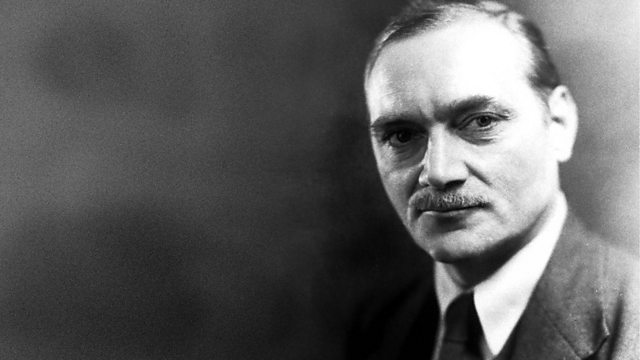
Documenting John Grierson
Similar Content
Browse content similar to Documenting John Grierson. Check below for episodes and series from the same categories and more!
Transcript
| Line | From | To | |
|---|---|---|---|
At Scotland's Stirling University they remember a native son | 0:00:02 | 0:00:04 | |
whose life was so remarkable that they have an entire archive | 0:00:04 | 0:00:07 | |
devoted to writings both by him and about him. | 0:00:07 | 0:00:11 | |
The man's name was John Grierson, | 0:00:11 | 0:00:14 | |
and, quite simply, he changed the way we see the world. | 0:00:14 | 0:00:18 | |
APPLAUSE | 0:00:21 | 0:00:23 | |
The Grierson Awards is the only British awards event | 0:00:23 | 0:00:25 | |
devoted solely to documentary. | 0:00:25 | 0:00:27 | |
Slightly cocky demeanour. | 0:00:27 | 0:00:29 | |
A man with a flair. | 0:00:29 | 0:00:31 | |
No sort of conception that men were different to women. | 0:00:32 | 0:00:37 | |
He was dictatorial, noisy. | 0:00:37 | 0:00:39 | |
He was a teacher all the time, I think. | 0:00:39 | 0:00:41 | |
A subversive. | 0:00:41 | 0:00:42 | |
A bit of a connoisseur of the morose. | 0:00:44 | 0:00:46 | |
He made us believe that we could change the world. | 0:00:46 | 0:00:48 | |
ALFRED HITCHCOCK: London Euston to Glasgow Central. | 0:00:53 | 0:00:56 | |
Greetings, reunions, people arriving, faces in a crowd. | 0:00:56 | 0:01:02 | |
Ordinary faces, ordinary people. | 0:01:02 | 0:01:04 | |
Yet one of these people is famous. | 0:01:06 | 0:01:09 | |
I wonder if you spotted him. | 0:01:09 | 0:01:10 | |
One great British film-maker celebrates another. | 0:01:10 | 0:01:13 | |
The master of suspense | 0:01:13 | 0:01:15 | |
speaking in his own characteristic deadpan way. | 0:01:15 | 0:01:18 | |
Some many years ago before I left England, | 0:01:18 | 0:01:21 | |
young Grierson was making his early mark on the film world | 0:01:21 | 0:01:25 | |
at much the time as my own humble efforts | 0:01:25 | 0:01:28 | |
were beginning to reach the screen. | 0:01:28 | 0:01:31 | |
In the years that have intervened, | 0:01:31 | 0:01:33 | |
Dr John Grierson has become dubbed the father of the documentary. | 0:01:33 | 0:01:39 | |
Grierson first made his name when, aged 30, | 0:01:39 | 0:01:42 | |
he persuaded a Tory government in London to finance a short film | 0:01:42 | 0:01:46 | |
about herring fisherman in the North Sea. | 0:01:46 | 0:01:49 | |
Grierson's film Drifters was revolutionary. | 0:01:49 | 0:01:53 | |
For the first time in class-conscious Britain, | 0:01:53 | 0:01:55 | |
British workers were shown in a way where people could see | 0:01:55 | 0:01:58 | |
the value of the work they did and the effort needed to do it. | 0:01:58 | 0:02:03 | |
Grierson called this type of film "documentary". | 0:02:03 | 0:02:06 | |
He had started a movement which would spread around the world. | 0:02:06 | 0:02:10 | |
Drifters was a huge success. | 0:02:10 | 0:02:12 | |
Grierson thought that for democracy to function as best it could | 0:02:12 | 0:02:16 | |
then people voting should have the best possible understanding | 0:02:16 | 0:02:19 | |
of how the society they were a part of worked. | 0:02:19 | 0:02:22 | |
Grierson believed that film as a medium | 0:02:22 | 0:02:25 | |
could change things for the better. | 0:02:25 | 0:02:27 | |
APPLAUSE | 0:02:27 | 0:02:29 | |
Later in life, in a classic lecture at the National Film Theatre, | 0:02:29 | 0:02:33 | |
Grierson outlined what had been his manifesto. | 0:02:33 | 0:02:36 | |
It was always, as we saw it, a chance to say something, | 0:02:36 | 0:02:40 | |
a chance to teach something, a chance to reveal something, | 0:02:40 | 0:02:45 | |
a chance, possibly, to inspire - | 0:02:45 | 0:02:47 | |
certainly always an opportunity for influence of one kind or another. | 0:02:47 | 0:02:51 | |
And you had political angles. | 0:02:51 | 0:02:54 | |
I was a pretty radical fella, | 0:02:54 | 0:02:56 | |
and saw a chance of doing certain things about the working class, | 0:02:56 | 0:02:59 | |
about housing problems and all that sort of thing. | 0:02:59 | 0:03:01 | |
John Grierson was a headmaster's son. | 0:03:01 | 0:03:04 | |
He grew up in the small Stirlingshire town of Cambusbarron. | 0:03:04 | 0:03:07 | |
He inherited his social conscience from both his parents. | 0:03:08 | 0:03:12 | |
His mother was politically active at a time when most mothers weren't. | 0:03:12 | 0:03:17 | |
She was a suffragette, | 0:03:17 | 0:03:18 | |
and during bad times she ran a soup kitchen for the unemployed. | 0:03:18 | 0:03:23 | |
Grierson was just 16 when the First World War broke out. | 0:03:23 | 0:03:26 | |
Underage, he joined the Navy and served on minesweepers. | 0:03:26 | 0:03:29 | |
Off duty, he made little sketches | 0:03:29 | 0:03:32 | |
and wrote letters home for any of his shipmates | 0:03:32 | 0:03:35 | |
who couldn't read or write. | 0:03:35 | 0:03:37 | |
After the war, while at Glasgow University, | 0:03:37 | 0:03:40 | |
John Grierson toyed with the idea of becoming a minister of the church, | 0:03:40 | 0:03:44 | |
but on a scholarship to America | 0:03:44 | 0:03:46 | |
he saw the factual films of Robert Flaherty. | 0:03:46 | 0:03:49 | |
Grierson had showed great interest | 0:03:49 | 0:03:51 | |
in Flaherty's film about the Inuit people, | 0:03:51 | 0:03:54 | |
Nanook of the North, | 0:03:54 | 0:03:55 | |
and in a review of his second film, Moana, | 0:03:55 | 0:03:58 | |
he used the word "documentary" | 0:03:58 | 0:04:00 | |
for the first time in a film context. | 0:04:00 | 0:04:02 | |
He and Flaherty were to form a long friendship, | 0:04:05 | 0:04:08 | |
with frequent arguments about working methods - | 0:04:08 | 0:04:11 | |
but Grierson always said Flaherty had the best eye in cinema. | 0:04:11 | 0:04:16 | |
John Grierson decided that cinema would be his pulpit. | 0:04:16 | 0:04:20 | |
He would make films with a message. | 0:04:20 | 0:04:23 | |
Films that would change the world. | 0:04:23 | 0:04:25 | |
The term "documentary" was his and Flaherty's... | 0:04:26 | 0:04:30 | |
..and it was invented in New York. | 0:04:31 | 0:04:35 | |
Sounds like the night they invented champagne! | 0:04:37 | 0:04:39 | |
It WAS invented in New York. | 0:04:39 | 0:04:43 | |
They didn't know what they were going to call the movement | 0:04:43 | 0:04:46 | |
and they thought "actuality", "actuality films", | 0:04:46 | 0:04:53 | |
and then, no, because it would resemble too much | 0:04:53 | 0:04:57 | |
the French newsreels "actualite". | 0:04:57 | 0:05:01 | |
And so, they had to think again. | 0:05:01 | 0:05:04 | |
And, finally, the first one was very uncompromising, it was the... | 0:05:04 | 0:05:10 | |
.."the self-dramatisation of the actual", | 0:05:12 | 0:05:15 | |
which was fairly tough-going, and limiting. | 0:05:15 | 0:05:19 | |
But that lasted for two or three years, | 0:05:19 | 0:05:23 | |
and eventually it came out, | 0:05:23 | 0:05:25 | |
as you know, as "the creative interpretation of the actual". | 0:05:25 | 0:05:31 | |
'The old order changes, giving place to new.' | 0:05:31 | 0:05:35 | |
This poetic film on industrial Britain | 0:05:43 | 0:05:46 | |
was produced by Grierson and directed by Robert Flaherty. | 0:05:46 | 0:05:49 | |
Grierson had realised that he could advance his cause more quickly | 0:05:49 | 0:05:52 | |
by producing films rather than by directing them. | 0:05:52 | 0:05:56 | |
He set up a film-making unit at the Empire Marketing Board in London. | 0:05:56 | 0:06:01 | |
Being termed a civil servant didn't bother him, | 0:06:01 | 0:06:03 | |
though "civil" is perhaps not the first word | 0:06:03 | 0:06:06 | |
that many would have applied to him. | 0:06:06 | 0:06:09 | |
He had an amazing gift of the gab. | 0:06:09 | 0:06:12 | |
He could inspire and enthuse them to do things. | 0:06:12 | 0:06:15 | |
He could also con money out of a sponsor | 0:06:15 | 0:06:18 | |
like nobody I have ever seen. | 0:06:18 | 0:06:20 | |
That was part of his genius, was to be able to | 0:06:20 | 0:06:23 | |
walk into somebody's office and explain to them | 0:06:23 | 0:06:26 | |
why it was important for them, what was in their self-interest, | 0:06:26 | 0:06:30 | |
to make this film which... | 0:06:30 | 0:06:33 | |
for his self-interest, was completely different. | 0:06:33 | 0:06:36 | |
-Scenario's ready. -Right-oh. Thanks. | 0:06:36 | 0:06:38 | |
Driven by the force of Grierson's personality | 0:06:38 | 0:06:42 | |
and his seemingly inexhaustible energy, | 0:06:42 | 0:06:44 | |
films started pouring out of the unit. | 0:06:44 | 0:06:47 | |
With a Government department paying the bills, | 0:06:47 | 0:06:49 | |
Grierson had to take great care | 0:06:49 | 0:06:51 | |
nothing they did could be seen in any way as an artistic indulgence | 0:06:51 | 0:06:55 | |
and a misuse of public money. | 0:06:55 | 0:06:57 | |
Right, cut it there. | 0:06:57 | 0:06:58 | |
When the Empire Marketing Board closed, his film unit survived | 0:06:58 | 0:07:02 | |
and was transferred across to the GPO - a very powerful body | 0:07:02 | 0:07:05 | |
running both Britain's postal service and the nation's telephones. | 0:07:05 | 0:07:09 | |
Right, start 'em up. | 0:07:09 | 0:07:11 | |
Grierson's contribution was first of all in selecting people. | 0:07:13 | 0:07:18 | |
I mean, he selected - I don't know whether it was five, six or seven | 0:07:18 | 0:07:24 | |
young men and women | 0:07:24 | 0:07:26 | |
who had got first class degrees at Oxford and Cambridge - | 0:07:26 | 0:07:29 | |
people like Stewart Legg and Arthur Elton, Humphrey Jennings - | 0:07:29 | 0:07:33 | |
and developed them as his creative team. | 0:07:33 | 0:07:39 | |
With these energetic, young college types, | 0:07:39 | 0:07:41 | |
Grierson changed the possibility | 0:07:41 | 0:07:43 | |
of what short films could be. | 0:07:43 | 0:07:45 | |
With subjects ranging from miners working at the coalface, | 0:07:45 | 0:07:49 | |
taking cameras underground... | 0:07:49 | 0:07:51 | |
to an innovative mix of animation and actuality | 0:07:51 | 0:07:54 | |
in Len Lye's Rainbow Dance, | 0:07:54 | 0:07:56 | |
selling the idea of the savings bank... | 0:07:56 | 0:07:59 | |
to director Humphrey Jennings first short film, | 0:07:59 | 0:08:02 | |
Post Haste, on the history of the postal service... | 0:08:02 | 0:08:05 | |
..and an intimate look at people's housing problems, | 0:08:10 | 0:08:13 | |
using actuality sound from working people. | 0:08:13 | 0:08:17 | |
Grierson's unit was one of the first | 0:08:17 | 0:08:19 | |
to put women in positions behind the camera. | 0:08:19 | 0:08:22 | |
With Housing Problems it was Ruby, | 0:08:22 | 0:08:25 | |
one of Grierson's two sisters in the unit. | 0:08:25 | 0:08:27 | |
Ruby used the then revolutionary technique of on-camera interviews | 0:08:27 | 0:08:31 | |
with ordinary working people to great success. | 0:08:31 | 0:08:35 | |
Gets on your nerves, where everything's filthy. | 0:08:35 | 0:08:38 | |
Dirty, filthy walls - and the vermin in the walls is wicked. | 0:08:38 | 0:08:42 | |
She told her brother, "You look at people in a glass bowl - | 0:08:42 | 0:08:45 | |
"I'm going to smash that bowl." | 0:08:45 | 0:08:48 | |
So, I tell you, we're fed up. | 0:08:48 | 0:08:50 | |
Anybody comes to see you, | 0:08:50 | 0:08:51 | |
they say they feel bilious when they get down the stairs | 0:08:51 | 0:08:54 | |
because it's all crooked. | 0:08:54 | 0:08:55 | |
Grierson had no conception that men were different to women, | 0:08:55 | 0:09:00 | |
so he would be quite happy to hire a female director | 0:09:00 | 0:09:04 | |
when it absolutely was not done. | 0:09:04 | 0:09:07 | |
He actually hired his two sisters, Marion and Ruby, | 0:09:07 | 0:09:11 | |
who both worked as directors - and very good ones, too. | 0:09:11 | 0:09:16 | |
By showing the nature of the social problems in a very graphic way, | 0:09:16 | 0:09:21 | |
Grierson built up an emotional reservoir of commitment | 0:09:21 | 0:09:26 | |
to that idea of central planning, | 0:09:26 | 0:09:29 | |
of an interventionist role for the State | 0:09:29 | 0:09:31 | |
which was seen as very benign and very progressive - | 0:09:31 | 0:09:35 | |
in contrast, perhaps, | 0:09:35 | 0:09:36 | |
to what was happening through the State in the Soviet Union, | 0:09:36 | 0:09:39 | |
or had happened through the State in Nazi Germany. | 0:09:39 | 0:09:42 | |
Film-making was one of the holy professions. | 0:09:42 | 0:09:46 | |
You had power to communicate ideas that were really important | 0:09:46 | 0:09:51 | |
and it was very important what you were going to say - | 0:09:51 | 0:09:54 | |
much more so than the simple act of film-making, you know, | 0:09:54 | 0:09:57 | |
which was attractive to us then, | 0:09:57 | 0:10:00 | |
but it was, what were you going to do with that? | 0:10:00 | 0:10:03 | |
What were you going to say, | 0:10:03 | 0:10:04 | |
what were your ideas that you were going to express? | 0:10:04 | 0:10:07 | |
And that you had a responsibility to use that art, | 0:10:07 | 0:10:11 | |
which was an incredibly powerful one, | 0:10:11 | 0:10:14 | |
to actually say something that would make the world a better place. | 0:10:14 | 0:10:17 | |
Grierson's gift for grouping other talents around him | 0:10:17 | 0:10:21 | |
was at its peak in this ground-breaking film. | 0:10:21 | 0:10:24 | |
He brought in sound expert, Alberto Cavalcanti, | 0:10:24 | 0:10:27 | |
the poet, WH Auden | 0:10:27 | 0:10:29 | |
and the composer Benjamin Britten. | 0:10:29 | 0:10:33 | |
The idea of having poetry in the commentary | 0:10:33 | 0:10:35 | |
so bothered the film's co-director, Harry Watt, | 0:10:35 | 0:10:37 | |
that Grierson told him to take a holiday. | 0:10:37 | 0:10:40 | |
When word got out that the poetry was actually working very well, | 0:10:40 | 0:10:44 | |
Watt soon came back. | 0:10:44 | 0:10:46 | |
'This is the night mail crossing the Border | 0:10:46 | 0:10:48 | |
'Bringing the cheque and the postal order | 0:10:48 | 0:10:50 | |
'Letters for the rich Letters for the poor | 0:10:50 | 0:10:52 | |
'The shop at the corner and the girl next door | 0:10:52 | 0:10:55 | |
'Pulling up Beattock A steady climb | 0:10:55 | 0:10:57 | |
'The gradient's against her but she's on time.' | 0:10:57 | 0:11:00 | |
Music: "Night Mail" by Benjamin Britten | 0:11:00 | 0:11:03 | |
Night Mail remains the most famous of the unit's films, | 0:11:12 | 0:11:15 | |
and when the train crosses the Scottish Border, | 0:11:15 | 0:11:18 | |
Grierson's voice takes over the commentary. | 0:11:18 | 0:11:21 | |
'Down towards Glasgow she descends, | 0:11:23 | 0:11:25 | |
'Towards the steam tugs yelping down the glade of cranes. | 0:11:25 | 0:11:29 | |
'Towards the fields of apparatus, the furnaces | 0:11:29 | 0:11:33 | |
'set on the dark plain like gigantic chessmen. | 0:11:33 | 0:11:36 | |
'All Scotland waits for her - | 0:11:36 | 0:11:39 | |
'in the dark glens, beside the pale-green sea lochs, | 0:11:39 | 0:11:43 | |
'men long for news. | 0:11:43 | 0:11:44 | |
'Letters of thanks Letters from banks | 0:11:44 | 0:11:46 | |
'Letters of joy from the girl and the boy | 0:11:46 | 0:11:48 | |
'Receipted bills and invitations | 0:11:48 | 0:11:49 | |
'To inspect new stock or to visit relations | 0:11:49 | 0:11:51 | |
'And applications for situations...' | 0:11:51 | 0:11:53 | |
This was a man who recruited an amazing | 0:11:53 | 0:11:56 | |
number of avant garde artists. | 0:11:56 | 0:11:58 | |
Think of WH Auden, think of Benjamin Britten. | 0:11:58 | 0:12:02 | |
Possibly the paramount illustration of that is Norman McLaren. | 0:12:02 | 0:12:07 | |
Never, if you see the early films of Norman McLaren | 0:12:07 | 0:12:11 | |
could you find somebody so... | 0:12:11 | 0:12:13 | |
apparently different from Grierson. | 0:12:13 | 0:12:16 | |
But what was Grierson like to work with? | 0:12:16 | 0:12:19 | |
As long as you got on with him, | 0:12:19 | 0:12:20 | |
that was all right | 0:12:20 | 0:12:22 | |
and I didn't get on with him. | 0:12:22 | 0:12:24 | |
I'd find him... | 0:12:24 | 0:12:26 | |
I was away with him | 0:12:26 | 0:12:28 | |
in the North of Ireland, | 0:12:28 | 0:12:30 | |
alone there quite a bit, | 0:12:30 | 0:12:33 | |
and he was really delightful. | 0:12:33 | 0:12:36 | |
Quite different from the man in London. | 0:12:36 | 0:12:39 | |
In London, he was dictatorial, noisy. | 0:12:39 | 0:12:42 | |
Critical of everything | 0:12:42 | 0:12:45 | |
he didn't like. | 0:12:45 | 0:12:46 | |
So, today, in the roar of a Glasgow football crowd, | 0:12:46 | 0:12:50 | |
you may well observe the vigour and the enthusiasm, | 0:12:50 | 0:12:52 | |
the ambition and the unconquerable determination of the Scottish race. | 0:12:52 | 0:12:57 | |
Like the night mail, | 0:12:57 | 0:12:59 | |
Grierson himself headed back to Scotland and helped form a committee | 0:12:59 | 0:13:03 | |
to make seven films of Scotland for the forthcoming Empire exhibition. | 0:13:03 | 0:13:08 | |
With his GPO colleague Basil Wright directing The Face Of Scotland, | 0:13:08 | 0:13:12 | |
an optimistic picture of the character of the nation | 0:13:12 | 0:13:15 | |
in 13 minutes. | 0:13:15 | 0:13:17 | |
ALL SHOUT | 0:13:17 | 0:13:18 | |
Today they are the same race of whom, nearly 500 hundred years ago, | 0:13:27 | 0:13:30 | |
the historian Holinshed spoke. | 0:13:30 | 0:13:33 | |
"There unto we find them to be courageous and hardy, | 0:13:33 | 0:13:37 | |
"offering themselves often unto the uttermost perils | 0:13:37 | 0:13:40 | |
"with great assurance." | 0:13:40 | 0:13:42 | |
In 1937, | 0:13:42 | 0:13:44 | |
Grierson was invited to Canada | 0:13:44 | 0:13:46 | |
to advise their government on the uses of film. | 0:13:46 | 0:13:49 | |
He wrote a plan for a Canadian national film board. | 0:13:49 | 0:13:53 | |
The Canadians liked his plan so much they asked him to run it. | 0:13:53 | 0:13:57 | |
None of us can imagine the Film Board having been made without him. | 0:13:57 | 0:14:00 | |
It was his genius | 0:14:00 | 0:14:03 | |
that persuaded McKenzie King - | 0:14:03 | 0:14:07 | |
the Prime Minster at the time - | 0:14:07 | 0:14:10 | |
to give him a mandate. | 0:14:10 | 0:14:15 | |
And Grierson wrote, drafted, | 0:14:15 | 0:14:18 | |
the Film Act of Parliament. | 0:14:18 | 0:14:22 | |
Grierson brought a few of his documentary colleagues | 0:14:22 | 0:14:25 | |
to Canada with him. | 0:14:25 | 0:14:26 | |
Among them Norman McLaren, the brilliant animator, | 0:14:26 | 0:14:29 | |
and, crucially, the exceptional film-making talents of Stewart Legg. | 0:14:29 | 0:14:35 | |
For the duration of the Second World War, | 0:14:35 | 0:14:37 | |
Grierson drove his ever-growing team at the Film Board | 0:14:37 | 0:14:40 | |
with characteristic energy and inspiration. | 0:14:40 | 0:14:43 | |
In addition to their many other films, | 0:14:43 | 0:14:45 | |
they produced two series every month - | 0:14:45 | 0:14:47 | |
Canada Carries On | 0:14:47 | 0:14:49 | |
and World In Action. | 0:14:49 | 0:14:51 | |
The World In Action series was up against the American March Of Time, | 0:14:51 | 0:14:55 | |
but still succeeded in being shown in several thousand American cinemas | 0:14:55 | 0:14:59 | |
as well as throughout Canada. | 0:14:59 | 0:15:01 | |
From the safety of Canada, Grierson was all too aware | 0:15:01 | 0:15:04 | |
of the dangers facing the team he had brought together in Britain, | 0:15:04 | 0:15:09 | |
busy making effective propaganda films | 0:15:09 | 0:15:11 | |
such as Humphrey Jennings' Fires Were Started. | 0:15:11 | 0:15:14 | |
This film reflected the "Britain can cope" attitude | 0:15:14 | 0:15:18 | |
to the effect of German bombing, whilst also boosting moral. | 0:15:18 | 0:15:22 | |
SIRENS WAIL | 0:15:22 | 0:15:24 | |
Once we had the war | 0:15:31 | 0:15:32 | |
and an understanding of the kind of propaganda | 0:15:32 | 0:15:35 | |
that the enemy was using against us, | 0:15:35 | 0:15:37 | |
and the very sophisticated Nazi propaganda, then... | 0:15:37 | 0:15:41 | |
..in Britain, as part of the war effort, | 0:15:42 | 0:15:45 | |
far more resources went into film. | 0:15:45 | 0:15:47 | |
And, of course, Grierson played a very important role | 0:15:47 | 0:15:50 | |
with his World In Actions, made in Canada at that time, | 0:15:50 | 0:15:53 | |
made in North America, | 0:15:53 | 0:15:55 | |
which helped bring North American opinion round to the side of Britain | 0:15:55 | 0:16:00 | |
with its fight against Nazism. | 0:16:00 | 0:16:03 | |
The National Film Board of Canada | 0:16:03 | 0:16:06 | |
was probably his finest achievement. | 0:16:06 | 0:16:09 | |
He was no longer lodging his film operation | 0:16:09 | 0:16:14 | |
within a conventional government ministry, | 0:16:14 | 0:16:16 | |
but he had an ad hoc national institution for film | 0:16:16 | 0:16:21 | |
devoted entirely to the production of documentary | 0:16:21 | 0:16:25 | |
and, of course, thanks to another Scot, to animated film. | 0:16:25 | 0:16:30 | |
It had always been his intention to leave the Film Board | 0:16:30 | 0:16:34 | |
at the end of the war, and put it in the hands of Canadians. | 0:16:34 | 0:16:37 | |
No case ever ends for the Federal Bureau of Investigation | 0:16:42 | 0:16:45 | |
until it is solved and closed with the conviction of the guilty | 0:16:45 | 0:16:49 | |
or the acquittal of the innocent. | 0:16:49 | 0:16:50 | |
In 1945, in the middle of a Communist scare panic, | 0:16:50 | 0:16:54 | |
the name of a Russian contact was discovered | 0:16:54 | 0:16:56 | |
in the notebook of one of Grierson's secretaries. | 0:16:56 | 0:16:59 | |
Despite it's perfectly legitimate reason for being there, | 0:16:59 | 0:17:03 | |
rumours ran wild and Grierson resigned. | 0:17:03 | 0:17:06 | |
In court he treated the idea of being any kind of Communist agent | 0:17:06 | 0:17:11 | |
or spy as laughable. | 0:17:11 | 0:17:12 | |
Grierson headed for New York. | 0:17:16 | 0:17:18 | |
He had hoped that the newly-founded UNESCO might be interested | 0:17:18 | 0:17:21 | |
in funding documentary films addressing world problems. | 0:17:21 | 0:17:25 | |
But he was targeted by J Edgar Hoover, chief of the American FBI. | 0:17:25 | 0:17:30 | |
Hoover saw Grierson as a dangerous Red | 0:17:30 | 0:17:33 | |
and his American visa was cancelled. | 0:17:33 | 0:17:36 | |
I think it's going to be necessary | 0:17:36 | 0:17:38 | |
to enlarge the detail of agents at Little Rock, Arkansas. | 0:17:38 | 0:17:40 | |
Grierson was under constant surveillance | 0:17:40 | 0:17:42 | |
from the point when he went to New York. | 0:17:42 | 0:17:44 | |
Hoover was convinced Grierson was a Communist spy | 0:17:44 | 0:17:47 | |
and was trying to figure out some way to prove it and couldn't, | 0:17:47 | 0:17:50 | |
and was really annoyed. | 0:17:50 | 0:17:52 | |
And so Hoover got somebody who was a member of the World Today, | 0:17:52 | 0:17:55 | |
which was Grierson's New York company, to spy for the FBI. | 0:17:55 | 0:17:59 | |
This person, I don't know who that was, | 0:17:59 | 0:18:01 | |
would go through the company correspondence at the end of the day | 0:18:01 | 0:18:05 | |
and then write down anything that was interesting | 0:18:05 | 0:18:08 | |
or photograph it and give it to the FBI. | 0:18:08 | 0:18:10 | |
And, of course, this person's complaints were used by the FBI | 0:18:10 | 0:18:15 | |
to justify kicking Grierson out of the United States, | 0:18:15 | 0:18:18 | |
which they did do. | 0:18:18 | 0:18:20 | |
But Grierson landed on his feet, in 1947, in Paris, | 0:18:20 | 0:18:24 | |
as UNESCO's first director of mass communications. | 0:18:24 | 0:18:28 | |
There he developed the policy of "each to each", | 0:18:28 | 0:18:31 | |
where each country contributed to the wider group of countries | 0:18:31 | 0:18:35 | |
their own particular strength. | 0:18:35 | 0:18:37 | |
After three years in Paris, he was invited back to Britain | 0:18:37 | 0:18:41 | |
to take over at the Central Office of Information. | 0:18:41 | 0:18:44 | |
But he found the bureaucracy stifling. | 0:18:44 | 0:18:47 | |
No, I mean, quite honestly, | 0:18:47 | 0:18:49 | |
he was not a success at the COI. | 0:18:49 | 0:18:51 | |
Erm... | 0:18:51 | 0:18:53 | |
My recollections are vivid because he | 0:18:53 | 0:18:57 | |
was enormously stimulating, | 0:18:57 | 0:19:00 | |
and a very exciting man | 0:19:00 | 0:19:03 | |
to have in your midst, | 0:19:03 | 0:19:05 | |
and the debates we had both | 0:19:05 | 0:19:07 | |
in the office and in his own flat, | 0:19:07 | 0:19:10 | |
which was very close by, | 0:19:10 | 0:19:12 | |
were wonderful. | 0:19:12 | 0:19:14 | |
I mean, people would drift in and out | 0:19:14 | 0:19:16 | |
of these debates | 0:19:16 | 0:19:17 | |
rather like a seminar. | 0:19:17 | 0:19:20 | |
Although the purpose of the meeting | 0:19:20 | 0:19:22 | |
might be to decide | 0:19:22 | 0:19:24 | |
whether we'd make a film on coal, | 0:19:24 | 0:19:26 | |
you might get absolutely anywhere - | 0:19:26 | 0:19:28 | |
like growing strawberries in Wiltshire, | 0:19:28 | 0:19:31 | |
who should select teachers, | 0:19:31 | 0:19:33 | |
who were the most important people | 0:19:33 | 0:19:35 | |
within a democracy | 0:19:35 | 0:19:36 | |
and fundamentally deciding the issues of democracy, | 0:19:36 | 0:19:40 | |
and all of this would happen | 0:19:40 | 0:19:42 | |
with a room full of perhaps six, eight, ten people. | 0:19:42 | 0:19:45 | |
And a good deal of whisky in the evenings. | 0:19:45 | 0:19:47 | |
He had that bright-eyed, brisk, slightly cocky demeanour. | 0:19:47 | 0:19:52 | |
He looked around like a sparrow the whole time. | 0:19:52 | 0:19:56 | |
He was always decently but not foppishly dressed. | 0:19:56 | 0:20:02 | |
He didn't affect the artist's garb. | 0:20:02 | 0:20:04 | |
He treated everyone as if they were slightly hostile to him. | 0:20:04 | 0:20:11 | |
He did not accept warm overtures easily. | 0:20:11 | 0:20:14 | |
He kept people at a distance - | 0:20:14 | 0:20:16 | |
and I remember at the first meeting, | 0:20:16 | 0:20:18 | |
if anyone got a little bit too familiar | 0:20:18 | 0:20:21 | |
or began talking a little bit too intimately | 0:20:21 | 0:20:24 | |
he was instantly slapped down. | 0:20:24 | 0:20:26 | |
Next - Group 3. | 0:20:29 | 0:20:31 | |
Grierson led a Government initiative | 0:20:33 | 0:20:35 | |
to make feature films in Britain. | 0:20:35 | 0:20:37 | |
At Group 3, Grierson, as always, inspired. | 0:20:39 | 0:20:42 | |
The company made some great films, such as The Brave Don't Cry, | 0:20:42 | 0:20:46 | |
a realistic fiction about a Scottish mining disaster | 0:20:46 | 0:20:50 | |
reflecting the harsher side of Scottish life. | 0:20:50 | 0:20:53 | |
But Rank distribution cold-shouldered | 0:20:53 | 0:20:55 | |
these Government-subsidised films. | 0:20:55 | 0:20:58 | |
As a result, their cinema release was severely limited | 0:20:58 | 0:21:01 | |
and the unit was finally forced to close. | 0:21:01 | 0:21:04 | |
Can you hear me? | 0:21:04 | 0:21:05 | |
After 15 years, Grierson's American visa was renewed. | 0:21:05 | 0:21:08 | |
When he arrived in New York on the Queen Mary, | 0:21:08 | 0:21:11 | |
two FBI men came aboard before anyone disembarked. | 0:21:11 | 0:21:15 | |
They escorted Grierson ashore, | 0:21:15 | 0:21:17 | |
telling him, "This is just so you know we know you're here." | 0:21:17 | 0:21:22 | |
Grierson recalled with humour, "For the first time, | 0:21:22 | 0:21:25 | |
"I had my pick of that long line of yellow cabs." | 0:21:25 | 0:21:29 | |
The documentary form developed and strengthened through the war, | 0:21:29 | 0:21:33 | |
through the 1940s, | 0:21:33 | 0:21:35 | |
but then along came television in the early '50s, | 0:21:35 | 0:21:39 | |
and here you had suddenly a mass medium. | 0:21:39 | 0:21:42 | |
A very democratic medium in some ways, | 0:21:42 | 0:21:44 | |
although it still talked in rather upper class tones | 0:21:44 | 0:21:47 | |
in the BBC in the early '50s. | 0:21:47 | 0:21:50 | |
But then, in 1956, a certain more brash approach | 0:21:50 | 0:21:56 | |
was brought in by commercial television and the ITV companies, | 0:21:56 | 0:22:00 | |
and that led to a wonderful series called This Wonderful World. | 0:22:00 | 0:22:05 | |
On This Wonderful World programme for Scottish Television, | 0:22:05 | 0:22:08 | |
which was the only network programme coming from Scotland at that time, | 0:22:08 | 0:22:11 | |
which was of course an assortment of clips from films | 0:22:11 | 0:22:14 | |
that had taken his fancy over the world. | 0:22:14 | 0:22:17 | |
Calling all workers! | 0:22:17 | 0:22:18 | |
This Wonderful World, for Scottish Television, | 0:22:23 | 0:22:26 | |
was a well-loved prime time opportunity to show excerpts | 0:22:26 | 0:22:29 | |
from documentaries from around the world | 0:22:29 | 0:22:32 | |
as well as looking back on the best of home production | 0:22:32 | 0:22:35 | |
such as Humphrey Jennings' brilliant wartime propaganda film, | 0:22:35 | 0:22:39 | |
the lyrical Listen To Britain. | 0:22:39 | 0:22:42 | |
MUSIC PLAYS OVER SPEAKERS | 0:22:42 | 0:22:44 | |
SINGING MUFFLED BY MACHINERY | 0:22:44 | 0:22:46 | |
It was during this time that Grierson was asked to write | 0:23:05 | 0:23:09 | |
a film treatment about Clyde shipbuilding. | 0:23:09 | 0:23:11 | |
Grierson picked an American director, Hilary Harris, | 0:23:11 | 0:23:15 | |
whose work he had seen at a festival in Brussels. | 0:23:15 | 0:23:18 | |
Grierson told Hilary he should look for that moment | 0:23:18 | 0:23:21 | |
when a ship is being launched | 0:23:21 | 0:23:23 | |
and its hull kisses the water for the first time. | 0:23:23 | 0:23:26 | |
Hilary shot many, many launches but ended up frustrated, | 0:23:26 | 0:23:30 | |
saying, "There is no kiss." | 0:23:30 | 0:23:33 | |
But with all those launches, | 0:23:37 | 0:23:38 | |
he now had the footage to make one of the very best openings | 0:23:38 | 0:23:41 | |
of a documentary. | 0:23:41 | 0:23:43 | |
VOICES AND STRIDENT MUSIC MERGE | 0:23:43 | 0:23:46 | |
Seawards The Great Ships went on to win an Oscar. | 0:24:01 | 0:24:04 | |
In his late 60s, Grierson was invited back to Canada, | 0:24:08 | 0:24:11 | |
to Montreal's McGill University. | 0:24:11 | 0:24:14 | |
To continue to do what he had always done. | 0:24:14 | 0:24:17 | |
Inspiring, energising and enabling a new generation | 0:24:17 | 0:24:21 | |
to follow in his footsteps. | 0:24:21 | 0:24:23 | |
Well, we learned that Grierson was coming to Montreal | 0:24:23 | 0:24:26 | |
to teach at McGill, and we were very excited about this, | 0:24:26 | 0:24:30 | |
because this was going to be a chance | 0:24:30 | 0:24:32 | |
for a number of us to get to know him better. | 0:24:32 | 0:24:35 | |
We spent time visiting him at his Crescent Street apartment | 0:24:35 | 0:24:39 | |
and we got to know a number of his students, | 0:24:39 | 0:24:42 | |
and we witnessed what we saw as a whole new generation | 0:24:42 | 0:24:47 | |
of kids who were going to be imprinted by this guy. | 0:24:47 | 0:24:54 | |
And some of them were going to become very important in the film business. | 0:24:54 | 0:24:58 | |
When Grierson was in town it just sparked | 0:24:58 | 0:25:03 | |
so many people's imagination. | 0:25:03 | 0:25:06 | |
Partly because they had known of him and were dying to meet him. | 0:25:06 | 0:25:12 | |
He had an energy that was very infectious | 0:25:12 | 0:25:15 | |
and he would seem to draw you in | 0:25:15 | 0:25:18 | |
to whatever the subject was. | 0:25:18 | 0:25:20 | |
What fascinated me was his way of thinking worldwide all the time, | 0:25:20 | 0:25:25 | |
not just local, it was international. | 0:25:25 | 0:25:28 | |
We thought the subject was about documentary film, | 0:25:28 | 0:25:31 | |
but he would turn up with a newspaper | 0:25:31 | 0:25:33 | |
with a photograph from the Vietnam War, | 0:25:33 | 0:25:35 | |
and he would start talking about the propagandistic value | 0:25:35 | 0:25:38 | |
of that photograph. | 0:25:38 | 0:25:40 | |
To hear him talk internationally the way he was, | 0:25:40 | 0:25:43 | |
you felt it was like a community. | 0:25:43 | 0:25:45 | |
Students would skip classes to crash his sessions. | 0:25:45 | 0:25:51 | |
I know I was at one of them, | 0:25:52 | 0:25:53 | |
and I thought, "If the fire commissioner ever came by | 0:25:53 | 0:25:56 | |
"this building he'd close it down." | 0:25:56 | 0:25:58 | |
There were students sitting in the stairways. | 0:25:58 | 0:26:01 | |
APPLAUSE | 0:26:01 | 0:26:02 | |
He somehow managed to engage every one of us | 0:26:02 | 0:26:05 | |
who was in that large room. | 0:26:05 | 0:26:07 | |
He was one of those people who could talk - | 0:26:07 | 0:26:09 | |
he talked to taxi drivers, he talked to everyone, | 0:26:09 | 0:26:11 | |
and always interested, and always had something to... | 0:26:11 | 0:26:14 | |
So, in that sense, he was a poet. | 0:26:14 | 0:26:17 | |
He was a poet of... | 0:26:17 | 0:26:20 | |
not just of this level that he had in knowledge, | 0:26:20 | 0:26:25 | |
but also a poet of the common man, you know? | 0:26:25 | 0:26:30 | |
So that's what made him a great documentarist, and a leader. | 0:26:30 | 0:26:34 | |
He asked what are you going to be going in for? | 0:26:34 | 0:26:36 | |
And I said, "Well, I'm in teaching." And he just immediately said, | 0:26:36 | 0:26:40 | |
"Teaching is the most important job in the world." | 0:26:40 | 0:26:43 | |
And I felt so validated by that, | 0:26:44 | 0:26:49 | |
in a small community of people who had dismissed me | 0:26:49 | 0:26:53 | |
because I wasn't looking at going into film. | 0:26:53 | 0:26:56 | |
And then all of a sudden, out of the blue one day, | 0:26:56 | 0:26:58 | |
he said, "How many hours a day do you work?" | 0:26:58 | 0:27:01 | |
So I worked maybe three hours a day or something like that then, | 0:27:01 | 0:27:05 | |
as a freelancer. | 0:27:05 | 0:27:06 | |
And I said - I lied, and I said, "Oh, eight hours a day." | 0:27:06 | 0:27:11 | |
And he jumped up and he said, "What? You only work eight hours a day? | 0:27:11 | 0:27:14 | |
"How do you expect to change the world | 0:27:14 | 0:27:16 | |
"if you only work eight hours a day?!" | 0:27:16 | 0:27:18 | |
He made us believe that we could change the world. | 0:27:18 | 0:27:21 | |
He once called Judy when we were first married | 0:27:21 | 0:27:26 | |
and said, "Well, you know..." | 0:27:26 | 0:27:28 | |
He wanted to talk to me, I wasn't home. | 0:27:28 | 0:27:30 | |
He said, "You know, Adam's going to change the world." | 0:27:30 | 0:27:33 | |
I'm sure he said that to everybody, of course, | 0:27:33 | 0:27:35 | |
but he really made you believe that, | 0:27:35 | 0:27:38 | |
even though you knew it was sort of bullshit, | 0:27:38 | 0:27:41 | |
but the potential was there, you know, | 0:27:41 | 0:27:43 | |
and he made you want to live up to that expectation. | 0:27:43 | 0:27:47 | |
Grierson had spent a lifetime smoking and drinking | 0:27:49 | 0:27:53 | |
and at the age of 71 he was paying the price. | 0:27:53 | 0:27:56 | |
His brother, a doctor, told him, | 0:27:56 | 0:27:58 | |
"Give up both and I'll guarantee you three more years." | 0:27:58 | 0:28:02 | |
Remarkably, Grierson did so. | 0:28:02 | 0:28:05 | |
He got the three years | 0:28:05 | 0:28:06 | |
his brother had promised him. | 0:28:06 | 0:28:07 | |
He died in 1972 | 0:28:08 | 0:28:10 | |
in a hospital in the city of Bath, | 0:28:10 | 0:28:12 | |
aged 74. | 0:28:12 | 0:28:15 | |
At an annual event in London, | 0:28:15 | 0:28:16 | |
Grierson Awards are given to the best documentaries of the year. | 0:28:16 | 0:28:19 | |
It's a great honour to win one, | 0:28:19 | 0:28:23 | |
and a reminder of a remarkable man. | 0:28:23 | 0:28:26 | |
John Grierson didn't just make films, | 0:28:28 | 0:28:31 | |
he made film-makers. | 0:28:31 | 0:28:32 |