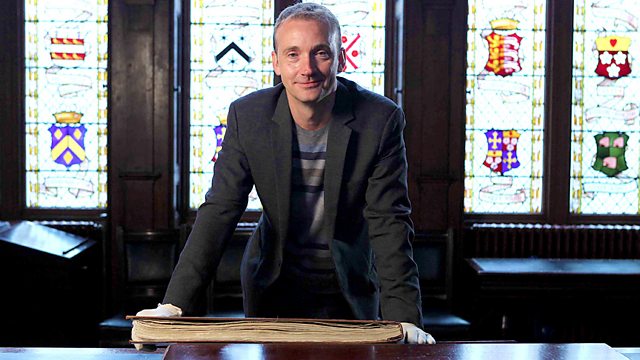
Mapping Ulster
Similar Content
Browse content similar to Mapping Ulster. Check below for episodes and series from the same categories and more!
Transcript
| Line | From | To | |
|---|---|---|---|
Finding our way around has never seemed easier. | 0:00:02 | 0:00:05 | |
Today's mapping technology allows us to locate where we need to go | 0:00:05 | 0:00:09 | |
quickly and accurately. | 0:00:09 | 0:00:11 | |
This urge to map is a basic, enduring human instinct. | 0:00:15 | 0:00:18 | |
Where would we be without maps? | 0:00:19 | 0:00:22 | |
One obvious answer is, of course, lost. | 0:00:24 | 0:00:27 | |
But maps provide answers to many more questions | 0:00:30 | 0:00:33 | |
than simply how to get from one place to another. | 0:00:33 | 0:00:37 | |
I have studied and written about maps my entire working life. | 0:00:37 | 0:00:41 | |
I'm fascinated by what drives the creation of a map... | 0:00:41 | 0:00:43 | |
..and what it can tell us about the age in which it was made. | 0:00:45 | 0:00:47 | |
And in this programme, | 0:00:49 | 0:00:51 | |
I'm on the trail of an extraordinary hoard of maps... | 0:00:51 | 0:00:54 | |
..maps of a land of huge political significance, | 0:00:55 | 0:00:58 | |
painting a picture of war, migration and economic transformation... | 0:00:58 | 0:01:03 | |
Any of these maps is really showing the Irish landscape | 0:01:05 | 0:01:08 | |
for the first time. | 0:01:08 | 0:01:10 | |
It's this idea of "Look what we have uncovered, look what we have found. | 0:01:10 | 0:01:13 | |
"This is the end of Gaelic Ulster and the beginning of something new." | 0:01:13 | 0:01:17 | |
The men in London looking at the maps, | 0:01:17 | 0:01:20 | |
they were living in a virtual world | 0:01:20 | 0:01:22 | |
and didn't really understand, I think, what was going on. | 0:01:22 | 0:01:26 | |
It's about security, it's about religion, | 0:01:27 | 0:01:30 | |
but it's also about profit, | 0:01:30 | 0:01:32 | |
and Ireland was a place where men could become rich. | 0:01:32 | 0:01:35 | |
..a land at Europe's very edge... | 0:01:37 | 0:01:40 | |
Ulster. | 0:01:40 | 0:01:41 | |
Maps have always been so much more than getting us from A to B. | 0:01:53 | 0:01:57 | |
Throughout history, the rich and the powerful have used maps | 0:01:57 | 0:02:00 | |
to lay claim to distant places and possessions. | 0:02:00 | 0:02:03 | |
In the 16th century, the mapmaker Abraham Ortelius called maps | 0:02:03 | 0:02:07 | |
"the eye of history", | 0:02:07 | 0:02:09 | |
because he believed | 0:02:09 | 0:02:10 | |
that people could see and remember historical events much more vividly | 0:02:10 | 0:02:14 | |
using maps, than in written descriptions. | 0:02:14 | 0:02:17 | |
And 400 years ago was an absolutely defining moment | 0:02:17 | 0:02:20 | |
in the history of maps, | 0:02:20 | 0:02:22 | |
because this was a period of exploration and discovery, | 0:02:22 | 0:02:25 | |
the Spanish, the Portuguese and the English laying claim | 0:02:25 | 0:02:29 | |
to territories in the New World of the Americas and in Asia. | 0:02:29 | 0:02:32 | |
And central to that process were maps. | 0:02:33 | 0:02:36 | |
Maps were a piece of technological kit which were as important | 0:02:36 | 0:02:40 | |
in the 16th century as they are today, in our current online world. | 0:02:40 | 0:02:43 | |
One of the most intensively-mapped regions in the 1600s, however, | 0:02:46 | 0:02:50 | |
lay much closer to home than the Americas. | 0:02:50 | 0:02:52 | |
It was the north part of Ireland - Ulster. | 0:02:52 | 0:02:55 | |
An amazing treasure trove of maps survives from this period. | 0:02:59 | 0:03:02 | |
Collectively, they present a vivid portrait | 0:03:03 | 0:03:06 | |
of the dramatic early years | 0:03:06 | 0:03:08 | |
of Scottish and English settlement in Ulster. | 0:03:08 | 0:03:10 | |
Each map tells its own story, of war and conquest, | 0:03:12 | 0:03:16 | |
of a great influx of entrepreneurs and adventurers | 0:03:16 | 0:03:21 | |
and of a wild landscape transformed into a network of towns. | 0:03:21 | 0:03:25 | |
England had first laid claim to Ireland | 0:03:30 | 0:03:32 | |
in the Anglo-Norman conquest of the 12th century. | 0:03:32 | 0:03:35 | |
From that moment on, control of the land was a tug-of-war | 0:03:40 | 0:03:43 | |
between the Crown and the Gaelic lords. | 0:03:43 | 0:03:46 | |
Ireland is divided into four provinces... | 0:03:49 | 0:03:52 | |
..Munster, Leinster, Connacht and Ulster. | 0:03:54 | 0:03:59 | |
Historically, the Gaelic lords controlled all four provinces | 0:04:01 | 0:04:05 | |
and the territories within them. | 0:04:05 | 0:04:07 | |
But in 1558, when Queen Elizabeth came to the throne, | 0:04:07 | 0:04:11 | |
the English were in control of most of the eastern coast, | 0:04:11 | 0:04:15 | |
which was called the Pale. | 0:04:15 | 0:04:17 | |
And the Queen's desire to strengthen English rule in Ireland | 0:04:18 | 0:04:22 | |
grew more urgent during her long war with Spain. | 0:04:22 | 0:04:25 | |
She feared Ireland would become a launch pad | 0:04:25 | 0:04:27 | |
for an invasion of England. | 0:04:27 | 0:04:29 | |
But up until the late 16th century, there was one province | 0:04:29 | 0:04:32 | |
that was still out of control of the English crown, and that was Ulster. | 0:04:32 | 0:04:37 | |
To gain control of an area requires intimate knowledge of the terrain. | 0:04:51 | 0:04:55 | |
But up until the late 1500s, Ulster remained largely a mystery, | 0:04:55 | 0:04:59 | |
or certainly to the English. | 0:04:59 | 0:05:00 | |
Hidden by rolling fields and vast tracts of forest, | 0:05:00 | 0:05:04 | |
this was a province that retained its secrets, | 0:05:04 | 0:05:07 | |
undiscovered and largely unmapped. | 0:05:07 | 0:05:10 | |
An unhappy 16th-century mapmaker offers one reason why - | 0:05:16 | 0:05:20 | |
"short days, dark and foul weather | 0:05:20 | 0:05:23 | |
"and the boggy mountains, as well, full of mire and water". | 0:05:23 | 0:05:27 | |
What did exist was drawn on a small scale, | 0:05:30 | 0:05:33 | |
only hinting at what lay within the interior. | 0:05:33 | 0:05:36 | |
But the mysteries of the landscape | 0:05:39 | 0:05:40 | |
would soon be revealed in exceptional detail by | 0:05:40 | 0:05:43 | |
a new wave of mapmakers, under the orders of the Queen and her army. | 0:05:43 | 0:05:47 | |
Annaleigh, this is an extraordinary landscape. | 0:05:49 | 0:05:51 | |
You can see that, down there, the space is incredibly flat, | 0:05:51 | 0:05:54 | |
but we come up here and we have this great vantage point | 0:05:54 | 0:05:57 | |
and the terrain suddenly gets very mountainous. | 0:05:57 | 0:05:59 | |
Tell me about it. What, for you, is significant about this? | 0:05:59 | 0:06:03 | |
Well, this is a really significant part, | 0:06:03 | 0:06:05 | |
because we're basically on a hill, in the middle of County Louth. | 0:06:05 | 0:06:07 | |
I mean, you look down straight ahead of you, | 0:06:07 | 0:06:10 | |
you see the flat land, which is leading towards the Pale, | 0:06:10 | 0:06:12 | |
and over to the right we've got the real hills of Ulster. | 0:06:12 | 0:06:16 | |
And this would have been one of the direct routes the English armies | 0:06:16 | 0:06:19 | |
would have marched through and many of the cartographers with them. | 0:06:19 | 0:06:22 | |
If you're an English cartographer faced with that landscape, | 0:06:22 | 0:06:27 | |
presumably you're going to be a bit nervous. | 0:06:27 | 0:06:29 | |
I mean, what problems are they facing? | 0:06:29 | 0:06:31 | |
Well, obviously, you're probably going to be | 0:06:31 | 0:06:32 | |
very challenged by that kind of terrain, | 0:06:32 | 0:06:34 | |
because of just the sheer nature and the scale of the mountains. | 0:06:34 | 0:06:38 | |
Quite a large amount of this would have had much more tree cover, | 0:06:38 | 0:06:41 | |
so it would have been pretty daunting when you would come along. | 0:06:41 | 0:06:44 | |
What about the Irish at this time? Are they mapping, as well? | 0:06:44 | 0:06:46 | |
We've not come across any surviving in any archive in Ireland or Britain. | 0:06:46 | 0:06:51 | |
And I mean, that takes us to the wider idea of what mapping really is. | 0:06:51 | 0:06:54 | |
I mean, is it that idea of, you know, | 0:06:54 | 0:06:56 | |
we had an oral culture in Ireland at that point in time? | 0:06:56 | 0:06:59 | |
It would also have opened it up potentially | 0:06:59 | 0:07:01 | |
to that landscape being discovered by others, | 0:07:01 | 0:07:04 | |
so two neighbouring Gaelic chieftains | 0:07:04 | 0:07:06 | |
may not have wanted the other to know too much about their lands. | 0:07:06 | 0:07:09 | |
Mapping it down would have given physical evidence to that. | 0:07:09 | 0:07:11 | |
So any of these maps | 0:07:11 | 0:07:13 | |
is really showing the Irish landscape for the first time. | 0:07:13 | 0:07:17 | |
Mapping this uncharted territory | 0:07:17 | 0:07:19 | |
presented both a challenge and a risk for the mapmaker. | 0:07:19 | 0:07:22 | |
In 1598, Queen Elizabeth I commissioned Francis Jobson | 0:07:31 | 0:07:35 | |
to make a survey of Ulster. | 0:07:35 | 0:07:37 | |
He produced a map which, at first glance | 0:07:39 | 0:07:42 | |
presents a colourful, attractive picture of the area. | 0:07:42 | 0:07:45 | |
But the artistry belies the real intention behind its creation... | 0:07:45 | 0:07:49 | |
reconnaissance. | 0:07:49 | 0:07:51 | |
And for the mapmaker, the mission was so dangerous | 0:07:55 | 0:07:58 | |
that he wrote he was "every hour in danger to lose my head". | 0:07:58 | 0:08:02 | |
The purpose of Jobson's expedition was to uncover the complex network | 0:08:03 | 0:08:07 | |
of Gaelic families who governed Ulster. | 0:08:07 | 0:08:09 | |
The map identifies who they are and where they live, | 0:08:09 | 0:08:12 | |
amongst them the McSweeneys the O'Boyles and the O'Cahans. | 0:08:12 | 0:08:19 | |
The most powerful was a man of especial interest | 0:08:19 | 0:08:21 | |
to Queen Elizabeth I and her military advisors, | 0:08:21 | 0:08:24 | |
Hugh O'Neill, the Earl of Tyrone. | 0:08:24 | 0:08:27 | |
The map recognises his power, marking the place | 0:08:29 | 0:08:32 | |
where he was inaugurated as chief of the O'Neills. | 0:08:32 | 0:08:35 | |
This is a very strange space. | 0:08:45 | 0:08:48 | |
I walked in and my pulse rate started to go. | 0:08:48 | 0:08:51 | |
There's something incredibly powerful about it | 0:08:51 | 0:08:55 | |
and very mysterious, | 0:08:55 | 0:08:56 | |
that very powerful things have happened here. | 0:08:56 | 0:09:00 | |
And Hugh O'Neill, who was the most powerful of all the Gaelic lords, | 0:09:03 | 0:09:09 | |
was enshrined as chief of the O'Neills here at Tullaghoge, | 0:09:09 | 0:09:15 | |
looking out over the whole landscape. | 0:09:15 | 0:09:18 | |
And he was enthroned in an enormous stone chair | 0:09:18 | 0:09:22 | |
in the centre, over there. | 0:09:22 | 0:09:25 | |
And you can really feel the power of that moment of him taking control. | 0:09:25 | 0:09:32 | |
It's almost like he's a god surveying everything that he sees. | 0:09:32 | 0:09:36 | |
And you really do get that feeling of godlike control. | 0:09:36 | 0:09:40 | |
It's quite wonderful, | 0:09:40 | 0:09:42 | |
but it's also a little bit spooky. It's extraordinary. | 0:09:42 | 0:09:46 | |
Queen Elizabeth I, however, | 0:09:48 | 0:09:50 | |
had ambitions to smash that control and take it for the Crown. | 0:09:50 | 0:09:54 | |
And the evidence is in Jobson's map. | 0:09:55 | 0:09:58 | |
A series of brightly-coloured boundaries | 0:09:58 | 0:10:00 | |
offers a new vision of the region, | 0:10:00 | 0:10:02 | |
dividing it into counties, according to the English custom. | 0:10:02 | 0:10:06 | |
The Queen's desire to control Ulster | 0:10:07 | 0:10:09 | |
met with violent resistance from O'Neill | 0:10:09 | 0:10:11 | |
and resulted in England's costliest campaign yet in Ireland, | 0:10:11 | 0:10:14 | |
the Nine Years' War. | 0:10:14 | 0:10:16 | |
The Queen underestimated O'Neill | 0:10:22 | 0:10:24 | |
and his highly-trained army of Irish and Scottish soldiers. | 0:10:24 | 0:10:27 | |
At the battle of the Yellow Ford, outside Armagh, | 0:10:30 | 0:10:32 | |
the English faced their greatest-ever defeat in Ireland, | 0:10:32 | 0:10:35 | |
losing 2,000 men. | 0:10:35 | 0:10:38 | |
The Queen even sent her favourite, the Earl of Essex, | 0:10:41 | 0:10:44 | |
with over 17,000 troops. | 0:10:44 | 0:10:46 | |
Again, after fierce fighting and an unofficial truce, | 0:10:46 | 0:10:50 | |
this ended in failure. | 0:10:50 | 0:10:51 | |
Inflamed, the Queen swore she'd humble the arch-traitor O'Neill | 0:10:54 | 0:10:57 | |
with her sword, | 0:10:57 | 0:10:58 | |
but instead sent Charles Blount, Lord Mountjoy, | 0:10:58 | 0:11:02 | |
to do the job for her. | 0:11:02 | 0:11:04 | |
Mountjoy arrived in Ireland in 1600. | 0:11:04 | 0:11:07 | |
With him was a man who would reveal | 0:11:07 | 0:11:09 | |
some of the landscape's best-kept secrets to the outside world. | 0:11:09 | 0:11:12 | |
Mountjoy brought with him a mapmaker called Richard Bartlett, | 0:11:25 | 0:11:28 | |
who would provide a vivid eyewitness account of the campaign. | 0:11:28 | 0:11:31 | |
The account took the form of a series of beautifully-rendered maps, | 0:11:37 | 0:11:41 | |
intended for presentation at Elizabeth's royal court. | 0:11:41 | 0:11:45 | |
The maps have now been returned to Ireland | 0:11:47 | 0:11:49 | |
and are considered a national treasure. | 0:11:49 | 0:11:52 | |
What is truly extraordinary about Bartlett's work, however, | 0:12:01 | 0:12:04 | |
is that it opens a window into the past | 0:12:04 | 0:12:07 | |
more revealing than any written version. | 0:12:07 | 0:12:09 | |
It's always an enormous thrill | 0:12:20 | 0:12:22 | |
when you see manuscripts like this for the first time, | 0:12:22 | 0:12:24 | |
and these Bartlett maps are absolutely beautiful. | 0:12:24 | 0:12:28 | |
What first strikes you is that they ARE the work of an artist. | 0:12:32 | 0:12:37 | |
This is an assured draughtsman. | 0:12:37 | 0:12:39 | |
The line is very fine, | 0:12:39 | 0:12:41 | |
the colours are very striking, but also very muted. | 0:12:41 | 0:12:46 | |
But as always with maps, there's more than one dimension to them. | 0:12:46 | 0:12:50 | |
As you start to look more closely, a different aspect starts to emerge, | 0:12:50 | 0:12:56 | |
and what you have here is actually a military landscape. | 0:12:56 | 0:13:01 | |
What you can see is that these are spaces | 0:13:01 | 0:13:05 | |
which are about military fortifications. | 0:13:05 | 0:13:09 | |
There are castles, there are forts, | 0:13:09 | 0:13:12 | |
there are lines through which troops can move. | 0:13:12 | 0:13:17 | |
This is a story that's being told through maps. | 0:13:17 | 0:13:20 | |
This is about war and it's about conquest. | 0:13:20 | 0:13:22 | |
What is also remarkable about Bartlett's maps | 0:13:26 | 0:13:29 | |
is that they are military intelligence, | 0:13:29 | 0:13:31 | |
providing a chronological account of Mountjoy's campaign. | 0:13:31 | 0:13:34 | |
And the first step in that campaign | 0:13:36 | 0:13:39 | |
was gaining control of the gateway to Ulster. | 0:13:39 | 0:13:42 | |
The Moyry Pass is a narrow valley and was once the only way north | 0:13:48 | 0:13:52 | |
through the thickly forested and mountainous region. | 0:13:52 | 0:13:55 | |
Whoever controlled the pass | 0:13:55 | 0:13:57 | |
controlled the main entry point into Ulster. | 0:13:57 | 0:14:00 | |
This ruined and dramatically situated castle in South Armagh | 0:14:09 | 0:14:13 | |
represents THE turning point in the Nine Years' War. | 0:14:13 | 0:14:16 | |
Some of the most brutal fighting of the war took place here. | 0:14:18 | 0:14:22 | |
The prize was control of the pass. | 0:14:22 | 0:14:24 | |
Jim, you share a surname with Hugh O'Neill. | 0:14:28 | 0:14:31 | |
Tell me what happened here between him and Mountjoy. | 0:14:31 | 0:14:35 | |
You see, O'Neill knew this was crucial ground, | 0:14:35 | 0:14:37 | |
and throughout the war this was always very important. | 0:14:37 | 0:14:40 | |
Mountjoy knew he had to come through here, | 0:14:40 | 0:14:42 | |
but O'Neill had fortified this pass. | 0:14:42 | 0:14:44 | |
Why is this area so important? | 0:14:44 | 0:14:46 | |
You've got to remember that south of Ulster, | 0:14:46 | 0:14:49 | |
it's like this barrier of drumlins and forests | 0:14:49 | 0:14:51 | |
that really is actually quite impenetrable | 0:14:51 | 0:14:53 | |
with the type of army that Mountjoy had. | 0:14:53 | 0:14:55 | |
So he had two options. | 0:14:55 | 0:14:56 | |
He had to go up through the west coast, up by Ballyshannon, | 0:14:56 | 0:14:59 | |
or go up through the Moyry, | 0:14:59 | 0:15:00 | |
and O'Neill knew this, and this is where he waited for him. | 0:15:00 | 0:15:02 | |
Mountjoy arrived in September 1600 with over 3,000 men. | 0:15:07 | 0:15:12 | |
O'Neill met him with an equal number and a crucial advantage... | 0:15:12 | 0:15:16 | |
detailed knowledge of the largely unmapped, difficult terrain. | 0:15:16 | 0:15:20 | |
So you actually had fortifications up on this ridge here? | 0:15:22 | 0:15:25 | |
He had fortifications on this ridge and that ridge, | 0:15:25 | 0:15:27 | |
so that not only had he created barricades here, | 0:15:27 | 0:15:29 | |
he'd created a kill zone, | 0:15:29 | 0:15:31 | |
so that whenever Mountjoy's army entered it, | 0:15:31 | 0:15:33 | |
he could not only fight them from the front, | 0:15:33 | 0:15:35 | |
he could actually pour on fire on both flanks. | 0:15:35 | 0:15:39 | |
After three weeks of fighting, Mountjoy withdrew. | 0:15:40 | 0:15:44 | |
Inexplicably, O'Neill also departed, leaving the pass undefended. | 0:15:44 | 0:15:48 | |
Mountjoy saw his opportunity and seized it. | 0:15:48 | 0:15:52 | |
Jim, this is Bartlett's map of this area. The castle wasn't there, then. | 0:15:52 | 0:15:56 | |
Absolutely not. The castle didn't get built till June of 1601, | 0:15:56 | 0:16:00 | |
after Mountjoy had taken the pass. | 0:16:00 | 0:16:03 | |
He didn't want to have a repeat of September, October 1600, | 0:16:03 | 0:16:07 | |
so he built this castle to make sure | 0:16:07 | 0:16:09 | |
that this pass would stay firmly in the hands of the Crown. | 0:16:09 | 0:16:12 | |
What you're seeing is the unfolding of the campaign. | 0:16:12 | 0:16:14 | |
I mean, the map is really rather beautiful, | 0:16:14 | 0:16:17 | |
but there's something a bit more sinister going on here, isn't there? | 0:16:17 | 0:16:20 | |
It's a beautiful piece of art, | 0:16:20 | 0:16:21 | |
but this wasn't a cartographer who happened to be with military men. | 0:16:21 | 0:16:26 | |
This seemed to be a military man that was also working as a cartographer. | 0:16:26 | 0:16:29 | |
With earlier maps, the pass had been seen as one great block of trees. | 0:16:29 | 0:16:32 | |
At least now they had details, they could see causeways, | 0:16:32 | 0:16:35 | |
they could see where they had to turn and where they could and couldn't go. | 0:16:35 | 0:16:38 | |
And certainly, if we think about war reporting, | 0:16:38 | 0:16:40 | |
this is somebody who is embedded | 0:16:40 | 0:16:41 | |
and he has an investment in producing | 0:16:41 | 0:16:43 | |
this kind of image of the campaign, doesn't he? | 0:16:43 | 0:16:45 | |
Absolutely. And he's lucky he's in it at this point, | 0:16:45 | 0:16:47 | |
because at this point, the campaign is starting to go right. | 0:16:47 | 0:16:50 | |
OK, we had the bloody excesses of the Moyry Pass earlier in the year, | 0:16:50 | 0:16:54 | |
but by this stage, you've got a firm footing in Gaelic Ulster. | 0:16:54 | 0:17:00 | |
What Mountjoy did next struck at the very heart of O'Neill's power. | 0:17:00 | 0:17:05 | |
And recording this dramatic, pivotal moment in Ireland's history | 0:17:05 | 0:17:08 | |
was the mapmaker, Richard Bartlett. | 0:17:08 | 0:17:12 | |
This is probably one of Bartlett's most interesting maps, | 0:17:12 | 0:17:15 | |
because it has three real stages. | 0:17:15 | 0:17:17 | |
You can see the Irish under attack at the very top. | 0:17:17 | 0:17:20 | |
You can see the very ordered English troops marching along, | 0:17:20 | 0:17:23 | |
even down to their horses and their pikes. | 0:17:23 | 0:17:26 | |
And when you move to the middle section, you see Dungannon, | 0:17:26 | 0:17:29 | |
obviously the heart of the O'Neill estate in Ulster. | 0:17:29 | 0:17:32 | |
And there it is with the flag of St George. | 0:17:32 | 0:17:34 | |
It really shows you that that is the conquest of Ireland. | 0:17:34 | 0:17:38 | |
And at the bottom, we have Tullaghoge, | 0:17:38 | 0:17:40 | |
which was the traditional seat for the crowning of the O'Neill family. | 0:17:40 | 0:17:45 | |
It's very much in a rural location, | 0:17:45 | 0:17:49 | |
it would have been very hard to find, | 0:17:49 | 0:17:50 | |
and here you have it so prominently displayed on a map. | 0:17:50 | 0:17:53 | |
It's this idea of "Look what we have uncovered, look what we have found." | 0:17:53 | 0:17:58 | |
And it's that idea, almost of, you know, | 0:17:58 | 0:18:01 | |
"This is the end of Gaelic Ulster and the beginning of something new". | 0:18:01 | 0:18:04 | |
The chair was destroyed on Mountjoy's orders in 1602, | 0:18:12 | 0:18:15 | |
and just a few months later, as Queen Elizabeth lay dying, | 0:18:15 | 0:18:18 | |
O'Neill surrendered. | 0:18:18 | 0:18:20 | |
Four years later, along with the other chieftains of Ulster, | 0:18:20 | 0:18:23 | |
he fled Ireland for good | 0:18:23 | 0:18:24 | |
in what became known as the Flight of the Earls. | 0:18:24 | 0:18:27 | |
The Crown confiscated all their lands. | 0:18:27 | 0:18:30 | |
The way was now open for England to lay claim to all of Ireland | 0:18:30 | 0:18:34 | |
because of this conquest of the north. | 0:18:34 | 0:18:36 | |
Bartlett's maps provide a graphic account | 0:18:40 | 0:18:42 | |
of the Elizabethan military campaign in Ulster. | 0:18:42 | 0:18:44 | |
He was the 17th-century equivalent of a war reporter, | 0:18:46 | 0:18:49 | |
sending back dispatches from the front line to the English court. | 0:18:49 | 0:18:52 | |
And if history is written by the winners, | 0:18:58 | 0:19:01 | |
then Richard Bartlett's maps of Ulster during the Nine Years' War | 0:19:01 | 0:19:04 | |
show that geography is likewise drawn by the victors. | 0:19:04 | 0:19:09 | |
And his skill is such | 0:19:09 | 0:19:10 | |
that he captures the devastation of a landscape changed for ever by war. | 0:19:10 | 0:19:15 | |
Bartlett's apparent delight at being on the victor's side | 0:19:30 | 0:19:32 | |
was short-lived. | 0:19:32 | 0:19:34 | |
He was commissioned to make a true and perfect map | 0:19:34 | 0:19:37 | |
of the northernmost parts of Ulster, Donegal. | 0:19:37 | 0:19:40 | |
His fate was recorded by letters | 0:19:40 | 0:19:43 | |
written by the Attorney General of Ireland. | 0:19:43 | 0:19:46 | |
He said, "Our geographers do not forget the entertainment | 0:19:46 | 0:19:49 | |
"the Irish of Tir Chonaill gave to a mapmaker | 0:19:49 | 0:19:52 | |
"after the late rebellion. | 0:19:52 | 0:19:54 | |
"The inhabitants took off his head | 0:19:54 | 0:19:57 | |
"because they would not have their country discovered." | 0:19:57 | 0:19:59 | |
Queen Elizabeth I died in 1603, with no direct heirs. | 0:20:10 | 0:20:14 | |
The successor was King James VI of Scotland, | 0:20:14 | 0:20:17 | |
and he was crowned here in London as James I of England and Ireland. | 0:20:17 | 0:20:22 | |
All three kingdoms were now united under one crown. | 0:20:23 | 0:20:28 | |
James was a Protestant. | 0:20:28 | 0:20:29 | |
He also believed in the divine right of kings | 0:20:29 | 0:20:32 | |
to rule with absolute authority | 0:20:32 | 0:20:34 | |
over England, Ireland, Scotland and Wales. | 0:20:34 | 0:20:36 | |
He'd already tried to settle plantations in rural Scotland, | 0:20:36 | 0:20:39 | |
as a way of raising revenue for his cash-strapped kingdom, | 0:20:39 | 0:20:42 | |
and his reign would also be responsible for establishing | 0:20:42 | 0:20:45 | |
the first English colony in the Americas, Jamestown in Virginia. | 0:20:45 | 0:20:50 | |
The King actively encouraged adventurers and entrepreneurs | 0:20:55 | 0:20:58 | |
to set out for the New World and settle there in his name. | 0:20:58 | 0:21:01 | |
But he was equally passionate that his subjects would do likewise | 0:21:05 | 0:21:08 | |
in a land much closer to home - the newly-conquered Ulster. | 0:21:08 | 0:21:13 | |
King James's Scottish origins would play an enormous part | 0:21:16 | 0:21:19 | |
in who settled there and geography aided him, too. | 0:21:19 | 0:21:23 | |
There's only 18 miles between the Scottish and Irish coasts here. | 0:21:23 | 0:21:27 | |
And this lush and fertile spar of land, known as the Ards Peninsula, | 0:21:29 | 0:21:33 | |
had had a long history of trade | 0:21:33 | 0:21:35 | |
and intermarriage with families on the Scottish coast. | 0:21:35 | 0:21:37 | |
Even before the conquest of Ulster, | 0:21:37 | 0:21:39 | |
prospective settlers had spotted its potential. | 0:21:39 | 0:21:43 | |
There had been a previous attempt to settle the peninsula by the English. | 0:21:43 | 0:21:47 | |
In 1571, Queen Elizabeth offered her secretary of state, | 0:21:47 | 0:21:51 | |
Sir Thomas Smith, | 0:21:51 | 0:21:52 | |
the opportunity to develop a colony along the peninsula. | 0:21:52 | 0:21:56 | |
Thomas Smith hit on the bright idea of producing a promotional booklet | 0:21:56 | 0:22:00 | |
to try and attract investors, and he gave it a really hard sell | 0:22:00 | 0:22:04 | |
by asking people "to possess a land that floweth with milke and hony", | 0:22:04 | 0:22:09 | |
although, surprisingly, | 0:22:09 | 0:22:11 | |
Sir Thomas Smith also didn't underplay the weather conditions, | 0:22:11 | 0:22:14 | |
advising that "Ireland requireth lasting and warm clothes". | 0:22:14 | 0:22:18 | |
The booklet included a very basic yet attractive map of the peninsula. | 0:22:22 | 0:22:28 | |
But this is also a map driven by personal and financial ambitions. | 0:22:28 | 0:22:33 | |
As a window into Ulster's past, it gives only a partial view. | 0:22:33 | 0:22:38 | |
What it deliberately doesn't show is any sign of the Gaelic lord | 0:22:38 | 0:22:41 | |
who also claimed ownership of the land at that time. | 0:22:41 | 0:22:44 | |
Only 100 colonists arrived | 0:22:46 | 0:22:48 | |
and, by 1573, the colony had failed, due to the fierce local opposition, | 0:22:48 | 0:22:53 | |
ending in the murder of Sir Thomas's son. | 0:22:53 | 0:22:56 | |
30 years later, it was a different story. | 0:22:59 | 0:23:01 | |
The conquest of Ulster had smoothed the way | 0:23:01 | 0:23:03 | |
for Ulster's closest neighbours, the Scottish, | 0:23:03 | 0:23:06 | |
to settle on the peninsula. | 0:23:06 | 0:23:08 | |
The grand migration scheme that followed | 0:23:10 | 0:23:12 | |
was down to the determination, luck and cunning of two Scottish men. | 0:23:12 | 0:23:17 | |
James Hamilton and Hugh Montgomery were favourites of King James I. | 0:23:17 | 0:23:22 | |
Hugh Montgomery was from one of the most powerful families in Scotland, | 0:23:22 | 0:23:26 | |
while James Hamilton, an academic, | 0:23:26 | 0:23:28 | |
was the son of a minister from Ayrshire. | 0:23:28 | 0:23:31 | |
Both men saw the Ards Peninsula as an accessible new frontier | 0:23:32 | 0:23:37 | |
where they could make their fortunes. | 0:23:37 | 0:23:39 | |
And it was at their invitation that a cross section of Scottish society | 0:23:46 | 0:23:50 | |
landed in this very harbour to begin a new way of life. | 0:23:50 | 0:23:55 | |
But what compelled hundreds of ordinary men and women | 0:23:57 | 0:24:00 | |
to leave their native Scotland in the first place? | 0:24:00 | 0:24:03 | |
It's beautiful, but tell me how this works as an economic landscape, | 0:24:05 | 0:24:09 | |
and how would it have operated in the 16th century? | 0:24:09 | 0:24:12 | |
Really, to understand the 16th century, early 17th century situation | 0:24:12 | 0:24:15 | |
you need to go back to the 14th century, | 0:24:15 | 0:24:18 | |
when you had the Black Death and a severe decline in population. | 0:24:18 | 0:24:22 | |
Because of that, pastoral farming was allowed to dominate. | 0:24:22 | 0:24:25 | |
Cattle, really, were able to take over a lot of land | 0:24:25 | 0:24:28 | |
because there was no humans there. | 0:24:28 | 0:24:29 | |
There was a sharp increase then in the population | 0:24:29 | 0:24:32 | |
and to provide food for that burgeoning population | 0:24:32 | 0:24:35 | |
they had to start bringing more land under cultivation. | 0:24:35 | 0:24:38 | |
Is that part of the reason for the settlement, the move towards Ulster? | 0:24:38 | 0:24:41 | |
Because I look at this landscape and I think, "Why would you leave this?" | 0:24:41 | 0:24:44 | |
Yeah. I mean, Ireland would have suffered the same amount of rainfall, | 0:24:44 | 0:24:47 | |
but the land quality was more fertile for growing crops. | 0:24:47 | 0:24:52 | |
You still had a dominance of pastoral farming in certain areas, | 0:24:52 | 0:24:56 | |
but there was more land available there | 0:24:56 | 0:24:58 | |
for them to grow crops, to supplement what they needed here. | 0:24:58 | 0:25:02 | |
The prospect of land | 0:25:06 | 0:25:08 | |
and a new life only a short sail from Scotland proved very appealing. | 0:25:08 | 0:25:12 | |
The first settlers left Ayrshire in the summer of 1606. | 0:25:12 | 0:25:16 | |
But as word spread, a stream of people | 0:25:16 | 0:25:18 | |
departed Argyll, Dumfries & Galloway and Perthshire, | 0:25:18 | 0:25:22 | |
all bound for Ulster. | 0:25:22 | 0:25:25 | |
So, what kind of people were leaving this area to go to Ireland? | 0:25:25 | 0:25:28 | |
They were the younger sons of noble families who went looking for land. | 0:25:28 | 0:25:32 | |
They took with them their tenant farmers, | 0:25:32 | 0:25:34 | |
because they weren't going to work the land. They were the landowners. | 0:25:34 | 0:25:38 | |
You had to take masons, carpenters, ironworkers, | 0:25:38 | 0:25:42 | |
the whole cross section that you really needed | 0:25:42 | 0:25:44 | |
to support a brand-new community. | 0:25:44 | 0:25:47 | |
And for Hamilton, a man from humble beginnings, it offered | 0:25:48 | 0:25:51 | |
the chance to build his very own sprawling and lucrative estate. | 0:25:51 | 0:25:56 | |
So Ireland, for him, was really an opportunity, and he grasped it fully. | 0:25:56 | 0:26:01 | |
He set about establishing towns, he built himself a mansion, | 0:26:01 | 0:26:05 | |
he was licensed to hold fairs and markets, | 0:26:05 | 0:26:08 | |
and he worked himself literally | 0:26:08 | 0:26:10 | |
into quite a high-status position in Ireland. | 0:26:10 | 0:26:14 | |
That gives him an opportunity, | 0:26:14 | 0:26:15 | |
and if they invest in that, they do very well out of it. | 0:26:15 | 0:26:19 | |
Both Montgomery and Hamilton would acquire great wealth and titles. | 0:26:22 | 0:26:26 | |
But it came at a cost. | 0:26:26 | 0:26:28 | |
A bitter feud erupted between the two men over who owned what. | 0:26:28 | 0:26:32 | |
Hamilton's response was to use the latest advances in mapmaking | 0:26:34 | 0:26:38 | |
to record the land he owned and who lived on it. | 0:26:38 | 0:26:41 | |
And at the same time, he also left history with a wonderful depiction | 0:26:42 | 0:26:46 | |
of the lives of the early Scottish settlers in Ulster. | 0:26:46 | 0:26:50 | |
The Book of Maps was drawn by an English surveyor | 0:26:50 | 0:26:53 | |
called Thomas Raven. | 0:26:53 | 0:26:54 | |
Raven was one of the most prolific mapmakers in Ulster at this period, | 0:26:54 | 0:26:58 | |
and he was also unique, because he produced in a very long career | 0:26:58 | 0:27:02 | |
a whole slew of different kinds of maps. | 0:27:02 | 0:27:05 | |
They included large surveys, plantation maps, town maps | 0:27:05 | 0:27:09 | |
and maps like this of an estate. | 0:27:09 | 0:27:13 | |
And this is his Book of Maps of the Hamilton estates. | 0:27:13 | 0:27:17 | |
Wow! It is really, really a very beautiful frontispiece, | 0:27:18 | 0:27:24 | |
where he shows you this is a book which is commissioned by Hamilton, | 0:27:24 | 0:27:29 | |
and from there what do we get? | 0:27:29 | 0:27:31 | |
A wonderful map of Bangor, | 0:27:33 | 0:27:36 | |
and you can actually begin to see the town itself as it's developing. | 0:27:36 | 0:27:41 | |
The settlement here shows you in real detail the bay of Bangor, | 0:27:41 | 0:27:46 | |
and then you can see the main street of Bangor running up here. | 0:27:46 | 0:27:51 | |
You can see the cony burrow. This is wonderful. | 0:27:51 | 0:27:54 | |
So, this is Hamilton showing burrows of rabbits, | 0:27:54 | 0:27:57 | |
and the rabbits rather beautifully drawn there, in relief. | 0:27:57 | 0:28:01 | |
So it's really interesting that the map is both | 0:28:01 | 0:28:03 | |
around settlement, in terms of mapping the space, | 0:28:03 | 0:28:07 | |
but also showing economic dimensions. | 0:28:07 | 0:28:09 | |
So, people wanted to eat rabbits, and they also were growing wheat, | 0:28:09 | 0:28:14 | |
so you've got the wheat hill. | 0:28:14 | 0:28:15 | |
You've got a sense | 0:28:15 | 0:28:16 | |
of where everybody's apportion of the land is. | 0:28:16 | 0:28:20 | |
And what's really revealing about Raven's series of maps | 0:28:24 | 0:28:27 | |
is what else it can tell us about the settlers. | 0:28:27 | 0:28:30 | |
The names inscribed on the parcels of land - Dunlap, Nesbitt, Austin - | 0:28:30 | 0:28:37 | |
confirm that the first settlers were all of Scottish origin. | 0:28:37 | 0:28:41 | |
Church Hill and Church Yard are also clearly marked. | 0:28:41 | 0:28:45 | |
The settlers were mostly Protestant. | 0:28:45 | 0:28:47 | |
The map shows the centrality of faith to their lives. | 0:28:47 | 0:28:51 | |
And the sheer numbers of people on this land paying rent to Hamilton | 0:28:53 | 0:28:57 | |
tells us that estate is prospering | 0:28:57 | 0:28:59 | |
and his dream of making a fortune in Ulster is beginning to be realised. | 0:28:59 | 0:29:04 | |
One of Raven's most beautifully drawn maps features | 0:29:11 | 0:29:14 | |
a village on the shores of Strangford Lough. | 0:29:14 | 0:29:17 | |
Overlooking it is a fairytale-like castle. | 0:29:17 | 0:29:20 | |
This was Hamilton's new home, Killyleagh. | 0:29:20 | 0:29:24 | |
The castle and the village remain to this day. | 0:29:25 | 0:29:28 | |
The castle has changed a good deal in the last 400 years, | 0:29:28 | 0:29:31 | |
but you can still see traces of the original as depicted on the map. | 0:29:31 | 0:29:36 | |
Hamilton's descendant and his family continue to live here, | 0:29:36 | 0:29:39 | |
in the oldest inhabited castle in Ireland. | 0:29:39 | 0:29:41 | |
Good to meet you. How are you? | 0:29:41 | 0:29:43 | |
Gawn, there's three of us here in the room, | 0:29:45 | 0:29:47 | |
because we've got your ancestor, James Hamilton, up there. | 0:29:47 | 0:29:50 | |
And I've got a quote suggesting that he was very learned, laborious | 0:29:50 | 0:29:55 | |
and noble, especially to strangers and scholars. | 0:29:55 | 0:29:59 | |
Do you think that's quite a good assessment of him? | 0:29:59 | 0:30:01 | |
He was clearly wise and learned, his libraries were extensive. | 0:30:01 | 0:30:05 | |
He was a teacher and certainly set up a school in Dublin. | 0:30:05 | 0:30:10 | |
Bold? | 0:30:10 | 0:30:11 | |
Most definitely. I like to think of him as more of a pirate, really. | 0:30:11 | 0:30:15 | |
I think that he would have been a hard man to cross. | 0:30:15 | 0:30:18 | |
I don't think I'd like to be him. | 0:30:18 | 0:30:21 | |
I think he was more of a, sort of, Robert Maxwell character. | 0:30:21 | 0:30:24 | |
You know, he started off life as the son of the Vicar of Dunlop | 0:30:24 | 0:30:28 | |
and he ended up being one of the largest landowners in Ireland | 0:30:28 | 0:30:31 | |
and...I think he did it by some sharp means, too. | 0:30:31 | 0:30:35 | |
But, nevertheless, I do have some admiration for him. | 0:30:35 | 0:30:37 | |
He was a highly successful man, | 0:30:37 | 0:30:39 | |
from whichever angle you like to look at it from. | 0:30:39 | 0:30:42 | |
We've been looking at Raven's Book Of Maps. | 0:30:42 | 0:30:45 | |
Can you tell us why they were commissioned? | 0:30:45 | 0:30:47 | |
What was the impetus behind that? | 0:30:47 | 0:30:49 | |
The maps were requested by Hamilton, in order to settle, | 0:30:49 | 0:30:55 | |
or help settle, the arguments he was having with Montgomery. | 0:30:55 | 0:30:58 | |
I mean, they had, basically, a standing army for about 20-30 years | 0:30:58 | 0:31:02 | |
and skirmishes would happen regularly between the families. | 0:31:02 | 0:31:05 | |
In fact, Montgomery on his deathbed said in the intel and the will | 0:31:05 | 0:31:09 | |
that no Montgomery could inherit if they'd ever marry a Hamilton | 0:31:09 | 0:31:12 | |
and over 400-plus years, the families have never intermarried, | 0:31:12 | 0:31:16 | |
which is extraordinary, really, given that they were neighbours. | 0:31:16 | 0:31:19 | |
So, Gawn, we've got Raven's map here, | 0:31:22 | 0:31:26 | |
which, rather wonderfully, has the castle down in the corner. | 0:31:26 | 0:31:30 | |
But just try and orientate me here. | 0:31:30 | 0:31:33 | |
What do you see as you look at that? | 0:31:33 | 0:31:35 | |
Well, the first thing I see is the harbour, which, of course, | 0:31:35 | 0:31:39 | |
was the commercial rationale for the village | 0:31:39 | 0:31:41 | |
and you can see the harbour there, the little bay there. | 0:31:41 | 0:31:45 | |
The other thing I am amused by is the church hill, | 0:31:45 | 0:31:47 | |
which you see now as the church standing there. | 0:31:47 | 0:31:50 | |
That steeple is a much later addition. | 0:31:50 | 0:31:53 | |
But otherwise, you have the grid layout of Killyleagh | 0:31:53 | 0:31:56 | |
and you have traditionally what's called Front Street | 0:31:56 | 0:31:58 | |
and Back Street, which is now called Plantation Street. | 0:31:58 | 0:32:01 | |
But you can see the workmen's cottages there | 0:32:01 | 0:32:03 | |
and how they were lined out and these were the.... | 0:32:03 | 0:32:05 | |
predominantly, the stone buildings | 0:32:05 | 0:32:07 | |
that Hamilton would have built, after he came here. | 0:32:07 | 0:32:11 | |
Raven's map shows a thriving community | 0:32:13 | 0:32:15 | |
with plots around the castle, | 0:32:15 | 0:32:17 | |
also portioned out to settlers with Scottish names | 0:32:17 | 0:32:20 | |
such as John Stuarde, Robert Hogg and Andrew Harde. | 0:32:20 | 0:32:24 | |
And next to them is the feature which would come to characterise | 0:32:24 | 0:32:28 | |
the changing landscape of 17th-century Ulster - | 0:32:28 | 0:32:30 | |
a small commercial town. | 0:32:30 | 0:32:32 | |
And are these names - in terms of the people who have these parcels of land - | 0:32:32 | 0:32:38 | |
are they still relevant to you? | 0:32:38 | 0:32:39 | |
Do they resonate? Hogg, Boyle, Hamilton... | 0:32:39 | 0:32:41 | |
Hogg certainly does, yes. | 0:32:41 | 0:32:43 | |
-They are names that you will still find in the village. -Yeah. | 0:32:43 | 0:32:46 | |
Down there, stretches of the Ards Peninsula | 0:32:50 | 0:32:52 | |
and almost all the land around here in the early 17th century was Hamilton-Montgomery land. | 0:32:52 | 0:32:56 | |
And the Scots that they invited to settle this area built villages, they built towns. | 0:32:56 | 0:33:01 | |
They settled farms, they created mills. | 0:33:01 | 0:33:04 | |
And they developed a heavily agricultural area - | 0:33:04 | 0:33:07 | |
look at the parcels of land around here. | 0:33:07 | 0:33:10 | |
They have left their mark on the landscape. | 0:33:10 | 0:33:13 | |
Raven's maps very clearly record the successful early years | 0:33:14 | 0:33:18 | |
of the Scottish migration to the Ards Peninsula. | 0:33:18 | 0:33:21 | |
The news of the flourishing and profitable settlement | 0:33:21 | 0:33:24 | |
was eagerly received by King James I. | 0:33:24 | 0:33:27 | |
Following the Flight of the Earls in 1607, he had huge swathes | 0:33:30 | 0:33:35 | |
of confiscated land at his disposal in Central and Western Ulster. | 0:33:35 | 0:33:38 | |
Keen to copy Hamilton and Montgomery's success on a grander scale | 0:33:40 | 0:33:44 | |
and to fill the land with his own loyal subjects, | 0:33:44 | 0:33:46 | |
the King launched the most expansive | 0:33:46 | 0:33:48 | |
and ambitious plan for colonisation ever seen in Western Europe. | 0:33:48 | 0:33:52 | |
The scheme became known as the Plantation of Ulster. | 0:34:04 | 0:34:07 | |
Gaining a more accurate impression of the land was vital... | 0:34:07 | 0:34:10 | |
In other words, the King needed more maps. | 0:34:10 | 0:34:13 | |
In 1609, he commissioned Sir Josias Bodley | 0:34:14 | 0:34:18 | |
to survey Central and Western Ulster, | 0:34:18 | 0:34:20 | |
showing the goodness, or badness, of the soil with the woods, | 0:34:20 | 0:34:25 | |
mountains, rivers, bogs and lochs. | 0:34:25 | 0:34:29 | |
It's always a great moment | 0:34:29 | 0:34:31 | |
seeing these maps in the flesh for the first time | 0:34:31 | 0:34:33 | |
and these are Bodley's survey maps. | 0:34:33 | 0:34:36 | |
Beautiful, beautiful maps. | 0:34:36 | 0:34:39 | |
This is doing something very different from the military maps | 0:34:42 | 0:34:46 | |
or the estate maps that we have been looking at. | 0:34:46 | 0:34:49 | |
This is very much about preparation for settlement. | 0:34:49 | 0:34:52 | |
You can tell the way in which the landscape | 0:34:52 | 0:34:55 | |
is being drawn here by Bodley. | 0:34:55 | 0:34:58 | |
And then, you also have mountainous regions, which are perhaps | 0:34:58 | 0:35:02 | |
not so ripe for settlement. | 0:35:02 | 0:35:04 | |
And the townlands have been drawn very carefully, | 0:35:04 | 0:35:07 | |
very deliberately, and here is another part of Loughinsholin. | 0:35:07 | 0:35:12 | |
And again, the labelling of the townlands - very precise, | 0:35:12 | 0:35:16 | |
very careful. | 0:35:16 | 0:35:18 | |
This is about where people can come, they can live their lives, | 0:35:18 | 0:35:21 | |
develop their trades. | 0:35:21 | 0:35:22 | |
This is about a prelude to settlement and plantation. | 0:35:22 | 0:35:26 | |
Not all of the maps drawn by Bodley and his team have survived. | 0:35:28 | 0:35:32 | |
These two show the ancient barony of Loughinsholin, | 0:35:32 | 0:35:35 | |
located today in Central Ulster. | 0:35:35 | 0:35:36 | |
Really, at this point in time, | 0:35:39 | 0:35:41 | |
you've got the Crown in London wanting to rival those | 0:35:41 | 0:35:45 | |
European powers which were starting to get real empires | 0:35:45 | 0:35:48 | |
and also looking for money, trade and colonisation, really. | 0:35:48 | 0:35:55 | |
So this is really the westward expansion of the Jacobean period, | 0:35:55 | 0:35:59 | |
it is just starting at this point? | 0:35:59 | 0:36:00 | |
Yes, exactly. So it is also about knowledge, as well, being power. | 0:36:00 | 0:36:05 | |
You've had an earlier period where everything was | 0:36:05 | 0:36:08 | |
written down about land, but obviously, | 0:36:08 | 0:36:10 | |
if you are in London, you are a long way away from the land in question. | 0:36:10 | 0:36:14 | |
How can you visualise it? | 0:36:14 | 0:36:16 | |
And in fact, these are just two of very many Irish maps | 0:36:16 | 0:36:21 | |
that we have in the National Archives | 0:36:21 | 0:36:23 | |
from the late 16th and early 17th centuries. | 0:36:23 | 0:36:25 | |
And if you look at the earlier maps, you can see that the view | 0:36:25 | 0:36:29 | |
they portrayed to London is showing sea monsters and wolves | 0:36:29 | 0:36:33 | |
and wild men, so the London view is, | 0:36:33 | 0:36:36 | |
"Gosh, that must be a really dangerous country..." | 0:36:36 | 0:36:38 | |
But these are now very different, aren't they? This is a whole different world. | 0:36:38 | 0:36:42 | |
This is actually showing us land which is neat, organised... | 0:36:42 | 0:36:46 | |
It is suggesting a, sort of, familiarity - a land | 0:36:46 | 0:36:50 | |
which can be made into plantations very much like estates at home. | 0:36:50 | 0:36:55 | |
These are to be seen by ministers of state, who are going to be | 0:37:00 | 0:37:04 | |
informed by the maps and it will influence their decisions. | 0:37:04 | 0:37:08 | |
So they are, kind of, state papers, really, aren't they? | 0:37:08 | 0:37:10 | |
That's right, they are working papers, | 0:37:10 | 0:37:13 | |
they are not a finished reference map. | 0:37:13 | 0:37:16 | |
They are really a working map, to show the information that they | 0:37:16 | 0:37:21 | |
needed in London to make their policy. | 0:37:21 | 0:37:24 | |
Maps always reveal the concerns and interests of their makers. | 0:37:31 | 0:37:35 | |
In the case of Bodley, the maps highlight a feature which | 0:37:37 | 0:37:40 | |
once characterised the landscape of Western and Central Ulster... | 0:37:40 | 0:37:43 | |
..the huge tracts of forest, | 0:37:45 | 0:37:47 | |
which stretch from the Sperrin Mountains to Loch Neagh. | 0:37:47 | 0:37:51 | |
I can really see now why the Gaelic chiefs regarded these woods | 0:38:04 | 0:38:07 | |
as such strongholds. | 0:38:07 | 0:38:09 | |
It is also no surprise that the English called them | 0:38:09 | 0:38:12 | |
the most dangerous places in Ireland. | 0:38:12 | 0:38:14 | |
Finding and removing these hiding places was strategic, | 0:38:20 | 0:38:23 | |
but more importantly, | 0:38:23 | 0:38:25 | |
Bodley's survey identified the forests as a source of great profit. | 0:38:25 | 0:38:29 | |
This discovery would dramatically change the landscape of Ulster. | 0:38:29 | 0:38:33 | |
In the early 1600s, timber was worth its weight in gold. | 0:38:35 | 0:38:40 | |
It was needed for ships, barrels, fuel and housing. | 0:38:40 | 0:38:44 | |
England had almost stripped her own countryside bare | 0:38:44 | 0:38:47 | |
and so, over time, the once vast forests of Ulster were reduced | 0:38:47 | 0:38:51 | |
to the few scattered clusters of woodland that remain today. | 0:38:51 | 0:38:55 | |
Well, once this would have been all oak woodland, | 0:39:00 | 0:39:02 | |
that's where Derry gets its name - from the word "oak", "Doire". | 0:39:02 | 0:39:06 | |
And, in fact, what we have here is an oak woodland which was | 0:39:06 | 0:39:09 | |
part of the great forests of Glenconkeyne and Killetra. | 0:39:09 | 0:39:12 | |
So, in fact, it's a massive great big oak woodland. | 0:39:12 | 0:39:16 | |
In the 1600s, a lot of that would have been harvested, | 0:39:16 | 0:39:18 | |
a lot of it would have been shipped up the river, bound to Coleraine | 0:39:18 | 0:39:21 | |
and exported across for housebuilding and things like that. | 0:39:21 | 0:39:25 | |
Tell me about the maps, because Bodley's maps are very beautiful, | 0:39:25 | 0:39:28 | |
but are they still relevant for you today? | 0:39:28 | 0:39:31 | |
Those are the very basis for us | 0:39:31 | 0:39:32 | |
defining what ancient woodland is in Northern Ireland. | 0:39:32 | 0:39:35 | |
When we started speaking about ancient woodland in the mid-1990s, | 0:39:35 | 0:39:39 | |
people were very cynical and sceptical | 0:39:39 | 0:39:41 | |
that there was such a thing as ancient woodland in Northern Ireland. | 0:39:41 | 0:39:44 | |
As they were cynical, | 0:39:44 | 0:39:46 | |
they were looking for reasons to kind of disprove what we were saying, | 0:39:46 | 0:39:50 | |
but the fact that we could go back to Bodley, Raven and Bartlett, | 0:39:50 | 0:39:54 | |
and look at the old maps | 0:39:54 | 0:39:56 | |
that had been done in preparation for the Plantation of Ulster, | 0:39:56 | 0:39:59 | |
made our project so robust. | 0:39:59 | 0:40:02 | |
And as you walk through it and you think about the 400-year history of the woodland, | 0:40:05 | 0:40:09 | |
how do you react to it and respond to it? | 0:40:09 | 0:40:11 | |
It is amazing, because I think there is a very, very special feel. | 0:40:11 | 0:40:16 | |
And I think you begin to think back about all of the people | 0:40:16 | 0:40:20 | |
and all of the occurrences in the province over the last 400 years | 0:40:20 | 0:40:25 | |
that these actual trees around us have witnessed. | 0:40:25 | 0:40:27 | |
And if we take an oak tree at 400 years old, it is but a baby. | 0:40:27 | 0:40:32 | |
You know, it's possibly got another 800 years that it can live, | 0:40:32 | 0:40:37 | |
so it will be around to see some more generations coming through | 0:40:37 | 0:40:40 | |
this woodland and I think that is what makes it very, very special. | 0:40:40 | 0:40:44 | |
So there is a power to the map to affect change, | 0:40:51 | 0:40:54 | |
even 400 years after it is first created. | 0:40:54 | 0:40:57 | |
Bodley's maps have had a dual impact upon the Ulster woodland. | 0:40:58 | 0:41:02 | |
Originally, they were drawn to define the woods | 0:41:02 | 0:41:05 | |
as an economic resource and led to their destruction. | 0:41:05 | 0:41:09 | |
But today, those same maps are being used to preserve that woodland. | 0:41:09 | 0:41:13 | |
In the early 1600s, within a very short space of time, | 0:41:24 | 0:41:27 | |
the once mysterious and impenetrable Ulster had been surveyed | 0:41:27 | 0:41:31 | |
and mapped in great detail. | 0:41:31 | 0:41:33 | |
King James I now had the necessary knowledge | 0:41:45 | 0:41:48 | |
to divide the land into estates and award them to Scottish | 0:41:48 | 0:41:51 | |
and English noblemen and soldiers who had served in Ireland. | 0:41:51 | 0:41:55 | |
By 1613, almost 9,000 English | 0:41:55 | 0:41:59 | |
and Scottish tenants had settled on the new estates. | 0:41:59 | 0:42:03 | |
This was just the beginning. | 0:42:04 | 0:42:06 | |
Throughout the rest of the 17th century, tens of thousands | 0:42:06 | 0:42:09 | |
more settlers - mostly Scottish - would pour into Ulster. | 0:42:09 | 0:42:13 | |
James I's ambitions for plantation across the whole of Ulster | 0:42:21 | 0:42:24 | |
were beginning to be realised. | 0:42:24 | 0:42:26 | |
Plantations cost money | 0:42:26 | 0:42:27 | |
and this one could have been a huge drain on the Royal purse, | 0:42:27 | 0:42:32 | |
especially because James wanted to introduce specifically | 0:42:32 | 0:42:34 | |
English ways of doing business and commerce in Ireland. | 0:42:34 | 0:42:38 | |
So he devised a plan to settle the northernmost territories of Ulster. | 0:42:39 | 0:42:43 | |
He called on the resources and commercial expertise | 0:42:43 | 0:42:48 | |
of one of the wealthiest institutions in the entire land, | 0:42:48 | 0:42:51 | |
the Guilds of London. | 0:42:51 | 0:42:54 | |
The Guilds dated back to mediaeval times. | 0:42:56 | 0:42:58 | |
Named after the trades they represented - | 0:42:58 | 0:43:01 | |
amongst them the Salters, Vintners, Skinners and Ironmongers - | 0:43:01 | 0:43:04 | |
they were already involved in the new colony in Virginia. | 0:43:04 | 0:43:08 | |
They were more reluctant to accept the offer of land in this remote | 0:43:08 | 0:43:11 | |
and hostile part of Ulster, stating that, | 0:43:11 | 0:43:14 | |
"It would be very foolish to intermeddle in this business." | 0:43:14 | 0:43:17 | |
Ian, tell me about the London Companies, what are they exactly? | 0:43:21 | 0:43:24 | |
Well, first of all, they are the associations through which | 0:43:24 | 0:43:28 | |
London craftsmen and tradesmen organised their economic life | 0:43:28 | 0:43:35 | |
and secondly, they have an important political role, | 0:43:35 | 0:43:37 | |
because it is through the companies that London | 0:43:37 | 0:43:40 | |
has exercised their political rights, | 0:43:40 | 0:43:42 | |
which means that the companies are really quite wealthy | 0:43:42 | 0:43:47 | |
organisations, or look to be so from the point of view of the Crown, | 0:43:47 | 0:43:50 | |
and that makes them | 0:43:50 | 0:43:51 | |
a rather attractive target for Royal projects like the Ulster Plantation. | 0:43:51 | 0:43:57 | |
Why does the Crown want to get them involved? | 0:43:57 | 0:44:00 | |
It is partly ideological and it is partly economic. | 0:44:00 | 0:44:05 | |
Ideological, because the Ulster Project from the Crown's point of view | 0:44:05 | 0:44:09 | |
was very much a civilising one | 0:44:09 | 0:44:12 | |
and towns were central to notions of civility. | 0:44:12 | 0:44:18 | |
Urbanism was going to civilise the Irish. | 0:44:18 | 0:44:22 | |
And secondly, I think the Crown feels that London is going to bring | 0:44:22 | 0:44:27 | |
its commercial expertise to the development of the economy. | 0:44:27 | 0:44:33 | |
The London Companies were asked to invest £60,000, | 0:44:33 | 0:44:37 | |
or in today's money, between £2-£3 billion. | 0:44:37 | 0:44:41 | |
I think you can imagine the sort of sense of shock. | 0:44:41 | 0:44:44 | |
When Londoners were first given this offer they were not very keen on it. | 0:44:44 | 0:44:50 | |
Initially, the City sought voluntary subscriptions and it was quite clear | 0:44:50 | 0:44:55 | |
that that was not going to work and people just absented themselves. | 0:44:55 | 0:44:59 | |
Then the City turns to compulsory levies | 0:44:59 | 0:45:04 | |
on the Livery Company members. | 0:45:04 | 0:45:06 | |
Many of them are imprisoned before they pay, | 0:45:06 | 0:45:10 | |
others in the Grocers' Company, for example, | 0:45:10 | 0:45:12 | |
are threatened with the loss of their freedom, which is | 0:45:12 | 0:45:14 | |
a really serious sanction, because that would mean | 0:45:14 | 0:45:17 | |
closing their shops and denying them of voting powers. | 0:45:17 | 0:45:19 | |
It is a sign that the stakes are really high, | 0:45:19 | 0:45:21 | |
so they have to be squeezed really hard to pay up. | 0:45:21 | 0:45:24 | |
This is not a project that they are engaging in with any enthusiasm. | 0:45:24 | 0:45:28 | |
To sweeten the deal, a new county was created, | 0:45:35 | 0:45:38 | |
which included the timber-rich forests of Glenconkeyne | 0:45:38 | 0:45:41 | |
and the teeming fisheries of the rivers Foyle and Bann. | 0:45:41 | 0:45:46 | |
Renamed Londonderry, the companies were required to clear the | 0:45:47 | 0:45:51 | |
Gaelic Irish off the land and bring in English and Scottish settlers. | 0:45:51 | 0:45:56 | |
And an account of what happened in the early years of the plantation | 0:45:56 | 0:46:00 | |
is recorded in a stunning book of maps. | 0:46:00 | 0:46:03 | |
These maps are made by the same person who was mapping | 0:46:06 | 0:46:09 | |
the Hamilton estates, but they are very different. | 0:46:09 | 0:46:12 | |
These are Thomas Raven's maps of Londonderry, | 0:46:12 | 0:46:17 | |
and this is almost a zooming out and seeing the way in which land | 0:46:17 | 0:46:21 | |
is being apportioned, and what you are seeing is the Vintners'... | 0:46:21 | 0:46:25 | |
Then you also have Drapers' Land, you have the Salters' Lands, | 0:46:25 | 0:46:28 | |
you have the Mercers' Lands... | 0:46:28 | 0:46:30 | |
There's not really much sense of a landscape here... | 0:46:30 | 0:46:32 | |
It is very beautiful, the artistry is there, | 0:46:32 | 0:46:34 | |
but this is very much about political geography. | 0:46:34 | 0:46:37 | |
It is about dividing the land up. | 0:46:37 | 0:46:39 | |
And if we then go further in, there is a sort of drilling down | 0:46:39 | 0:46:42 | |
that is going on. | 0:46:42 | 0:46:45 | |
It is almost like a digital surveillance map that we have today, | 0:46:45 | 0:46:48 | |
to go from one point up in space | 0:46:48 | 0:46:50 | |
and then you zoom right down to the Vintners' buildings at Bellaghy... | 0:46:50 | 0:46:54 | |
And look at the detail here that you've got. | 0:46:54 | 0:46:57 | |
The way in which a settlement is starting to emerge. | 0:46:57 | 0:47:00 | |
The very earliest settlers were mostly English. | 0:47:02 | 0:47:04 | |
They built timber-framed houses in a style which was | 0:47:04 | 0:47:07 | |
common in the south of England. | 0:47:07 | 0:47:09 | |
The names of the people on the Vintners' portion - | 0:47:09 | 0:47:11 | |
which include William Dearde, Ellis Oakes and William Cox - | 0:47:11 | 0:47:15 | |
are distinctively English, too. | 0:47:15 | 0:47:17 | |
The London Companies built villages like the one at Bellaghy | 0:47:23 | 0:47:26 | |
in each of their 12 portions. | 0:47:26 | 0:47:28 | |
The most important town of the plantation, however, | 0:47:28 | 0:47:31 | |
was the greatest urban structure Ireland had seen to date. | 0:47:31 | 0:47:35 | |
The London companies were required to fortify, to settle and to build. | 0:47:35 | 0:47:40 | |
And 400 years ago, they built these walls | 0:47:40 | 0:47:42 | |
around the existing town of Derry, | 0:47:42 | 0:47:45 | |
making it the final walled city in Europe. | 0:47:45 | 0:47:48 | |
Their name for the new city | 0:47:51 | 0:47:53 | |
was the same as their new county - Londonderry. | 0:47:53 | 0:47:56 | |
It would be the commercial hub of the plantation. | 0:47:56 | 0:47:59 | |
Its purpose, to trade with England, Scotland, the rest of Europe | 0:47:59 | 0:48:03 | |
and the new colonies in the Americas. | 0:48:03 | 0:48:06 | |
This is the plantation citadel - | 0:48:06 | 0:48:09 | |
they'll receive a million acres of prime real estate... | 0:48:09 | 0:48:12 | |
Formally O'Cahan's country - | 0:48:12 | 0:48:14 | |
County Coleraine, County Londonderry - | 0:48:14 | 0:48:17 | |
on condition that they build these walls, | 0:48:17 | 0:48:20 | |
that they construct this cathedral, which is the first purposely-built | 0:48:20 | 0:48:23 | |
Protestant cathedral in these islands, | 0:48:23 | 0:48:26 | |
and that they arm these walls. | 0:48:26 | 0:48:28 | |
The gun that we are lying on now is one of what is the finest collection | 0:48:28 | 0:48:33 | |
of early modern ordinance in these islands, indeed, in Western Europe. | 0:48:33 | 0:48:38 | |
Can you tell me what is happening just before the London Companies arrive? | 0:48:38 | 0:48:41 | |
What is the, sort of, political situation and the conflict | 0:48:41 | 0:48:44 | |
that is just preceding their arrival or their settlement? | 0:48:44 | 0:48:46 | |
I suppose the London Companies arrive here at the end of what | 0:48:46 | 0:48:50 | |
historians would know as the Tudor conquests | 0:48:50 | 0:48:54 | |
or the English reconquest of Ireland. | 0:48:54 | 0:48:57 | |
And it is no surprise that this becomes the plantation citadel. | 0:48:57 | 0:49:02 | |
Essentially, Britannia rules the waves, | 0:49:02 | 0:49:04 | |
but England's wooden walls are full of holes. | 0:49:04 | 0:49:07 | |
England has not got the virgin forests that are necessary | 0:49:07 | 0:49:11 | |
to fit out shapes of the line, | 0:49:11 | 0:49:14 | |
and when the London Companies are being showed around, | 0:49:14 | 0:49:17 | |
rather like when Potemkin brings Catherine the Great through the Crimea, | 0:49:17 | 0:49:21 | |
they don't show them the bogs or the mountains, | 0:49:21 | 0:49:24 | |
they show them the fisheries. They show them the virgin forests. | 0:49:24 | 0:49:27 | |
They show them the good land. | 0:49:27 | 0:49:28 | |
And in some ways the London Companies are an early modern equivalent of Haliburton. | 0:49:28 | 0:49:33 | |
You know, it is about security. | 0:49:33 | 0:49:35 | |
It is about religion, but it is also about profit, and the merchants | 0:49:35 | 0:49:40 | |
of London, the London Companies are in the business of making money. | 0:49:40 | 0:49:44 | |
So this area becomes the sort of Jacobean timber outfitters? | 0:49:48 | 0:49:52 | |
Yeah, fish, timber... land is also important. | 0:49:52 | 0:49:56 | |
Political power in the early modern period | 0:49:56 | 0:49:59 | |
whether you are in England, Scotland or Ireland | 0:49:59 | 0:50:01 | |
is predicated on property and, you know, this was a place, | 0:50:01 | 0:50:05 | |
Ireland was a place, where men could become rich. | 0:50:05 | 0:50:08 | |
But gaining those riches proved problematic for the new settlers | 0:50:12 | 0:50:15 | |
living outside the City. | 0:50:15 | 0:50:16 | |
Each of the 12 London Company estates was far greater in size | 0:50:18 | 0:50:21 | |
than had been promised. | 0:50:21 | 0:50:23 | |
Raven's maps showed newly-built villages | 0:50:25 | 0:50:27 | |
placed on vast tracts of land. | 0:50:27 | 0:50:30 | |
And each one was required to have a manor house with a defensive wall, | 0:50:35 | 0:50:39 | |
known as a "bawn." | 0:50:39 | 0:50:41 | |
The names and locations of many - | 0:50:43 | 0:50:44 | |
like the village built by the Vintners at Bellaghy - | 0:50:44 | 0:50:47 | |
have survived. | 0:50:47 | 0:50:48 | |
But very little is left of the picturesque buildings | 0:50:52 | 0:50:56 | |
shown on Raven's maps. | 0:50:56 | 0:50:57 | |
There is a huge gulf between Raven's map | 0:51:00 | 0:51:03 | |
and the village as it now stands today. | 0:51:03 | 0:51:05 | |
There is certainly no timber-framed houses, | 0:51:06 | 0:51:09 | |
but there are some fascinating clues to the original settlement. | 0:51:09 | 0:51:13 | |
This is Castle Street and up there is the bawn. | 0:51:13 | 0:51:16 | |
And there is the church, which is there. | 0:51:16 | 0:51:19 | |
Now, that is probably not the original church, but probably | 0:51:19 | 0:51:21 | |
standing on the original foundations of the church that we can see here. | 0:51:21 | 0:51:26 | |
So there is a sense in which the skeleton of the village | 0:51:26 | 0:51:29 | |
is here on Raven's map, 400 years ago. | 0:51:29 | 0:51:33 | |
And the gap between the present day and the past narrows most of all | 0:51:37 | 0:51:41 | |
when visiting what remains of Bellaghy Bawn. | 0:51:41 | 0:51:43 | |
I'm really struck by the sense of the elegant | 0:51:43 | 0:51:47 | |
simplicity of this space, standing here in the courtyard of the bawn. | 0:51:47 | 0:51:50 | |
There is the tower, | 0:51:50 | 0:51:52 | |
the original tower that you can see on Raven's map. | 0:51:52 | 0:51:54 | |
There is a real feeling about keeping people in here, | 0:51:54 | 0:51:58 | |
but it is also a fortification. | 0:51:58 | 0:52:00 | |
Another sense is about keeping people out. | 0:52:00 | 0:52:03 | |
Soon after their arrival, | 0:52:04 | 0:52:05 | |
the London Companies came face-to-face | 0:52:05 | 0:52:08 | |
with the difficulties of trying to establish a colony | 0:52:08 | 0:52:10 | |
in a territory which was both hostile | 0:52:10 | 0:52:13 | |
and super-sized beyond their expectations. | 0:52:13 | 0:52:16 | |
The Vintners were granted something like 3,500 acres, supposedly. | 0:52:18 | 0:52:22 | |
But the actual estate is something like 32,000 acres! | 0:52:22 | 0:52:26 | |
JERRY LAUGHS | 0:52:26 | 0:52:28 | |
You see, whilst the mapmakers were very good | 0:52:28 | 0:52:31 | |
at spatial relationships, | 0:52:31 | 0:52:33 | |
they weren't very good at measurement. | 0:52:33 | 0:52:34 | |
I suppose you might think, "Hooray!" but then you might also think, | 0:52:34 | 0:52:37 | |
-"There's some problems there." -The men in London sitting there, | 0:52:37 | 0:52:40 | |
looking at the maps, they were living in a virtual world. | 0:52:40 | 0:52:44 | |
And they didn't really understand, I think, what was going on. | 0:52:45 | 0:52:49 | |
And the native Irish, where are they in this whole process of plantation? | 0:52:49 | 0:52:54 | |
Well, they are supposed to be taken off the land and moved elsewhere. | 0:52:54 | 0:53:00 | |
They were, for example, supposed to be moved to the church land | 0:53:00 | 0:53:03 | |
but they weren't. | 0:53:03 | 0:53:05 | |
The fact is, there were not enough settlers in the early days | 0:53:05 | 0:53:09 | |
to move them away. | 0:53:09 | 0:53:11 | |
Raven's Book Of Maps shows the complex | 0:53:15 | 0:53:18 | |
relationship between the new settlers and the native population. | 0:53:18 | 0:53:21 | |
He writes that many "murders and robberies" have been committed. | 0:53:24 | 0:53:28 | |
And yet, Raven also lists 145 natives living alongside | 0:53:28 | 0:53:33 | |
the 52 British men and three freeholders on this portion alone. | 0:53:33 | 0:53:39 | |
The London Companies had discovered they could not | 0:53:39 | 0:53:41 | |
fulfil their requirement to clear the Irish off the land. | 0:53:41 | 0:53:45 | |
By 1630, less than 2,000 colonists had arrived in the area. | 0:53:45 | 0:53:50 | |
The lands were simply too vast to manage without the labour | 0:53:50 | 0:53:53 | |
and rents of the Irish. | 0:53:53 | 0:53:55 | |
Maps of other portions draw attention to unfinished castles | 0:53:59 | 0:54:01 | |
and half-built houses, | 0:54:01 | 0:54:04 | |
and bawns even being used as cowsheds. | 0:54:04 | 0:54:07 | |
And this highlighting of the plantation's flaws and shortcomings, | 0:54:07 | 0:54:11 | |
reveals the true purpose of this book of maps. | 0:54:11 | 0:54:15 | |
Raven created it at the request of Sir Thomas Phillips, | 0:54:17 | 0:54:21 | |
a man with a grudge against the London Companies. | 0:54:21 | 0:54:23 | |
The book would subsequently be used as evidence in a controversial trial | 0:54:23 | 0:54:28 | |
which took place in London after the death of King James I | 0:54:28 | 0:54:31 | |
when his son Charles succeeded him to the throne. | 0:54:31 | 0:54:35 | |
What is it that goes wrong with the Ulster Plantation | 0:54:39 | 0:54:42 | |
under Charles' reign? | 0:54:42 | 0:54:43 | |
Well, basically, | 0:54:43 | 0:54:45 | |
the plantation is just too tempting a target for Charles' government. | 0:54:45 | 0:54:49 | |
Charles is financially highly embarrassed in the 1630s, | 0:54:52 | 0:54:56 | |
he is desperate for money and the Ulster Plantation offers | 0:54:56 | 0:55:01 | |
one means of getting at it, by bringing London down. | 0:55:01 | 0:55:05 | |
Over the previous 15 years, | 0:55:06 | 0:55:09 | |
London has acquired some very powerful enemies. | 0:55:09 | 0:55:12 | |
One of the leading enemies in Ulster is Sir Thomas Phillips | 0:55:12 | 0:55:18 | |
who became a thorn in the flesh of the whole city's project. | 0:55:18 | 0:55:22 | |
Well, Phillips had been the Governor of Coleraine | 0:55:22 | 0:55:25 | |
and he is displaced, to make way for the London project | 0:55:25 | 0:55:30 | |
and, basically, | 0:55:30 | 0:55:32 | |
makes it his career to construct a case against the City, | 0:55:32 | 0:55:38 | |
to prove that they haven't fulfilled the terms of the articles | 0:55:38 | 0:55:42 | |
of plantation, to prove that they haven't provided | 0:55:42 | 0:55:45 | |
the settlers that the Crown had required. | 0:55:45 | 0:55:49 | |
Raven himself, possibly, had his own grievances against the Londoners | 0:55:49 | 0:55:55 | |
and that agenda is being pursued to some extent through the maps, | 0:55:55 | 0:55:59 | |
which are an indictment of the City's failure. | 0:55:59 | 0:56:03 | |
So this is a crucial moment in English history, isn't it? | 0:56:03 | 0:56:06 | |
The Crown is putting the City on trial? | 0:56:06 | 0:56:09 | |
Yes, and it is part of a wider process | 0:56:09 | 0:56:14 | |
under Charles of subjecting the City to immense pressure. | 0:56:14 | 0:56:20 | |
What was the outcome of the trial? | 0:56:20 | 0:56:22 | |
First of all, a swingeing fine of £70,000 | 0:56:22 | 0:56:27 | |
AND the estates are confiscated. | 0:56:27 | 0:56:29 | |
The City has lost those estates, | 0:56:29 | 0:56:32 | |
in which it has invested huge amounts of money. | 0:56:32 | 0:56:36 | |
London is really alienated by the way it is being treated | 0:56:36 | 0:56:40 | |
over the plantation. | 0:56:40 | 0:56:41 | |
And when Charles becomes really desperate for money, | 0:56:41 | 0:56:46 | |
in the great crisis of his monarchy in 1639-1640, | 0:56:46 | 0:56:49 | |
when he is facing rebellion in Scotland, | 0:56:49 | 0:56:53 | |
then the City pretty consistently refuses to lend him money. | 0:56:53 | 0:56:59 | |
So 1639-1640 becomes payback time for Charles. | 0:56:59 | 0:57:04 | |
This seemingly modest book of maps actually captures | 0:57:11 | 0:57:14 | |
an extraordinary moment in Ulster history, | 0:57:14 | 0:57:17 | |
when the London Companies create a little bit of England in Ireland. | 0:57:17 | 0:57:22 | |
But it is more than that. | 0:57:24 | 0:57:26 | |
It sets London's merchants against the King | 0:57:26 | 0:57:29 | |
and one of the consequences of that are the civil wars of the 1640s, | 0:57:29 | 0:57:33 | |
and ultimately, the death of a King. | 0:57:33 | 0:57:36 | |
In 1649, Charles I is executed. | 0:57:36 | 0:57:40 | |
The confiscated lands were later returned to the London Companies. | 0:57:44 | 0:57:48 | |
The buildings seen on Raven's map did not survive the turbulent years | 0:57:48 | 0:57:51 | |
of rebellion and conflict in Ulster that followed. | 0:57:51 | 0:57:54 | |
If maps are indeed the eye of history, | 0:58:00 | 0:58:03 | |
then the legacy of Jobson, Bartlett, Bodley | 0:58:03 | 0:58:05 | |
and Raven allow us to see the landscape and population | 0:58:05 | 0:58:09 | |
of early 17th-century Ulster in the midst of a profound transformation. | 0:58:09 | 0:58:14 | |
And what they tell us | 0:58:16 | 0:58:17 | |
is that the traces of Ulster from 400 years ago are still with us | 0:58:17 | 0:58:22 | |
to this day, and they enable us | 0:58:22 | 0:58:24 | |
to begin to grasp what Ulster is all about, | 0:58:24 | 0:58:27 | |
in its complex landscape and its cultures | 0:58:27 | 0:58:30 | |
and, to all of this, it is the maps that bear witness. | 0:58:30 | 0:58:35 | |
Subtitles by Red Bee Media Ltd | 0:58:59 | 0:59:02 |