Pompeii: New Secrets Revealed with Mary Beard
Similar Content
Browse content similar to Pompeii: New Secrets Revealed with Mary Beard. Check below for episodes and series from the same categories and more!
Transcript
| Line | From | To | |
|---|---|---|---|
I first came to Pompeii in 1973, | 0:00:11 | 0:00:14 | |
and I've been here hundreds of times. | 0:00:14 | 0:00:17 | |
I always find a new corner to explore and new surprises. | 0:00:19 | 0:00:23 | |
I'm back amongst its ancient ruins because I have an unmissable | 0:00:23 | 0:00:27 | |
chance to experience Pompeii as I've never done before. | 0:00:27 | 0:00:31 | |
The very fabric of the town, its buildings and people, are undergoing | 0:00:31 | 0:00:35 | |
a major new forensic study. | 0:00:35 | 0:00:38 | |
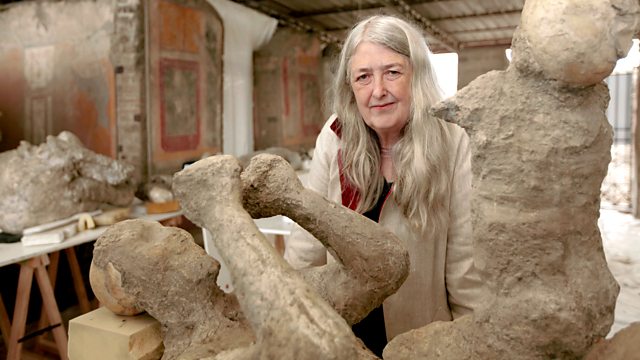
At the centre are the famous casts - the human victims of the | 0:00:38 | 0:00:43 | |
volcanic eruption of AD 79. | 0:00:43 | 0:00:47 | |
These are such moving objects that it's always been impossible not to | 0:00:47 | 0:00:51 | |
imagine their stories in your head. | 0:00:51 | 0:00:54 | |
What must have been happening, what they must have been going through. | 0:00:54 | 0:00:58 | |
Over the years, all kinds of stories have been invented about who | 0:00:58 | 0:01:02 | |
these people were and what kind of life they might have led. | 0:01:02 | 0:01:06 | |
But now, using a medical CT scanner, | 0:01:06 | 0:01:09 | |
which can peer beneath the fragile plaster, | 0:01:09 | 0:01:12 | |
an international team of experts are looking to uncover the truth. | 0:01:12 | 0:01:16 | |
I am preparing myself for some surprises. | 0:01:18 | 0:01:21 | |
People I've always thought were women turning out to be men. | 0:01:23 | 0:01:27 | |
Children turning out not to be related to the people holding them. | 0:01:27 | 0:01:31 | |
'And while I get to poke around behind the scenes in locked | 0:01:35 | 0:01:38 | |
'storerooms and labs...' | 0:01:38 | 0:01:40 | |
This is absolutely disgusting. | 0:01:40 | 0:01:44 | |
'..a team of specialist architects, armed with the latest laser | 0:01:44 | 0:01:48 | |
'mapping technology, will create stunning digital replicas of | 0:01:48 | 0:01:53 | |
'some of the buildings.' | 0:01:53 | 0:01:54 | |
These will help produce the most accurate and detailed 3-D | 0:01:55 | 0:01:58 | |
map of Pompeii ever made. | 0:01:58 | 0:02:01 | |
All together, this should give us an unrivalled image of what daily | 0:02:01 | 0:02:05 | |
Roman life was like. | 0:02:05 | 0:02:07 | |
It's just metres and metres of lead pipes. | 0:02:08 | 0:02:13 | |
For me, these are some of the things that really close | 0:02:16 | 0:02:19 | |
the gap between our world and the Roman world. | 0:02:19 | 0:02:23 | |
Everyone knows how the people of Pompeii died... | 0:02:24 | 0:02:27 | |
..but this is a once-in-a-lifetime chance | 0:02:28 | 0:02:31 | |
to reveal their life before death. | 0:02:31 | 0:02:34 | |
What I love about Pompeii is that it was such an ordinary little | 0:02:52 | 0:02:56 | |
Roman town. Its only claim to fame was being destroyed | 0:02:56 | 0:03:00 | |
and buried by the eruption of the volcano Vesuvius in 79 AD. | 0:03:00 | 0:03:05 | |
It was then completely forgotten, until many centuries later it | 0:03:26 | 0:03:31 | |
was accidently found and uncovered again. | 0:03:31 | 0:03:34 | |
It now gives us | 0:03:39 | 0:03:42 | |
an absolutely unique glimpse of how ordinary Romans lived their lives. | 0:03:42 | 0:03:47 | |
What makes Pompeii unique is not only that we have its streets | 0:03:54 | 0:03:58 | |
and houses, | 0:03:58 | 0:04:00 | |
but we also have some of its people, in the form of the ghostly casts. | 0:04:00 | 0:04:05 | |
Which were recovered by a surprisingly simple process | 0:04:05 | 0:04:09 | |
that dates back to the 1860s, | 0:04:09 | 0:04:11 | |
when the archaeologists digging in Pompeii discovered that | 0:04:11 | 0:04:16 | |
around many of the skeletons of the victims was strange cavities. | 0:04:16 | 0:04:21 | |
After pouring in liquid plaster, | 0:04:21 | 0:04:23 | |
what emerged was an exact imprint of a human body. | 0:04:23 | 0:04:27 | |
And because of their twisted poses and eerie grins, | 0:04:30 | 0:04:35 | |
it's been all but impossible not to graft stories, even names, | 0:04:35 | 0:04:41 | |
onto these victims. | 0:04:41 | 0:04:42 | |
Like the couple in each other's arms, the old beggar and the | 0:04:42 | 0:04:47 | |
family with this tiny toddler. | 0:04:47 | 0:04:50 | |
These are people captured for ever at the exact moment of their death. | 0:04:52 | 0:04:58 | |
These stories are certainly evocative, | 0:05:11 | 0:05:14 | |
but they are at best guesswork. | 0:05:14 | 0:05:16 | |
Now, for the first time, the casts are being brought together into | 0:05:16 | 0:05:21 | |
Pompeii's amphitheatre for our forensic study, | 0:05:21 | 0:05:25 | |
with a CT scanner capable of finding even the smallest trace of | 0:05:25 | 0:05:30 | |
real evidence. | 0:05:30 | 0:05:31 | |
For forensic archaeologist Estelle Lazer, | 0:05:31 | 0:05:34 | |
this is a chance to cast new light on who the victims really | 0:05:34 | 0:05:39 | |
were, as well as who they were not. | 0:05:39 | 0:05:42 | |
It's an adventure. We have no idea | 0:05:43 | 0:05:46 | |
what we are going to find and that's really exciting. | 0:05:46 | 0:05:49 | |
Nobody has studied these before, they have had no scientific | 0:05:49 | 0:05:53 | |
examination and yet so much has been written about them, and to | 0:05:53 | 0:05:58 | |
give them back the lives they originally had | 0:05:58 | 0:06:01 | |
-is a wonderful opportunity. -BEEPING | 0:06:01 | 0:06:03 | |
But it's not just the casts that are under examination. | 0:06:09 | 0:06:13 | |
Pompeii itself is in the grip of a once-in-a-generation | 0:06:13 | 0:06:17 | |
restoration programme. | 0:06:17 | 0:06:18 | |
The Great Pompeii Project is a 100-million-euro | 0:06:22 | 0:06:26 | |
scheme which is fighting the ravages of time and weather to save the | 0:06:26 | 0:06:31 | |
fabric of the town. I'm lucky enough to have been allowed behind | 0:06:31 | 0:06:37 | |
the scenes, still off-limits to most visitors, | 0:06:37 | 0:06:39 | |
to see life breathed back into some of the buildings and their frescoes. | 0:06:39 | 0:06:45 | |
And to help us really understand how the town worked, | 0:06:48 | 0:06:51 | |
we've commissioned a team of specialist architects to | 0:06:51 | 0:06:55 | |
create a spectacularly detailed bird's-eye view. | 0:06:55 | 0:07:00 | |
Using 3-D laser scanners, they're busy capturing precise digital | 0:07:00 | 0:07:05 | |
replicas of the buildings, | 0:07:05 | 0:07:07 | |
which will reveal Pompeii in a way that has never been seen before. | 0:07:07 | 0:07:12 | |
As we fly down streets, over roofs and even through walls. | 0:07:17 | 0:07:22 | |
Now for the first time, we will get to see, from previously | 0:07:24 | 0:07:28 | |
impossible perspectives, where the average Pompeian ate, drank, | 0:07:28 | 0:07:33 | |
bathed and even had it away. | 0:07:33 | 0:07:35 | |
And as this was a Roman town, the most spectacular and exciting | 0:07:37 | 0:07:41 | |
place was its amphitheatre... | 0:07:41 | 0:07:43 | |
..where Pompeii's gladiators did battle in front of a 20,000-strong | 0:07:46 | 0:07:51 | |
crowd, cheering, leering, very likely baying for blood. | 0:07:51 | 0:07:56 | |
Gladiators were big entertainment here, like everywhere | 0:07:58 | 0:08:01 | |
in the Roman world. There must have been troops of them | 0:08:01 | 0:08:06 | |
under their own money-making impresarios, who travelled | 0:08:06 | 0:08:10 | |
the region putting on fights in the local amphitheatres. | 0:08:10 | 0:08:14 | |
They lived in military-style barracks | 0:08:14 | 0:08:17 | |
and they were highly trained in swordplay, fighting tactics | 0:08:17 | 0:08:21 | |
and in putting on a good show. | 0:08:21 | 0:08:23 | |
Pompeii's amphitheatre is one of the best preserved in the whole | 0:08:27 | 0:08:31 | |
Roman world. | 0:08:31 | 0:08:33 | |
The noise and atmosphere would have been electric, | 0:08:33 | 0:08:38 | |
as each pair of gladiators made their way into the arena. | 0:08:38 | 0:08:43 | |
Don't think Hollywood here - we are in a little Roman town in | 0:08:49 | 0:08:53 | |
the lower divisions of the league. | 0:08:53 | 0:08:56 | |
And there wouldn't have been too much fighting to the death - | 0:08:56 | 0:08:59 | |
gladiators were too expensive a commodity to lose. | 0:08:59 | 0:09:03 | |
This was probably more like wrestling than boxing. | 0:09:03 | 0:09:07 | |
All the same, it would have been an occasion to look forward to. | 0:09:07 | 0:09:11 | |
You have to imagine the audience all on the edge of their seats, | 0:09:11 | 0:09:14 | |
watching what was going on in the arena. | 0:09:14 | 0:09:16 | |
There would be music, drums, | 0:09:16 | 0:09:19 | |
gladiators out there in their shiny helmets, their polished weapons | 0:09:19 | 0:09:22 | |
and the nets with which they trapped each other, and the crowd | 0:09:22 | 0:09:26 | |
would have cheered when their favourite felled an opponent. | 0:09:26 | 0:09:30 | |
Yeah, come on, Celadus, stick it up him! | 0:09:31 | 0:09:34 | |
This wasn't just adult entertainment. | 0:09:43 | 0:09:45 | |
Going to the games was also | 0:09:45 | 0:09:48 | |
a family day out, and it makes you think a bit. | 0:09:48 | 0:09:52 | |
Mum, Dad and a couple of kids, maybe? | 0:09:53 | 0:09:56 | |
Well, one such family is now amongst Pompeii's most famous casts. | 0:09:57 | 0:10:02 | |
Discovered in 1974, they were found cowering in a basement. | 0:10:09 | 0:10:14 | |
They must have come here to hide, thinking it was the safest | 0:10:15 | 0:10:19 | |
place in the house. | 0:10:19 | 0:10:20 | |
Story is that we have a father, here... | 0:10:20 | 0:10:25 | |
..a mother, here, still holding a young child. | 0:10:26 | 0:10:31 | |
And there is also a toddler, usually assumed to be part of the group. | 0:10:31 | 0:10:35 | |
But we don't actually know where he or she was found. | 0:10:35 | 0:10:38 | |
At just a couple of feet tall, | 0:10:40 | 0:10:43 | |
the toddler easily fits into the CT scanner. | 0:10:43 | 0:10:46 | |
Its tiny frame, a poignant reminder of how indiscriminate disasters are. | 0:10:46 | 0:10:53 | |
When you look straight at its face, you notice it's got chubby | 0:10:53 | 0:10:58 | |
baby lips, it's looking right at you. | 0:10:58 | 0:11:00 | |
You have to have a heart of stone, | 0:11:01 | 0:11:03 | |
not to be really touched by this. One of the things I'm looking | 0:11:03 | 0:11:09 | |
for here is to begin to think about families, childcare. | 0:11:09 | 0:11:15 | |
It looks obvious to us that it's | 0:11:15 | 0:11:18 | |
Mum, Dad and two children but is that the case? | 0:11:18 | 0:11:21 | |
BEEPING | 0:11:21 | 0:11:24 | |
The powerful machine can not only look through the plaster to | 0:11:27 | 0:11:32 | |
find the skeleton, | 0:11:32 | 0:11:33 | |
but also any objects trapped within. | 0:11:33 | 0:11:37 | |
Is this the child's belt? Is that a clasp? | 0:11:37 | 0:11:40 | |
If there is anything like metal in there, it will show. | 0:11:40 | 0:11:43 | |
It's very evocative, we have got a very small child | 0:11:43 | 0:11:47 | |
who died in this disaster well before its time. | 0:11:47 | 0:11:50 | |
As our tiny cast slides into the scanner, | 0:11:57 | 0:12:01 | |
I can't help imagining what life for a child might have been like | 0:12:01 | 0:12:06 | |
2,000 years ago. | 0:12:06 | 0:12:08 | |
No formal school buildings have ever been uncovered in Pompeii | 0:12:09 | 0:12:13 | |
and childhood here has always been a bit of a puzzle. | 0:12:13 | 0:12:17 | |
This is Pompeii's public park, | 0:12:21 | 0:12:24 | |
and bang in the middle, a great big swimming pool. I guess some days, | 0:12:24 | 0:12:29 | |
it would have been heaving with people. | 0:12:29 | 0:12:32 | |
It's right next door to the amphitheatre. | 0:12:32 | 0:12:34 | |
This is where the refreshment sellers | 0:12:34 | 0:12:37 | |
and the souvenir vendors would be, where people would camp | 0:12:37 | 0:12:40 | |
out overnight if they had come from a long way away. | 0:12:40 | 0:12:42 | |
And it's where people would have come to go to the lavatory - | 0:12:42 | 0:12:45 | |
the facilities in the amphitheatre itself were basic. | 0:12:45 | 0:12:49 | |
And in the colonnade, kids learning to read and write. | 0:12:50 | 0:12:54 | |
Places like this were the perfect spot for private tutors to | 0:12:56 | 0:13:01 | |
set up shop out of the sun, or sheltering from the rain. | 0:13:01 | 0:13:05 | |
The curriculum was pretty narrow - reading, writing, arithmetic | 0:13:06 | 0:13:11 | |
and grammar - and it could be pretty brutal, too. | 0:13:11 | 0:13:16 | |
There is a painting that actually survives from Pompeii - | 0:13:16 | 0:13:21 | |
a terrible tale - there are some very good boys on one side, | 0:13:21 | 0:13:25 | |
doing their reading very dutifully under the supervision of a | 0:13:25 | 0:13:29 | |
teacher, here. The other side, there is a naughty boy. He's been late, | 0:13:29 | 0:13:35 | |
he's been cheeky, hasn't done his homework. And he is being beaten. | 0:13:35 | 0:13:40 | |
Not just beaten, he seems to have been completely stripped, | 0:13:41 | 0:13:45 | |
he's propped up on the back of a teacher, here, | 0:13:45 | 0:13:49 | |
and his legs are pulled out behind him. | 0:13:49 | 0:13:51 | |
And he's being absolutely thwacked. | 0:13:51 | 0:13:54 | |
Some people might call it old-fashioned discipline. | 0:13:55 | 0:13:59 | |
To me, it looks more like cruelty to children. | 0:13:59 | 0:14:02 | |
Education was brutal, expensive and only for boys who could afford it. | 0:14:14 | 0:14:19 | |
Girls were simply expected to stay at home, while the poor had to work. | 0:14:23 | 0:14:29 | |
In fact, here in Pompeii, we have found rather few toys, | 0:14:29 | 0:14:34 | |
no sign of specifically children's clothing, | 0:14:34 | 0:14:38 | |
no sign of children's entertainment. | 0:14:38 | 0:14:42 | |
It's almost as if, in our sense, childhood was absent here. | 0:14:42 | 0:14:47 | |
But, of course, kids were still kids. | 0:14:47 | 0:14:51 | |
All over Pompeii, | 0:14:53 | 0:14:55 | |
we find graffiti that can only have been made by little ones. | 0:14:55 | 0:14:59 | |
Images of animals and people that could have been scratched yesterday. | 0:15:01 | 0:15:05 | |
Back in the investigation, not all of our victims will fit into our | 0:15:21 | 0:15:25 | |
CT scanner so Estelle's team have decamped to where the casts | 0:15:25 | 0:15:30 | |
are on display. | 0:15:30 | 0:15:32 | |
Yeah, it's really good. | 0:15:32 | 0:15:33 | |
And with a portable X-ray machine, they're examining specific | 0:15:34 | 0:15:38 | |
parts of them. | 0:15:38 | 0:15:40 | |
-What are we doing? -Pelvis. | 0:15:40 | 0:15:42 | |
We are looking for the same kinds of features that we would look | 0:15:42 | 0:15:46 | |
for if we were looking at a modern mass disaster | 0:15:46 | 0:15:48 | |
so we want to identify individuals, | 0:15:48 | 0:15:50 | |
we want to find out what sex they were, | 0:15:50 | 0:15:53 | |
what age they were when they died. | 0:15:53 | 0:15:55 | |
One, two, three... | 0:15:55 | 0:15:57 | |
It's all within the frame, | 0:15:57 | 0:15:59 | |
but the plaster is really thick. | 0:15:59 | 0:16:02 | |
The biggest problem is that bone and plaster have the same density, | 0:16:02 | 0:16:06 | |
so what you are trying to find is plaster in plaster. | 0:16:06 | 0:16:09 | |
Yet the study is already providing its first surprise, as the team | 0:16:09 | 0:16:14 | |
discover some of the casts have had their bones replaced by iron rods. | 0:16:14 | 0:16:20 | |
What's been preserved is the form of the individual, you can see there. | 0:16:20 | 0:16:24 | |
And when you | 0:16:24 | 0:16:26 | |
look inside, there's iron bars that are used to hold the structure | 0:16:26 | 0:16:30 | |
together when they made the cast. The limbs are fragile. | 0:16:30 | 0:16:34 | |
There is nothing in there, just plaster. | 0:16:37 | 0:16:40 | |
This means that, from now on, we will have to rethink how these | 0:16:40 | 0:16:45 | |
casts were made. | 0:16:45 | 0:16:47 | |
It also has somewhat limited the information Estelle can | 0:16:47 | 0:16:51 | |
extract from the mother and father. | 0:16:51 | 0:16:54 | |
Even so, her team have established they were probably both | 0:16:54 | 0:16:59 | |
younger than originally thought. | 0:16:59 | 0:17:01 | |
Perhaps just into their 20s. And the child standing on the | 0:17:01 | 0:17:05 | |
mother's chest does contain a full set of teeth. | 0:17:05 | 0:17:09 | |
Although, they're not where you might expect. | 0:17:10 | 0:17:13 | |
This is the lower jaw of the child and it's somewhere around waist | 0:17:13 | 0:17:18 | |
level. It's fallen, you assume by gravity, and gone into that void. | 0:17:18 | 0:17:22 | |
They look a bit, erm...rickety, crooked. | 0:17:22 | 0:17:26 | |
They are very crooked. | 0:17:26 | 0:17:28 | |
So this kid had not gone to the orthodontist. | 0:17:28 | 0:17:30 | |
Absolutely not. | 0:17:30 | 0:17:31 | |
This is an exciting find | 0:17:33 | 0:17:36 | |
because an almost complete set of lower teeth can help Estelle | 0:17:36 | 0:17:41 | |
get closer to the child's age at death. | 0:17:41 | 0:17:44 | |
It's been suggested that this child was five or six years of age. | 0:17:44 | 0:17:48 | |
Because it has got some baby teeth and some adult teeth. | 0:17:48 | 0:17:51 | |
And doesn't seem to have lost the baby teeth yet. | 0:17:51 | 0:17:53 | |
And the CT scan results of the toddler have proved more | 0:17:59 | 0:18:04 | |
revealing. With the plaster digitally peeled away, | 0:18:04 | 0:18:09 | |
for the first time we can see inside this tiny evocative cast. | 0:18:09 | 0:18:16 | |
You can see the leg bones, you can see the vertebrae, | 0:18:24 | 0:18:28 | |
you can see the skull really well. | 0:18:28 | 0:18:30 | |
By studying the development of leg and foot bones, Estelle can | 0:18:31 | 0:18:36 | |
start to think about the age of this child. | 0:18:36 | 0:18:39 | |
The tarsal bones start to ossify around three... | 0:18:40 | 0:18:43 | |
Ah, so you really don't get your foot bones until you are about three | 0:18:43 | 0:18:47 | |
-and this kid is on the way? -Yes. | 0:18:47 | 0:18:49 | |
-And that's the crown. -That's the crown of what will be... | 0:18:50 | 0:18:54 | |
A molar. | 0:18:54 | 0:18:55 | |
But it has not yet come through? | 0:18:55 | 0:18:57 | |
So those are the baby teeth and these are what's forming in the gum. | 0:18:57 | 0:19:01 | |
-Mm-hmm. -So that's putting him around three? | 0:19:01 | 0:19:03 | |
Around about three. | 0:19:03 | 0:19:05 | |
Knowing the age seems a relatively simple thing, but put it this way, | 0:19:05 | 0:19:10 | |
when you say, "This kid's just passed the terrible twos," | 0:19:10 | 0:19:14 | |
he instantly seems so much more human and we can now even see | 0:19:14 | 0:19:20 | |
what that blob on the chest really is. | 0:19:20 | 0:19:23 | |
It is a brooch? It is a pin, is it? | 0:19:24 | 0:19:27 | |
It looks like a fastening of some sort. | 0:19:27 | 0:19:30 | |
I'm really pleased with that, because from the outside it looked | 0:19:30 | 0:19:32 | |
as if there was a clasp and that is exactly what it seems to be. | 0:19:32 | 0:19:37 | |
Presumably it's a case of everything having got pushed up | 0:19:37 | 0:19:41 | |
and what would have been around the kid's waist has ended up there. | 0:19:41 | 0:19:46 | |
Exactly. | 0:19:46 | 0:19:48 | |
The big question has always been, for me, | 0:19:50 | 0:19:53 | |
whether he belonged to the so-called mother, | 0:19:53 | 0:19:56 | |
so-called father and so-called child...but you rather hope | 0:19:56 | 0:20:00 | |
he is with them because otherwise he is on his own. | 0:20:00 | 0:20:03 | |
Of course you don't want to imagine this poor child was | 0:20:03 | 0:20:05 | |
all by themselves. | 0:20:05 | 0:20:06 | |
No, you do want him with his mum and dad, don't you? | 0:20:06 | 0:20:09 | |
Casts can take us some of the way, | 0:20:20 | 0:20:23 | |
but it's our laser scans of Pompeii's buildings that will | 0:20:23 | 0:20:27 | |
give us real insight into daily life here. | 0:20:27 | 0:20:30 | |
In the south-east corner, restoration is well underway | 0:20:32 | 0:20:36 | |
on one of Pompeii's most intriguing houses. | 0:20:36 | 0:20:40 | |
Covering two blocks, | 0:20:40 | 0:20:42 | |
this spectacular urban villa has multiple | 0:20:42 | 0:20:46 | |
two-storey buildings as well as a large private garden. | 0:20:46 | 0:20:50 | |
This looks like a very grand private residence but it's not all it seems. | 0:20:52 | 0:20:56 | |
We know that because there was a sign by the front door, advertising | 0:21:00 | 0:21:05 | |
what was on offer - shops, flats, bar and restaurant. | 0:21:05 | 0:21:10 | |
Even the baths were up for rent. | 0:21:10 | 0:21:13 | |
They must have been pricey, | 0:21:13 | 0:21:15 | |
cos they are described as "rather lovely, for classy people". | 0:21:15 | 0:21:20 | |
This property has been shut to the public for years. What we can | 0:21:23 | 0:21:26 | |
do is not only take you inside, but we can see what a visit here | 0:21:26 | 0:21:30 | |
2,000 years ago would have been like. | 0:21:30 | 0:21:34 | |
At the rear was the private residence - | 0:21:34 | 0:21:36 | |
probably reserved just for the owner. | 0:21:36 | 0:21:39 | |
While at the other end was a large private bath complex. | 0:21:39 | 0:21:43 | |
Which unlike Pompeii's public baths, wasn't for just anyone. | 0:21:43 | 0:21:48 | |
This was an exclusive and presumably expensive members-only type | 0:21:48 | 0:21:53 | |
of place. | 0:21:53 | 0:21:54 | |
No riffraff laughing at your willy here, amongst all the naked bathers. | 0:21:54 | 0:21:59 | |
If you wanted to take a bath, this is where you would come in. | 0:22:00 | 0:22:03 | |
Walked in off the street, into this quite elegant hallway. | 0:22:03 | 0:22:08 | |
My guess is that, there or here, | 0:22:11 | 0:22:15 | |
is where you would have come in, handed over your kit | 0:22:15 | 0:22:19 | |
and said, "Ooh, two fluffy white towels, please," and off you went. | 0:22:19 | 0:22:23 | |
These baths followed the same principle as all others in | 0:22:25 | 0:22:29 | |
the Roman world, | 0:22:29 | 0:22:30 | |
where you start cold and get hotter and hotter with each room | 0:22:30 | 0:22:34 | |
ramping up the temperature. | 0:22:34 | 0:22:36 | |
We can even see where all this heat came from, as behind the wall | 0:22:36 | 0:22:41 | |
is the wood-burning furnace that the slaves would have kept fed. | 0:22:41 | 0:22:46 | |
But I don't think you came here just to get clean. | 0:22:46 | 0:22:51 | |
My guess that there might have been other services available, you know, | 0:22:51 | 0:22:55 | |
massage parlour? | 0:22:55 | 0:22:57 | |
You know the kind of thing. | 0:22:58 | 0:23:00 | |
But these decidedly upmarket baths were just one part of this | 0:23:00 | 0:23:06 | |
flourishing business empire. | 0:23:06 | 0:23:08 | |
There were rents rolling in, | 0:23:10 | 0:23:12 | |
from the bar and restaurant, the baths and the flats | 0:23:12 | 0:23:15 | |
and apartments, so who was taking the profit? | 0:23:15 | 0:23:19 | |
I think we'd imagine it was some canny Roman businessman. | 0:23:20 | 0:23:24 | |
In fact, it was a canny Roman businesswoman - | 0:23:24 | 0:23:27 | |
and from the rental notice, we even know her name. | 0:23:27 | 0:23:31 | |
She was called Julia Felix, and that means "Lucky Julia". | 0:23:31 | 0:23:36 | |
As a woman, she couldn't vote, she wasn't allowed to enjoy | 0:23:37 | 0:23:41 | |
the men's section of the local baths, | 0:23:41 | 0:23:44 | |
but she could become a successful entrepreneur - lucky Julia! | 0:23:44 | 0:23:47 | |
But this establishment wasn't just for an exclusive clientele. | 0:23:57 | 0:24:02 | |
Anyone walking past could have popped into the street-front pub, | 0:24:05 | 0:24:09 | |
which offered food to take away. | 0:24:09 | 0:24:11 | |
You come in here, from the street, | 0:24:13 | 0:24:15 | |
and if you wanted to be quick, you would choose | 0:24:15 | 0:24:19 | |
something to eat on the go as you went. | 0:24:19 | 0:24:22 | |
Other people, though, would have wanted to sit down, perhaps | 0:24:22 | 0:24:26 | |
make an evening of it, and they would have come through here. | 0:24:26 | 0:24:31 | |
We've got a choice - I guess if | 0:24:33 | 0:24:36 | |
you really want to make a very long session of it, | 0:24:36 | 0:24:40 | |
you've already booked the couches in advance - the triclinium - | 0:24:40 | 0:24:44 | |
but most people, | 0:24:44 | 0:24:45 | |
a bit more of a hurry, they would have come and sat here, bolt upright | 0:24:45 | 0:24:50 | |
with a table in front of them. It's a great reminder that not all | 0:24:50 | 0:24:54 | |
Romans, all the time, ate lying down saying, "Pass the grapes, darling." | 0:24:54 | 0:24:59 | |
But what were they eating? | 0:24:59 | 0:25:01 | |
Well, actually, we know a good deal of the answer to that because | 0:25:01 | 0:25:06 | |
it's been preserved almost as well as the place itself. | 0:25:06 | 0:25:10 | |
And all that foodstuff is carefully kept under wraps, in here. | 0:25:16 | 0:25:21 | |
-Luigi, ciao, buona sera. -Ciao, Mary. | 0:25:21 | 0:25:25 | |
This really is behind the scenes at Pompeii, it's what most of us | 0:25:27 | 0:25:32 | |
never get to see. | 0:25:32 | 0:25:33 | |
This is quite amazing for me, | 0:25:35 | 0:25:37 | |
as few people ever get to root around in here. | 0:25:37 | 0:25:40 | |
Oh, wow. | 0:25:40 | 0:25:42 | |
It's stuffed with some of Pompeii's most precious and delicate finds. | 0:25:42 | 0:25:46 | |
These are pomegranates and almonds. This is olives, and these are very | 0:25:46 | 0:25:52 | |
splendid nuts. What sort of nuts are they? Walnuts. Walnuts, I think. | 0:25:52 | 0:25:58 | |
And it can all helps us reconstruct how the ordinary people were | 0:25:58 | 0:26:03 | |
living just at that moment before the eruption. | 0:26:03 | 0:26:06 | |
Figs - this isn't posh food. Everybody's eating these. | 0:26:06 | 0:26:11 | |
It's a turtle shell. | 0:26:12 | 0:26:14 | |
You have to imagine somebody had a great feast out of this. | 0:26:14 | 0:26:18 | |
Luigi, what else have we got? Let's see something else | 0:26:18 | 0:26:21 | |
because this is an Aladdin's cave, really. Bring something... | 0:26:21 | 0:26:24 | |
This is the bits of fish | 0:26:26 | 0:26:28 | |
that went into what was almost the greatest Roman | 0:26:28 | 0:26:32 | |
ketchup of all - a thing called garum, | 0:26:32 | 0:26:34 | |
which was a sauce made out of simply rotted fish. | 0:26:34 | 0:26:40 | |
Oh, no. Indeed we have some. | 0:26:41 | 0:26:43 | |
Still made near here. | 0:26:43 | 0:26:46 | |
I can smell it from here. This is... | 0:26:46 | 0:26:50 | |
..absolutely disgusting. | 0:26:51 | 0:26:53 | |
I'm going to do it again, to show how very brave I am. | 0:26:53 | 0:26:56 | |
But...eugh! Eugh! When you think about Roman diet, you've | 0:26:56 | 0:27:02 | |
really got to think, everything smothered with that stuff! | 0:27:02 | 0:27:06 | |
This is a loaf of Pompeian Roman bread. | 0:27:06 | 0:27:10 | |
Is this a thumbprint? | 0:27:12 | 0:27:15 | |
HE SPEAKS ITALIAN | 0:27:15 | 0:27:18 | |
The baker has kind of put his thumbprint, | 0:27:18 | 0:27:21 | |
his maker's mark on the bread. | 0:27:21 | 0:27:24 | |
This kind of stuff, for me, is some of the most moving bits of what you | 0:27:24 | 0:27:28 | |
find at Pompeii because it... You kind of know that someone had made | 0:27:28 | 0:27:33 | |
that just before the eruption happened. It got | 0:27:33 | 0:27:38 | |
cooked in the oven but no-one got to eat it. | 0:27:38 | 0:27:41 | |
It's one of those things that shows you that kind of disruption in | 0:27:41 | 0:27:46 | |
life, time, tragedy and disaster because it was an ordinary loaf | 0:27:46 | 0:27:51 | |
and nobody ever got to eat it. | 0:27:51 | 0:27:54 | |
It is actually fantastically exciting to get this | 0:27:55 | 0:27:57 | |
close to this stuff because you really don't find this kind | 0:27:57 | 0:28:03 | |
of survival from anywhere else in the Roman world, apart from Pompeii. | 0:28:03 | 0:28:09 | |
Before the eruption, | 0:28:14 | 0:28:16 | |
Pompeii was home to not much more than 12,000 people. | 0:28:16 | 0:28:21 | |
And our study of the casts may go some way into giving us a clue | 0:28:21 | 0:28:26 | |
as to who some of these people were. | 0:28:26 | 0:28:29 | |
One of the most puzzling has been called The Beggar, | 0:28:29 | 0:28:33 | |
because this misshapen hand was thought to be a bag that he | 0:28:33 | 0:28:37 | |
used to beg for hand-outs. | 0:28:37 | 0:28:39 | |
While on his right foot, he has the imprint of a sandal - | 0:28:40 | 0:28:44 | |
easy to imagine it was the present from a generous benefactor. | 0:28:44 | 0:28:48 | |
But if he was a beggar, | 0:28:51 | 0:28:52 | |
what would life in Pompeii have been like for him? | 0:28:52 | 0:28:56 | |
We might just get a hint from a unique picture | 0:28:56 | 0:28:59 | |
originally found in the town. | 0:28:59 | 0:29:00 | |
This is a scene that we instantly recognise. | 0:29:02 | 0:29:05 | |
He's got shaggy hair, rags, a stick. He's holding out his hand | 0:29:05 | 0:29:11 | |
to this rather posh lady, here, who is giving him a bit of loose change. | 0:29:11 | 0:29:16 | |
And she has her little slave with her. | 0:29:16 | 0:29:18 | |
Actually, that's a rather rare scene in the Roman world. | 0:29:20 | 0:29:23 | |
The Romans weren't big on charity and if you were | 0:29:23 | 0:29:27 | |
destitute in Pompeii, with no state benefits, no hostels, honestly you | 0:29:27 | 0:29:33 | |
would be a problem that would pretty soon solve itself because you'd die. | 0:29:33 | 0:29:37 | |
So which would seem better - being free but penniless, | 0:29:38 | 0:29:44 | |
homeless and literally starving to death? | 0:29:44 | 0:29:47 | |
Or being a slave with all the discrimination | 0:29:48 | 0:29:51 | |
and lack of freedom that that implies, | 0:29:51 | 0:29:53 | |
but at least with a roof over your head and supper on the table? | 0:29:53 | 0:29:57 | |
Which would you choose? | 0:29:58 | 0:30:00 | |
This cast has always been imagined as a frail old man, pleading | 0:30:01 | 0:30:06 | |
for hand-outs. | 0:30:06 | 0:30:08 | |
With this blob being his begging bag. | 0:30:08 | 0:30:12 | |
Certainly has no coins in it. | 0:30:12 | 0:30:14 | |
No. | 0:30:14 | 0:30:15 | |
So a bit of miscasting actually launches this whole | 0:30:15 | 0:30:19 | |
myth that this is a beggar. | 0:30:19 | 0:30:21 | |
So there is no begging bag, but what about that sandal? | 0:30:21 | 0:30:26 | |
The X-rays have now shown it up in much greater detail. | 0:30:26 | 0:30:30 | |
What's amazing here is that you really do see how smart | 0:30:30 | 0:30:34 | |
-they are, don't you? -Yep, and that's the strap. | 0:30:34 | 0:30:37 | |
That's the strap. | 0:30:37 | 0:30:38 | |
And according to the reports, it had a sensible grip. | 0:30:38 | 0:30:42 | |
That sandal looks to me, you know, pretty posh. | 0:30:42 | 0:30:45 | |
Never mind the philanthropist, much more likely that this is | 0:30:45 | 0:30:48 | |
someone who is really quite rich - rich enough to have nice footwear. | 0:30:48 | 0:30:51 | |
One, two, three... | 0:30:51 | 0:30:53 | |
But it's the bones in the left foot that can tell us most. | 0:30:53 | 0:30:57 | |
You can just see the growth plate on the heel bone. | 0:30:57 | 0:31:02 | |
What's a growth plate? | 0:31:02 | 0:31:03 | |
That's the part where the two bits of bone are separated | 0:31:03 | 0:31:07 | |
and the growth plate is made up of cartilaginous bone. | 0:31:07 | 0:31:10 | |
Which is gradually fusing it together. | 0:31:10 | 0:31:12 | |
It's growing and eventually when growth stops, it will close up | 0:31:12 | 0:31:16 | |
and fuse. | 0:31:16 | 0:31:17 | |
So one of the key indicators then of how old somebody is | 0:31:17 | 0:31:21 | |
is in the joints? | 0:31:21 | 0:31:22 | |
Exactly. | 0:31:22 | 0:31:23 | |
So my picture of this is starting to... | 0:31:23 | 0:31:26 | |
It's really overturning, you know, the standard beggar idea. | 0:31:26 | 0:31:31 | |
It's not an old beggar with a bent back, | 0:31:31 | 0:31:34 | |
it's definitely a younger individual, | 0:31:34 | 0:31:36 | |
possibly with their own sandals. | 0:31:36 | 0:31:38 | |
As the image of our frail old beggar fades away, we start to | 0:31:46 | 0:31:51 | |
wonder if, in fact, he might have been a wealthy young man. | 0:31:51 | 0:31:55 | |
And we see a clearer picture of the real Pompeii emerging. | 0:31:55 | 0:32:01 | |
This wasn't a sleepy backwater, but a thriving little town with | 0:32:09 | 0:32:13 | |
its fair share of young and reasonably well off. | 0:32:13 | 0:32:17 | |
And although the sea is more than 2km away today, | 0:32:17 | 0:32:21 | |
these are mooring rings and they tell us | 0:32:21 | 0:32:24 | |
that at the time of the eruption, | 0:32:24 | 0:32:26 | |
boats came right up into town, | 0:32:26 | 0:32:29 | |
making this area to the south-west some sort of marina. | 0:32:29 | 0:32:33 | |
And the way that Pompeii relied on the sea is clear all over the place. | 0:32:33 | 0:32:39 | |
This is part of a very delicate fishing net of some ancient | 0:32:42 | 0:32:48 | |
Pompeian fisherman, and you can see just how beautifully woven it is. | 0:32:48 | 0:32:53 | |
And the Pompeian diet didn't stop at fish. | 0:32:53 | 0:32:56 | |
These sea urchins were a favourite delicacy. | 0:32:56 | 0:32:59 | |
When we get the rare opportunity to investigate | 0:32:59 | 0:33:02 | |
the contents of a lavatory from round here, one of the things | 0:33:02 | 0:33:06 | |
you almost always find is sea-urchin spikes which I think have | 0:33:06 | 0:33:10 | |
come through the digestive tracts of the locals. | 0:33:10 | 0:33:13 | |
These conch shells even had a life after they had made | 0:33:13 | 0:33:18 | |
someone a good meal. | 0:33:18 | 0:33:19 | |
These were actually ancient trumpets, used in the theatre | 0:33:19 | 0:33:23 | |
to kind of make a noise, to shut people up and things. | 0:33:23 | 0:33:26 | |
What you're supposed to do is blow down it. | 0:33:26 | 0:33:29 | |
I'm not going to be able to manage this but I'll have a go. | 0:33:29 | 0:33:32 | |
SHE BLOWS | 0:33:32 | 0:33:33 | |
SHE MAKES FAKE TRUMPET SOUND | 0:33:33 | 0:33:35 | |
That was cheating there, I'm afraid. Well, I can't get... | 0:33:35 | 0:33:39 | |
..a blind bit of noise | 0:33:41 | 0:33:43 | |
out of this thing. Opinions differ about whether it's a | 0:33:43 | 0:33:47 | |
nice pleasant relaxing noise or whether it's a horrible screech - | 0:33:47 | 0:33:51 | |
if you can get any noise out of it at all - | 0:33:51 | 0:33:53 | |
but it's a nice example of the sea producing all kinds of things | 0:33:53 | 0:33:58 | |
that Pompeians are recycling. | 0:33:58 | 0:34:01 | |
Just above the marina, we find some the houses of | 0:34:05 | 0:34:09 | |
the richest and most powerful Pompeians. | 0:34:09 | 0:34:12 | |
This is one of the most impressive. | 0:34:12 | 0:34:14 | |
It has 60 rooms, covering almost 3,000 square metres. | 0:34:14 | 0:34:19 | |
But what's fascinating here is, while the upper floors are under | 0:34:19 | 0:34:23 | |
massive restoration, our scans can help us reveal... | 0:34:23 | 0:34:28 | |
a secret hidden world. | 0:34:28 | 0:34:30 | |
Like many of the buildings in Pompeii, it was multi-levelled. | 0:34:30 | 0:34:34 | |
And at the very lowest level are the remains of one of the most | 0:34:34 | 0:34:39 | |
elusive and least understood bits of the Roman world. | 0:34:39 | 0:34:43 | |
This was once one of the grandest | 0:34:48 | 0:34:51 | |
and biggest mansions in the town. It doesn't look all that | 0:34:51 | 0:34:55 | |
wonderful now but you can still see one of the things that made | 0:34:55 | 0:34:59 | |
it special - location. We are just a stone's throw from the city | 0:34:59 | 0:35:04 | |
centre but, here, there was a view to die for, right over the sea. | 0:35:04 | 0:35:09 | |
But I am interested in something rather different - downstairs. | 0:35:11 | 0:35:16 | |
Sinking through the ground, a hidden Pompeii is now revealed. | 0:35:28 | 0:35:33 | |
Down here is where the slaves, so vital for keeping the | 0:35:34 | 0:35:38 | |
house running, lived their life of servitude. | 0:35:38 | 0:35:41 | |
Some rather steep stairs. | 0:35:43 | 0:35:46 | |
And what I have got into is really the service areas of the house. | 0:35:48 | 0:35:53 | |
And there are pokey little rooms. | 0:36:01 | 0:36:03 | |
You don't often get to be able to explore | 0:36:03 | 0:36:06 | |
where the slaves lived and worked | 0:36:06 | 0:36:09 | |
and that's why this one is so important. | 0:36:09 | 0:36:12 | |
With all these tunnels and anonymous rooms, it's quite difficult to | 0:36:12 | 0:36:17 | |
figure out just what went on here. | 0:36:17 | 0:36:20 | |
Slavery, in a sense, is defined for me | 0:36:22 | 0:36:26 | |
by the fact that you don't know exactly where | 0:36:26 | 0:36:29 | |
they slept, you don't know how many hours they worked. | 0:36:29 | 0:36:32 | |
They're the kind of silent part of the Roman world. In a sense, | 0:36:32 | 0:36:37 | |
they are defined by us sort of not being able to see them. | 0:36:37 | 0:36:41 | |
A house this size might have had something like 50 slaves, | 0:36:46 | 0:36:50 | |
doing everything from cooking and cleaning, to the gardening | 0:36:50 | 0:36:54 | |
and DIY. | 0:36:54 | 0:36:55 | |
All treated pretty much as we would treat machines today, | 0:36:55 | 0:37:00 | |
they were all but invisible. | 0:37:00 | 0:37:02 | |
You couldn't want a clearer proof of the invisibility of slaves | 0:37:04 | 0:37:09 | |
than this... | 0:37:09 | 0:37:11 | |
You've got a couple in bed, making love, behind them | 0:37:11 | 0:37:15 | |
is a little slave at hand. They aren't even noticing her, | 0:37:15 | 0:37:21 | |
she might just as well be part of the furniture. | 0:37:21 | 0:37:23 | |
But slaves didn't only watch. We tend to think of slavery | 0:37:23 | 0:37:29 | |
as domestic service but service really did mean "service" - slaves, | 0:37:29 | 0:37:35 | |
both male and female, were there for the pleasure of their owners. | 0:37:35 | 0:37:40 | |
Slavery was an integral part of the fabric of Roman society. | 0:37:42 | 0:37:47 | |
Because we never hear from the slaves themselves, only from | 0:37:47 | 0:37:51 | |
their masters, often complaining about them, it's always been a | 0:37:51 | 0:37:55 | |
one-sided story, and that's why this network of underground spaces | 0:37:55 | 0:38:02 | |
is so important. It's a unique window | 0:38:02 | 0:38:05 | |
into this poorly understood part of Pompeian life. | 0:38:05 | 0:38:08 | |
Rich or poor in Pompeii, | 0:38:23 | 0:38:25 | |
there is one place that almost everyone would have visited | 0:38:25 | 0:38:28 | |
on a regular basis. | 0:38:28 | 0:38:30 | |
Dotted around the town are a number of public baths. | 0:38:32 | 0:38:37 | |
One of the most lavish and well preserved, | 0:38:37 | 0:38:40 | |
just off the main square. | 0:38:40 | 0:38:41 | |
The Romans absolutely loved public bathing. Here, they could | 0:38:47 | 0:38:53 | |
relax and just let it all hang out. | 0:38:53 | 0:38:57 | |
This is where everyone came to get naked. | 0:39:07 | 0:39:11 | |
You would sit down here, | 0:39:13 | 0:39:15 | |
shoes off, clothes off | 0:39:15 | 0:39:19 | |
and then you'd shove it all in lockers up here. | 0:39:19 | 0:39:24 | |
I wouldn't leave your valuables, though, | 0:39:24 | 0:39:27 | |
this was a thieves' paradise. | 0:39:27 | 0:39:30 | |
The public baths were great levellers, | 0:39:33 | 0:39:36 | |
it was here that the young | 0:39:36 | 0:39:38 | |
barrow boy with the hunky body could | 0:39:38 | 0:39:40 | |
look down at the waddling fat cat with an overhanging belly. | 0:39:40 | 0:39:45 | |
Romans laughed at the odd willies they observed in the baths and joked | 0:39:45 | 0:39:51 | |
about the old guys with hernias. Body image, it's not a new problem. | 0:39:51 | 0:39:57 | |
I wouldn't have been very welcome here 2,000 years ago | 0:40:01 | 0:40:05 | |
because these baths were men-only. | 0:40:05 | 0:40:09 | |
But as our scans reveal, the distinctive cylindrical | 0:40:09 | 0:40:13 | |
vaults are repeated right next door. | 0:40:13 | 0:40:17 | |
And that's one of Pompeii's hidden secrets - the women's bathing suite. | 0:40:17 | 0:40:23 | |
Which is now a locked storeroom. | 0:40:23 | 0:40:26 | |
I have never actually been in the women's baths before | 0:40:27 | 0:40:31 | |
but one thing is for absolutely sure, that this was | 0:40:31 | 0:40:35 | |
nowhere near as grand as the men's quarters. | 0:40:35 | 0:40:39 | |
The modest size and decoration of these baths has a lot to say about | 0:40:41 | 0:40:46 | |
the position of most women in Pompeian society | 0:40:46 | 0:40:50 | |
but today, the stuff | 0:40:50 | 0:40:52 | |
piled up in here speaks of everyday Pompeian life. | 0:40:52 | 0:40:56 | |
That's another big one. | 0:40:56 | 0:40:57 | |
Closed to everyone except a few archaeologists, | 0:40:57 | 0:41:00 | |
I've been encouraged to have a dig around! | 0:41:00 | 0:41:03 | |
This is the kind of stuff you just find | 0:41:05 | 0:41:07 | |
everywhere in houses in Pompeii - in the kitchens, | 0:41:07 | 0:41:12 | |
in the servants' quarters, in the bottom of cupboards. | 0:41:12 | 0:41:16 | |
The top of a big jar that would've once held wine or olive oil. | 0:41:16 | 0:41:21 | |
I think this is cheers to you. | 0:41:21 | 0:41:23 | |
This must have been for weighing things. This is | 0:41:23 | 0:41:26 | |
the kind of thing you need on a market stall | 0:41:26 | 0:41:28 | |
when you're selling your produce, you know, "How much do you want?" | 0:41:28 | 0:41:31 | |
And this is where you come face-to-face with the human tragedy. | 0:41:35 | 0:41:41 | |
There must be 100 skulls here, looking at us. | 0:41:41 | 0:41:45 | |
And not just skulls, this wall of bones | 0:41:45 | 0:41:50 | |
reminds us just how many people perished in the disaster. | 0:41:50 | 0:41:53 | |
This is a very odd pile. What it is, loads | 0:41:56 | 0:42:00 | |
and loads of the little pieces of stone that once made up mosaic | 0:42:00 | 0:42:05 | |
floors. It's the remnants of floors that have been destroyed but the | 0:42:05 | 0:42:10 | |
funny thing is, this presumably is how your mosaic floor was delivered | 0:42:10 | 0:42:14 | |
in the first place - the builders brought round a whole pile of | 0:42:14 | 0:42:17 | |
this and then the layers came and made it into a beautiful pattern. | 0:42:17 | 0:42:21 | |
And here is just metres | 0:42:23 | 0:42:26 | |
and metres of lead pipes. It took water everywhere | 0:42:26 | 0:42:33 | |
but the truth is, rich Pompeians were more concerned to have water | 0:42:33 | 0:42:37 | |
delivered to their fountains than to their lavatories. | 0:42:37 | 0:42:41 | |
And...you can't have pipes without taps. | 0:42:41 | 0:42:46 | |
Which is what these are. You can't help thinking that it would be | 0:42:46 | 0:42:53 | |
a really good town to be a plumber in. | 0:42:53 | 0:42:56 | |
THUNDER CRACKS | 0:42:58 | 0:43:00 | |
And I think I could do with a plumber right now. | 0:43:00 | 0:43:04 | |
As the sudden cloudburst reveals one of Pompeii's urban problems | 0:43:04 | 0:43:09 | |
and solutions. | 0:43:09 | 0:43:10 | |
People often ask, why on earth were Pompeian pavements so high? | 0:43:12 | 0:43:17 | |
What on earth were those stepping stones across the street for? | 0:43:17 | 0:43:21 | |
Well, one answer is that as soon as it starts to rain like this, | 0:43:22 | 0:43:27 | |
the streets become a river. The only way you can | 0:43:27 | 0:43:29 | |
get across is by the stones. | 0:43:29 | 0:43:31 | |
There's no underground drains here, | 0:43:33 | 0:43:36 | |
and what takes the water away is the roadway. | 0:43:36 | 0:43:40 | |
So much for Roman brilliance at drainage! | 0:43:44 | 0:43:47 | |
It's clear that living in Pompeii before the eruption would | 0:43:50 | 0:43:53 | |
have had its challenges. | 0:43:53 | 0:43:55 | |
We can see some of the ways its people try to cope, but who | 0:43:55 | 0:44:00 | |
were these people? | 0:44:00 | 0:44:01 | |
Where did they come from? | 0:44:01 | 0:44:03 | |
-What are we doing? -Lateral on the skull. | 0:44:06 | 0:44:08 | |
There's one cast that might give us a clue. | 0:44:08 | 0:44:12 | |
Found more than 100 years ago, | 0:44:12 | 0:44:15 | |
it was supposed to be of a man | 0:44:15 | 0:44:17 | |
coming from North Africa. It was then known as The Moor. | 0:44:17 | 0:44:21 | |
The idea was it was a river port, | 0:44:23 | 0:44:26 | |
that there might have been Africans or African slaves and that | 0:44:26 | 0:44:30 | |
this might have been the remains of a slave. | 0:44:30 | 0:44:34 | |
Is there anything in this skull which suggests ethnicity at all? | 0:44:37 | 0:44:41 | |
No, sadly most of it's disappeared. | 0:44:41 | 0:44:44 | |
So this area's gone, this area's gone. | 0:44:44 | 0:44:47 | |
We've got a bit of the bone around the eye socket, | 0:44:47 | 0:44:49 | |
and the features there are more consistent with male than female. | 0:44:49 | 0:44:54 | |
What sticks out for me | 0:44:54 | 0:44:56 | |
here is his teeth. Can you decode the teeth a bit? | 0:44:56 | 0:44:59 | |
Yeah, the teeth are actually quite good. The wisdom teeth haven't | 0:44:59 | 0:45:02 | |
erupted yet. There's no tooth decay and there is not much wear | 0:45:02 | 0:45:05 | |
on the teeth so that all suggests | 0:45:05 | 0:45:08 | |
a younger rather than an older individual. | 0:45:08 | 0:45:10 | |
So he's a young man, | 0:45:10 | 0:45:13 | |
but no suggestion that he's from North Africa | 0:45:13 | 0:45:16 | |
like it's usually claimed. | 0:45:16 | 0:45:18 | |
So another layer of myth is peeled away | 0:45:20 | 0:45:23 | |
and what's emerging is significant. | 0:45:23 | 0:45:26 | |
There certainly seem to be, in the cases that we are looking at, | 0:45:26 | 0:45:30 | |
fairly young individuals so far. | 0:45:30 | 0:45:33 | |
One of the things that has often been said is that the young | 0:45:33 | 0:45:37 | |
and healthy were those who actually managed to cut | 0:45:37 | 0:45:40 | |
and run and get away and the people that were left were the pregnant | 0:45:40 | 0:45:44 | |
ladies and granny and the toddlers. | 0:45:44 | 0:45:46 | |
That's definitely not true. | 0:45:46 | 0:45:48 | |
The fact that many of these victims were young and fit | 0:45:48 | 0:45:51 | |
can't help but change the way I look at them. | 0:45:51 | 0:45:54 | |
As night falls, | 0:45:57 | 0:45:59 | |
you get a real sense of how Pompeii's character changes, too. | 0:45:59 | 0:46:03 | |
My guess is that respectable people didn't venture out much after dark | 0:46:05 | 0:46:11 | |
and certainly not elderly ladies. | 0:46:11 | 0:46:13 | |
For a start, the streets were so uneven you could easily break | 0:46:14 | 0:46:18 | |
your ankle in broad daylight. Night-time, they were a death trap. | 0:46:18 | 0:46:22 | |
I very much doubt that the whole place was crime-free, | 0:46:23 | 0:46:26 | |
I am thinking about muggers lurking and pickpockets | 0:46:26 | 0:46:30 | |
and general ne'er-do-wells and there is no police force. | 0:46:30 | 0:46:35 | |
Either to keep the streets safe or to report a crime to | 0:46:35 | 0:46:39 | |
after the event. | 0:46:39 | 0:46:41 | |
And anyway, Roman law was really only interested in the problems | 0:46:41 | 0:46:45 | |
of the rich. | 0:46:45 | 0:46:46 | |
If you were an ordinary crime victim | 0:46:46 | 0:46:49 | |
and you thought you knew who the culprit was, | 0:46:49 | 0:46:52 | |
your best bet would've been to get your mates together | 0:46:52 | 0:46:54 | |
and just go and sort him out. | 0:46:54 | 0:46:56 | |
And this was a particularly seedy part of town. | 0:46:58 | 0:47:03 | |
This is the town brothel. | 0:47:14 | 0:47:16 | |
There's five small cubicles. We are now missing the soft | 0:47:16 | 0:47:20 | |
furnishings, there must have been cushions on the bed | 0:47:20 | 0:47:23 | |
and, I guess, a curtain here for a bit of privacy. | 0:47:23 | 0:47:26 | |
Who used this place? | 0:47:28 | 0:47:30 | |
We can't really be sure, but certainly not | 0:47:30 | 0:47:33 | |
the Pompeian rich, who would | 0:47:33 | 0:47:35 | |
have had slaves at home for that kind of thing. | 0:47:35 | 0:47:38 | |
We must be dealing with the poorer sort of locals, who didn't | 0:47:38 | 0:47:42 | |
have that kind of facility. | 0:47:42 | 0:47:44 | |
And people passing through, people from the port, | 0:47:44 | 0:47:48 | |
travellers of any sort. | 0:47:48 | 0:47:49 | |
One satisfied customer has written here, "futui", | 0:47:51 | 0:47:54 | |
and there's no prizes for guessing what that means. | 0:47:54 | 0:47:57 | |
The girls who worked here must all have been | 0:48:02 | 0:48:05 | |
slaves, and my heart goes out to them. No woman with any | 0:48:05 | 0:48:11 | |
options in life could possibly have wanted to work in this place. | 0:48:11 | 0:48:15 | |
For most people, daily life in Pompeii must in truth have been | 0:48:34 | 0:48:39 | |
fairly unpleasant. | 0:48:39 | 0:48:41 | |
A hot climate, limited drainage and the streets | 0:48:41 | 0:48:45 | |
filled with animal waste, probably added up to quite a stench. | 0:48:45 | 0:48:50 | |
And there was one group of workers who were considered | 0:48:50 | 0:48:54 | |
to have it worse than most. | 0:48:54 | 0:48:55 | |
Yet strangely, they worked in this elegant residence | 0:49:01 | 0:49:06 | |
which, for years, has been closed for restoration. | 0:49:06 | 0:49:10 | |
I've come to see how this once private house was | 0:49:11 | 0:49:16 | |
converted into the local laundry. | 0:49:16 | 0:49:20 | |
By laundry, I don't mean this is where you brought your tunics | 0:49:20 | 0:49:24 | |
and your smalls. | 0:49:24 | 0:49:26 | |
There was some cleaning of old cloth here but it was mainly | 0:49:26 | 0:49:30 | |
about the large-scale processing of new, raw coarse cloth. | 0:49:30 | 0:49:35 | |
And that meant washing and rinsing, battering and softening, | 0:49:37 | 0:49:41 | |
bleaching and degreasing. | 0:49:41 | 0:49:44 | |
And it involved an odd mixture of substances. | 0:49:44 | 0:49:48 | |
Clay, soda, sulphur and human urine, | 0:49:48 | 0:49:52 | |
and the story was that the canny launderers collected that by leaving | 0:49:52 | 0:49:58 | |
pots outside their front door for the convenience of the passers-by. | 0:49:58 | 0:50:02 | |
This noxious concoction was all mixed together in here. | 0:50:12 | 0:50:17 | |
Here's the main series of rinsing tanks | 0:50:17 | 0:50:20 | |
and these are the treading stalls, where the launderers spent all | 0:50:20 | 0:50:26 | |
day treading the cloth with their bare feet. | 0:50:26 | 0:50:31 | |
I guess about ten people would have worked here - slaves | 0:50:31 | 0:50:35 | |
and free side by side, and it was pretty nasty work. But you | 0:50:35 | 0:50:41 | |
do get a sense of friendship and camaraderie about the place. | 0:50:41 | 0:50:45 | |
And when other people went past laundries, they said they not | 0:50:47 | 0:50:51 | |
only smelled them but they heard them, | 0:50:51 | 0:50:54 | |
because the launderers were busy | 0:50:54 | 0:50:56 | |
shouting and singing at their work... | 0:50:56 | 0:51:00 | |
# Dee-dee-diddy-dee-dee-dee | 0:51:00 | 0:51:03 | |
# Dee-dee-diddy-dee-dee-dee | 0:51:03 | 0:51:04 | |
# Dee-dee-diddy-dee-dee-dee-dee-dee Di-dee-di-dee... # | 0:51:04 | 0:51:08 | |
As life is breathed back into the buildings of Pompeii, | 0:51:18 | 0:51:22 | |
we are reminded that this is the best glimpse of the everyday | 0:51:22 | 0:51:25 | |
world of the Romans that we can ever get. | 0:51:25 | 0:51:29 | |
Oh, my goodness me. There's blue, there's orange... | 0:51:30 | 0:51:36 | |
'Some little pots of pigment were found in painters' workshops, | 0:51:36 | 0:51:40 | |
'others abandoned by a half-finished fresco. It's an exquisite example of | 0:51:40 | 0:51:46 | |
'how everyday life was suddenly and violently disrupted by the volcano.' | 0:51:46 | 0:51:51 | |
This is clearly not for painting | 0:51:52 | 0:51:54 | |
the whole of the side of a wall, this isn't the kind of big interior | 0:51:54 | 0:51:59 | |
decoration. This is the detailed stuff. | 0:51:59 | 0:52:01 | |
When you put the lovely little patterns down the side, | 0:52:01 | 0:52:04 | |
put your finger in it... (Orange). | 0:52:04 | 0:52:07 | |
It's quite exciting. | 0:52:08 | 0:52:10 | |
When you look at all the paint there is in Pompeii, | 0:52:12 | 0:52:14 | |
on walls, richly and lavishly painted, | 0:52:14 | 0:52:17 | |
it's easy to forget that they were made by painters | 0:52:17 | 0:52:21 | |
and those painters were sourcing and mixing | 0:52:21 | 0:52:25 | |
and transporting their paint pots everywhere. | 0:52:25 | 0:52:29 | |
That blue one is really good. | 0:52:29 | 0:52:31 | |
With our map complete, we are now getting a much clearer picture | 0:52:36 | 0:52:40 | |
of what Pompeii was really like. | 0:52:40 | 0:52:43 | |
It was an ordinary town with a busy little port. | 0:52:43 | 0:52:46 | |
There were painters and plumbers, teachers and launderers, | 0:52:46 | 0:52:50 | |
all going about their daily lives. | 0:52:50 | 0:52:53 | |
But we've also found industrious entrepreneurs who'd built up | 0:52:53 | 0:52:58 | |
flourishing businesses serving Pompeii's rich. | 0:52:58 | 0:53:02 | |
And we've even managed to catch sight of Pompeii's invisible | 0:53:02 | 0:53:07 | |
population - its slaves. | 0:53:07 | 0:53:09 | |
Yet many of these lives were abruptly cut short when, | 0:53:18 | 0:53:22 | |
in AD 79, the eruption of Mount Vesuvius | 0:53:22 | 0:53:25 | |
destroyed and buried Pompeii. | 0:53:25 | 0:53:28 | |
The reason we know so much about the eruption is | 0:53:37 | 0:53:40 | |
that we actually have an eye-witness account of it. | 0:53:40 | 0:53:43 | |
A young man called Pliny was staying about 30km away, | 0:53:43 | 0:53:47 | |
across the Bay of Naples, and he watched what was going on | 0:53:47 | 0:53:51 | |
and later wrote it all down. | 0:53:51 | 0:53:53 | |
He describes the earth tremors in the days leading up to the | 0:53:53 | 0:53:57 | |
eruption, the column of smoke that poured out of the volcano, | 0:53:57 | 0:54:00 | |
people putting cushions on their heads to protect | 0:54:00 | 0:54:04 | |
themselves from falling debris. | 0:54:04 | 0:54:06 | |
We know that over 1,600 people perished in Pompeii. | 0:54:10 | 0:54:14 | |
Although it's only been possible to make casts of just over 100 of them. | 0:54:14 | 0:54:19 | |
Two of the most moving are known as The Embracing Couple. | 0:54:21 | 0:54:25 | |
They were found in 1914, desperately clinging together, or so it seems. | 0:54:28 | 0:54:34 | |
Often thought to be two women, perhaps a mother with her daughter, | 0:54:36 | 0:54:40 | |
or two sisters. | 0:54:40 | 0:54:42 | |
Or maybe just strangers, offering comfort in their last moments. | 0:54:42 | 0:54:48 | |
They are found together. | 0:54:54 | 0:54:56 | |
Is there any clue about which is the older and which is the younger? | 0:54:56 | 0:54:59 | |
Well, this one was presumed to be the younger one just | 0:54:59 | 0:55:02 | |
because the development of the bones. | 0:55:02 | 0:55:04 | |
And the teeth are not of a very old | 0:55:05 | 0:55:08 | |
person so their wisdom teeth aren't erupted. | 0:55:08 | 0:55:12 | |
Male or female? | 0:55:12 | 0:55:13 | |
Erm, more female than male. | 0:55:13 | 0:55:16 | |
But what Estelle's most interested in are these features on the skull. | 0:55:16 | 0:55:21 | |
Can you see the sutures? They're the areas along here where the | 0:55:21 | 0:55:26 | |
bone grows. | 0:55:26 | 0:55:28 | |
And about 20% of Pompeians appear with an extra bone here | 0:55:28 | 0:55:33 | |
and about 35% on this side and 39% on that side, | 0:55:33 | 0:55:37 | |
so they are population markers. | 0:55:37 | 0:55:39 | |
And what it tells us is that this person was sharing the same | 0:55:39 | 0:55:43 | |
environment when growing up. | 0:55:43 | 0:55:45 | |
What it is suggesting, then, is that we have got at least a good | 0:55:45 | 0:55:50 | |
nucleus of people here who are Pompeians born and bred. | 0:55:50 | 0:55:55 | |
We are seeing that as a feature that is quite distinctive to this area? | 0:55:55 | 0:56:00 | |
There certainly seems to be a level of homogeneity that is | 0:56:00 | 0:56:03 | |
unexpected for a river port. | 0:56:03 | 0:56:05 | |
I think your homogeneity is my Pompeian born and bred, Estelle! | 0:56:05 | 0:56:09 | |
OK, fine. | 0:56:09 | 0:56:10 | |
We can't say who this couple really were, but we do know they | 0:56:11 | 0:56:15 | |
died together and they were probably native to Pompeii. | 0:56:15 | 0:56:18 | |
Even in that port town, there were plenty who were born there | 0:56:20 | 0:56:24 | |
and never left. | 0:56:24 | 0:56:26 | |
And as many of the casualties have turned out to be young and | 0:56:26 | 0:56:29 | |
fit, it makes you wonder who escaped, who didn't and why? | 0:56:29 | 0:56:33 | |
I suspect that many of the victims were people | 0:56:35 | 0:56:39 | |
with something to lose, reluctant to leave their homes or | 0:56:39 | 0:56:43 | |
the businesses they'd built up, and with nowhere else to go. | 0:56:43 | 0:56:46 | |
And that's just one of the ways in which we've been brought | 0:56:54 | 0:56:57 | |
a little bit closer to the people of Pompeii. | 0:56:57 | 0:57:01 | |
We may have intruded on their peace a bit | 0:57:02 | 0:57:05 | |
but I think that we owe it to them to help them tell their true | 0:57:05 | 0:57:10 | |
story, not just to be victims of our fantasies. | 0:57:10 | 0:57:14 | |
In a garden at the very southern edge of town, we find one such | 0:57:16 | 0:57:21 | |
group who perhaps left it too late. | 0:57:21 | 0:57:25 | |
Known simply as The Fugitives, we know very little about their story. | 0:57:25 | 0:57:30 | |
But for me, looking at these men, women and children, | 0:57:30 | 0:57:34 | |
I forget about the science, archaeology and history. | 0:57:34 | 0:57:38 | |
All I see is just that, lives interrupted. | 0:57:38 | 0:57:42 | |
This group of people have been left exactly where they died. | 0:57:47 | 0:57:52 | |
Men, women and little children found at the edge of town, | 0:57:52 | 0:57:57 | |
desperately hoping to get to safety. | 0:57:57 | 0:58:00 | |
They didn't make it. | 0:58:00 | 0:58:02 | |
But what is clear is that, amidst the dreadful darkness, | 0:58:02 | 0:58:07 | |
the panic and the terrible noise of falling debris and human screams, | 0:58:07 | 0:58:14 | |
these people chose to stick together. | 0:58:14 | 0:58:17 | |
I hope that is what we would do, too. | 0:58:17 | 0:58:21 |