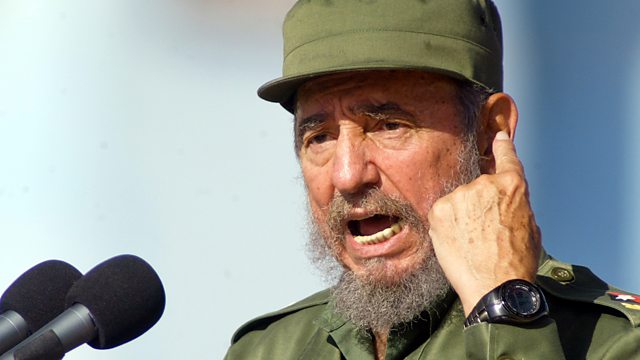
Fidel Castro - America's Nemesis
Similar Content
Browse content similar to Fidel Castro - America's Nemesis. Check below for episodes and series from the same categories and more!
Transcript
| Line | From | To | |
|---|---|---|---|
Fidel Castro spent most of his life at war | 0:00:04 | 0:00:07 | |
with the United States of America. | 0:00:07 | 0:00:09 | |
He leaned forward | 0:00:10 | 0:00:12 | |
and put his very long, thin, strong finger in my chest | 0:00:12 | 0:00:17 | |
and said to me, "I know what US policy is. | 0:00:17 | 0:00:21 | |
"I have people at the highest levels of your government. | 0:00:21 | 0:00:25 | |
"Your policy is to wait for me to die, | 0:00:25 | 0:00:27 | |
"and I don't intend to cooperate." | 0:00:27 | 0:00:29 | |
IN SPANISH: | 0:00:29 | 0:00:31 | |
His was a dictatorship that lasted more than 50 years. | 0:00:39 | 0:00:44 | |
He crossed swords with 11 US presidents | 0:00:44 | 0:00:47 | |
and survived hundreds of assassination attempts... | 0:00:47 | 0:00:51 | |
and an invasion. | 0:00:51 | 0:00:53 | |
For millions around the world, he was an inspiring revolutionary. | 0:00:53 | 0:00:58 | |
Castro was an almost mythical figure. | 0:00:58 | 0:01:01 | |
A figure worshipped by the left in general, | 0:01:01 | 0:01:04 | |
although not without misgivings. | 0:01:04 | 0:01:07 | |
To his critics, he was a brutal dictator, | 0:01:07 | 0:01:10 | |
imprisoning and executing tens of thousands of opponents. | 0:01:10 | 0:01:14 | |
As he famously said once, | 0:01:14 | 0:01:18 | |
"Trust no-one", and he didn't. | 0:01:18 | 0:01:21 | |
IN SPANISH: | 0:01:21 | 0:01:24 | |
A giant of the Cold War, | 0:01:30 | 0:01:32 | |
Castro took the world to the brink of nuclear Armageddon. | 0:01:32 | 0:01:37 | |
When somebody asked him, | 0:01:37 | 0:01:39 | |
"What do you think history are going to tell about you?" | 0:01:39 | 0:01:41 | |
Fidel said, "When? In 100 years, in 500 years? | 0:01:41 | 0:01:48 | |
"1,000 years? When?" | 0:01:48 | 0:01:51 | |
Castro's death has now reignited the debate | 0:01:53 | 0:01:56 | |
on one of the most divisive and controversial figures | 0:01:56 | 0:01:59 | |
of the 20th century. | 0:01:59 | 0:02:01 | |
It's hard to imagine today that Fidel Castro's relationship | 0:02:08 | 0:02:12 | |
with the United States began in 1959 as something of a love affair. | 0:02:12 | 0:02:17 | |
-CHANTING: -Fidel Castro! Fidel Castro! Fidel Castro! | 0:02:18 | 0:02:21 | |
-NEWSREEL: -New York's Pennsylvania Station rarely | 0:02:21 | 0:02:24 | |
has seen anything like it. | 0:02:24 | 0:02:25 | |
Only the magnetism of a Castro could produce it. | 0:02:25 | 0:02:28 | |
Just three months earlier, | 0:02:30 | 0:02:32 | |
Castro had taken control of Cuba in a violent revolution. | 0:02:32 | 0:02:35 | |
On his 11-day trip, | 0:02:38 | 0:02:40 | |
he wowed America with the charisma that had helped propel him to power. | 0:02:40 | 0:02:44 | |
Even a child appears dressed in Castro-like garb. | 0:02:45 | 0:02:49 | |
I came for good relations. | 0:02:49 | 0:02:52 | |
For good understanding. | 0:02:52 | 0:02:54 | |
For good economical relations. | 0:02:54 | 0:02:57 | |
Castro had burst onto the world stage at the height of the Cold War. | 0:02:57 | 0:03:02 | |
When he met America's vice president, | 0:03:04 | 0:03:06 | |
the big question for Richard Nixon was, whose side was Castro on? | 0:03:06 | 0:03:11 | |
At the end of the conversation, | 0:03:12 | 0:03:13 | |
Nixon wrote that Fidel was a great leader | 0:03:13 | 0:03:17 | |
and it was clear that he was going to be a great leader, | 0:03:17 | 0:03:19 | |
but that he didn't know whether Fidel was naive or was a communist. | 0:03:19 | 0:03:24 | |
When I repeated that to Fidel, later on, | 0:03:24 | 0:03:28 | |
after reading memorandum conversation, Fidel said, | 0:03:28 | 0:03:32 | |
"Well, I was both or I was neither." | 0:03:32 | 0:03:35 | |
Fidel was not clear in his own mind exactly what he was at that time. | 0:03:35 | 0:03:39 | |
His views were just evolving. | 0:03:39 | 0:03:41 | |
But the courtship between Castro and America didn't last long. | 0:03:42 | 0:03:46 | |
Within months, relations turned hostile, | 0:03:48 | 0:03:51 | |
and they remained hostile for the next 50 years. | 0:03:51 | 0:03:54 | |
The story of why Cuba and America, just 90 miles apart, | 0:03:56 | 0:04:00 | |
became implacable foes is a story of Castro's revolution | 0:04:00 | 0:04:04 | |
and how it managed to survive for so long. | 0:04:04 | 0:04:07 | |
Fidel Castro was born in 1926 | 0:04:09 | 0:04:13 | |
in Cuba's sugar cane heartlands. | 0:04:13 | 0:04:16 | |
His father was a wealthy farmer. | 0:04:16 | 0:04:18 | |
His mother was a servant on the estate. | 0:04:20 | 0:04:23 | |
Castro was sent away to be schooled by Jesuits in Santiago. | 0:04:23 | 0:04:27 | |
He's a smart guy, he works hard. | 0:04:30 | 0:04:32 | |
He's a star basketball and baseball athlete, | 0:04:32 | 0:04:35 | |
and he gets a car from his dad to ride to the University of Havana. | 0:04:35 | 0:04:39 | |
As a law student in 1945, | 0:04:42 | 0:04:45 | |
Fidel Castro joined the struggle for Cuba's future. | 0:04:45 | 0:04:48 | |
Havana University was a cauldron of radical politics of all kinds. | 0:04:52 | 0:04:56 | |
There were often violent protests. | 0:04:56 | 0:04:58 | |
-TRANSLATION: -Fidel used to wear a pistol in his belt, and so did I. | 0:05:04 | 0:05:07 | |
We all had to be armed if we wanted to exercise the right | 0:05:07 | 0:05:09 | |
to give an opinion at the university square. | 0:05:09 | 0:05:12 | |
In the 1950s, Cuba was the gambling and prostitution capital | 0:05:18 | 0:05:22 | |
of the Caribbean. | 0:05:22 | 0:05:23 | |
It was known as the whorehouse of America. | 0:05:23 | 0:05:28 | |
Many of the casinos were owned by American mobsters. | 0:05:28 | 0:05:31 | |
Politics was dominated by military strongman General Fulgencio Batista. | 0:05:33 | 0:05:38 | |
HE SPEAKS IN SPANISH | 0:05:43 | 0:05:44 | |
-TRANSLATION: -No-one could put up with those conditions of life. | 0:05:46 | 0:05:50 | |
Prostitution was a big problem, and so were the casinos. | 0:05:53 | 0:05:57 | |
Children couldn't go to school. | 0:05:57 | 0:05:59 | |
We, the students, couldn't accept it. | 0:06:04 | 0:06:06 | |
In 1948, Castro married the daughter of a wealthy family | 0:06:10 | 0:06:14 | |
with political connections. | 0:06:14 | 0:06:17 | |
The couple had a son, Fidelito. | 0:06:17 | 0:06:19 | |
The ambitious young Castro ran for election to congress, | 0:06:21 | 0:06:24 | |
vowing to clean up corruption. | 0:06:24 | 0:06:26 | |
But in 1952, General Batista seized power in a military coup. | 0:06:32 | 0:06:37 | |
His new regime was supported by America. | 0:06:39 | 0:06:42 | |
Students took to the streets in protest, but were brushed aside. | 0:06:45 | 0:06:49 | |
-TRANSLATION: -And now there's a government | 0:06:53 | 0:06:55 | |
which is not even dressed in civilian clothes. | 0:06:55 | 0:06:58 | |
It's a military government, | 0:06:58 | 0:07:00 | |
where public freedoms are restricted, | 0:07:00 | 0:07:02 | |
and where the only way to change the situation | 0:07:02 | 0:07:05 | |
is through revolutionary action. | 0:07:05 | 0:07:07 | |
Castro soon became central to the armed resistance | 0:07:10 | 0:07:12 | |
against the dictatorship and the Cuban army. | 0:07:12 | 0:07:15 | |
In 1953, he launched an audacious attack against Batista's regime, | 0:07:20 | 0:07:24 | |
leading around 150 men in an assault | 0:07:24 | 0:07:28 | |
on the Moncada Army Barracks in Santiago. | 0:07:28 | 0:07:30 | |
IN SPANISH: | 0:07:32 | 0:07:35 | |
But the Moncada attack was a disaster. | 0:07:56 | 0:08:00 | |
Around 60 rebels were killed. | 0:08:00 | 0:08:02 | |
Castro was captured and put on trial. | 0:08:04 | 0:08:08 | |
The trial was a chance to promote his political vision. | 0:08:08 | 0:08:12 | |
He was his own lawyer, he spoke on his own behalf, | 0:08:12 | 0:08:16 | |
and his trial defence was then edited | 0:08:16 | 0:08:19 | |
and published as a pamphlet | 0:08:19 | 0:08:22 | |
that turned out to be effective as a way to describe | 0:08:22 | 0:08:26 | |
the political plan for a movement that had never had a political plan. | 0:08:26 | 0:08:32 | |
Castro's famous pamphlet was called History Will Absolve Me. | 0:08:32 | 0:08:36 | |
-TRANSLATION: -History Will Absolve Me we used to say was our Bible. | 0:08:41 | 0:08:46 | |
It became the country's first constitution | 0:08:46 | 0:08:48 | |
for us in the opposition. | 0:08:48 | 0:08:49 | |
History Will Absolve Me was where Fidel talked to the problem | 0:08:53 | 0:08:55 | |
of the poor, the problem of the schools, | 0:08:55 | 0:08:58 | |
the problem of land for the peasants, | 0:08:58 | 0:09:00 | |
which was a very serious problem, | 0:09:00 | 0:09:02 | |
housing, all those things, which were serious problems. | 0:09:02 | 0:09:05 | |
Castro was sentenced to 15 years in one of Cuba's most notorious jails. | 0:09:07 | 0:09:13 | |
Years later, he recalled his incarceration fondly. | 0:09:13 | 0:09:17 | |
IN SPANISH: | 0:09:17 | 0:09:19 | |
In prison, Castro decided to divorce his wife | 0:09:41 | 0:09:43 | |
and wrote a letter to his sister | 0:09:43 | 0:09:46 | |
revealing how hard he would fight for custody of his son. | 0:09:46 | 0:09:49 | |
He says, "Look, I am going to wage a war | 0:09:49 | 0:09:53 | |
"that is going to make the Hundred Year War | 0:09:53 | 0:09:57 | |
"look like a walk at the beach. I will never give up. | 0:09:57 | 0:10:03 | |
"I will do this even if the world shall be destroyed in the process." | 0:10:03 | 0:10:09 | |
So we have here, very clearly, in the letters, he tells you, | 0:10:11 | 0:10:17 | |
"I am a scorched-earth warrior, I will bluff until I win." | 0:10:17 | 0:10:23 | |
-NEWSREEL: -1955. | 0:10:23 | 0:10:24 | |
In an attempt to cope with the serious unrest in Cuba, | 0:10:24 | 0:10:27 | |
Batista tries appeasement. | 0:10:27 | 0:10:29 | |
A general amnesty frees a beardless Fidel Castro. | 0:10:29 | 0:10:32 | |
His brother Raul leaves with him. | 0:10:32 | 0:10:35 | |
Released after nearly two years, | 0:10:35 | 0:10:37 | |
Castro immediately set about taking on Batista again. | 0:10:37 | 0:10:41 | |
He announces that he will leave the country to organise an invasion. | 0:10:43 | 0:10:47 | |
Castro travelled to Miami to raise money... | 0:10:53 | 0:10:56 | |
..and to Mexico to put together the nucleus of a new guerrilla force. | 0:10:59 | 0:11:02 | |
Among Castro's recruits was a young Argentine doctor. | 0:11:05 | 0:11:09 | |
Che Guevara would become a key figure in the revolution... | 0:11:09 | 0:11:14 | |
and its global face. | 0:11:14 | 0:11:16 | |
In-built into the Cuban revolution, right from the beginning, | 0:11:16 | 0:11:20 | |
was the spirit of internationalism, | 0:11:20 | 0:11:23 | |
that our leaders were Fidel and Che, an Argentinian, | 0:11:23 | 0:11:28 | |
so it was a fight not just for Cuba, but the whole continent. | 0:11:28 | 0:11:33 | |
Castro's revolutionaries called themselves the July 26th Movement, | 0:11:33 | 0:11:37 | |
in memory of the Moncada Barracks assault. | 0:11:37 | 0:11:41 | |
But alongside the armed struggle, | 0:11:41 | 0:11:43 | |
Castro was also a master of propaganda, | 0:11:43 | 0:11:46 | |
quickly latching on to the new marketing methods of 1950s America. | 0:11:46 | 0:11:51 | |
-TRANSLATION: -He learned how effective | 0:11:56 | 0:11:58 | |
advertising campaigns could be. | 0:11:58 | 0:12:00 | |
You could sell soap through adverts, or any product, | 0:12:00 | 0:12:04 | |
so in a country full of frustration | 0:12:04 | 0:12:06 | |
and social problems, why not a political idea? | 0:12:06 | 0:12:09 | |
The revolution began inauspiciously | 0:12:16 | 0:12:18 | |
in a small cabin cruiser called Granma. | 0:12:18 | 0:12:21 | |
Castro and around 80 men set sail from Mexico in November 1956. | 0:12:21 | 0:12:27 | |
The boat was overloaded, | 0:12:27 | 0:12:30 | |
and a 1,200-mile voyage took longer than expected. | 0:12:30 | 0:12:34 | |
They missed their intended landing spot on Cuba's southeast tip, | 0:12:34 | 0:12:38 | |
ending up in a mangrove swamp. They were ambushed by Batista's troops. | 0:12:38 | 0:12:44 | |
Fewer than 20 of Castro's men escaped to the mountains with him. | 0:12:44 | 0:12:48 | |
In the Sierra Maestra, | 0:12:53 | 0:12:54 | |
Castro once again turned a setback to his advantage. | 0:12:54 | 0:12:58 | |
He began building up his motley army. | 0:12:58 | 0:13:01 | |
Among his most trusted comrades was his younger brother, Raul, | 0:13:01 | 0:13:05 | |
who would be by his side for the next 50 years. | 0:13:05 | 0:13:09 | |
Castro won over the peasants | 0:13:09 | 0:13:11 | |
who came to support his campaign against Batista. | 0:13:11 | 0:13:13 | |
-TRANSLATION: -He made a great impression | 0:13:14 | 0:13:16 | |
on the people in the countryside. | 0:13:16 | 0:13:18 | |
He got along very well with the poor people in the Sierra Maestra. | 0:13:18 | 0:13:22 | |
They saw the commander as the person who had come | 0:13:23 | 0:13:27 | |
to bring about agrarian reform. | 0:13:27 | 0:13:29 | |
Che Guevara was one of Castro's key strategists. | 0:13:32 | 0:13:36 | |
Facing a much stronger enemy, the rebels fought a guerrilla war. | 0:13:37 | 0:13:41 | |
-NEWSREEL: -The Castro rebels plant bombs on buses, on railroad trains. | 0:13:43 | 0:13:46 | |
They set fire to cars and trucks, oil tanks and factories. | 0:13:46 | 0:13:49 | |
Castro also waged a cutting-edge war for hearts and minds. | 0:13:52 | 0:13:56 | |
He invited journalists and film-makers to follow him. | 0:13:58 | 0:14:01 | |
This is only the beginning. | 0:14:03 | 0:14:05 | |
The last battle will be fought in the capital, you can be sure. | 0:14:05 | 0:14:08 | |
But Batista also manipulated the media, | 0:14:11 | 0:14:14 | |
telling a journalist Castro had been killed. | 0:14:14 | 0:14:17 | |
The reason Batista did that was he knew that Fidel Castro | 0:14:17 | 0:14:22 | |
needed celebrity and fame to exist and make his revolution happen. | 0:14:22 | 0:14:28 | |
So what does Fidel Castro do? He's panicked. | 0:14:28 | 0:14:30 | |
He's in the Sierra, he says, "Oh, my God, they're writing I'm dead", | 0:14:30 | 0:14:34 | |
and that's when he summons Herbert Matthews of the New York Times, | 0:14:34 | 0:14:37 | |
then the most influential reporter in the country, | 0:14:37 | 0:14:41 | |
then he does this charade where he turns his 50 troops into... | 0:14:41 | 0:14:45 | |
He keeps rotating them so they look like hundreds | 0:14:45 | 0:14:48 | |
and hundreds and hundreds. | 0:14:48 | 0:14:49 | |
Stagecraft, propaganda. | 0:14:49 | 0:14:52 | |
No-one has ever been in his league in that regard. | 0:14:52 | 0:14:55 | |
Castro's revolutionary message was left wing, | 0:14:59 | 0:15:01 | |
but not, at that stage, communist. | 0:15:01 | 0:15:04 | |
It is not communism or Marxism in our idea. | 0:15:04 | 0:15:10 | |
Our political philosophy is representative democracy | 0:15:10 | 0:15:16 | |
and social justice in a well-planned economy. | 0:15:16 | 0:15:22 | |
Castro's vision struck a chord with many Cubans. | 0:15:22 | 0:15:26 | |
That was a very exciting message for a young generation. | 0:15:26 | 0:15:31 | |
So all of us, and certainly the rest of the Cuban people, | 0:15:31 | 0:15:39 | |
followed that hope. | 0:15:39 | 0:15:41 | |
-NEWSREEL: -Batista's henchmen have fled. | 0:15:44 | 0:15:45 | |
Towards the end of 1958, Batista lost control of Havana. | 0:15:45 | 0:15:50 | |
This was the scene of turmoil in the capital Havana | 0:15:50 | 0:15:53 | |
as the climax of revolution was reached. | 0:15:53 | 0:15:56 | |
Anyone suspected of sympathy for the Batista regime | 0:15:56 | 0:15:58 | |
came in for a rough time. | 0:15:58 | 0:16:01 | |
On New Year's Day, 1959, Batista fled, | 0:16:04 | 0:16:07 | |
taking millions of dollars with him, | 0:16:07 | 0:16:10 | |
but leaving behind the trappings of dictatorship. | 0:16:10 | 0:16:13 | |
A week later, Castro made a triumphal arrival in the city. | 0:16:19 | 0:16:23 | |
-TRANSLATION: -It was as if somebody had said a cyclone was coming. | 0:16:30 | 0:16:35 | |
But it was a cyclone we had longed for, | 0:16:35 | 0:16:37 | |
because it would sweep the rottenness away. | 0:16:37 | 0:16:40 | |
Castro's first speech as Cuba's new leader was carefully staged. | 0:16:43 | 0:16:48 | |
Before he spoke, they released a flock of white doves, | 0:16:50 | 0:16:55 | |
but one of the doves floated up in the air and then came back | 0:16:55 | 0:16:57 | |
and landed on Castro's shoulder, | 0:16:57 | 0:17:00 | |
and remained there throughout the speech. | 0:17:00 | 0:17:03 | |
People in the audience were gasping, | 0:17:03 | 0:17:06 | |
because the white dove is the messenger of the gods in Santeria, | 0:17:06 | 0:17:11 | |
which is the most powerful religion in Cuba. | 0:17:11 | 0:17:14 | |
The messenger the gods sent to indicate the anointed one. | 0:17:14 | 0:17:19 | |
One of the new Cuban leader's first priorities | 0:17:24 | 0:17:27 | |
was mounting a charm offensive on American television. | 0:17:27 | 0:17:30 | |
Just 30 days ago, Fidel Castro entered Havana to be greeted | 0:17:30 | 0:17:34 | |
by cheering mobs as one the greatest heroes in Cuba's history. | 0:17:34 | 0:17:38 | |
Good evening, Fidel Castro. | 0:17:38 | 0:17:41 | |
At the age of 32, you now have in your hands | 0:17:41 | 0:17:45 | |
a great deal of power and a great deal of responsibility. | 0:17:45 | 0:17:48 | |
Aren't you a little frightened by this? | 0:17:48 | 0:17:51 | |
Well, really, not frightened, because I have self-confidence. | 0:17:51 | 0:17:57 | |
In pyjamas in his apartment in Havana's Hilton hotel, | 0:17:57 | 0:18:01 | |
it was perhaps the most intimate interview ever given | 0:18:01 | 0:18:04 | |
by a world leader. | 0:18:04 | 0:18:05 | |
There was even discussion of Castro's famous beard. | 0:18:05 | 0:18:09 | |
My beard means many things to my country. | 0:18:09 | 0:18:14 | |
When we have fulfilled our promise of good government, | 0:18:14 | 0:18:18 | |
I will cut my beard. | 0:18:18 | 0:18:20 | |
Politics was not entirely off limits. | 0:18:20 | 0:18:23 | |
The young Castro was asked about his tough treatment | 0:18:23 | 0:18:25 | |
of Batista's henchman. | 0:18:25 | 0:18:27 | |
Well, Fidel Castro, what about the trials of Batista's followers? | 0:18:27 | 0:18:33 | |
Well, I think, myself, all our people, that they are just... | 0:18:33 | 0:18:38 | |
because we are not living now in normal conditions. | 0:18:38 | 0:18:43 | |
Behind the soft image Castro was keen to project, | 0:18:44 | 0:18:47 | |
he was tightening his grip on power. | 0:18:47 | 0:18:49 | |
There were show trials and public executions | 0:18:51 | 0:18:54 | |
of those suspected of being part of Batista's regime, | 0:18:54 | 0:18:57 | |
despite America's condemnation. | 0:18:57 | 0:18:59 | |
GUNSHOTS | 0:19:02 | 0:19:03 | |
Castro started breaking up large farms and plantations | 0:19:05 | 0:19:08 | |
and handing the land over to Cuba's peasants, | 0:19:08 | 0:19:11 | |
just as he said he would before the revolution. | 0:19:11 | 0:19:14 | |
But Castro didn't deliver on another promise he had made. | 0:19:22 | 0:19:25 | |
We expected him to call an election, | 0:19:28 | 0:19:30 | |
and he said that he was going to call elections in six months. | 0:19:30 | 0:19:35 | |
But then we heard him on TV in four or five months, | 0:19:36 | 0:19:43 | |
the famous words, phrase, | 0:19:43 | 0:19:47 | |
that he repeated, "Elecciones para que?" | 0:19:47 | 0:19:51 | |
"Elections? For what?" | 0:19:51 | 0:19:54 | |
So we started realising that all the things that this guy had promised | 0:19:54 | 0:19:59 | |
when he was in the mountains, he was not going to really realise. | 0:19:59 | 0:20:05 | |
Robin Day of the BBC asked Castro why he was breaking his promise. | 0:20:05 | 0:20:11 | |
You obviously have a great deal of support | 0:20:11 | 0:20:13 | |
among the people of Cuba, Dr Castro. | 0:20:13 | 0:20:15 | |
Why, in that case, do you not hold elections on a democratic basis? | 0:20:15 | 0:20:19 | |
We asked the people. | 0:20:19 | 0:20:21 | |
The people said we don't want political now | 0:20:21 | 0:20:24 | |
because we are working. | 0:20:24 | 0:20:25 | |
Political was good only for robbers and for criminals. | 0:20:25 | 0:20:30 | |
Fidel Castro genuinely believed that, in an important sense, | 0:20:30 | 0:20:37 | |
he was always a democrat. | 0:20:37 | 0:20:41 | |
He believed that he had the support of the majority of the Cuban people. | 0:20:41 | 0:20:48 | |
But as the nature of Castro's revolution became clearer, | 0:20:50 | 0:20:53 | |
many Cubans turned against him, particularly the middle classes. | 0:20:53 | 0:20:57 | |
Hundreds of thousands of Cubans fled the country | 0:21:02 | 0:21:05 | |
as Castro began seizing private businesses. | 0:21:05 | 0:21:09 | |
Most ended up in Miami. | 0:21:10 | 0:21:11 | |
What was your position, your job, in Cuba? | 0:21:12 | 0:21:14 | |
-I was a manager in a sugar company. -And why did you leave? | 0:21:14 | 0:21:18 | |
Well, because they took absolutely everything... | 0:21:18 | 0:21:21 | |
of our company. | 0:21:21 | 0:21:24 | |
Those exiles felt that things were worse | 0:21:24 | 0:21:26 | |
than they had ever been under Batista. | 0:21:26 | 0:21:28 | |
Miami became a haven for deeply, deeply embittered people | 0:21:28 | 0:21:33 | |
who...had a lovely synergy with those in power in Washington. | 0:21:33 | 0:21:41 | |
Relations between Cuba and America were deteriorating fast. | 0:21:44 | 0:21:47 | |
Castro began seizing businesses owned by powerful Americans. | 0:21:50 | 0:21:53 | |
In retaliation, | 0:21:55 | 0:21:57 | |
the US refused to buy Cuba's sugar or supply the country with oil. | 0:21:57 | 0:22:01 | |
It was a huge blow to Castro. | 0:22:01 | 0:22:03 | |
Che Guevara was now head of Cuba's national bank, | 0:22:07 | 0:22:10 | |
and, in 1960, he struck a crucial deal with America's Cold War rival, | 0:22:10 | 0:22:14 | |
the Soviet Union. | 0:22:14 | 0:22:16 | |
They would buy one million tonnes of sugar a year, a lifeline for Cuba. | 0:22:16 | 0:22:22 | |
Economics as well as politics was propelling Castro | 0:22:22 | 0:22:25 | |
towards the Soviets. | 0:22:25 | 0:22:27 | |
Soon, Cuba had not just new Russian tractors... | 0:22:29 | 0:22:32 | |
..but tanks and other weapons too. | 0:22:33 | 0:22:36 | |
In March 1960, there was an explosion on an ammunition ship | 0:22:48 | 0:22:51 | |
in Havana Docks. | 0:22:51 | 0:22:53 | |
At least 75 people died. Castro blamed the Americans. | 0:22:54 | 0:23:00 | |
-NEWSREEL: -Fidel Castro suggests it was sabotage, | 0:23:00 | 0:23:03 | |
occurring with the knowledge and approval of the US government. | 0:23:03 | 0:23:07 | |
Cuba was on a war footing. | 0:23:11 | 0:23:13 | |
America's CIA began targeting Castro. | 0:23:17 | 0:23:19 | |
There were plots to kill him using poisoned pens and pills. | 0:23:21 | 0:23:25 | |
Even exploding cigars. Castro revelled in the CIA's bungling. | 0:23:25 | 0:23:31 | |
And I do not worry at all. It's news. | 0:23:31 | 0:23:36 | |
-TRANSLATION: -They never understood that the best way | 0:23:36 | 0:23:39 | |
to fight Fidel Castro is not to confront him, | 0:23:39 | 0:23:41 | |
because where can he go from there? | 0:23:41 | 0:23:44 | |
He wouldn't have known what to do, because he needs the confrontation. | 0:23:45 | 0:23:49 | |
That's what the United States were useful for. | 0:23:49 | 0:23:51 | |
Fidel loves the US, they did everything he wanted. | 0:23:51 | 0:23:55 | |
-IN ENGLISH: -He's the hero. He's David against Goliath. | 0:23:56 | 0:24:00 | |
Deep in the Florida Everglades, the CIA was working with hundreds | 0:24:03 | 0:24:06 | |
of Cuban exiles on a bold plan to invade Cuba. | 0:24:06 | 0:24:10 | |
We felt that we had to do something. | 0:24:14 | 0:24:17 | |
We had to do something to reclaim the nation. | 0:24:17 | 0:24:21 | |
President Kennedy refused to commit American forces, | 0:24:21 | 0:24:24 | |
but was happy for the exiles to go ahead. | 0:24:24 | 0:24:26 | |
It would turn out to be a huge blunder that Castro would exploit. | 0:24:31 | 0:24:34 | |
American bombers painted to look like Cuban planes | 0:24:38 | 0:24:41 | |
and piloted by exiles | 0:24:41 | 0:24:42 | |
set out from Nicaragua to destroy Castro's air force. | 0:24:42 | 0:24:45 | |
But he feared an attack was coming, and had hidden most of his planes. | 0:24:48 | 0:24:51 | |
The Cubans began preparing for a ground invasion. | 0:24:54 | 0:24:57 | |
Two days later, 1,400 exiles landed on Cuba's south coast | 0:25:01 | 0:25:05 | |
at the Bay of Pigs. | 0:25:05 | 0:25:08 | |
Very little would go to plan. | 0:25:08 | 0:25:10 | |
I landed in the first wave. | 0:25:10 | 0:25:14 | |
The first thing that I heard was, "Viva Fidel Castro." | 0:25:14 | 0:25:17 | |
Resistance was fiercer than expected. | 0:25:19 | 0:25:21 | |
The Cuban air force sank two supply ships. | 0:25:21 | 0:25:25 | |
Castro rushed to the Bay of Pigs to take command. | 0:25:25 | 0:25:28 | |
Perhaps, that night, the most intense fight | 0:25:30 | 0:25:34 | |
that has taken place in Cuba in the 20th century. | 0:25:34 | 0:25:41 | |
Over two days, 70,000 Cuban troops using Soviet tanks | 0:25:41 | 0:25:46 | |
overpowered the would-be liberators. 114 exiles were killed. | 0:25:46 | 0:25:52 | |
Around 1,100 were captured. | 0:25:52 | 0:25:54 | |
The invasion had achieved the opposite | 0:25:54 | 0:25:57 | |
of what its participants had intended. | 0:25:57 | 0:26:00 | |
The success of the invasion for Fidel Castro gave him | 0:26:01 | 0:26:05 | |
a tremendous sense of invincibility | 0:26:05 | 0:26:08 | |
and also proved to the Soviet Union that he was somebody that | 0:26:08 | 0:26:15 | |
they could trust to maintain the fight | 0:26:15 | 0:26:21 | |
against the US. | 0:26:21 | 0:26:24 | |
As it turned out, they were right. | 0:26:24 | 0:26:27 | |
In Cuba, the revolution was gathering support. | 0:26:29 | 0:26:32 | |
Castro had a populist touch and was busy attacking the vestiges | 0:26:32 | 0:26:35 | |
of privilege from the Batista days. | 0:26:35 | 0:26:38 | |
This used to be the luxurious Biltmore Beach Club, | 0:26:42 | 0:26:45 | |
with, they told me, an entrance fee of 2,000 | 0:26:45 | 0:26:49 | |
and an annual subscription of 200. | 0:26:49 | 0:26:51 | |
Nowadays, anyone can come in for a few cents a time. | 0:26:51 | 0:26:55 | |
With Castro cementing his power over Cuba, | 0:26:57 | 0:27:00 | |
the Americans focused on a covert war of sabotage and subversion. | 0:27:00 | 0:27:04 | |
Now he showed how pragmatic he could be. | 0:27:06 | 0:27:08 | |
He had come to power vowing he was not a communist, | 0:27:14 | 0:27:17 | |
but, in December 1961, | 0:27:17 | 0:27:20 | |
Castro formally threw in his lot with the Soviets. | 0:27:20 | 0:27:23 | |
IN SPANISH: | 0:27:26 | 0:27:27 | |
APPLAUSE | 0:27:34 | 0:27:35 | |
When he announces on national television that he had become | 0:27:37 | 0:27:41 | |
a Marxist-Leninist and, quote, "I will be one till the day I die", | 0:27:41 | 0:27:45 | |
he also said that he had not finished even the first book | 0:27:45 | 0:27:47 | |
of Karl Marx's Capital. | 0:27:47 | 0:27:50 | |
This is not book learning. This is saying, "You know, it looks good. | 0:27:50 | 0:27:57 | |
"Good enough, at least. | 0:27:57 | 0:27:58 | |
"If I'm going to be a Soviet ally, | 0:27:58 | 0:28:00 | |
"I'd better say that I'm a communist." | 0:28:00 | 0:28:03 | |
The Russians now had an ally just 90 miles from the coast of Florida. | 0:28:03 | 0:28:08 | |
Castro became a communist hero. | 0:28:08 | 0:28:11 | |
IN RUSSIAN: | 0:28:14 | 0:28:16 | |
Cuba had become the first communist beachhead | 0:28:21 | 0:28:24 | |
in the Western hemisphere. | 0:28:24 | 0:28:27 | |
In response, America tightened its economic noose around Castro, | 0:28:27 | 0:28:31 | |
putting in place a trade embargo that lasted more than 50 years. | 0:28:31 | 0:28:35 | |
But as the Cold War deepened, Cuba and its newly communist | 0:28:37 | 0:28:41 | |
leader would soon bring the world to the edge of destruction. | 0:28:41 | 0:28:44 | |
We were this close to nuclear holocaust, | 0:28:46 | 0:28:49 | |
and Fidel Castro was the main reason that we were that close. | 0:28:49 | 0:28:52 | |
In June 1961, the United States had placed nuclear missiles | 0:28:55 | 0:29:00 | |
in Turkey, capable of striking the Soviet Union. | 0:29:00 | 0:29:04 | |
A year later, the Russian leader Khrushchev persuaded Castro | 0:29:04 | 0:29:07 | |
to allow its nuclear missiles to be secretly sited in Cuba. | 0:29:07 | 0:29:11 | |
That would put Washington in range of a Soviet strike. | 0:29:13 | 0:29:16 | |
-TRANSLATION: -I worked in a factory that made missiles | 0:29:20 | 0:29:23 | |
which were sent to Cuba on the orders of Khrushchev. | 0:29:23 | 0:29:28 | |
It was a test to the Americans | 0:29:28 | 0:29:30 | |
who had put rockets with nuclear warheads in Turkey, | 0:29:30 | 0:29:34 | |
a nice little present. | 0:29:34 | 0:29:35 | |
That could lead to a nuclear war. | 0:29:37 | 0:29:41 | |
But if we put our missiles under their noses, | 0:29:41 | 0:29:44 | |
maybe they would question whether it was worth it or not. | 0:29:44 | 0:29:49 | |
The Soviets set about building missile sites in Cuba. | 0:29:51 | 0:29:54 | |
But they could not be concealed from American spy planes. | 0:29:57 | 0:30:02 | |
They were discovered in October 1962, bringing the two superpowers | 0:30:02 | 0:30:06 | |
to the brink of nuclear war. | 0:30:06 | 0:30:09 | |
Within the past week, | 0:30:09 | 0:30:10 | |
unmistakable evidence has established | 0:30:10 | 0:30:13 | |
the fact that a series of offensive missile sites | 0:30:13 | 0:30:17 | |
is now in preparation on that imprisoned island. | 0:30:17 | 0:30:21 | |
The purpose of these bases can be none other than to provide | 0:30:21 | 0:30:24 | |
a nuclear strike capability against the Western hemisphere. | 0:30:24 | 0:30:29 | |
US President John F Kennedy imposed a naval blockade | 0:30:30 | 0:30:33 | |
against Soviet ships. | 0:30:33 | 0:30:35 | |
Protests erupted around the world. | 0:30:39 | 0:30:41 | |
The crisis peaked when an American spy plane was shot down over Cuba. | 0:30:46 | 0:30:50 | |
The Cold War was turning white hot. | 0:30:54 | 0:30:56 | |
-TRANSLATION: -We had no doubts | 0:31:04 | 0:31:06 | |
that this could have turned into a third world catastrophe. | 0:31:06 | 0:31:11 | |
This was a real possibility. | 0:31:11 | 0:31:13 | |
A single careless step could spark an explosion. | 0:31:13 | 0:31:16 | |
Years later, Castro recalled how high the stakes had been. | 0:31:20 | 0:31:24 | |
IN SPANISH: | 0:31:27 | 0:31:28 | |
After 13 days in which the world stared into the abyss, | 0:31:48 | 0:31:52 | |
the two superpowers came to a deal. | 0:31:52 | 0:31:55 | |
Khrushchev agreed to withdraw his missiles from Cuba. | 0:31:55 | 0:31:58 | |
America withdrew theirs from Turkey. To his horror, Castro was sidelined. | 0:31:58 | 0:32:03 | |
-TRANSLATION: -To a certain extent, at a basic level, | 0:32:10 | 0:32:13 | |
you could say it was a betrayal. | 0:32:13 | 0:32:16 | |
Castro took great offence at the lack of trust | 0:32:18 | 0:32:21 | |
shown by the Soviet Union. | 0:32:21 | 0:32:25 | |
Decades later, Castro revealed his own role in taking the world | 0:32:28 | 0:32:32 | |
to the brink of Armageddon. | 0:32:32 | 0:32:33 | |
When he told us, at the time it was really unbelievable. | 0:32:35 | 0:32:40 | |
He had sent a message to Khrushchev, which he told us about, | 0:32:40 | 0:32:44 | |
in which he said, | 0:32:44 | 0:32:46 | |
"The things about these missiles is that you have to use them first." | 0:32:46 | 0:32:50 | |
You know, a pre-emptive strike. | 0:32:50 | 0:32:52 | |
That, ironically, | 0:32:52 | 0:32:54 | |
proved to be one of the reasons why Khrushchev decided to withdraw them. | 0:32:54 | 0:32:58 | |
He realised that he was losing control | 0:32:58 | 0:33:02 | |
at a moment of grave crisis in the world, | 0:33:02 | 0:33:04 | |
and that maybe Fidel did not have all of his marbles. | 0:33:04 | 0:33:08 | |
He was right. | 0:33:11 | 0:33:13 | |
Thank God that Khrushchev was wise enough to do that, | 0:33:13 | 0:33:16 | |
because otherwise we would have had a nuclear holocaust. | 0:33:16 | 0:33:18 | |
Away from the world stage, Castro was reforming Cuban society. | 0:33:23 | 0:33:27 | |
Before the revolution, | 0:33:30 | 0:33:31 | |
Cuba had been one of the wealthier countries in Latin America... | 0:33:31 | 0:33:35 | |
but many of its six million citizens were poor, | 0:33:35 | 0:33:38 | |
and around a quarter couldn't read. | 0:33:38 | 0:33:41 | |
Castro encouraged thousands of young volunteers | 0:33:41 | 0:33:43 | |
to travel to the countryside to teach literacy, | 0:33:43 | 0:33:48 | |
and he began building a health service. | 0:33:48 | 0:33:50 | |
The successes were enormous. First, the entire population was educated. | 0:33:52 | 0:33:58 | |
Secondly, schools, universities, | 0:33:58 | 0:34:02 | |
built to educate their children and grandchildren. | 0:34:02 | 0:34:05 | |
Third, the creation of a medical system and a health service | 0:34:05 | 0:34:10 | |
that is the envy of most of the world. | 0:34:10 | 0:34:13 | |
Castro himself came to embody the revolution. | 0:34:18 | 0:34:21 | |
He frequently appeared at mass rallies, | 0:34:23 | 0:34:25 | |
making televised speeches of epic proportions, | 0:34:25 | 0:34:28 | |
as his daughter Alina remembers. | 0:34:28 | 0:34:30 | |
-TRANSLATION: -Imagine a child of eight just longing | 0:34:32 | 0:34:34 | |
for six o'clock in the evening | 0:34:34 | 0:34:36 | |
to be able to watch half an hour of cartoons. | 0:34:36 | 0:34:39 | |
This man was talking, he had started at two o'clock, | 0:34:40 | 0:34:43 | |
and the children were virtually praying for him to shut up. | 0:34:43 | 0:34:47 | |
Behind the cult of personality, | 0:34:51 | 0:34:53 | |
the Cuban leader jealously guarded his private life. | 0:34:53 | 0:34:56 | |
-TRANSLATION: -Fidel Castro is a man who has been surrounded | 0:34:59 | 0:35:03 | |
by people since the year he was in the Sierra Maestra. | 0:35:03 | 0:35:06 | |
He needs solitude. | 0:35:07 | 0:35:09 | |
He's a man who is very private in his personal life, | 0:35:09 | 0:35:12 | |
very, very private. | 0:35:12 | 0:35:14 | |
Castro's family was off limits. | 0:35:17 | 0:35:19 | |
He's believed to have had ten children with several women. | 0:35:21 | 0:35:25 | |
Including Fidelito, who he kept from his mother. | 0:35:25 | 0:35:28 | |
His daughter, who later fled Cuba, recalls life with her father. | 0:35:28 | 0:35:32 | |
-TRANSLATION: -To begin with, I was a very normal girl. | 0:35:33 | 0:35:36 | |
When I had any questions, I would go along and ask my parents, | 0:35:36 | 0:35:39 | |
my mother, my father. | 0:35:39 | 0:35:41 | |
The answers were always very cryptic and strange. | 0:35:41 | 0:35:45 | |
They never really explained anything to me. | 0:35:45 | 0:35:48 | |
And so I would let him talk in a monologue | 0:35:48 | 0:35:51 | |
about whatever subject he cared to at that particular moment. | 0:35:51 | 0:35:56 | |
I didn't have a regular place in his world. | 0:35:56 | 0:35:59 | |
Castro's regime persecuted political and social outsiders, | 0:36:02 | 0:36:07 | |
including gays and lesbians. | 0:36:07 | 0:36:09 | |
He constructed a powerful police state. | 0:36:09 | 0:36:12 | |
Fidel was prepared to send people | 0:36:13 | 0:36:16 | |
to prison by the tens of thousands | 0:36:16 | 0:36:19 | |
and hold them in prison for years and years, | 0:36:19 | 0:36:23 | |
simply because of the expression of political views | 0:36:23 | 0:36:28 | |
or to try to associate to oppose him. | 0:36:28 | 0:36:31 | |
This was a ruthless ruler | 0:36:31 | 0:36:33 | |
in the way that he dealt with the domestic political opposition. | 0:36:33 | 0:36:38 | |
CHEERING | 0:36:38 | 0:36:40 | |
One former revolutionary spent 22 years | 0:36:40 | 0:36:43 | |
as a political prisoner after he turned against Castro's regime. | 0:36:43 | 0:36:48 | |
HE SPEAKS SPANISH | 0:36:48 | 0:36:50 | |
-TRANSLATION: -Prison in Cuba was a violent shock for us, | 0:36:50 | 0:36:53 | |
especially after we had fought Batista's dictatorship | 0:36:53 | 0:36:56 | |
which had been very arbitrary and very cruel to political prisoners. | 0:36:56 | 0:37:01 | |
We saw that the very same revolution we had fought for | 0:37:01 | 0:37:05 | |
was using the same or worse methods against political prisoners. | 0:37:05 | 0:37:09 | |
In one of three documentaries Oliver Stone made about him, | 0:37:12 | 0:37:16 | |
Castro rejected criticism of his use of power. | 0:37:16 | 0:37:19 | |
IN SPANISH: | 0:37:21 | 0:37:23 | |
Dictator means strong man, yes, dictator, yes, | 0:37:48 | 0:37:51 | |
in the 1960-'62 period some of them had met harsh | 0:37:51 | 0:37:54 | |
fates, no question about it, but at the same time you have to allow | 0:37:54 | 0:37:57 | |
that there were people who were not necessarily working | 0:37:57 | 0:38:00 | |
in the Cuban peoples' interest. It was a very tricky time. | 0:38:00 | 0:38:03 | |
So, a dictator, you can call him that. It's not a big deal. | 0:38:03 | 0:38:08 | |
The US has supported dictators, | 0:38:08 | 0:38:11 | |
dozens and dozens of dictators, in most of the countries of the world. | 0:38:11 | 0:38:15 | |
The 1960s saw the Cold War expanding into conflicts | 0:38:22 | 0:38:26 | |
around the world. | 0:38:26 | 0:38:28 | |
The US became embroiled in a disastrous war | 0:38:28 | 0:38:31 | |
against the communist backed forces of North Vietnam. | 0:38:31 | 0:38:36 | |
The conflict influenced Fidel Castro and Che Guevara | 0:38:36 | 0:38:40 | |
into internationalising the battle against American global power. | 0:38:40 | 0:38:44 | |
The way to fight the United States is to tie it down. | 0:38:45 | 0:38:49 | |
As Guevara articulately put it, | 0:38:49 | 0:38:51 | |
"Let us create two, three more Vietnams." | 0:38:51 | 0:38:54 | |
Wherever they may be, it doesn't matter. | 0:38:54 | 0:38:56 | |
It might be in the Congo, Bolivia, | 0:38:56 | 0:38:58 | |
it might be everywhere in Latin America or Africa. | 0:38:58 | 0:39:01 | |
Cuba becomes involved in much of the world to try to multiply the impact | 0:39:01 | 0:39:06 | |
of the strategy that the Vietnamese had developed - | 0:39:06 | 0:39:10 | |
fight imperialism wherever it may be. | 0:39:10 | 0:39:12 | |
Che Guevara went to the Congo where he tried to foment revolution, | 0:39:14 | 0:39:19 | |
then he turned his attention to Latin America. | 0:39:19 | 0:39:22 | |
In 1966, he went to Bolivia with a group of guerrillas. | 0:39:22 | 0:39:27 | |
He was hunted down by government troops, helped by the CIA, | 0:39:27 | 0:39:31 | |
and in October 1967, Guevara was captured, and shot the next day. | 0:39:31 | 0:39:36 | |
That image of the dead Che was seen in many parts of South America | 0:39:36 | 0:39:41 | |
and people said so, including people on the left, | 0:39:41 | 0:39:44 | |
"My God, it's like Christ." | 0:39:44 | 0:39:46 | |
Castro saw an opportunity in Che Guevara's death. | 0:39:46 | 0:39:50 | |
HE ORATES IN SPANISH | 0:39:52 | 0:39:54 | |
After Che died, suddenly his face is just everywhere. | 0:40:15 | 0:40:19 | |
It's just on every wall, every placard - | 0:40:19 | 0:40:23 | |
who has not seen the dashing, | 0:40:23 | 0:40:26 | |
handsome face of Che Guevara on their coffee cup, | 0:40:26 | 0:40:29 | |
on their T-shirt? That was all launched by Fidel Castro, | 0:40:29 | 0:40:33 | |
that was taking a Korda picture | 0:40:33 | 0:40:35 | |
and saying he's going to be our global ambassador | 0:40:35 | 0:40:38 | |
for the noble revolution | 0:40:38 | 0:40:40 | |
and the wicked US who must have been behind the Bolivians | 0:40:40 | 0:40:44 | |
and his execution - which to some extent was quite true. | 0:40:44 | 0:40:48 | |
As America's deepening involvement in Vietnam ignited protests | 0:40:51 | 0:40:54 | |
in Britain and beyond, | 0:40:54 | 0:40:55 | |
people on the left increasingly saw Castro as a figurehead. | 0:40:55 | 0:40:59 | |
Castro was like a David and Goliath situation to America. | 0:41:01 | 0:41:05 | |
Here was this tiny country, seeking to implement | 0:41:05 | 0:41:09 | |
a version of socialism, a version of communism, | 0:41:09 | 0:41:12 | |
whatever you want to call it, | 0:41:12 | 0:41:14 | |
up against the might of American capitalism, | 0:41:14 | 0:41:17 | |
which was doing everything it could to crush that - and he survived. | 0:41:17 | 0:41:23 | |
Whatever his defects, and whatever the bad humans rights record | 0:41:23 | 0:41:28 | |
of the island of Cuba, for which Castro was responsible as well, | 0:41:28 | 0:41:33 | |
nevertheless, that status was something that inspired | 0:41:33 | 0:41:37 | |
the rest of the left. | 0:41:37 | 0:41:38 | |
America appeared be losing on two fronts, in Vietnam and Cuba. | 0:41:40 | 0:41:45 | |
To some American diplomats, | 0:41:48 | 0:41:49 | |
the Cold War was blinding the superpower | 0:41:49 | 0:41:52 | |
to the true nature of its enemies. | 0:41:52 | 0:41:54 | |
Our two biggest mistakes in history were in Vietnam, | 0:41:56 | 0:42:00 | |
where we precisely confused communism and nationalism | 0:42:00 | 0:42:04 | |
and in Cuba, where we did the same thing. | 0:42:04 | 0:42:08 | |
The only way you could have dealt successfully | 0:42:08 | 0:42:11 | |
in Vietnam and Cuba is to understand | 0:42:11 | 0:42:13 | |
that nationalism is more important than communism, | 0:42:13 | 0:42:16 | |
from where they're coming. | 0:42:16 | 0:42:18 | |
Our ability to succeed would have depended on our ability | 0:42:18 | 0:42:21 | |
to understand the war that they saw, not the war that we saw. | 0:42:21 | 0:42:25 | |
Pull! | 0:42:25 | 0:42:27 | |
In 1976, a new US president, Jimmy Carter, | 0:42:27 | 0:42:32 | |
hoped for a new start with Cuba. | 0:42:32 | 0:42:35 | |
He sent Robert Pastor as his envoy to meet Castro. | 0:42:37 | 0:42:40 | |
As ever, the Cuban leader was defiant, | 0:42:42 | 0:42:44 | |
bringing up a US government report on CIA plots | 0:42:44 | 0:42:46 | |
to kill foreign leaders, including himself. | 0:42:46 | 0:42:50 | |
He started the meeting by reminding us of the Church Committee Report | 0:42:52 | 0:42:56 | |
on all of the political assassinations, | 0:42:56 | 0:42:58 | |
and he ended a description of those assassinations in the report | 0:42:58 | 0:43:02 | |
by then saying, "That's only about half of all of the attempts | 0:43:02 | 0:43:06 | |
"to kill me by the United States, | 0:43:06 | 0:43:07 | |
"let me tell you about the other half." | 0:43:07 | 0:43:09 | |
And he did. | 0:43:09 | 0:43:11 | |
But over time, the two countries did agreed | 0:43:15 | 0:43:18 | |
to reopen limited diplomatic relations short of full ties. | 0:43:18 | 0:43:21 | |
Carter relaxed the ban on Americans travelling to Cuba, | 0:43:21 | 0:43:25 | |
and Castro released some political prisoners. | 0:43:25 | 0:43:28 | |
He was always a tough negotiator. | 0:43:28 | 0:43:31 | |
He was a powerful attorney, advocate, | 0:43:35 | 0:43:38 | |
he could throw out five arguments | 0:43:38 | 0:43:40 | |
and you'd get the feeling as if he was tying you in a knot, | 0:43:40 | 0:43:44 | |
and then he'd pull it tight. | 0:43:44 | 0:43:45 | |
Brilliant, just brilliant, at times. | 0:43:47 | 0:43:49 | |
President Carter's effort to engage with Castro ultimately | 0:43:51 | 0:43:55 | |
ran into the sand. In the end, for Castro, | 0:43:55 | 0:43:58 | |
cooperation with America was more dangerous than conflict. | 0:43:58 | 0:44:01 | |
Castro had much greater possibilities, | 0:44:03 | 0:44:07 | |
in his eyes, to not normalise relations | 0:44:07 | 0:44:12 | |
when the potential existed, | 0:44:12 | 0:44:15 | |
because the risk of normalising relations | 0:44:15 | 0:44:18 | |
with the United States is significant. | 0:44:18 | 0:44:22 | |
Will they be able to control the country so tightly | 0:44:22 | 0:44:27 | |
with the influx of American ideas and money? | 0:44:27 | 0:44:31 | |
I think it would be very difficult. | 0:44:31 | 0:44:35 | |
Therefore, Castro has other priorities. | 0:44:35 | 0:44:41 | |
EXPLOSIONS | 0:44:41 | 0:44:44 | |
Castro continued to impose himself on the international stage, | 0:44:46 | 0:44:49 | |
this time thousands of miles away in south-west Africa. | 0:44:49 | 0:44:53 | |
When apartheid South Africa tried to destabilise | 0:44:53 | 0:44:56 | |
the left-wing government of Angola, Castro sent in Cuban troops. | 0:44:56 | 0:45:01 | |
IN SPANISH: | 0:45:04 | 0:45:05 | |
Around 10,000 Cuban soldiers are believed to have been killed | 0:45:19 | 0:45:24 | |
in 14 years of fighting. | 0:45:24 | 0:45:26 | |
In 1988, Castro took charge of the war from Havana | 0:45:26 | 0:45:30 | |
for the decisive Battle of Cuito Cuanavale. | 0:45:30 | 0:45:33 | |
IN SPANISH: | 0:45:35 | 0:45:36 | |
Cuba's intervention helped defeat South Africa in Angola. | 0:45:44 | 0:45:49 | |
It also hastened the end of the apartheid regime | 0:45:49 | 0:45:51 | |
that had survived for 40 years. | 0:45:51 | 0:45:54 | |
On his release, | 0:45:54 | 0:45:55 | |
Nelson Mandela acknowledge the debt the new South Africa owed to Cuba. | 0:45:55 | 0:46:00 | |
It's a very great moment for us to be visited by Fidel. | 0:46:00 | 0:46:04 | |
WOMAN TRANSLATES INTO SPANISH | 0:46:04 | 0:46:06 | |
Because what he has done for us... | 0:46:06 | 0:46:08 | |
is difficult to put into words. | 0:46:08 | 0:46:11 | |
Cuba's involvement in Angola was absolutely decisive | 0:46:11 | 0:46:15 | |
because they defeated the apartheid war machine, | 0:46:15 | 0:46:18 | |
which had never been... | 0:46:18 | 0:46:19 | |
South African forces had never been defeated before. | 0:46:19 | 0:46:23 | |
It became a major issue in the subsequent transformation | 0:46:23 | 0:46:28 | |
from the tyranny of apartheid to the free democracy | 0:46:28 | 0:46:31 | |
that we see in South Africa today. | 0:46:31 | 0:46:34 | |
But there was little sign of democracy in Cuba. | 0:46:35 | 0:46:39 | |
Even a popular hero of the Angolan War was not safe from persecution. | 0:46:39 | 0:46:43 | |
'It was the show trial that shook Havana...' | 0:46:43 | 0:46:46 | |
HE SPEAKS SPANISH | 0:46:46 | 0:46:49 | |
In 1989, General Arnaldo Ochoa was controversially convicted | 0:46:49 | 0:46:53 | |
of drug smuggling and corruption and was later executed. | 0:46:53 | 0:46:57 | |
When General Ochoa, the hero of Angola, | 0:47:00 | 0:47:04 | |
was condemned by Raul Castro at Fidel's behest, | 0:47:04 | 0:47:09 | |
and put to death, we all figured he did it | 0:47:09 | 0:47:12 | |
because he was a potential successor, | 0:47:12 | 0:47:15 | |
because Fidel never, ever puts up with potential successors. | 0:47:15 | 0:47:20 | |
Ochoa's death shattered the life of one of his friends, | 0:47:22 | 0:47:26 | |
the Cuban writer, Norberto Fuentes. | 0:47:26 | 0:47:29 | |
He had been part of Castro's inner circle for a decade. | 0:47:29 | 0:47:32 | |
He recalls a fateful meeting with the Cuban leader | 0:47:32 | 0:47:36 | |
after Ochoa's execution. | 0:47:36 | 0:47:38 | |
He gave me his hand, "How are you?" "I'm well, Comandante, how are you?" | 0:47:40 | 0:47:45 | |
"I'm well." He looked at me. He take my measure. | 0:47:46 | 0:47:51 | |
He's taking my measure for my coffin. That's what I think. | 0:47:51 | 0:47:56 | |
And I know that it was the end. | 0:47:58 | 0:48:00 | |
Fuentes tried to flee Cuba, but he was caught and jailed. | 0:48:03 | 0:48:07 | |
Castro let him leave the country after he went on hunger strike. | 0:48:07 | 0:48:10 | |
Now living in America, | 0:48:10 | 0:48:13 | |
his reflections on his life under the revolution | 0:48:13 | 0:48:16 | |
reveal the extraordinary devotion Castro inspired. | 0:48:16 | 0:48:19 | |
Fidel said something one day... | 0:48:21 | 0:48:23 | |
I'm going to say it in Spanish, | 0:48:23 | 0:48:26 | |
because I want to say it exact as he said... | 0:48:26 | 0:48:30 | |
Despite everything, Fuentes still won't denounce Castro. | 0:48:36 | 0:48:41 | |
Nada... | 0:48:41 | 0:48:42 | |
-TRANSLATION: -Nothing personal, no suffering, | 0:48:43 | 0:48:46 | |
no jail or dead friend has diminished my sense of history. | 0:48:46 | 0:48:52 | |
I'm not an enemy of the revolution. | 0:48:52 | 0:48:58 | |
How can you be an enemy of an earthquake? | 0:48:58 | 0:49:02 | |
Now Cuba faced another seismic shock. | 0:49:07 | 0:49:10 | |
For 30 years Castro's regime | 0:49:10 | 0:49:12 | |
had been sustained by Soviet economic help, | 0:49:12 | 0:49:15 | |
but under the new Russian leader, Mikhail Gorbachev, | 0:49:15 | 0:49:18 | |
that began to change. | 0:49:18 | 0:49:20 | |
Communism was collapsing across Eastern Europe. | 0:49:26 | 0:49:29 | |
When the Soviet Union disappeared, so did Castro's lifeline. | 0:49:29 | 0:49:34 | |
HE SPEAKS RUSSIAN | 0:49:36 | 0:49:39 | |
-TRANSLATION: -The majority of industrial facilities in Cuba | 0:49:39 | 0:49:43 | |
were financed by the Soviet Union, were manned by Soviet specialists, | 0:49:43 | 0:49:48 | |
built with materials supplied from the Soviet Union - | 0:49:48 | 0:49:51 | |
and suddenly all that stopped. | 0:49:51 | 0:49:54 | |
Cuba, from an economic point of view, seemed to fall into the abyss. | 0:49:55 | 0:50:00 | |
No support, no resources of its own. | 0:50:00 | 0:50:03 | |
Cuba's economy collapsed. | 0:50:07 | 0:50:10 | |
Without Russian economic support, | 0:50:11 | 0:50:13 | |
ordinary Cubans were thrust into poverty. | 0:50:13 | 0:50:16 | |
Castro blamed the ongoing US embargo | 0:50:16 | 0:50:18 | |
for the country's desperate situation. | 0:50:18 | 0:50:21 | |
HE SPEAKS SPANISH | 0:50:22 | 0:50:24 | |
APPLAUSE | 0:50:47 | 0:50:49 | |
Castro was forced to compromise with capitalism, | 0:50:50 | 0:50:53 | |
allowing some private business | 0:50:53 | 0:50:55 | |
and opening the country to tourism - | 0:50:55 | 0:50:57 | |
but Cuba was on its way to becoming | 0:50:57 | 0:50:59 | |
the third poorest country in Latin America. | 0:50:59 | 0:51:02 | |
As the crisis worsened in 1994, | 0:51:08 | 0:51:11 | |
thousands of desperate Cubans tried to flee, | 0:51:11 | 0:51:14 | |
the latest in a long line to risk it all in the Florida Straits. | 0:51:14 | 0:51:19 | |
Under Castro, around a sixth of Cuba's population went into exile. | 0:51:19 | 0:51:23 | |
-TRANSLATION: -We really don't know how many deaths there have been | 0:51:27 | 0:51:29 | |
of people who were trying to escape from Cuba. | 0:51:29 | 0:51:32 | |
Imagine how desperate you'd have to be | 0:51:32 | 0:51:34 | |
to get hold of an inner tube from some lorry, | 0:51:34 | 0:51:37 | |
throw a sack over it | 0:51:37 | 0:51:38 | |
and try to cross 90 miles of shark-infested water. | 0:51:38 | 0:51:42 | |
But it's easier to do that than to rebel there. | 0:51:42 | 0:51:44 | |
It's more likely that you'll survive that | 0:51:46 | 0:51:48 | |
than taking part in an armed uprising. | 0:51:48 | 0:51:51 | |
But Castro's international isolation began to ease in the late 1990s | 0:51:54 | 0:51:58 | |
as a string of left-wing governments came to power in Latin America. | 0:51:58 | 0:52:03 | |
The newly-elected leaders of Brazil and Venezuela | 0:52:03 | 0:52:06 | |
were among those who paid their dues to Castro. | 0:52:06 | 0:52:09 | |
Lula flew to Havana, met Fidel many times, | 0:52:09 | 0:52:13 | |
likewise Chavez - and for the first time since the Cuban Revolution, | 0:52:13 | 0:52:18 | |
the whole of South America recognised Cuba, | 0:52:18 | 0:52:21 | |
so the Cubans were suddenly joyous. | 0:52:21 | 0:52:26 | |
Venezuela's leader Hugo Chavez became Castro's closest ally. | 0:52:28 | 0:52:33 | |
He gave the struggling Cuban economy a new lease of life | 0:52:33 | 0:52:37 | |
by supplying cheap oil in return for help from Cuban medics. | 0:52:37 | 0:52:41 | |
Castro found admirers among a new generation | 0:52:42 | 0:52:46 | |
of Latin American leaders. | 0:52:46 | 0:52:47 | |
All these regimes had come to power through democratic elections - | 0:52:50 | 0:52:54 | |
none of them had come to power via an armed struggle, | 0:52:54 | 0:52:58 | |
and Fidel understood that the continent was changing, | 0:52:58 | 0:53:02 | |
so they were less isolated from 2000 onwards | 0:53:02 | 0:53:05 | |
than they had been for the preceding 40 years. | 0:53:05 | 0:53:09 | |
Castro never lost his eye for a powerful image | 0:53:12 | 0:53:15 | |
to promote his regime. | 0:53:15 | 0:53:17 | |
He invited Oliver Stone to film | 0:53:17 | 0:53:19 | |
a visit to a Cuban medical school for his documentary. | 0:53:19 | 0:53:22 | |
His message was clear - after 40 years in power, | 0:53:24 | 0:53:28 | |
Castro was still father to the nation and to the continent. | 0:53:28 | 0:53:31 | |
I don't know what picture people draw of Fidel Castro, | 0:53:32 | 0:53:35 | |
but those people who met him | 0:53:35 | 0:53:36 | |
would generally attribute warmth to him | 0:53:36 | 0:53:39 | |
and curiosity about the human condition. | 0:53:39 | 0:53:42 | |
He's a man who's truly interested in people, | 0:53:47 | 0:53:50 | |
because he knows he lives in a bubble, | 0:53:50 | 0:53:53 | |
so, in a way, he's trying to reach out of that bubble. | 0:53:53 | 0:53:56 | |
Castro's health had always been treated as a state secret. | 0:53:56 | 0:54:01 | |
The first sign he was not immortal | 0:54:01 | 0:54:03 | |
came while making a speech in 2004. | 0:54:03 | 0:54:06 | |
Those pictures were very damning to the image of Fidel - | 0:54:09 | 0:54:12 | |
the eternal vigilant, | 0:54:12 | 0:54:14 | |
ever healthy soldier, Comandante, | 0:54:14 | 0:54:17 | |
looking after our country. | 0:54:17 | 0:54:19 | |
In 2006, Castro had intestinal surgery. | 0:54:20 | 0:54:24 | |
Power was gradually handed over to his younger brother Raul. | 0:54:24 | 0:54:27 | |
Clearly Fidel did not want to do it, but he was forced to. | 0:54:27 | 0:54:32 | |
He couldn't appear in public and he was really compelled to do it. | 0:54:32 | 0:54:37 | |
But he didn't really want to do it. | 0:54:37 | 0:54:40 | |
As Fidel Castro's influence waned, Raul sped up the economic reforms. | 0:54:42 | 0:54:47 | |
In 2013, the visit of Barack Obama saw the easing of US sanctions | 0:54:47 | 0:54:53 | |
and the restoration of diplomatic ties between the two countries. | 0:54:53 | 0:54:57 | |
It remains to be seen whether Obama's successor, Donald Trump, | 0:54:59 | 0:55:03 | |
will maintain this new relationship. | 0:55:03 | 0:55:06 | |
Castro was rarely seen in recent years as his health declined. | 0:55:11 | 0:55:15 | |
His death has now reawakened the controversy | 0:55:15 | 0:55:18 | |
over the legacy of a popular revolution | 0:55:18 | 0:55:21 | |
and more than 50 years of authoritarian rule. | 0:55:21 | 0:55:24 | |
The world has rarely seen leaders like that. | 0:55:25 | 0:55:28 | |
Think of individuals who shape their country as completely | 0:55:28 | 0:55:32 | |
as Fidel Castro shaped Cuba, | 0:55:32 | 0:55:34 | |
and there aren't many people like that in the history of the world. | 0:55:34 | 0:55:38 | |
Castro was the last of the original Cold War warriors. | 0:55:38 | 0:55:42 | |
Unlike many, he survived the collapse of the Soviet Union | 0:55:44 | 0:55:47 | |
and remained an icon for left-wing movements around the world. | 0:55:47 | 0:55:52 | |
What I would say is he's one of the giants of the 20th century. | 0:55:52 | 0:55:56 | |
A major figure in South America and the rest of the world, too, | 0:55:56 | 0:56:02 | |
and, within the continent itself, | 0:56:02 | 0:56:04 | |
Fidel will be seen as a gigantic continental figure | 0:56:04 | 0:56:08 | |
of the type that only South America can produce. | 0:56:08 | 0:56:12 | |
He won, he definitely won, and he knows he won. | 0:56:19 | 0:56:23 | |
They didn't kill him, they didn't intimidate him, | 0:56:23 | 0:56:25 | |
he never bowed down. He fought on his... | 0:56:25 | 0:56:27 | |
He stood up and died on his feet, he didn't live on his knees. | 0:56:27 | 0:56:31 | |
Castro once claimed history would absolve him, | 0:56:32 | 0:56:36 | |
but, for some, it is his human rights record | 0:56:36 | 0:56:39 | |
that will also define his legacy. | 0:56:39 | 0:56:41 | |
History will record that this is a ruler | 0:56:44 | 0:56:48 | |
who did many good things to transform his country, | 0:56:48 | 0:56:53 | |
but anyone who imprisoned so many, | 0:56:53 | 0:56:55 | |
who caused the exile of a sixth of his population, | 0:56:55 | 0:57:00 | |
who executed so many and who committed unspeakable crimes | 0:57:00 | 0:57:05 | |
in the name of democracy and socialism, | 0:57:05 | 0:57:08 | |
no, I would not absolve him, | 0:57:08 | 0:57:10 | |
and I don't think history would. | 0:57:10 | 0:57:12 | |
People remember what he did for health care and education in Cuba. | 0:57:12 | 0:57:17 | |
And they'll also remember the completely self-destructive economy. | 0:57:17 | 0:57:21 | |
They'll remember years of conflict with the United States. | 0:57:21 | 0:57:24 | |
History absolved his desire to rid Cuba of the Batista dictatorship, | 0:57:24 | 0:57:30 | |
but it did not absolve his own dictatorship. | 0:57:30 | 0:57:33 |