Stirling to Invergowrie Great British Railway Journeys
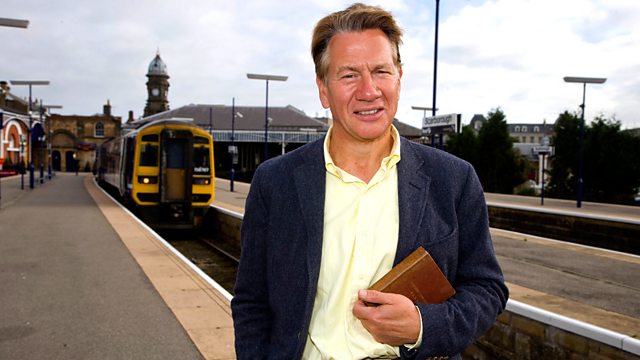
Similar Content
Browse content similar to Stirling to Invergowrie. Check below for episodes and series from the same categories and more!
Transcript
| Line | From | To | |
|---|---|---|---|
In 1840, one man transformed travel in the British Isles. | 0:00:05 | 0:00:10 | |
His name was George Bradshaw | 0:00:10 | 0:00:12 | |
and his railway guides inspired the Victorians to take to the tracks. | 0:00:12 | 0:00:17 | |
Stop by stop, he told them where to travel, what to see, | 0:00:17 | 0:00:21 | |
and where to stay. | 0:00:21 | 0:00:24 | |
Now, 170 years later, | 0:00:24 | 0:00:27 | |
I'm making a series of journeys | 0:00:27 | 0:00:29 | |
across the length and breadth of these isles | 0:00:29 | 0:00:31 | |
to see what of Bradshaw's Britain remains. | 0:00:31 | 0:00:35 | |
I've embarked on a new railway journey | 0:00:54 | 0:00:57 | |
to rural and coastal Scotland. | 0:00:57 | 0:00:58 | |
At the beginning of the 19th century, | 0:00:58 | 0:01:00 | |
much of this country was remote wilderness | 0:01:00 | 0:01:03 | |
which rarely attracted outside visitors. | 0:01:03 | 0:01:06 | |
But in Queen Victoria's reign, with the railways, | 0:01:06 | 0:01:09 | |
the landscape was opened up, | 0:01:09 | 0:01:11 | |
linking communities, developing industries | 0:01:11 | 0:01:14 | |
and providing secure and affordable routes for travellers | 0:01:14 | 0:01:18 | |
to reach even the most northerly parts of her kingdom. | 0:01:18 | 0:01:22 | |
The first leg of this journey meets a Scottish hero... | 0:01:23 | 0:01:26 | |
You have to remember there's a cult of Wallace going around. He's an iconic figure. | 0:01:26 | 0:01:30 | |
He has been ever since his death, or martyrdom, in 1305. | 0:01:30 | 0:01:33 | |
..continues with a bang.. | 0:01:33 | 0:01:35 | |
..and ends in tragedy. | 0:01:38 | 0:01:41 | |
And then the whole train descended into the water? | 0:01:41 | 0:01:43 | |
The whole train descended, everybody was killed. | 0:01:43 | 0:01:45 | |
The photographs show that really large bits of cast iron | 0:01:45 | 0:01:50 | |
were bent and twisted. The impact must have been ferocious. | 0:01:50 | 0:01:53 | |
Using my 1880s Bradshaw's, my journey starts in Stirling, | 0:01:55 | 0:01:59 | |
heads north to Perthshire, onto the granite city of Aberdeen | 0:01:59 | 0:02:04 | |
and then west, through Inverness-shire, | 0:02:04 | 0:02:07 | |
to the famous lochs of the Highlands | 0:02:07 | 0:02:09 | |
before reaching its end at John o' Groats. | 0:02:09 | 0:02:13 | |
Today's leg begins in Stirling, at the heart of Scottish history, | 0:02:15 | 0:02:19 | |
heads to "The Fair City" of Perth, | 0:02:19 | 0:02:21 | |
then on to Dunkeld and Birnam, | 0:02:21 | 0:02:23 | |
ending at Invergowrie on the banks of the River Tay. | 0:02:23 | 0:02:27 | |
For this Scottish journey, | 0:02:34 | 0:02:36 | |
I'm using an 1880s version of my Bradshaw's guide. | 0:02:36 | 0:02:39 | |
I'm now heading across the lowlands of Scotland towards Stirling, | 0:02:39 | 0:02:44 | |
which my Bradshaw's tells me was... | 0:02:44 | 0:02:46 | |
"The ancient seat of the Scottish kings | 0:02:46 | 0:02:48 | |
"and capital of Stirlingshire, | 0:02:48 | 0:02:49 | |
"situated on a beautiful part of the Forth | 0:02:49 | 0:02:52 | |
"about halfway between Edinburgh and Perth." | 0:02:52 | 0:02:55 | |
"On a rock above the town rises the castle of Stirling | 0:02:55 | 0:02:59 | |
"so celebrated in Scottish history." | 0:02:59 | 0:03:01 | |
And I want to find out why it played such a pivotal role. | 0:03:01 | 0:03:06 | |
In the 19th century, trade, particularly in agriculture, | 0:03:09 | 0:03:12 | |
provided Stirling with an injection of wealth - | 0:03:12 | 0:03:15 | |
an economic boom strengthened with the arrival of the railways in 1848. | 0:03:15 | 0:03:21 | |
Although Stirling is the smallest city in Scotland, | 0:03:22 | 0:03:25 | |
its castle has a big history. | 0:03:25 | 0:03:27 | |
From medieval times until Bonnie Prince Charlie's failed siege | 0:03:29 | 0:03:33 | |
in the 18th century, it's been the focus of military campaigns. | 0:03:33 | 0:03:38 | |
I'm hoping that castle steward Alan Clater can tell me why. | 0:03:38 | 0:03:42 | |
-Alan, hello. -Nice to meet you. Nice to meet you. | 0:03:42 | 0:03:45 | |
My Bradshaw's says that Stirling is a key to the Highlands, | 0:03:45 | 0:03:49 | |
in an important position, frequently contested. | 0:03:49 | 0:03:52 | |
Why was it so very, very key? | 0:03:52 | 0:03:53 | |
Well, the town of Stirling is located right in the heart of Scotland, | 0:03:53 | 0:03:56 | |
it's slap-bang in the middle of the country | 0:03:56 | 0:03:59 | |
and it's really because of its location that they built a castle, | 0:03:59 | 0:04:02 | |
a fortress, high up here in this volcanic rock, | 0:04:02 | 0:04:04 | |
a strategic position second to none. | 0:04:04 | 0:04:06 | |
In Bradshaw's day, the romanticised version of history | 0:04:06 | 0:04:09 | |
in Sir Walter Scott's novels was a very popular read | 0:04:09 | 0:04:13 | |
and the railways brought tourists keen to visit | 0:04:13 | 0:04:16 | |
where the action in the books had occurred. | 0:04:16 | 0:04:19 | |
During the Wars of Independence, | 0:04:19 | 0:04:21 | |
the castle passed between English and Scottish control many times, | 0:04:21 | 0:04:25 | |
and most of its conquerors added to its fortifications, | 0:04:25 | 0:04:29 | |
from which you feel as though | 0:04:29 | 0:04:31 | |
you are looking out over Scottish history. | 0:04:31 | 0:04:35 | |
Six major battles have been fought around these walls - | 0:04:35 | 0:04:38 | |
the Battle of Stirling Bridge, | 0:04:38 | 0:04:39 | |
the Battle of Bannockburn, the Battle of Sauchieburn, | 0:04:39 | 0:04:42 | |
two battles at Falkirk | 0:04:42 | 0:04:44 | |
and the battle of Sheriffmuir in 1715. | 0:04:44 | 0:04:48 | |
How many of those battles were between the English and the Scottish? | 0:04:48 | 0:04:51 | |
Really three of them, three of them during the Wars of Independence - | 0:04:51 | 0:04:54 | |
the Battle of Stirling Bridge, Bannockburn, | 0:04:54 | 0:04:56 | |
and the first battle of Falkirk. | 0:04:56 | 0:04:57 | |
Around the year 1500, James IV of Scotland | 0:04:57 | 0:05:01 | |
built this impressive forework around the castle entrance. | 0:05:01 | 0:05:05 | |
The palace sits 250 feet above the plain, | 0:05:05 | 0:05:09 | |
giving panoramic views of the surrounding terrain. | 0:05:09 | 0:05:13 | |
And here in the middle of the valley, there's a very prominent tower. What is that? | 0:05:13 | 0:05:16 | |
Ah, that's the National Wallace Monument. | 0:05:16 | 0:05:18 | |
This was erected in 1869 to commemorate Wallace's great victory | 0:05:18 | 0:05:22 | |
-over the English at Stirling Bridge. -William Wallace. | 0:05:22 | 0:05:25 | |
I couldn't come to Stirling without visiting that, could I? | 0:05:25 | 0:05:28 | |
No, you must. | 0:05:28 | 0:05:29 | |
The strategic importance of Stirling in medieval history | 0:05:29 | 0:05:33 | |
is reflected in the key battles that were fought in and around the city. | 0:05:33 | 0:05:37 | |
Today, even from far off, | 0:05:37 | 0:05:39 | |
the Wallace Monument is an impressive tribute | 0:05:39 | 0:05:42 | |
to one of Scotland's favourite sons | 0:05:42 | 0:05:45 | |
and his victory at the Battle of Stirling Bridge. | 0:05:45 | 0:05:47 | |
My Bradshaw's tells me, "About one and a half miles up the river | 0:05:49 | 0:05:53 | |
"is the site where Kildean Bridge stood, | 0:05:53 | 0:05:55 | |
"a place where William Wallace defeated the English in 1297. | 0:05:55 | 0:06:00 | |
"The Wallace Memorial is a high tower on Abbey Craig, | 0:06:00 | 0:06:03 | |
"a rock 560 feet high." | 0:06:03 | 0:06:06 | |
And it's Victorian, | 0:06:06 | 0:06:07 | |
so it wasn't just with Mel Gibson and the movie Braveheart | 0:06:07 | 0:06:10 | |
that William Wallace was first commemorated. | 0:06:10 | 0:06:13 | |
There are 246 steps to the top, | 0:06:20 | 0:06:24 | |
which is a way of ensuring that only hearts beating with Scottish pride will make it. | 0:06:24 | 0:06:29 | |
'Pride that I'm sure historian Scott McMaster has in abundance.' | 0:06:29 | 0:06:34 | |
-Scott. -Hi. -It's worth the climb, isn't it? | 0:06:34 | 0:06:37 | |
It certainly is for the view, that's for sure. | 0:06:37 | 0:06:40 | |
Now, it intrigues me, this is a Victorian monument. | 0:06:40 | 0:06:44 | |
Was the Victorian era an age of Scottish nationalism, | 0:06:44 | 0:06:47 | |
Scottish sentiment? | 0:06:47 | 0:06:48 | |
I think there was an element of that, but what you have to remember is | 0:06:48 | 0:06:51 | |
there's a cult of Wallace going around. He's an iconic figure. | 0:06:51 | 0:06:54 | |
He has been ever since his death, or martyrdom, in 1305. | 0:06:54 | 0:06:58 | |
How was it that it was built at Stirling? | 0:06:58 | 0:07:00 | |
Well, the most important thing is | 0:07:00 | 0:07:02 | |
that this is the site of the Battle of Stirling Bridge, | 0:07:02 | 0:07:05 | |
this is where Wallace's forces came | 0:07:05 | 0:07:06 | |
and camped here, waiting on the English to cross the Stirling Bridge, | 0:07:06 | 0:07:10 | |
and basically this is where his victory was. | 0:07:10 | 0:07:12 | |
How important was his victory over King Edward I? | 0:07:12 | 0:07:15 | |
It was the first time in the medieval period | 0:07:15 | 0:07:17 | |
where a feudal host had actually been decimated by basically a common army, | 0:07:17 | 0:07:21 | |
an inexperienced army. | 0:07:21 | 0:07:22 | |
Wallace then went on to become Guardian of Scotland | 0:07:22 | 0:07:25 | |
and then he began to free Scotland to a certain degree until 1298, | 0:07:25 | 0:07:29 | |
when Edward returned and decimated them at the Battle of Falkirk. | 0:07:29 | 0:07:32 | |
He's caught just outside Glasgow, | 0:07:32 | 0:07:34 | |
taken down to London, put on a show trial, | 0:07:34 | 0:07:36 | |
and basically executed in the most horrific manner. | 0:07:36 | 0:07:40 | |
He's hung, drawn and quartered. | 0:07:40 | 0:07:41 | |
And then, of course, William Wallace has been celebrated by Hollywood | 0:07:41 | 0:07:44 | |
-in the modern age with the movie Braveheart. -Of course, yeah. | 0:07:44 | 0:07:47 | |
I mean, there's a lot of artistic license added to that, | 0:07:47 | 0:07:50 | |
but what the film did do, in terms of this monument, | 0:07:50 | 0:07:53 | |
it doubled visitor numbers and it made the monument itself. | 0:07:53 | 0:07:57 | |
Instead of being open in a seasonal operation in the '90s, | 0:07:57 | 0:07:59 | |
it now opens almost 363 days a year. | 0:07:59 | 0:08:02 | |
So how did the Victorians get themselves organised to build it? | 0:08:02 | 0:08:06 | |
It was done by public subscription. | 0:08:06 | 0:08:07 | |
Scots patriots, ex-pats in Australia, | 0:08:07 | 0:08:10 | |
in America, you know, having their Burns evenings and suppers | 0:08:10 | 0:08:13 | |
and raising money and sending it across. | 0:08:13 | 0:08:15 | |
It's reported that when the foundation stone was laid in 1861, | 0:08:15 | 0:08:20 | |
local trains couldn't cope with the throng of visitors from across Britain. | 0:08:20 | 0:08:25 | |
I wonder whether Mel Gibson's Braveheart film | 0:08:25 | 0:08:28 | |
has encouraged tourists to visit from further afield. | 0:08:28 | 0:08:31 | |
I assumed you were Scottish but you don't sound it. Where are you from? | 0:08:31 | 0:08:35 | |
-We're from Germany. -You're from Germany? Wearing kilts? | 0:08:35 | 0:08:38 | |
Yes, we bought it in Germany for the visits here in Scotland, | 0:08:38 | 0:08:42 | |
and... | 0:08:42 | 0:08:44 | |
-Is that because you have Scottish backgrounds, Scottish family? -No. | 0:08:44 | 0:08:47 | |
First, we saw the film Braveheart and we saw the Highlands | 0:08:47 | 0:08:52 | |
-and... -The nature. | 0:08:52 | 0:08:54 | |
So we come here to see it with our own eyes. | 0:08:54 | 0:08:57 | |
And what did you think of it? Did you enjoy the monument? | 0:08:57 | 0:09:00 | |
-BOTH: Yes, it's very beautiful. -Yeah? -Yeah. | 0:09:00 | 0:09:02 | |
Beautiful view of Stirling and it's something proud. | 0:09:02 | 0:09:06 | |
Having enjoyed that lesson in Scottish history, | 0:09:06 | 0:09:10 | |
I'm resuming my railway journey, | 0:09:10 | 0:09:12 | |
moving north-east from the central battlefields. | 0:09:12 | 0:09:15 | |
This train will take me to Perth, which my Bradshaw's tells me is... | 0:09:25 | 0:09:28 | |
"The capital of Perthshire, a Parliamentary borough, | 0:09:28 | 0:09:32 | |
"an army brigade depot | 0:09:32 | 0:09:33 | |
"and a port to which small craft come up by the Firth of Tay." | 0:09:33 | 0:09:38 | |
It tells me that, "There's salmon fishing in the river | 0:09:38 | 0:09:41 | |
"with a fish culture at Stormontfield." | 0:09:41 | 0:09:43 | |
In Scotland, wherever there's moving water, | 0:09:43 | 0:09:46 | |
you can bet that someone will be casting a fly. | 0:09:46 | 0:09:49 | |
As the first spot over which the mighty Tay could be bridged, | 0:09:59 | 0:10:02 | |
Perth was founded by Scottish king David | 0:10:02 | 0:10:05 | |
in the early 12 century. In the 19th century, | 0:10:05 | 0:10:09 | |
the town was known for two very Scottish products - | 0:10:09 | 0:10:12 | |
whisky and salmon. | 0:10:12 | 0:10:14 | |
And the coming of the railways in 1848 saw them both flourish. | 0:10:14 | 0:10:19 | |
Urban Britain needed food on its plate, | 0:10:21 | 0:10:24 | |
and when salmon could reach the slabs | 0:10:24 | 0:10:26 | |
of London's Billingsgate Fish Market | 0:10:26 | 0:10:28 | |
within hours of leaving Scottish waters, | 0:10:28 | 0:10:31 | |
Perth's fishing industry exploded. | 0:10:31 | 0:10:34 | |
Landlords cashed in by leasing their stretch of the salmon-filled Tay | 0:10:34 | 0:10:38 | |
to commercial fishermen who laid vast nets to maximise their catch. | 0:10:38 | 0:10:43 | |
I'm visiting the oldest salmon fishery on the planet, | 0:10:43 | 0:10:46 | |
owned by David Clarke. | 0:10:46 | 0:10:49 | |
-Hello, David. -Hello. -Very, very good to see you. What a fantastic day. | 0:10:49 | 0:10:53 | |
-What a beautiful place. -It's grand, isn't it? | 0:10:53 | 0:10:55 | |
How long have they been fishing salmon here on the Tay? | 0:10:55 | 0:10:59 | |
In the 11th century, | 0:10:59 | 0:11:00 | |
the first charters were given to the monks along the river | 0:11:00 | 0:11:05 | |
and that continued right up to the dissolution of the monasteries. | 0:11:05 | 0:11:11 | |
Did the Victorians take it another stage? | 0:11:11 | 0:11:13 | |
Well, they over-fished, basically, | 0:11:13 | 0:11:16 | |
and I think at one time there was probably a net in the river every quarter of a mile | 0:11:16 | 0:11:21 | |
-so it was almost impossible for fish to get by. -Yes, far too many. | 0:11:21 | 0:11:24 | |
Nobody had any responsibility for maintaining the stocks. | 0:11:24 | 0:11:27 | |
If you think about it, | 0:11:27 | 0:11:29 | |
-everyone was in competition with everybody else. -Yes. | 0:11:29 | 0:11:31 | |
And there was no reason for them to preserve the stocks, | 0:11:31 | 0:11:35 | |
so, obviously, fish stock would have declined. | 0:11:35 | 0:11:39 | |
Foreseeing the problem of dwindling salmon stocks, | 0:11:39 | 0:11:43 | |
in 1899 local naturalist and fisherman PD Malloch | 0:11:43 | 0:11:47 | |
persuaded the landed gentry that it was foolish to over-fish. | 0:11:47 | 0:11:52 | |
They gave him the financial backing | 0:11:52 | 0:11:55 | |
to buy up long leases covering many miles of the Tay | 0:11:55 | 0:11:58 | |
so that he could control fishing and begin to tag Tay salmon | 0:11:58 | 0:12:02 | |
to keep track of numbers and to learn about their lifecycle. | 0:12:02 | 0:12:05 | |
Malloch tagged a thousand salmon | 0:12:07 | 0:12:10 | |
and was able to prove, for the first time, | 0:12:10 | 0:12:12 | |
that salmon did return to their river of birth. | 0:12:12 | 0:12:14 | |
Where it had only been conjecture before, he actually proved it. | 0:12:14 | 0:12:17 | |
The river is no longer industrially fished, | 0:12:17 | 0:12:20 | |
but the fly fishermen who pay a pretty penny for the privilege | 0:12:20 | 0:12:23 | |
expect a sporting chance of a decent catch | 0:12:23 | 0:12:27 | |
and salmon conservation is as important as ever. | 0:12:27 | 0:12:30 | |
But even using nets to catch and tag fish for scientific purposes | 0:12:30 | 0:12:35 | |
before returning them requires patience bordering on stoicism. | 0:12:35 | 0:12:40 | |
So no sign of anything yet? | 0:12:40 | 0:12:41 | |
No, but there's some ripples there, you never know. | 0:12:41 | 0:12:44 | |
They can be right on the beach before you realise there's a fish in there. | 0:12:44 | 0:12:47 | |
Look at those swirls there, you would think there was a fish, wouldn't you? | 0:12:47 | 0:12:52 | |
Hard luck, boys. I'm sorry. MICHAEL SIGHS | 0:12:52 | 0:12:54 | |
-An empty net. -Yes. | 0:12:54 | 0:12:56 | |
That's a sadness but you don't mind coming down to the river | 0:12:56 | 0:12:58 | |
-even if the net is empty? -Well, no, exactly. | 0:12:58 | 0:13:00 | |
-You're very welcome to come back and try any time with us. -Thank you. | 0:13:00 | 0:13:05 | |
Pursuing my 19th century inspired railway journeys, | 0:13:11 | 0:13:16 | |
just occasionally I witness a scene | 0:13:16 | 0:13:18 | |
that could be lifted directly from Victorian times. | 0:13:18 | 0:13:22 | |
Today, watching those men handling nets with skills | 0:13:22 | 0:13:25 | |
that are passed through the generations | 0:13:25 | 0:13:27 | |
gave me a special insight | 0:13:27 | 0:13:30 | |
and a moment of tranquillity that I shall savour. | 0:13:30 | 0:13:34 | |
I've been studying my Bradshaw's guide for a hotel | 0:13:39 | 0:13:42 | |
to spend the night while I'm here in Perth | 0:13:42 | 0:13:45 | |
and on a day when I've been thinking about kings and queens, | 0:13:45 | 0:13:48 | |
this one has a suitably monarchical name - | 0:13:48 | 0:13:51 | |
The Royal George. | 0:13:51 | 0:13:53 | |
And I'm excited to be booked in, because although it surprises me, | 0:13:55 | 0:14:00 | |
Queen Victoria herself once rested her head here at The Royal George. | 0:14:00 | 0:14:05 | |
Well, she would normally have stayed in Scone Palace, | 0:14:07 | 0:14:09 | |
probably, with Lord Mansfield, but he happened to be in London, | 0:14:09 | 0:14:13 | |
and the house-keeper here was given one hour's notice | 0:14:13 | 0:14:15 | |
that the Queen was going to arrive and stay. | 0:14:15 | 0:14:17 | |
Do you have any mementoes of that? | 0:14:17 | 0:14:19 | |
Yes, indeed, we have the royal warrant that she actually presented | 0:14:19 | 0:14:22 | |
to the hotel. It's hanging in the hall. | 0:14:22 | 0:14:24 | |
Well, that I have to see. Would you mind showing me? | 0:14:24 | 0:14:26 | |
-Most certainly. -Thank you. | 0:14:26 | 0:14:28 | |
Here we are, then - one royal warrent. | 0:14:28 | 0:14:30 | |
Well, well, it's hardly pocket-sized, is it? | 0:14:31 | 0:14:34 | |
-That's superb. What's it made of? -Hand carved solid oak. -Really? | 0:14:34 | 0:14:38 | |
So, when I stay here tonight, | 0:14:38 | 0:14:39 | |
I should think of myself as staying in a sort of unofficial palace. | 0:14:39 | 0:14:43 | |
Without a doubt. Quite correct. | 0:14:43 | 0:14:45 | |
Porridge - I love it. | 0:14:53 | 0:14:55 | |
And nowadays, it's not confined to Scotland, I've had it in Beijing | 0:14:55 | 0:14:59 | |
and Texas, and the great thing is, every time it's a surprise. | 0:14:59 | 0:15:02 | |
You can make it with water or milk or cream, | 0:15:02 | 0:15:05 | |
it can be smooth or it can be gritty, | 0:15:05 | 0:15:07 | |
but because my mother's Scottish, | 0:15:07 | 0:15:09 | |
the great thing is how you flavour it. | 0:15:09 | 0:15:11 | |
Not for me sugar... Salt! | 0:15:11 | 0:15:14 | |
Hmm, that's the way! | 0:15:22 | 0:15:23 | |
'In 1842, Queen Victoria made her first visit north of the border | 0:15:25 | 0:15:29 | |
'and loved it, so much so that she bought what she called her | 0:15:29 | 0:15:33 | |
'"dear paradise in the Highlands", Balmoral.' | 0:15:33 | 0:15:36 | |
Today, I am joining a gathering that benefitted greatly from her | 0:15:36 | 0:15:40 | |
new found penchant for all things Scottish. | 0:15:40 | 0:15:44 | |
My first destination of the day is Dunkeld, | 0:15:44 | 0:15:47 | |
which my Bradshaw's tells me is "most charmingly situated | 0:15:47 | 0:15:51 | |
"on the margin of the River Tay, | 0:15:51 | 0:15:52 | |
"and forms part of the path into the Highlands. | 0:15:52 | 0:15:56 | |
"It's been aptly designated 'The Eden of the North.' | 0:15:56 | 0:16:00 | |
"It was the abode of the Culdees in 570, | 0:16:00 | 0:16:02 | |
"and the capital of ancient Caledonia." | 0:16:02 | 0:16:05 | |
Well, nowadays, Dunkeld shares its railway station with Birnam, | 0:16:05 | 0:16:09 | |
and I'm alighting there for a competitive event which is decidedly | 0:16:09 | 0:16:13 | |
Caledonian and has been celebrated annually since Victorian times. | 0:16:13 | 0:16:18 | |
Birnam and Dunkeld are set on opposite sides of the River Tay. | 0:16:24 | 0:16:27 | |
Dunkeld held the first Highland Games in the 1820s, but, in 1864, | 0:16:27 | 0:16:32 | |
the event moved to Birnam, where it has been held ever since. | 0:16:32 | 0:16:36 | |
'Highland dancing, piping, cycling, track | 0:16:36 | 0:16:39 | |
'and heavyweight prizes are all up for grabs.' | 0:16:39 | 0:16:43 | |
Present arms! | 0:16:52 | 0:16:55 | |
Now that we've had the pipes and the drums and the firing | 0:17:07 | 0:17:10 | |
of the cannon, our senses have been titillated and the games can begin. | 0:17:10 | 0:17:15 | |
The Highland Games, though centuries old, suffered an enforced hiatus. | 0:17:17 | 0:17:21 | |
Jane Anderson, an archivist at nearby Blair Castle, knows more. | 0:17:21 | 0:17:26 | |
Jane, the Highland Games are a wonderful afternoon's fun. | 0:17:26 | 0:17:29 | |
What was the origin of them? | 0:17:29 | 0:17:31 | |
They would have originally been much more informal than this, but showing | 0:17:31 | 0:17:35 | |
the same types of skills - strength, accuracy - all the things that would | 0:17:35 | 0:17:39 | |
have been needed to show what a good servant you would be of a clansman. | 0:17:39 | 0:17:43 | |
And have those sorts of games continued ever since? | 0:17:43 | 0:17:47 | |
There would be quite a gap due to the risings of the people | 0:17:47 | 0:17:52 | |
in Scotland who supported King James | 0:17:52 | 0:17:54 | |
and then all Highland culture was stamped on | 0:17:54 | 0:17:56 | |
by the national government. | 0:17:56 | 0:17:59 | |
They were very worried about the risings, | 0:17:59 | 0:18:01 | |
they wanted to put an end to that, so tartan was forbidden, | 0:18:01 | 0:18:04 | |
weapons were forbidden, bagpipes were forbidden. | 0:18:04 | 0:18:08 | |
So it's a big gap. | 0:18:08 | 0:18:09 | |
And then they come back to being greatly popular | 0:18:09 | 0:18:13 | |
in the middle of the 19th century, is that right? | 0:18:13 | 0:18:16 | |
Yes, around about 1820s, which was when the visit of George IV was. | 0:18:16 | 0:18:21 | |
And Queen Victoria then visited Scotland, | 0:18:21 | 0:18:25 | |
and things Highland became fashionable. | 0:18:25 | 0:18:28 | |
The thing to attend and come and see. | 0:18:28 | 0:18:31 | |
It's an extraordinary change, that, isn't it? | 0:18:31 | 0:18:33 | |
From being suppressed to fashionable in a short period of time. | 0:18:33 | 0:18:36 | |
Yes, it was. | 0:18:36 | 0:18:38 | |
Well, I came here by train today - | 0:18:38 | 0:18:39 | |
did the railways play a part in the games? | 0:18:39 | 0:18:41 | |
Yes, the railway arrived here in 1856, | 0:18:41 | 0:18:44 | |
and people came by train from many miles away. | 0:18:44 | 0:18:47 | |
Extra trains came, and just like you today, | 0:18:47 | 0:18:51 | |
they could appreciate these feats of strength and skill. | 0:18:51 | 0:18:55 | |
Excuse me interrupting. | 0:19:04 | 0:19:06 | |
Welcome, welcome. | 0:19:06 | 0:19:08 | |
Thank you. I did not expect to see an armed man here - | 0:19:08 | 0:19:11 | |
you've got a rifle, a bayonet, are you expecting trouble today? | 0:19:11 | 0:19:16 | |
No, I don't think so, we are actually the Atholl Highlanders, | 0:19:16 | 0:19:19 | |
the Duke of Atholl's private army. | 0:19:19 | 0:19:21 | |
I didn't know there were private armies in the UK today. | 0:19:21 | 0:19:24 | |
Well, we are actually the last private army, | 0:19:24 | 0:19:26 | |
official private army, in Europe, | 0:19:26 | 0:19:27 | |
and we're based up at Blair Castle 20 miles north of here. | 0:19:27 | 0:19:30 | |
So what's the history? | 0:19:30 | 0:19:32 | |
Well, Queen Victoria visited this area in the 1840s | 0:19:32 | 0:19:36 | |
and the men of Atholl provided a bodyguard for her. | 0:19:36 | 0:19:39 | |
Did you do a good job? | 0:19:39 | 0:19:40 | |
I think we must have done, | 0:19:40 | 0:19:41 | |
because the following year she arranged for colours to be | 0:19:41 | 0:19:44 | |
presented to us, and that to this day gives us the right to bear arms. | 0:19:44 | 0:19:47 | |
Well, a pleasure to see you. Like Queen Victoria, | 0:19:47 | 0:19:49 | |
I'm very impressed by this fine body of men that I've seen here today. | 0:19:49 | 0:19:52 | |
-Thank you very much. -Bye. | 0:19:52 | 0:19:55 | |
Three, two, one! | 0:19:55 | 0:19:57 | |
This is unbelievable - this is the haggis-eating competition. | 0:19:59 | 0:20:03 | |
They're trying to get down the haggis | 0:20:03 | 0:20:05 | |
as quick as they possibly can, | 0:20:05 | 0:20:07 | |
then each contestant has to keep it down for 40 seconds in order to win. | 0:20:07 | 0:20:14 | |
'Haggis eating may be an admirable skill, but, for me, | 0:20:15 | 0:20:19 | |
'one event evokes the Highland Games. | 0:20:19 | 0:20:21 | |
'It utilises the trunk of a pine tree, weighing up to 80 kilos | 0:20:21 | 0:20:25 | |
'and nearly six metres long. | 0:20:25 | 0:20:28 | |
'It's tossing the caber, today judged by Alec Webster.' | 0:20:28 | 0:20:31 | |
He's picking it up. | 0:20:31 | 0:20:33 | |
Which is a job in itself, isn't it? | 0:20:34 | 0:20:36 | |
Wa-hey, up it goes, he's got hold of it. | 0:20:36 | 0:20:38 | |
Now we go behind him. We go behind him. | 0:20:38 | 0:20:41 | |
There it goes. It's gone over. | 0:20:46 | 0:20:49 | |
Now, sir, how are you going to judge that? | 0:20:49 | 0:20:51 | |
Well, he's turned it to this side, | 0:20:51 | 0:20:53 | |
right, that would be about five past 12. | 0:20:53 | 0:20:57 | |
So if he'd done it perfectly, it would have landed in the 12 o'clock, | 0:20:57 | 0:21:00 | |
dead ahead of us, and that would be perfect. | 0:21:00 | 0:21:02 | |
That would be perfect, yes. | 0:21:02 | 0:21:04 | |
The winner, then, is not the person who's tossed the caber the furthest, | 0:21:04 | 0:21:08 | |
the winner is the person who's done it the most perfectly. | 0:21:08 | 0:21:11 | |
Most perfectly, that's right. | 0:21:11 | 0:21:13 | |
'Continuing my Scottish adventure, | 0:21:15 | 0:21:18 | |
'I'm heading back to Perth Station to push east.' | 0:21:18 | 0:21:21 | |
I shall leave this train at Invergowrie, from where | 0:21:28 | 0:21:31 | |
on a clear day I will have a good view of the Tay Rail Bridge. | 0:21:31 | 0:21:35 | |
My Bradshaw's writes about the bridge's predecessor - | 0:21:35 | 0:21:38 | |
"This immense viaduct, as constructed by Sir Thomas Bouch, | 0:21:38 | 0:21:42 | |
"3,450 yards long on 85 spans, was begun in 1870, | 0:21:42 | 0:21:49 | |
"opened in 1877 and cost £300,000. | 0:21:49 | 0:21:53 | |
"On Sunday evening, the 28th of December 1879, at about 7.15, | 0:21:53 | 0:21:59 | |
"in a storm of wind, the middle spans, where they were the widest | 0:21:59 | 0:22:03 | |
"and at the greatest height above the water, 130 feet, | 0:22:03 | 0:22:08 | |
"were swept away, with a train of carriages just passing over. | 0:22:08 | 0:22:12 | |
"Out of 70-80 persons, all perished." | 0:22:12 | 0:22:17 | |
The Tay Bridge disaster is one of those epic catastrophes | 0:22:18 | 0:22:22 | |
that is remembered from century to century. | 0:22:22 | 0:22:25 | |
'Historian Professor Charles McKean has studied the disaster.' | 0:22:35 | 0:22:40 | |
Charles, hello. | 0:22:40 | 0:22:42 | |
I suppose this blustery weather is not bad for considering | 0:22:42 | 0:22:45 | |
the Tay Bridge disaster, and it's a great view from here. | 0:22:45 | 0:22:49 | |
It is tremendous, but this is two miles wide, | 0:22:49 | 0:22:51 | |
so we'd be much better to get out there by boat | 0:22:51 | 0:22:54 | |
-so we could see the thing close up. -Very good, let's do that. | 0:22:54 | 0:22:56 | |
The bridge was built by the North British Railway company, | 0:22:58 | 0:23:01 | |
which was in fierce competition with the Caledonian Railway company | 0:23:01 | 0:23:05 | |
for rail traffic running between London and Aberdeen. | 0:23:05 | 0:23:08 | |
Finished in 1877, | 0:23:08 | 0:23:10 | |
the Tay crossing was the longest railway bridge in the world. | 0:23:10 | 0:23:14 | |
However, the engineers had failed to notice a damaged girder - | 0:23:14 | 0:23:18 | |
the result of corner cutting during construction | 0:23:18 | 0:23:21 | |
and which had caused season ticket holders to demand refunds | 0:23:21 | 0:23:24 | |
because their carriages were bouncing. | 0:23:24 | 0:23:27 | |
In 1879, disaster struck one unlucky train. | 0:23:27 | 0:23:32 | |
All 75 passengers lost their lives. | 0:23:32 | 0:23:35 | |
What was it that happened on that night? | 0:23:36 | 0:23:38 | |
One of the carriages that was empty jumped off track. | 0:23:38 | 0:23:41 | |
There was a gale, not a very big gale, and it blew that carriage | 0:23:41 | 0:23:44 | |
against the side of the bridge. The iron fractured and down it went. | 0:23:44 | 0:23:47 | |
Everybody was killed. | 0:23:47 | 0:23:49 | |
The photographs show that really large bits of cast iron were | 0:23:49 | 0:23:53 | |
bent and twisted, the impact must have been ferocious. | 0:23:53 | 0:23:56 | |
Is it unique in being the only railway disaster in Britain | 0:23:56 | 0:24:00 | |
in which everybody has perished? | 0:24:00 | 0:24:01 | |
I think so, and it caused huge shock at the time, | 0:24:01 | 0:24:04 | |
because the Victorians believed in technology, it was their bag. | 0:24:04 | 0:24:08 | |
In our time, it would be comparable | 0:24:08 | 0:24:10 | |
to a jumbo jet coming out of the sky. | 0:24:10 | 0:24:13 | |
And who was it who got the blame? | 0:24:13 | 0:24:14 | |
I think the inquiry was fixed. | 0:24:14 | 0:24:16 | |
The chairman had been briefed by the Board of Trade, | 0:24:16 | 0:24:19 | |
they wanted to get a bit back at the engineers, | 0:24:19 | 0:24:21 | |
so he blamed the engineer, Sir Thomas Bouch. | 0:24:21 | 0:24:23 | |
They say that he died of a broken heart, do you buy that? | 0:24:23 | 0:24:26 | |
Not in the slightest, he was convinced it was nothing to do with | 0:24:26 | 0:24:29 | |
him and by the time he died, all the evidence showed he was right. | 0:24:29 | 0:24:32 | |
In typical Victorian fashion, engineers soon set about building | 0:24:34 | 0:24:39 | |
a structure that would restore confidence in the railways, | 0:24:39 | 0:24:41 | |
and, in 1887, a new double track bridge was opened. | 0:24:41 | 0:24:46 | |
Construction involved 25,000 tons of iron, 70,000 tons of concrete, | 0:24:47 | 0:24:53 | |
10 million bricks and 3 million rivets. | 0:24:53 | 0:24:57 | |
The Caledonian Railway, whose trains from London to Aberdeen ran | 0:24:59 | 0:25:02 | |
up the west coast, was now vulnerable to its competitor | 0:25:02 | 0:25:05 | |
North British, which ran its trains up the east coast. | 0:25:05 | 0:25:09 | |
It planned to scupper its rival. | 0:25:10 | 0:25:12 | |
So once the North British has got a bridge across the Tay, it now | 0:25:14 | 0:25:18 | |
has the advantage over running trains up the main line. | 0:25:18 | 0:25:21 | |
It has the advantage, but for the last 24 miles into Aberdeen | 0:25:21 | 0:25:25 | |
they're on Caledonian rail, and there's a junction, | 0:25:25 | 0:25:28 | |
and it's run by Caledonian signalmen, | 0:25:28 | 0:25:31 | |
so every time they see a North British express, | 0:25:31 | 0:25:33 | |
the Caledonian signalmen put it to red and effectively | 0:25:33 | 0:25:36 | |
it's dirty tricks, and it's in response to that that North British | 0:25:36 | 0:25:41 | |
think they've got to expose this to the public gaze, and the best way | 0:25:41 | 0:25:45 | |
to do this is by railway race. | 0:25:45 | 0:25:47 | |
And they ran a train from King's Cross to Aberdeen | 0:25:47 | 0:25:50 | |
and it takes 13 hours, that's down from 18 hours. | 0:25:50 | 0:25:52 | |
Really? They get five hours off the total? | 0:25:52 | 0:25:55 | |
They get five hours, and the west coast line realise they're losing | 0:25:55 | 0:25:59 | |
business, dirty tricks isn't winning them any favours so they retaliate | 0:25:59 | 0:26:03 | |
almost immediately, and during June, July and August 1895 there's | 0:26:03 | 0:26:10 | |
a sort of railway Olympiad, and people get really burned up about | 0:26:10 | 0:26:14 | |
it, all the newspapers get going, and it climaxes on the 23rd August. | 0:26:14 | 0:26:20 | |
You have the west coast leaving Euston at 8pm, the North British | 0:26:20 | 0:26:24 | |
with the east coast leaving King's Cross at 8pm and they're roaring up. | 0:26:24 | 0:26:28 | |
By this time, there are people in York railway station | 0:26:28 | 0:26:32 | |
cheering them through at 3am. Then they arrive at Montrose. | 0:26:32 | 0:26:36 | |
North British is about four minutes ahead, | 0:26:36 | 0:26:38 | |
and, as usual, the Caledonian inspector stops the North British | 0:26:38 | 0:26:42 | |
and allows the west coast line to win. | 0:26:42 | 0:26:45 | |
But, the North British has filled its train with newspapermen | 0:26:47 | 0:26:51 | |
and that's what they wanted to do. | 0:26:51 | 0:26:53 | |
They saw this, and worldwide, throughout the Empire, | 0:26:53 | 0:26:57 | |
the dirty tricks of the Caledonian railway is exposed to full gaze. | 0:26:57 | 0:27:02 | |
And, ultimately, the west coast line won the railway race, | 0:27:02 | 0:27:06 | |
but the North British won the commercial war. | 0:27:06 | 0:27:09 | |
And indeed the propaganda battle, which I know from my experience | 0:27:09 | 0:27:13 | |
is one of the most important to win. | 0:27:13 | 0:27:14 | |
Exactly. They had it down to a tee. | 0:27:14 | 0:27:17 | |
The 19th-century railway boom opened swathes of Scotland to | 0:27:24 | 0:27:29 | |
leisure travellers for the first time and it spurred the development | 0:27:29 | 0:27:32 | |
of Scottish industries, but the hell-for-leather competition | 0:27:32 | 0:27:36 | |
between different railway companies was accompanied by catastrophe. | 0:27:36 | 0:27:41 | |
Sometimes, even brilliant Victorian engineers had to stop | 0:27:41 | 0:27:47 | |
to think again. | 0:27:47 | 0:27:48 | |
'On the next leg of this journey, | 0:27:51 | 0:27:53 | |
'I learn how Queen Victoria used trackside trees | 0:27:53 | 0:27:56 | |
'to screen her from her subjects.' | 0:27:56 | 0:27:58 | |
They were planted at Queen Victoria's request because | 0:27:58 | 0:28:02 | |
when she was going to Balmoral, the royal train would stop here | 0:28:02 | 0:28:05 | |
for her breakfast, and she didn't like the locals to see her eating. | 0:28:05 | 0:28:08 | |
'I lend an ear to the history of a textile mill.' | 0:28:08 | 0:28:11 | |
Everybody in the factory went deaf eventually. | 0:28:11 | 0:28:15 | |
-Oh, yes. -Awful. | 0:28:15 | 0:28:18 | |
'And I'll go out with a bang in Aberdeenshire.' | 0:28:18 | 0:28:21 | |
Lord, look at that! | 0:28:23 | 0:28:26 | |
It has changed the shape of the quarry. | 0:28:26 | 0:28:29 | |
Subtitles by Red Bee Media Ltd | 0:28:42 | 0:28:46 |