Invergordon to John O'Groats Great British Railway Journeys
Similar Content
Browse content similar to Invergordon to John O'Groats. Check below for episodes and series from the same categories and more!
Transcript
| Line | From | To | |
|---|---|---|---|
In 1840, one man transformed travel in the British Isles. | 0:00:05 | 0:00:10 | |
His name was George Bradshaw, | 0:00:10 | 0:00:12 | |
and his railway guides inspired the Victorians to take to the tracks. | 0:00:12 | 0:00:16 | |
Stop by stop, he told them where to travel, | 0:00:18 | 0:00:21 | |
what to see and where to stay. | 0:00:21 | 0:00:23 | |
Now, 170 years later, I'm making a series of journeys | 0:00:25 | 0:00:29 | |
across the length and breadth of these isles | 0:00:29 | 0:00:32 | |
to see what of Bradshaw's Britain remains. | 0:00:32 | 0:00:34 | |
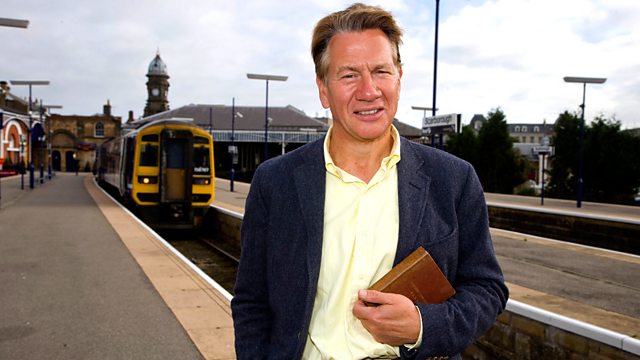
I'm on the last leg of my Scottish journey, | 0:00:57 | 0:00:59 | |
travelling on the well-named Far North Line. | 0:00:59 | 0:01:03 | |
By 1874, the Victorians had built tracks to very top of Scotland, | 0:01:03 | 0:01:08 | |
and I'm going to ride them to the end. | 0:01:08 | 0:01:10 | |
'On today's stretch, I'll learn how one man's vision | 0:01:11 | 0:01:14 | |
'helped to bring train travel to the Highlands...' | 0:01:14 | 0:01:17 | |
He really saw the social value of railways | 0:01:17 | 0:01:20 | |
and in opening up the county of Sutherland. | 0:01:20 | 0:01:22 | |
'..discover how farming has changed since Bradshaw's day...' | 0:01:22 | 0:01:26 | |
We have about a tonne in the grain tank there. | 0:01:26 | 0:01:30 | |
That would hopefully produce about 400 litres of neat whisky. | 0:01:30 | 0:01:34 | |
Wow! | 0:01:34 | 0:01:35 | |
'..and re-live the drama of Scotland's Victorian gold rush.' | 0:01:35 | 0:01:40 | |
Gold! We've found gold! | 0:01:40 | 0:01:43 | |
So far on this journey, | 0:01:46 | 0:01:48 | |
I've uncovered the Victorian heritage of eastern Scotland, | 0:01:48 | 0:01:51 | |
and been dazzled by the beauty of the Highlands. | 0:01:51 | 0:01:54 | |
Now, I'm following the coastline northwards on the home straight. | 0:01:54 | 0:01:58 | |
Starting in Invergordon, | 0:02:00 | 0:02:01 | |
I'll pass through the county of Sutherland | 0:02:01 | 0:02:04 | |
to the end of the line at Wick, | 0:02:04 | 0:02:06 | |
finishing my journey in John O'Groats. | 0:02:06 | 0:02:08 | |
'I've swapped my usual 1860s Bradshaw's for a later edition, | 0:02:13 | 0:02:17 | |
'which shows me how the railways opened up this windswept coast.' | 0:02:17 | 0:02:21 | |
I'm going to leave the train at Invergordon | 0:02:23 | 0:02:25 | |
in order to reach Cromarty, where, my Bradshaw's tells me, | 0:02:25 | 0:02:28 | |
"Hugh Miller, a native, made his discoveries | 0:02:28 | 0:02:32 | |
"in the granite and red sandstone cliffs." | 0:02:32 | 0:02:35 | |
I don't know that name, | 0:02:35 | 0:02:36 | |
but he must have been a prominent Victorian to feature in my guidebook | 0:02:36 | 0:02:40 | |
so I'm intrigued to hear Hugh Miller's tale. | 0:02:40 | 0:02:43 | |
'On the trail of this forgotten figure, | 0:02:49 | 0:02:51 | |
'I'm taking the ferry across the Cromarty Firth.' | 0:02:51 | 0:02:54 | |
'This sheltered bay is an important centre for North Sea oil, | 0:02:56 | 0:02:59 | |
'which we now know was formed hundreds of millions of years ago.' | 0:02:59 | 0:03:03 | |
'It was 19th-century scientists who first recognised | 0:03:04 | 0:03:07 | |
'how great is the age of the Earth, | 0:03:07 | 0:03:09 | |
'and here, in the harbour town of Cromarty, | 0:03:09 | 0:03:12 | |
'self-taught geologist Hugh Miller played an important role.' | 0:03:12 | 0:03:16 | |
'He was born in 1802 in this humble cottage, | 0:03:19 | 0:03:22 | |
'which now has a museum attached. | 0:03:22 | 0:03:24 | |
'It's where I'm meeting Dr Alix Powers-Jones | 0:03:24 | 0:03:27 | |
'from the National Trust for Scotland.' | 0:03:27 | 0:03:29 | |
-Alix. -Michael, welcome. Do come in. -Thank you. | 0:03:29 | 0:03:33 | |
Bradshaw's tells me that Hugh Miller was a native of Cromarty | 0:03:34 | 0:03:38 | |
and that he made his discoveries | 0:03:38 | 0:03:40 | |
in the granite and the red sandstone cliffs. | 0:03:40 | 0:03:44 | |
What were the discoveries? | 0:03:44 | 0:03:46 | |
He found fossils. He found fossil fish. | 0:03:46 | 0:03:50 | |
On the shore, there were nodes of limestone | 0:03:50 | 0:03:54 | |
that had weathered out of the cliff. | 0:03:54 | 0:03:56 | |
They don't look very exciting, but if you take the top off... | 0:03:56 | 0:04:00 | |
-Ah! -Fossils, and this is a fossil fish... | 0:04:02 | 0:04:06 | |
Lovely. | 0:04:06 | 0:04:08 | |
'The 19th century witnessed a new fashion for fossil hunting, | 0:04:08 | 0:04:12 | |
'and the work of enthusiastic amateurs like Miller | 0:04:12 | 0:04:15 | |
'helped people to understand that the Earth was older | 0:04:15 | 0:04:18 | |
'than they'd been taught to believe. | 0:04:18 | 0:04:20 | |
'He began collecting in childhood, | 0:04:20 | 0:04:23 | |
'then trained as a stonemason and, later, banker, | 0:04:23 | 0:04:26 | |
'but he continued to pursue his passion. | 0:04:26 | 0:04:29 | |
'Over his lifetime, he collected and catalogued | 0:04:29 | 0:04:32 | |
'an astonishing 6,000 specimens.' | 0:04:32 | 0:04:34 | |
So, he was pushing at the edges of scientific knowledge. | 0:04:34 | 0:04:38 | |
I mean, this was a very interesting period, wasn't it? | 0:04:38 | 0:04:41 | |
I suppose we're running up to Darwin's theory of evolution? | 0:04:41 | 0:04:45 | |
Yes. In fact, Darwin and Hugh Miller were in communication with one another. | 0:04:45 | 0:04:50 | |
Darwin wrote to Hugh Miller, congratulating him on his work. | 0:04:50 | 0:04:55 | |
'Fossil evidence was vital to Darwin's groundbreaking work - | 0:04:56 | 0:05:00 | |
'On The Origin Of Species, published in 1859. | 0:05:00 | 0:05:05 | |
'In his letter to Miller, he praises not just his research, | 0:05:05 | 0:05:08 | |
'but also his writings, for Miller was a talented author.' | 0:05:08 | 0:05:12 | |
He wrote a book called First Impressions Of England And Her People, | 0:05:12 | 0:05:17 | |
and he travelled by railway. | 0:05:17 | 0:05:19 | |
I'm delighted to hear that. | 0:05:19 | 0:05:22 | |
He was not a great fan... | 0:05:22 | 0:05:24 | |
"One soon wearies of the monotony of railway travelling, | 0:05:24 | 0:05:27 | |
"of hurrying through a country stage after stage | 0:05:27 | 0:05:31 | |
"without incident or advantage, | 0:05:31 | 0:05:33 | |
"and I felt quite glad when the train stopped at Wolverhampton." | 0:05:33 | 0:05:38 | |
-Oh, dear. I think... I think I could be going off Hugh Miller! -SHE LAUGHS | 0:05:38 | 0:05:42 | |
'Alongside his scientific research and travel writing, | 0:05:42 | 0:05:45 | |
'Miller was also a prolific journalist and social commentator. | 0:05:45 | 0:05:49 | |
'And while, these days, his name has been largely forgotten, | 0:05:49 | 0:05:52 | |
'in his day, he was a huge celebrity.' | 0:05:52 | 0:05:56 | |
He was quite a showman, I think. | 0:05:56 | 0:05:58 | |
He'd got a great swash of red hair and mutton-chop whiskers, | 0:05:58 | 0:06:03 | |
and he wore a shepherd's plaid, a tartan, tossed over his shoulder. | 0:06:03 | 0:06:07 | |
He was known as Old Red. | 0:06:07 | 0:06:09 | |
On the day of his funeral, | 0:06:09 | 0:06:10 | |
the whole of Edinburgh, where he died, ground to a halt. | 0:06:10 | 0:06:14 | |
Thousands of people attended his funeral. | 0:06:14 | 0:06:17 | |
And then, just after he died, three years, | 0:06:17 | 0:06:20 | |
a column was erected in Cromarty, like a Nelson's Column. | 0:06:20 | 0:06:24 | |
A Hugh Miller column. | 0:06:24 | 0:06:25 | |
By the people. | 0:06:25 | 0:06:27 | |
No wonder, then, that decades later | 0:06:27 | 0:06:30 | |
he still gets a mention in my Bradshaw's guide. | 0:06:30 | 0:06:33 | |
'It's good to know that, in Cromarty at least, | 0:06:35 | 0:06:37 | |
'Miller's memory is being kept alive. | 0:06:37 | 0:06:40 | |
'I'm now rejoining the Far North Line | 0:06:41 | 0:06:43 | |
'to continue my Highland adventure. | 0:06:43 | 0:06:45 | |
'For most of the route, the railway hugs the coast, | 0:06:46 | 0:06:49 | |
'but it was also built to serve the rural hinterland.' | 0:06:49 | 0:06:53 | |
My next stop is Tain, which my Bradshaw's tells me is... | 0:06:53 | 0:06:56 | |
"a royal burgh of considerable antiquity. | 0:06:56 | 0:06:59 | |
"Weekly grain markets are held here, | 0:06:59 | 0:07:02 | |
"and there is a rich agricultural district around the town, | 0:07:02 | 0:07:05 | |
"Easter Ross being famous for its large and early crop." | 0:07:05 | 0:07:10 | |
'This region's farmers enjoy an unusual microclimate, | 0:07:12 | 0:07:15 | |
'thanks to high ground to the west, | 0:07:15 | 0:07:17 | |
'which protects them from the worst of the Scottish weather. | 0:07:17 | 0:07:21 | |
'The arrival of the railway boosted their competitive advantage even further. | 0:07:21 | 0:07:26 | |
'But, surprisingly, the Victorian railway builders | 0:07:26 | 0:07:29 | |
'were just as reliant on agriculture as the farmers were on the trains. | 0:07:29 | 0:07:34 | |
'I've come to Rhynie Farm to meet Donald Ross.' | 0:07:34 | 0:07:37 | |
-Hello! -Hello, Michael. | 0:07:37 | 0:07:39 | |
'Donald's family have farmed the land here for five generations, | 0:07:39 | 0:07:43 | |
'but they also have a link with tracks that I've travelled | 0:07:43 | 0:07:46 | |
'on my Scottish railway adventure.' | 0:07:46 | 0:07:48 | |
Tell me about your great-great-grandfather. | 0:07:48 | 0:07:50 | |
He was a contractor on the Inverness to Aviemore line. | 0:07:50 | 0:07:55 | |
He built the bridge over the River Findhorn at Tomatin. | 0:07:55 | 0:07:59 | |
I went on that line very, very recently. | 0:07:59 | 0:08:01 | |
The Findhorn Viaduct is spectacular. | 0:08:01 | 0:08:04 | |
This gentleman here is my great-great-grandfather. | 0:08:04 | 0:08:07 | |
That is the most wonderful photograph! | 0:08:07 | 0:08:09 | |
"Opening of the Aviemore line, October 29th 1898." | 0:08:09 | 0:08:13 | |
And you have in pride of place in your hallway here, | 0:08:13 | 0:08:16 | |
so it must mean something to your family? | 0:08:16 | 0:08:18 | |
It's been there since the photo was taken, | 0:08:18 | 0:08:21 | |
so, I mean, we are very proud of him, yes. | 0:08:21 | 0:08:23 | |
'Building the Victorian railways was a massive task, | 0:08:25 | 0:08:28 | |
'requiring vast numbers of men and huge quantities of materials. | 0:08:28 | 0:08:33 | |
'And Donald's great-great-grandfather | 0:08:33 | 0:08:36 | |
'came up with an ingenious way to improve efficiency.' | 0:08:36 | 0:08:39 | |
What took him into farming? | 0:08:41 | 0:08:43 | |
He needed to feed his animals. | 0:08:43 | 0:08:45 | |
Um... | 0:08:45 | 0:08:47 | |
Because he didn't have any lorries or anything to work, he had horses. | 0:08:47 | 0:08:51 | |
His horses were very important to him, | 0:08:51 | 0:08:53 | |
as they carted all the spoil away | 0:08:53 | 0:08:55 | |
and to the embankments on the railway line. | 0:08:55 | 0:08:58 | |
And they needed to eat hay and they needed to eat oats, | 0:08:58 | 0:09:02 | |
so the farm was a form of vertical integration, | 0:09:02 | 0:09:05 | |
as opposed to...supply the animals with feed. | 0:09:05 | 0:09:08 | |
And do you know when he bought the farm? | 0:09:08 | 0:09:11 | |
The farm was bought in 1886. | 0:09:11 | 0:09:14 | |
Indeed we have an entry in this diary here... | 0:09:14 | 0:09:18 | |
14th April, | 0:09:18 | 0:09:20 | |
"Bought property, jointly with Balaldie. | 0:09:20 | 0:09:24 | |
"£12,500." | 0:09:24 | 0:09:26 | |
Amazing. | 0:09:26 | 0:09:27 | |
'In Victorian times, farming was changing fast, | 0:09:31 | 0:09:35 | |
'as new machinery was invented. | 0:09:35 | 0:09:38 | |
'Forward-thinking farmers like Donald's great-great-grandfather | 0:09:38 | 0:09:41 | |
'embraced this new technology.' | 0:09:41 | 0:09:43 | |
This is a fine old piece of machinery! | 0:09:46 | 0:09:48 | |
What kind of date is this, Donald? | 0:09:48 | 0:09:51 | |
Michael, this is an 1894...Kemp Reaper. | 0:09:51 | 0:09:56 | |
How was it powered? | 0:09:56 | 0:09:57 | |
It's pulled by two horses either side of the main bar up the middle. | 0:09:57 | 0:10:02 | |
There's a knife which goes back and forth, | 0:10:02 | 0:10:04 | |
and the barley, or the crop, falls onto the louvres at the back, | 0:10:04 | 0:10:10 | |
and when there's sufficient in it, | 0:10:10 | 0:10:12 | |
the man...picked up his rake... | 0:10:12 | 0:10:16 | |
while he was sitting in that seat, and would shove it back. | 0:10:16 | 0:10:19 | |
'Mechanised reapers like this | 0:10:20 | 0:10:22 | |
'dramatically reduced the manpower needed to harvest crops, | 0:10:22 | 0:10:25 | |
'which could then be taken to a threshing machine | 0:10:25 | 0:10:28 | |
'to separate the grain from the stalks. | 0:10:28 | 0:10:31 | |
'But a later invention | 0:10:31 | 0:10:33 | |
'was to streamline the process even further.' | 0:10:33 | 0:10:36 | |
And so, a combine harvester is exactly that, | 0:10:38 | 0:10:41 | |
it's bringing two jobs together, that before were entirely separate? | 0:10:41 | 0:10:44 | |
That's correct, Michael. | 0:10:44 | 0:10:45 | |
It brings together the cutting as well as the thrashing. | 0:10:45 | 0:10:48 | |
Now, if you come over here, this is what we use now. | 0:10:48 | 0:10:51 | |
Ah! Splendid vehicle... | 0:10:51 | 0:10:53 | |
Yeah, it's 18 years old, but it serves our purposes very well, | 0:10:53 | 0:10:58 | |
and it's up there with most of the big boys | 0:10:58 | 0:11:00 | |
in the modern technology stakes. | 0:11:00 | 0:11:02 | |
'Invented in the United States in the 19th century, | 0:11:02 | 0:11:06 | |
'the combine harvester didn't become widespread in Britain | 0:11:06 | 0:11:09 | |
'until the 1950s. | 0:11:09 | 0:11:11 | |
'Thanks to machinery like this, | 0:11:11 | 0:11:14 | |
'the work done by 30 men in Donald's great-great-grandfather's time | 0:11:14 | 0:11:18 | |
'is now done by just three.' | 0:11:18 | 0:11:20 | |
So, I can see the teeth there going back and forwards at high speed. | 0:11:20 | 0:11:23 | |
-They're chopping down the barley? -They're cutting the barley. | 0:11:23 | 0:11:26 | |
Apart from anything else, you get a wonderful view of your crop from here. | 0:11:26 | 0:11:30 | |
You must be able to tell a lot just from driving over it like this? | 0:11:30 | 0:11:33 | |
You can. I mean, you can see... | 0:11:33 | 0:11:35 | |
I mean, when it's ripe, the heads are down... | 0:11:35 | 0:11:38 | |
'This barley is destined for the whisky trade. | 0:11:38 | 0:11:41 | |
'As the vital ingredient in Scotland's world-famous tipple, | 0:11:41 | 0:11:44 | |
'it has to be top quality.' | 0:11:44 | 0:11:46 | |
Have you any idea how many bottles of whisky | 0:11:46 | 0:11:49 | |
we've harvested in the last few minutes? | 0:11:49 | 0:11:51 | |
Well, if I look behind me, | 0:11:51 | 0:11:53 | |
we have about a tonne in the grain tank there, | 0:11:53 | 0:11:56 | |
and I would be saying that would hopefully produce | 0:11:56 | 0:11:59 | |
about 400 litres of neat whisky. | 0:11:59 | 0:12:02 | |
Wow! | 0:12:02 | 0:12:03 | |
So, in effect, we probably have 1,000 bottles of whisky behind us. | 0:12:03 | 0:12:07 | |
-MICHAEL LAUGHS -That's quite a thought. Let's keep going! | 0:12:07 | 0:12:10 | |
Aye, well, that would be a good night, wouldn't it? | 0:12:10 | 0:12:12 | |
'I'm sure George Bradshaw would be astonished by the technology | 0:12:16 | 0:12:20 | |
'that allows one man to harvest so much. | 0:12:20 | 0:12:23 | |
'I'm now rejoining the railway, | 0:12:23 | 0:12:25 | |
'to make one more trip before nightfall.' | 0:12:25 | 0:12:27 | |
Last stop of the day, Rogart, which, my Bradshaw's tells me, is... | 0:12:32 | 0:12:36 | |
"in the midst of a hilly district | 0:12:36 | 0:12:38 | |
"abounding in traces of Danish camps." | 0:12:38 | 0:12:42 | |
Well, I fear there are no Danes left to welcome me, | 0:12:42 | 0:12:45 | |
but I do intend to encamp here for the night. | 0:12:45 | 0:12:47 | |
'Tonight's stopover is something out of the ordinary, | 0:12:54 | 0:12:57 | |
'and it's kicking off with a traditional Scottish welcome...' | 0:12:57 | 0:13:01 | |
BAGPIPES PLAY | 0:13:01 | 0:13:03 | |
-Hello! -Hello, Michael. Welcome to Rogart. | 0:13:05 | 0:13:08 | |
Who's the young piper? | 0:13:10 | 0:13:12 | |
My son, Fraser. | 0:13:12 | 0:13:13 | |
Good lad. | 0:13:15 | 0:13:16 | |
Kate Roach offers weary railway travellers | 0:13:18 | 0:13:21 | |
the chance to sleep by the tracks in a converted railway carriage. | 0:13:21 | 0:13:25 | |
-Thank you. -If you'd like to go in... | 0:13:25 | 0:13:27 | |
-Ah! -We have a shower in the vestibule end... -Yes. | 0:13:27 | 0:13:31 | |
..and then your bedroom's through here... | 0:13:31 | 0:13:34 | |
Oh, that is very homely! | 0:13:34 | 0:13:37 | |
-..and then we have a sitting room... -Oh, that's great! | 0:13:37 | 0:13:40 | |
An old first-class compartment in a corridor train | 0:13:40 | 0:13:44 | |
with a wonderful library of railway books... | 0:13:44 | 0:13:46 | |
'I'm sure my Bradshaw's guide and I will feel perfectly at home here.' | 0:13:46 | 0:13:51 | |
HE SIGHS CONTENTEDLY | 0:13:56 | 0:13:58 | |
Perfect. | 0:13:58 | 0:13:59 | |
After a day on the tracks, | 0:13:59 | 0:14:01 | |
I've become a railway sleeper. | 0:14:01 | 0:14:03 | |
'A new day beckons, and there's just time to rustle up some breakfast | 0:14:15 | 0:14:19 | |
'before I hit the tracks.' | 0:14:19 | 0:14:21 | |
Superb! My compliments to the chef. | 0:14:24 | 0:14:26 | |
'I'm now venturing into ever more sparsely-populated territory. | 0:14:29 | 0:14:34 | |
'Many of the stations on this line are so remote | 0:14:34 | 0:14:36 | |
'that there are no scheduled stops.' | 0:14:36 | 0:14:38 | |
Um...Dunrobin Castle. I think it's a request stop. Could you ask the driver to stop, please? | 0:14:48 | 0:14:52 | |
-It is. I'll tell the driver for you. -Thank you very much. -Thank you. | 0:14:52 | 0:14:55 | |
'It might seem surprising that such an isolated region | 0:14:57 | 0:15:00 | |
'has a railway at all. | 0:15:00 | 0:15:02 | |
'But it's all thanks to the energy and determination | 0:15:02 | 0:15:05 | |
'of one very eminent Victorian railway fan.' | 0:15:05 | 0:15:09 | |
My Bradshaw's tells me that the part of the line to Helmsdale | 0:15:09 | 0:15:12 | |
is called The Duke of Sutherland's Line, | 0:15:12 | 0:15:15 | |
having been made at his cost, | 0:15:15 | 0:15:17 | |
which tells you quite a lot about the mid-19th century. | 0:15:17 | 0:15:20 | |
I shall be getting off at Dunrobin Castle, | 0:15:20 | 0:15:23 | |
"where the station is a private one, | 0:15:23 | 0:15:25 | |
"for the use of Dunrobin Castle, the Duke's seat. | 0:15:25 | 0:15:28 | |
"A magnificent pile of buildings, | 0:15:28 | 0:15:30 | |
"enlarged within last 20 years at great expense, | 0:15:30 | 0:15:34 | |
"and finely placed for land and sea views." | 0:15:34 | 0:15:37 | |
'Perched above the Moray Firth, | 0:15:41 | 0:15:43 | |
'Dunrobin Castle certainly lives up to my guidebook's description. | 0:15:43 | 0:15:47 | |
'It was rebuilt in the style of a French chateau in the 1840s, | 0:15:47 | 0:15:51 | |
'complete with fairy-tale spires and elegant gardens. | 0:15:51 | 0:15:56 | |
'But I'm here to explore its unique station, | 0:15:56 | 0:15:58 | |
'which helped to shape the history of the Far North Line. | 0:15:58 | 0:16:02 | |
'Still privately owned by the estate, | 0:16:03 | 0:16:05 | |
'today it's looked after by rail enthusiast Daniel Brittain-Catlin.' | 0:16:05 | 0:16:10 | |
Michael, welcome to Dunrobin Castle station. | 0:16:11 | 0:16:14 | |
Thank you very much indeed. | 0:16:14 | 0:16:16 | |
Apparently, according to my Bradshaw's, | 0:16:16 | 0:16:18 | |
the Duke of Sutherland paid for this line. | 0:16:18 | 0:16:20 | |
He really saw the social value of railways, | 0:16:20 | 0:16:23 | |
and in opening up the county of Sutherland. | 0:16:23 | 0:16:26 | |
And, of course, he was able to build this line comparatively easily | 0:16:26 | 0:16:30 | |
because, being a duke, he was a member of the House of Lords, | 0:16:30 | 0:16:33 | |
he was able to promote his own Act of Parliament, | 0:16:33 | 0:16:36 | |
which was modestly called the Duke of Sutherland's Railway Act... | 0:16:36 | 0:16:39 | |
He put that through the House of Lords, paid for it himself, | 0:16:39 | 0:16:43 | |
and he created his own railway line, | 0:16:43 | 0:16:44 | |
ending up as part of the national network. | 0:16:44 | 0:16:47 | |
'The railway-mad duke built 14½ miles of track | 0:16:49 | 0:16:53 | |
'to link Dunrobin with the coal mine that he owned at Brora | 0:16:53 | 0:16:57 | |
'and the fishing village of Helmsdale. | 0:16:57 | 0:16:59 | |
'Owning the line was just the start of his passion...' | 0:16:59 | 0:17:03 | |
What kind of rolling stock was he running on his railway line? | 0:17:03 | 0:17:06 | |
He ran trains for the public when it opened, | 0:17:06 | 0:17:11 | |
but he had his own engine, and two carriages, | 0:17:11 | 0:17:13 | |
and they were pretty plush. | 0:17:13 | 0:17:16 | |
One contained a sleeping car, and one was a day coach. | 0:17:16 | 0:17:20 | |
'The duke had the right to run his private train | 0:17:20 | 0:17:23 | |
'between Inverness and Wick. | 0:17:23 | 0:17:25 | |
'In 1872, it carried Queen Victoria | 0:17:25 | 0:17:28 | |
'when she visited the Sutherland estate. | 0:17:28 | 0:17:31 | |
They came up on train, they left from Inverness, | 0:17:32 | 0:17:35 | |
and from Inverness onwards, they were on the Sutherlands' own train. | 0:17:35 | 0:17:39 | |
The duchess and Queen Victoria were in the carriage, | 0:17:39 | 0:17:42 | |
but she did slightly wonder where the duke was. | 0:17:42 | 0:17:45 | |
But once they reached what was then called Bonar Bridge station, | 0:17:45 | 0:17:49 | |
is now called Ardgay station, | 0:17:49 | 0:17:50 | |
a slightly sort of dirty man in overalls appeared, | 0:17:50 | 0:17:53 | |
shook hands rather too enthusiastically with the Queen | 0:17:53 | 0:17:56 | |
and, of course, it turned out to be the duke | 0:17:56 | 0:17:58 | |
who'd been driving his own railway engine | 0:17:58 | 0:18:01 | |
fired with his own coal from his own coal mine. | 0:18:01 | 0:18:04 | |
How absolutely magnificent! | 0:18:04 | 0:18:07 | |
What did the Queen think of that, do we know? | 0:18:07 | 0:18:09 | |
Well, it could be that this is one of the very rare occasions | 0:18:09 | 0:18:12 | |
-that Queen Victoria WAS amused. -MICHAEL CHUCKLES | 0:18:12 | 0:18:15 | |
'The Queen spent ten days enjoying a lavish reception | 0:18:16 | 0:18:19 | |
'amid the splendour of Dunrobin Castle, | 0:18:19 | 0:18:22 | |
'and the bed she slept in still takes pride of place | 0:18:22 | 0:18:25 | |
'in the opulent green and gold room. | 0:18:25 | 0:18:28 | |
'The station, however, is altogether on a more domestic scale.' | 0:18:29 | 0:18:34 | |
This building doesn't seem to have any Victorian feel to it... | 0:18:34 | 0:18:38 | |
It's 1902, | 0:18:38 | 0:18:40 | |
so JUST the first year of Edward VII. | 0:18:40 | 0:18:43 | |
It's the second building. | 0:18:43 | 0:18:44 | |
The first was a kind of Wild West ranch-style building, amazingly. | 0:18:44 | 0:18:49 | |
This one is in a classic piece of ENGLISH Arts and Crafts architecture, | 0:18:49 | 0:18:54 | |
plonked in the middle of Sutherland. | 0:18:54 | 0:18:56 | |
'By the late 20th century, | 0:18:56 | 0:18:58 | |
'this remarkable building was suffering after years of neglect, | 0:18:58 | 0:19:02 | |
'but since then, it's been lovingly restored. | 0:19:02 | 0:19:05 | |
'Until recently, there was just one room which remained unloved, | 0:19:05 | 0:19:09 | |
'but it turns out that I've timed my visit perfectly | 0:19:09 | 0:19:12 | |
'for the unveiling of this special project.' | 0:19:12 | 0:19:14 | |
Michael, this is very much our pride and joy at Dunrobin. It's... | 0:19:14 | 0:19:18 | |
-Hello, everybody. -You've got quite a queue of admirers! | 0:19:18 | 0:19:21 | |
It's our newly-restored Edwardian cloakroom. | 0:19:21 | 0:19:25 | |
The last piece of restoration, and it's only just been completed, | 0:19:25 | 0:19:28 | |
so I hope you will do us the honour | 0:19:28 | 0:19:31 | |
of doing an official opening of this loo. | 0:19:31 | 0:19:33 | |
I'm very, very, very touched. | 0:19:33 | 0:19:35 | |
-Here we are. -Oh, thank you very much indeed. | 0:19:35 | 0:19:37 | |
Well, ladies and gentlemen, | 0:19:39 | 0:19:40 | |
I'm sure this ought to be done by a celebrity, | 0:19:40 | 0:19:44 | |
but I'm here in LIEU... | 0:19:44 | 0:19:45 | |
LAUGHTER | 0:19:45 | 0:19:47 | |
I'd like to congratulate those involved in this, | 0:19:48 | 0:19:51 | |
carpenter, tiler, and everybody else, and, um... | 0:19:51 | 0:19:56 | |
Well, good luck to everyone who may...sail in it, you know... | 0:19:56 | 0:20:00 | |
LAUGHTER | 0:20:00 | 0:20:02 | |
CHEERING AND APPLAUSE | 0:20:04 | 0:20:07 | |
And I hope you'll...be the first to try it! | 0:20:07 | 0:20:10 | |
LAUGHTER | 0:20:10 | 0:20:12 | |
'Impressive as the facilities are, | 0:20:12 | 0:20:14 | |
'it's time for me to bid goodbye to the station | 0:20:14 | 0:20:17 | |
'and continue my journey along the Duke of Sutherland's Line.' | 0:20:17 | 0:20:21 | |
'As I travel north, I'm passing alongside the beautiful Moray Firth. | 0:20:22 | 0:20:27 | |
'This stretch of water is an important haven for wildlife, | 0:20:27 | 0:20:30 | |
'including grey seals and their pups, | 0:20:30 | 0:20:33 | |
'and there's no better way to enjoy it than from my railway carriage.' | 0:20:33 | 0:20:37 | |
This seascape is dreamy. | 0:20:39 | 0:20:41 | |
I'm passing by golden beaches, entirely deserted. | 0:20:41 | 0:20:45 | |
I have this scenery completely to myself. | 0:20:45 | 0:20:49 | |
'Stunning as the coastline is, to reach my next stop, | 0:20:50 | 0:20:54 | |
'I must soon leave the sea behind and turn inland.' | 0:20:54 | 0:20:58 | |
Bradshaw's tells me that this line passes over a moory district | 0:20:59 | 0:21:03 | |
by 12 or 13 stations, including Kildonan, where I'll get off, | 0:21:03 | 0:21:08 | |
where the duke has his reclamation farms | 0:21:08 | 0:21:10 | |
of 80 to 100 acres for small farmers. | 0:21:10 | 0:21:14 | |
But I understand that, in the 1860s, | 0:21:14 | 0:21:17 | |
the land brought forth something even more valuable | 0:21:17 | 0:21:20 | |
than oats or barley. | 0:21:20 | 0:21:22 | |
ANNOUNCEMENT: 'We are now approaching Kildonan. This is a request stop.' | 0:21:22 | 0:21:26 | |
'150 years ago, this remote part of the Sutherland estate | 0:21:26 | 0:21:30 | |
'was the setting for Scotland's very own gold rush. | 0:21:30 | 0:21:35 | |
'I'm meeting modern-day prospector Lorna Smith | 0:21:35 | 0:21:38 | |
'to hear the extraordinary tale.' | 0:21:38 | 0:21:40 | |
-Hello! -Hello! Michael. -Pleased to meet you. | 0:21:40 | 0:21:43 | |
Panning for gold? | 0:21:43 | 0:21:44 | |
Yes, aye, one or two little specks just from the surface gravel. | 0:21:44 | 0:21:48 | |
'The second half of the 19th century witnessed a gold-hunting craze, | 0:21:49 | 0:21:54 | |
'as, dazzled by the discoveries made in 1840s California, | 0:21:54 | 0:21:57 | |
'prospectors scoured the globe for new places to get rich quick. | 0:21:57 | 0:22:03 | |
'Before long, they turned their gaze on Scotland.' | 0:22:03 | 0:22:06 | |
It was a chap called Robert Gilchrist who started the gold rush. | 0:22:06 | 0:22:09 | |
He was a local man, and he was interested in the gold. | 0:22:09 | 0:22:13 | |
He went to Australia to try his hand there. | 0:22:13 | 0:22:16 | |
He met a few experienced miners out there, and learnt quite a lot. | 0:22:16 | 0:22:21 | |
He was beginning to feel homesick after a few years, | 0:22:21 | 0:22:23 | |
so he thought he would just come home | 0:22:23 | 0:22:25 | |
and try hand in Strath of Kildonan, because he recognised similarities | 0:22:25 | 0:22:29 | |
between the rock structures and gravels in Australia | 0:22:29 | 0:22:32 | |
to what he had left at home. | 0:22:32 | 0:22:34 | |
'In 1868, Gilchrist struck it lucky, | 0:22:35 | 0:22:39 | |
'and the news of his success soon spread. | 0:22:39 | 0:22:42 | |
'At that time, the Duke of Sutherland's railway was yet to be built, | 0:22:42 | 0:22:46 | |
'so prospectors faced a 30-mile walk from the nearest station. | 0:22:46 | 0:22:50 | |
'But that did nothing to deter the hopeful hordes.' | 0:22:50 | 0:22:53 | |
The potato blight had ruined the food for the winters. | 0:22:53 | 0:22:57 | |
People were beginning to be hungry. | 0:22:57 | 0:23:00 | |
Once they heard about how Robert was doing on the river, | 0:23:00 | 0:23:04 | |
they reckoned they would like to come and have a try too. | 0:23:04 | 0:23:07 | |
And how many people did come? | 0:23:07 | 0:23:09 | |
500 people came at the height of the gold rush. | 0:23:09 | 0:23:12 | |
Extraordinary. | 0:23:12 | 0:23:13 | |
'The Duke of Sutherland issued licences, | 0:23:13 | 0:23:16 | |
'at a cost of a pound a month, | 0:23:16 | 0:23:17 | |
'while the crown took 10% of all the prospectors found. | 0:23:17 | 0:23:22 | |
'Although much of the gold probably went undeclared, | 0:23:22 | 0:23:24 | |
'it's thought the official haul | 0:23:24 | 0:23:26 | |
'totalled around £850,000 in today's money. | 0:23:26 | 0:23:31 | |
'But the heady days of the gold rush were not to last long.' | 0:23:31 | 0:23:34 | |
The duke decided that there was too much disruption to the salmon parr, | 0:23:34 | 0:23:40 | |
whose gills were being clogged by the suspended gravel in the stream. | 0:23:40 | 0:23:45 | |
He was worried it was going to have an effect on the salmon fishing. | 0:23:45 | 0:23:48 | |
The winter was setting in, and they had rough wooden shelters on here. | 0:23:48 | 0:23:52 | |
When you're talking about maybe 15 or 16 degrees of frost | 0:23:52 | 0:23:55 | |
in the middle of the winter, it's not good. It's not good. | 0:23:55 | 0:23:59 | |
And so, that brought the gold rush to an end? | 0:23:59 | 0:24:02 | |
The duke decided that for everybody's safety and comfort | 0:24:02 | 0:24:06 | |
that he should really end the gold rush. | 0:24:06 | 0:24:08 | |
He did that by not issuing any more licences | 0:24:08 | 0:24:11 | |
and not renewing licences after they had been issued. | 0:24:11 | 0:24:14 | |
'By the end of 1869, the Kildonan gold rush was over. | 0:24:14 | 0:24:19 | |
'These days, anyone can come and search for gold on the estate, | 0:24:19 | 0:24:22 | |
'but the only method allowed is hand-panning. | 0:24:22 | 0:24:25 | |
'It works on the principle that gold is the heaviest mineral in the river.' | 0:24:25 | 0:24:30 | |
And that's just a case of swirling it round, | 0:24:30 | 0:24:33 | |
so the heavy pieces get a chance to sink right down to the bottom | 0:24:33 | 0:24:36 | |
and the lighter gravels and stones are on the top. | 0:24:36 | 0:24:39 | |
-And then, gradually, wash off the lighter stuff? -Yep. | 0:24:39 | 0:24:42 | |
'It takes patience and hard work, | 0:24:42 | 0:24:44 | |
'but retrieving even a tiny amount is quite a thrill.' | 0:24:44 | 0:24:47 | |
This just a little sample from the side of the burn, | 0:24:47 | 0:24:51 | |
but you can see that there's gold there. | 0:24:51 | 0:24:53 | |
I never thought I'd see this. | 0:24:53 | 0:24:54 | |
All the times I've seen in movies, people doing this, | 0:24:54 | 0:24:58 | |
and, of course, in the movies they never do find gold, poor things, | 0:24:58 | 0:25:01 | |
-but there it is. -There it is, that's right. | 0:25:01 | 0:25:03 | |
-HE SHOUTS: -Gold! We've found gold! | 0:25:03 | 0:25:06 | |
-Gold! -SHE CHUCKLES | 0:25:06 | 0:25:09 | |
-Is that not what you do? -No. | 0:25:09 | 0:25:11 | |
THEY LAUGH | 0:25:11 | 0:25:14 | |
'Sadly, I don't have time to seek my fortune, | 0:25:14 | 0:25:17 | |
'as I'm rejoining the Far North Line to complete my Scottish odyssey. | 0:25:17 | 0:25:21 | |
'Finished in 1874, this final section opened up | 0:25:21 | 0:25:25 | |
'some of the wildest reaches of northern Scotland, | 0:25:25 | 0:25:28 | |
'previously accessible only to wealthy travellers.' | 0:25:28 | 0:25:32 | |
I'm now on the very last segment of my journey, taking me into Wick, | 0:25:32 | 0:25:36 | |
which my Bradshaw's describes as... | 0:25:36 | 0:25:38 | |
"The present ultima Thule of railway enterprise, | 0:25:38 | 0:25:42 | |
"the furthest extremity," | 0:25:42 | 0:25:44 | |
and, as in Victorian days, this is the end of the line. | 0:25:44 | 0:25:47 | |
'In Bradshaw's day, Wick was a busy herring port, | 0:25:49 | 0:25:52 | |
'and the new railway line helped to transport the fish | 0:25:52 | 0:25:55 | |
'to markets further south. | 0:25:55 | 0:25:57 | |
'It also attracted crowds of Victorian tourists, | 0:25:57 | 0:26:00 | |
'disembarking to make the short coach trip | 0:26:00 | 0:26:03 | |
'to that most symbolic of coastal villages, John O'Groats.' | 0:26:03 | 0:26:06 | |
Bradshaw's says of John O'Groats, | 0:26:08 | 0:26:11 | |
"This famous locality lies at the south side of the Pentland Firth, | 0:26:11 | 0:26:15 | |
"and gives one of the finest sights in the north. | 0:26:15 | 0:26:18 | |
"The view, on a favourable day..." Thank goodness, today IS favourable, | 0:26:18 | 0:26:22 | |
"..of land and water, is very interesting. | 0:26:22 | 0:26:25 | |
"Orkney is seen to great advantage." | 0:26:25 | 0:26:29 | |
Since, a few years ago, I stood at Land's End, | 0:26:29 | 0:26:32 | |
it's been my ambition to come to this other most far-flung part of our kingdom. | 0:26:32 | 0:26:37 | |
'Every year, tourists come to marvel at the wild beauty of the setting, | 0:26:41 | 0:26:45 | |
'amid the stunning cliffs of Duncansby Head, | 0:26:45 | 0:26:48 | |
'and thousands of so-called "end-to-enders" | 0:26:48 | 0:26:51 | |
'undertake the long journey | 0:26:51 | 0:26:53 | |
'between Britain's most distant inhabited spots.' | 0:26:53 | 0:26:56 | |
I just couldn't resist. | 0:27:03 | 0:27:05 | |
'As my lengthy trek up Scotland's east coast draws to an end, | 0:27:08 | 0:27:12 | |
'it strikes me that the railways helped this nation | 0:27:12 | 0:27:15 | |
'to share its blessings with the rest of the world.' | 0:27:15 | 0:27:18 | |
Victorian tracks have brought me | 0:27:18 | 0:27:21 | |
to the uppermost edge of mainland Britain. | 0:27:21 | 0:27:24 | |
From my seat on the train, | 0:27:24 | 0:27:26 | |
I've gawped in admiration at Scotland's grandeur. | 0:27:26 | 0:27:29 | |
The railways in the Highlands brought not industrial revolution | 0:27:29 | 0:27:33 | |
so much as continuity, | 0:27:33 | 0:27:34 | |
enabling communities to survive and traditional skills to flourish. | 0:27:34 | 0:27:40 | |
My Bradshaw's guide has now enabled me | 0:27:40 | 0:27:42 | |
to appreciate Britain, this great country, from toe to tip. | 0:27:42 | 0:27:47 | |
'On my next journey, I'll be travelling from London to Devon, | 0:27:50 | 0:27:54 | |
'along master engineer Isambard Kingdom Brunel's | 0:27:54 | 0:27:57 | |
'Great Western Railway...' | 0:27:57 | 0:27:58 | |
This is exciting. Is this genuinely a section of Brunel's pipe? | 0:27:59 | 0:28:03 | |
'..I'll visit a Victorian tourist hotspot...' | 0:28:03 | 0:28:05 | |
This is the grandaddy of all castles and cathedrals and skyscrapers. | 0:28:06 | 0:28:11 | |
This is the beginning of architecture. | 0:28:11 | 0:28:13 | |
'..explore a church that moves in mysterious ways...' | 0:28:13 | 0:28:17 | |
That's extraordinary, Rod. It really is moving from side to side. | 0:28:17 | 0:28:21 | |
'..and work up a sweat turning a grand old loco.' | 0:28:21 | 0:28:24 | |
-HE GROANS -She's moving! I can't believe it, she's moving. | 0:28:24 | 0:28:27 | |
Subtitles by Red Bee Media Ltd | 0:28:48 | 0:28:54 |