Episode 37 University Challenge
Similar Content
Browse content similar to Episode 37. Check below for episodes and series from the same categories and more!
Transcript
| Line | From | To | |
|---|---|---|---|
APPLAUSE | 0:00:17 | 0:00:19 | |
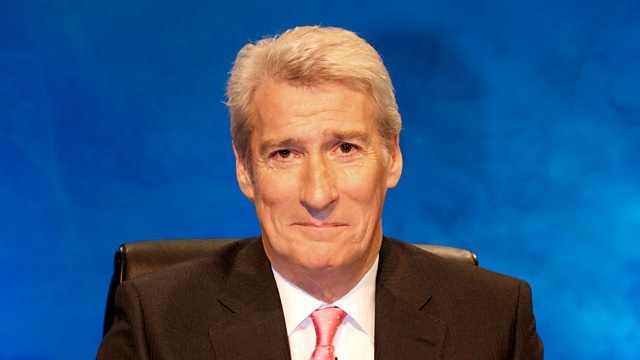
Asking the questions, Jeremy Paxman. | 0:00:22 | 0:00:25 | |
Hello. Around 130 teams applied to take part in this series. | 0:00:28 | 0:00:33 | |
28 made it to the televised stage, and we've watched them fight it | 0:00:33 | 0:00:37 | |
out over the past months, through 2,794 questions. | 0:00:37 | 0:00:42 | |
But it ends tonight. | 0:00:42 | 0:00:44 | |
Over the next half an hour, the two best teams in the contest | 0:00:44 | 0:00:47 | |
will compete for the title of series champions, | 0:00:47 | 0:00:51 | |
and one of them will earn the right to lift the trophy. | 0:00:51 | 0:00:54 | |
Now, the team from Wolfson College, Cambridge have so far taken | 0:00:54 | 0:00:57 | |
the scalps of the School of Oriental and African Studies, | 0:00:57 | 0:01:00 | |
Jesus College, Cambridge, the University of Warwick, | 0:01:00 | 0:01:04 | |
and then Emmanuel College, Cambridge in the first semifinal. | 0:01:04 | 0:01:07 | |
They won't need reminding that when they first met their | 0:01:07 | 0:01:10 | |
opponents tonight in their first quarterfinal match, | 0:01:10 | 0:01:13 | |
they were victorious, but only by a margin of 30 points. | 0:01:13 | 0:01:17 | |
No doubt hoping history will repeat itself, and with an average | 0:01:17 | 0:01:21 | |
age of 25, let's meet the Wolfson team for the last time. | 0:01:21 | 0:01:25 | |
Hi, my name is Justin Yang, I'm from Vancouver, Canada, | 0:01:26 | 0:01:28 | |
and I'm studying for a PhD in public health and primary care. | 0:01:28 | 0:01:32 | |
Hi, I'm Ben Chaudhri, I'm from near Cockermouth in Cumbria, | 0:01:32 | 0:01:34 | |
-and I'm studying natural sciences. -And this is their captain. | 0:01:34 | 0:01:37 | |
Hello, my name is Eric Monkman, I'm from Oakville, Canada, | 0:01:37 | 0:01:41 | |
and I'm studying economics. | 0:01:41 | 0:01:43 | |
Hi, I'm Paul Cosgrove, I'm from Cookstown in Northern Ireland, | 0:01:43 | 0:01:46 | |
and I'm doing an MPhil in nuclear energy. | 0:01:46 | 0:01:48 | |
APPLAUSE | 0:01:48 | 0:01:51 | |
The team from Balliol College, Oxford sent home Imperial College London | 0:01:53 | 0:01:58 | |
in round one and Robinson College, Cambridge in round two. | 0:01:58 | 0:02:02 | |
In their quarterfinals, they beat the University of Birmingham and | 0:02:02 | 0:02:05 | |
Corpus Christi College, Oxford, | 0:02:05 | 0:02:07 | |
and their semifinal victory was at the expense of Edinburgh University. | 0:02:07 | 0:02:11 | |
They won't need reminding either of their first encounter with | 0:02:11 | 0:02:14 | |
their opponents tonight. | 0:02:14 | 0:02:15 | |
With an average age of 23, | 0:02:15 | 0:02:18 | |
let's meet the Balliol team for the final time. | 0:02:18 | 0:02:21 | |
Hi, I'm Freddy Potts, I'm from Newcastle, and I'm reading history. | 0:02:21 | 0:02:26 | |
Hello, I'm Jacob Lloyd, I'm from London, | 0:02:26 | 0:02:28 | |
-and I'm reading for a DPhil in English. -And their captain. | 0:02:28 | 0:02:32 | |
Hi, I'm Joey Goldman, I'm from London, | 0:02:32 | 0:02:34 | |
and I'm reading philosophy and theology. | 0:02:34 | 0:02:36 | |
Hi, I'm Ben Pope, I'm from sunny Sydney, | 0:02:36 | 0:02:38 | |
and I'm doing a DPhil in astrophysics. | 0:02:38 | 0:02:40 | |
APPLAUSE | 0:02:40 | 0:02:43 | |
OK, fingers on the buzzers, here's your first starter for ten. | 0:02:46 | 0:02:49 | |
In Thomas Hardy's The Return Of The Native, which city does | 0:02:49 | 0:02:52 | |
Eustacia's grandfather describe as "that rookery of pomp and vanity"? | 0:02:52 | 0:02:58 | |
In an eponymous work of 1933, | 0:02:58 | 0:03:01 | |
George Orwell called it "the land of the bistro and the sweatshop". | 0:03:01 | 0:03:05 | |
-Paris. -Paris is correct. | 0:03:06 | 0:03:08 | |
APPLAUSE | 0:03:08 | 0:03:10 | |
Right, your bonuses are on the ancient mathematician and | 0:03:11 | 0:03:14 | |
philosopher Hypatia. | 0:03:14 | 0:03:16 | |
In which city of the Eastern Roman Empire did Hypatia teach philosophy? | 0:03:16 | 0:03:21 | |
She died there in 415 at the hands of a Christian mob. | 0:03:21 | 0:03:24 | |
Soon after, St Cyril became the city's bishop. | 0:03:24 | 0:03:27 | |
-Alexandria. -Correct. | 0:03:27 | 0:03:29 | |
Hypatia was the daughter of Theon of Alexandria, | 0:03:29 | 0:03:32 | |
himself a mathematician and astronomer. | 0:03:32 | 0:03:34 | |
He's credited with preserving which of Euclid's works? | 0:03:34 | 0:03:38 | |
-The Elements. -Presumably. -Must be. | 0:03:38 | 0:03:40 | |
-Euclid's Elements. -Correct. | 0:03:40 | 0:03:42 | |
Associated with the philosopher Plotinus and the supreme principle | 0:03:42 | 0:03:46 | |
known as "the One", which late school of Greek philosophy | 0:03:46 | 0:03:49 | |
did Hypatia espouse? | 0:03:49 | 0:03:51 | |
Neoplatonism? Yeah, that's what I'd go for. Neoplatonism. | 0:03:51 | 0:03:53 | |
Neoplatonism is correct. | 0:03:53 | 0:03:55 | |
APPLAUSE | 0:03:55 | 0:03:57 | |
Time for another starter question. | 0:03:58 | 0:04:00 | |
First Man in Armour, Speaker of the Temple | 0:04:00 | 0:04:03 | |
and three child spirits are among the characters in which op...? | 0:04:03 | 0:04:07 | |
-The Magic Flute. -Correct. | 0:04:08 | 0:04:10 | |
APPLAUSE | 0:04:10 | 0:04:13 | |
So your bonuses, Wolfson, are on reptiles. | 0:04:13 | 0:04:16 | |
Which country has the highest number of recorded species of | 0:04:16 | 0:04:18 | |
reptile with more than 850? | 0:04:18 | 0:04:21 | |
These include the freshwater crocodile and the desert death adder. | 0:04:21 | 0:04:25 | |
-Could it be Australia? -Australia. | 0:04:25 | 0:04:27 | |
-Australia. -Correct. | 0:04:27 | 0:04:29 | |
With more than 800 species, which country's reptiles include | 0:04:29 | 0:04:33 | |
the Cozumel spiny lizard and the Sonoran spotted whiptail? | 0:04:33 | 0:04:38 | |
Yeah, Mexico. | 0:04:38 | 0:04:40 | |
-Mexico. -Correct. | 0:04:40 | 0:04:41 | |
With about 750 species, which country's reptiles include | 0:04:41 | 0:04:45 | |
the Amboina sailfin lizard and the Lesser Sundas cat snake? | 0:04:45 | 0:04:50 | |
I would say that would probably be India. I mean, it could be Bangladesh. | 0:04:50 | 0:04:54 | |
-India's larger. -India. | 0:04:54 | 0:04:56 | |
No, it's Indonesia. Ten points for this. | 0:04:56 | 0:04:58 | |
Quote, "I had the sound first, without the spelling. | 0:04:58 | 0:05:02 | |
"Then, in one of my occasional perusals of Finnegans Wake by | 0:05:02 | 0:05:05 | |
"James Joyce, I came across the word..." | 0:05:05 | 0:05:07 | |
-Quark. -Quark is correct, yes. | 0:05:09 | 0:05:12 | |
APPLAUSE | 0:05:12 | 0:05:14 | |
Right, these bonuses are on medieval earls of Orkney, Wolfson. | 0:05:14 | 0:05:19 | |
Firstly, an early earl of Orkney, Sigurd the Stout, | 0:05:19 | 0:05:23 | |
was killed at which battle of 1014, fought near Dublin? | 0:05:23 | 0:05:26 | |
The Irish high king Brian Boru was also killed. | 0:05:26 | 0:05:29 | |
Um... Battle... Battle of the Downs? | 0:05:31 | 0:05:34 | |
-Go for it. -Battle of the Downs. | 0:05:34 | 0:05:36 | |
No, it was Clontarf. | 0:05:36 | 0:05:38 | |
Secondly, Sigurd's son, Thorfinn the Mighty, | 0:05:38 | 0:05:41 | |
extended his rule over Caithness and which area? | 0:05:41 | 0:05:44 | |
It's named after its relation to Norse settlements in Orkney | 0:05:44 | 0:05:47 | |
rather than its position on the island of Great Britain. | 0:05:47 | 0:05:51 | |
Probably south, like... | 0:05:51 | 0:05:53 | |
In a cardinal direction, it sounds like... | 0:05:53 | 0:05:55 | |
-Stornoway. -No, it's Sutherland. | 0:05:58 | 0:06:01 | |
And finally, Kirkwall Cathedral in Orkney is dedicated to which | 0:06:01 | 0:06:06 | |
earl, later a saint? Known as the Martyr, | 0:06:06 | 0:06:09 | |
he was murdered on the island of Egilsay in about 1117? | 0:06:09 | 0:06:13 | |
-St Edmund the Martyr? -I don't know. | 0:06:13 | 0:06:16 | |
-St Edmund the Martyr? -No, it's Magnus. | 0:06:16 | 0:06:19 | |
Ten points for this. | 0:06:19 | 0:06:21 | |
Who was the UK Prime Minister when the short-lived | 0:06:21 | 0:06:24 | |
French Second Republic was established? | 0:06:24 | 0:06:27 | |
His minority Whig administration held power because the | 0:06:27 | 0:06:30 | |
Conservatives were split between the Protectionists and the Peelites. | 0:06:30 | 0:06:34 | |
-Lord John Russell. -Correct. | 0:06:37 | 0:06:39 | |
APPLAUSE | 0:06:39 | 0:06:40 | |
These bonuses are on chloroform, Wolfson. | 0:06:42 | 0:06:45 | |
In an 1847 paper based on his findings from | 0:06:45 | 0:06:49 | |
self-experimentation, which Scottish physician first described the | 0:06:49 | 0:06:53 | |
-use of chloroform as an anaesthetic? -Could it be Lister? | 0:06:53 | 0:06:56 | |
It's not Robert Graves, is it? | 0:06:56 | 0:06:59 | |
I don't know. I think it might be Lister, Lord Lister. | 0:06:59 | 0:07:03 | |
-Lister? -No, it was James Young Simpson. | 0:07:03 | 0:07:06 | |
Secondly, used as a chemical weapon during World War I, | 0:07:06 | 0:07:10 | |
which poisonous gas is generated on the oxidation of chloroform | 0:07:10 | 0:07:14 | |
in the presence of UV light? | 0:07:14 | 0:07:16 | |
-Chlorine? -Chlorine gas? Chlorine gas? | 0:07:16 | 0:07:18 | |
No, it might be like... | 0:07:18 | 0:07:19 | |
-Chlorine gas? -Oh, no, is it...? No, it's phosgene. | 0:07:19 | 0:07:22 | |
I'm going to nominate you, Chaudhri. | 0:07:22 | 0:07:24 | |
-Nominate Chaudhri. -Phosgene? | 0:07:24 | 0:07:26 | |
Phosgene is correct, yes. | 0:07:26 | 0:07:28 | |
Apart from amylene, | 0:07:28 | 0:07:29 | |
what solvent is typically added to stabilise chloroform | 0:07:29 | 0:07:33 | |
and prevent oxidation if long-term storage is required? | 0:07:33 | 0:07:36 | |
-I have no idea on this one. I mean, I would just pass. -Er... | 0:07:38 | 0:07:41 | |
Did you say the family of the chemical? | 0:07:41 | 0:07:43 | |
Family of the chemical? Yeah. | 0:07:43 | 0:07:44 | |
-Is it e...? -Erm. Ether? | 0:07:44 | 0:07:46 | |
We could just say ether. | 0:07:46 | 0:07:48 | |
-Nominate Chaudhri. -Ether. | 0:07:48 | 0:07:50 | |
No, it's ethanol. | 0:07:50 | 0:07:51 | |
Ten points for this picture starter question. | 0:07:51 | 0:07:54 | |
You're going to see a map showing the borders of European | 0:07:54 | 0:07:57 | |
states as the result of a major series of peace accords. | 0:07:57 | 0:08:00 | |
For ten points, I want the collective term after | 0:08:00 | 0:08:03 | |
a European city by which these accords are known. | 0:08:03 | 0:08:06 | |
Westphalia. | 0:08:08 | 0:08:09 | |
No. Anyone like to buzz from Wolfson? | 0:08:10 | 0:08:13 | |
Vienna? | 0:08:13 | 0:08:14 | |
The Congress of Vienna is correct, yes. | 0:08:14 | 0:08:16 | |
APPLAUSE | 0:08:16 | 0:08:19 | |
We follow on from the Congress of Vienna with three more maps | 0:08:19 | 0:08:22 | |
that show the borders of Europe as they were redrawn by historic | 0:08:22 | 0:08:25 | |
treaties and peace accords. | 0:08:25 | 0:08:27 | |
In each case, I want you to identify the treaty or accord that | 0:08:27 | 0:08:30 | |
established them. | 0:08:30 | 0:08:31 | |
All are named after the places in which they were formulated. | 0:08:31 | 0:08:35 | |
First, I want the name traditionally given to the series of | 0:08:35 | 0:08:37 | |
treaties that resulted in these political boundaries. | 0:08:37 | 0:08:40 | |
This is the Peace of Westphalia. | 0:08:42 | 0:08:44 | |
-Yes. -Yeah. -Peace of Westphalia. | 0:08:44 | 0:08:46 | |
It is the Peace of Westphalia. | 0:08:46 | 0:08:47 | |
Secondly, the treaty that resulted in these borders. | 0:08:47 | 0:08:50 | |
Oh, that's...the Councils of Claremont. | 0:08:53 | 0:08:56 | |
Oh... Yeah. Try that. | 0:08:56 | 0:08:57 | |
Well, it's earlier than that. | 0:08:57 | 0:08:59 | |
I think this is after Charlemagne. | 0:08:59 | 0:09:01 | |
Charlemagne, isn't that...? | 0:09:01 | 0:09:02 | |
Isn't that Claremont? Isn't that Claremont? | 0:09:02 | 0:09:04 | |
-I don't remember. -Claremont? | 0:09:04 | 0:09:06 | |
No, it's Verdun in 843 AD. And finally, | 0:09:06 | 0:09:10 | |
any of the three treaties that resulted in these frontiers. | 0:09:10 | 0:09:13 | |
-Erm...this is the Treaty of Versailles maybe, probably. -Yeah. | 0:09:16 | 0:09:19 | |
Yeah, Treaty of Versailles? Versailles? | 0:09:19 | 0:09:21 | |
Yeah, that'll do. Great. APPLAUSE | 0:09:21 | 0:09:23 | |
Terrific. 10 points for this. | 0:09:23 | 0:09:25 | |
Which lower-case Greek letter represents in statistics the | 0:09:25 | 0:09:28 | |
standard deviation of a...? | 0:09:28 | 0:09:30 | |
Sigma. | 0:09:30 | 0:09:31 | |
Sigma is correct. Yes. APPLAUSE | 0:09:31 | 0:09:34 | |
These bonuses are on duelling, Balliol. | 0:09:36 | 0:09:38 | |
In 1598, which literary figure killed the actor | 0:09:38 | 0:09:43 | |
Gabriel Spenser in a duel fought with swords? | 0:09:43 | 0:09:46 | |
He avoided the gallows but was branded on the thumb as | 0:09:46 | 0:09:49 | |
a convicted felon. | 0:09:49 | 0:09:51 | |
When did Marlowe die? | 0:09:51 | 0:09:52 | |
Erm... | 0:09:53 | 0:09:55 | |
Might be the sort of person to do that, then. | 0:09:55 | 0:09:57 | |
Marlowe? | 0:09:57 | 0:09:58 | |
No, he was killed in a brawl. | 0:09:58 | 0:10:00 | |
It was Ben Jonson. In Hamburg in 1704, | 0:10:00 | 0:10:03 | |
which composer fought a duel with his friend Johann Mattheson in | 0:10:03 | 0:10:06 | |
a quarrel during the performance of the latter's opera Cleopatra? | 0:10:06 | 0:10:10 | |
A large coat button is said to have deflected Mattheson's sword. | 0:10:10 | 0:10:13 | |
-What was the date again? -1704. | 0:10:15 | 0:10:17 | |
German. Hindemith or something. | 0:10:17 | 0:10:19 | |
-No idea. -No, no, that's... | 0:10:19 | 0:10:21 | |
actually going to be... | 0:10:21 | 0:10:23 | |
Hindemith. | 0:10:23 | 0:10:24 | |
No, it was Handel, they were squabbling over who'd conduct | 0:10:24 | 0:10:27 | |
the second half. | 0:10:27 | 0:10:28 | |
And considered the founder of modern algebra, | 0:10:28 | 0:10:31 | |
in particular of group theory, which French mathematician died...? | 0:10:31 | 0:10:34 | |
Galois. | 0:10:34 | 0:10:35 | |
Galois is correct. APPLAUSE 10 points for this. | 0:10:35 | 0:10:37 | |
What two-word term appears in the title of a work of 2005 by | 0:10:37 | 0:10:40 | |
Joan Didion and denotes a cognitive disorder involving the belief | 0:10:40 | 0:10:44 | |
that one event happens as a result of another...? | 0:10:44 | 0:10:48 | |
Post hoc ergo propter hoc? | 0:10:48 | 0:10:50 | |
No, I'm afraid you lose five points. | 0:10:50 | 0:10:52 | |
One event happens as a result of another without | 0:10:52 | 0:10:54 | |
a plausible link of causation? | 0:10:54 | 0:10:56 | |
Just world? | 0:11:01 | 0:11:02 | |
No, it's magical thinking, as in The Year Of Magical Thinking. | 0:11:02 | 0:11:05 | |
10 points for this. Traditionally regarded as a holy relic, | 0:11:05 | 0:11:08 | |
the Iron Crown of Lombardy is housed...? | 0:11:08 | 0:11:12 | |
It's housed in Italy somewhere. | 0:11:12 | 0:11:14 | |
-Sorry. -LAUGHTER | 0:11:14 | 0:11:16 | |
I mean, it's the one that they use to crown the King of Italy. | 0:11:16 | 0:11:19 | |
-Yes, I'm afraid that is a completely useless answer. -Yeah, it is. | 0:11:19 | 0:11:21 | |
LAUGHTER And you lose five points. | 0:11:21 | 0:11:24 | |
It's housed in the cathedral of which city? Situated | 0:11:24 | 0:11:26 | |
about 15km north-east of Milan, | 0:11:26 | 0:11:30 | |
it is a regular venue of the Italian Formula One Grand Prix. | 0:11:30 | 0:11:34 | |
You may not confer... | 0:11:34 | 0:11:35 | |
-Monza. -Monza is correct. | 0:11:35 | 0:11:37 | |
Yes. APPLAUSE | 0:11:37 | 0:11:42 | |
These bonuses are on cosmology in the 18th century. | 0:11:42 | 0:11:46 | |
Get them, you'll take the lead. Born in Stockholm in 1688, | 0:11:46 | 0:11:49 | |
which thinker was an early proponent of the nebular hypothesis, the | 0:11:49 | 0:11:53 | |
idea that the solar system formed from a cloud of rotating gas? | 0:11:53 | 0:11:57 | |
It's called the hypothesis in physics, | 0:11:58 | 0:12:01 | |
so there must have been some guy who got there first. | 0:12:01 | 0:12:04 | |
-Stockholm... -Swedish people? | 0:12:04 | 0:12:06 | |
-Er... -What are two names? Kant-Laplace? | 0:12:06 | 0:12:07 | |
-Yeah, but obviously Immanuel Kant isn't born in Stockholm. -Right. | 0:12:07 | 0:12:11 | |
Erm... So... | 0:12:11 | 0:12:12 | |
Laplace. | 0:12:12 | 0:12:13 | |
No, it was Swedenborg. | 0:12:13 | 0:12:15 | |
Secondly, which German philosopher applied Newtonian | 0:12:15 | 0:12:18 | |
principles to the nebular hypothesis in his 1755 work | 0:12:18 | 0:12:22 | |
Universal Natural History And Theory Of The Heavens? | 0:12:22 | 0:12:26 | |
-That's probably Kant. -Immanuel Kant? | 0:12:26 | 0:12:27 | |
That was Immanuel Kant. | 0:12:27 | 0:12:28 | |
Which French scientist independently advanced the nebular | 0:12:28 | 0:12:31 | |
hypothesis in a work of 1796? Noted for his works on celestial... | 0:12:31 | 0:12:35 | |
Laplace. | 0:12:35 | 0:12:36 | |
Laplace is correct, yes. | 0:12:36 | 0:12:37 | |
APPLAUSE That gives you the lead. | 0:12:37 | 0:12:39 | |
Right, another starter question. Born 1854, which Frenchman gives | 0:12:39 | 0:12:43 | |
his name to a sphere used in optics, a symmetry group associated with | 0:12:43 | 0:12:48 | |
the special theory of relativity | 0:12:48 | 0:12:50 | |
and the conjecture about the topology...? | 0:12:50 | 0:12:53 | |
Poincare. | 0:12:53 | 0:12:54 | |
Poincare is correct. APPLAUSE | 0:12:54 | 0:12:58 | |
These bonuses are on prose authors | 0:12:58 | 0:13:00 | |
cited in the Oxford English Dictionary. | 0:13:00 | 0:13:03 | |
Firstly for five, the OED cites which Scottish author as the | 0:13:03 | 0:13:06 | |
first user of the term freelance? | 0:13:06 | 0:13:09 | |
In this case, he's referring to a mercenary knight in | 0:13:09 | 0:13:12 | |
a historical novel of 1819. | 0:13:12 | 0:13:15 | |
1819? Yeah, Walter Scott. | 0:13:15 | 0:13:16 | |
Correct. Which 19th-century English novelist is cited in the OED as the | 0:13:16 | 0:13:21 | |
first user of the noun rampage, | 0:13:21 | 0:13:24 | |
the verb flummox and the word doormat when applied to a person? | 0:13:24 | 0:13:28 | |
Charles Dickens? | 0:13:28 | 0:13:29 | |
It was Charles Dickens. | 0:13:29 | 0:13:31 | |
The OED states that which US author may have coined the word | 0:13:31 | 0:13:35 | |
nerd in the 1950 children's book If I Ran The Zoo? | 0:13:35 | 0:13:39 | |
Hmm. | 0:13:39 | 0:13:40 | |
Could it be, erm...? Who's that guy, who...? | 0:13:40 | 0:13:43 | |
-Maurice... -Yeah, I think Sendak. | 0:13:43 | 0:13:46 | |
Maurice Sendak? | 0:13:46 | 0:13:47 | |
No, it was Dr Seuss. | 0:13:47 | 0:13:49 | |
Right, another starter question. | 0:13:49 | 0:13:51 | |
You're going to hear part of a recording of a lecture by | 0:13:51 | 0:13:54 | |
a major 20th-century figure. | 0:13:54 | 0:13:56 | |
Ten points if you can identify him. | 0:13:56 | 0:13:58 | |
But liberty is not merely a cultural matter... | 0:13:58 | 0:14:01 | |
Is it Russell? | 0:14:03 | 0:14:04 | |
It is Bertrand Russell, yes. APPLAUSE | 0:14:04 | 0:14:07 | |
Recorded in 1948, | 0:14:09 | 0:14:11 | |
that lecture by Bertrand Russell was one of the inaugural Reith | 0:14:11 | 0:14:14 | |
Lectures, the BBC series of annual lectures by significant thinkers. | 0:14:14 | 0:14:19 | |
Your bonuses are excerpts from three recent Reith lectures. | 0:14:19 | 0:14:23 | |
For the five points, in each case all you have to do | 0:14:23 | 0:14:25 | |
is to identify the lecturer. | 0:14:25 | 0:14:26 | |
Firstly for five... | 0:14:26 | 0:14:28 | |
The freedom to make contact with other human beings with whom | 0:14:28 | 0:14:32 | |
you may wish to share thoughts, your hopes, your laughter | 0:14:32 | 0:14:36 | |
and at times even your anger and indignation | 0:14:36 | 0:14:39 | |
is a right that should never be violated. | 0:14:39 | 0:14:42 | |
Nominate Chaudhri. | 0:14:42 | 0:14:44 | |
It's Aung San Suu Kyi. | 0:14:44 | 0:14:46 | |
It is Aung San Suu Kyi, yes. | 0:14:46 | 0:14:48 | |
Secondly... | 0:14:48 | 0:14:50 | |
But the bedrock nature of space and time and the structure of our | 0:14:50 | 0:14:54 | |
entire universe are surely among science's great open frontiers. | 0:14:54 | 0:14:58 | |
-Think it's... -Nominate Chaudhri. | 0:14:58 | 0:15:01 | |
Martin Rees. | 0:15:01 | 0:15:02 | |
It is Martin Rees, yes. And finally... | 0:15:02 | 0:15:05 | |
But the thing is, I think there are boundaries still about what | 0:15:05 | 0:15:08 | |
-can and cannot be art... -Oh, yeah, Grayson Perry. | 0:15:08 | 0:15:10 | |
-..but the limits are softened. -Grayson Perry. | 0:15:10 | 0:15:13 | |
Grayson Perry is correct. APPLAUSE | 0:15:13 | 0:15:15 | |
Right, ten points for this starter question. | 0:15:15 | 0:15:17 | |
Said to be based on Truman Capote, which character in...? | 0:15:17 | 0:15:22 | |
Dill? | 0:15:22 | 0:15:23 | |
Dill is correct, yes. APPLAUSE | 0:15:23 | 0:15:26 | |
In To Kill A Mockingbird. | 0:15:26 | 0:15:28 | |
That means you retake the lead and your bonuses now are on | 0:15:28 | 0:15:31 | |
Tudor executions, Wolfson. | 0:15:31 | 0:15:32 | |
In each case, you will hear a list of three people executed in | 0:15:32 | 0:15:35 | |
successive years of the 16th century. | 0:15:35 | 0:15:38 | |
In each case, I need one of those three years and the name of | 0:15:38 | 0:15:42 | |
the reigning monarch. | 0:15:42 | 0:15:44 | |
Firstly, the Nun of Kent, Sir Thomas More and Anne Boleyn. | 0:15:44 | 0:15:49 | |
That was like 15... | 0:15:49 | 0:15:50 | |
Henry VIII and 15... | 0:15:51 | 0:15:53 | |
38? | 0:15:53 | 0:15:54 | |
-38? OK. -I don't know... | 0:15:54 | 0:15:56 | |
Henry VIII in 1538? | 0:15:56 | 0:15:59 | |
No, I'm afraid you can't get the points. They were 1534, 1535 and | 0:15:59 | 0:16:02 | |
1536. It was, though, Henry VIII, obviously. | 0:16:02 | 0:16:05 | |
Secondly, Lady Jane Grey, Nicholas Ridley and Thomas Cranmer. | 0:16:06 | 0:16:10 | |
That'd be Mary I in 1550... Let's say 1558. | 0:16:10 | 0:16:14 | |
Cos that was a... Or, no, 1550... 15... | 0:16:14 | 0:16:17 | |
-Elizabeth came in 1558. -1550, maybe? | 0:16:17 | 0:16:19 | |
-1550? -No, 15... Well... -I'll nominate you. | 0:16:19 | 0:16:22 | |
I don't know. It's... | 0:16:22 | 0:16:23 | |
-Just do it between... -1555, then? | 0:16:23 | 0:16:25 | |
-1555, yeah. -OK. | 0:16:25 | 0:16:27 | |
Mary I, 1555. | 0:16:27 | 0:16:30 | |
Yeah, 1554 and 1556 for the two others. Yes. | 0:16:30 | 0:16:34 | |
And finally, the Roman Catholic priest Thomas Aufield, | 0:16:34 | 0:16:37 | |
the conspirator Anthony Babington and Mary Queen of Scots. | 0:16:37 | 0:16:41 | |
-I think that's like '87, 1687? -Yeah. -1587, Elizabeth I. -Yeah. | 0:16:41 | 0:16:46 | |
1587, Elizabeth I. | 0:16:46 | 0:16:49 | |
Correct. APPLAUSE The others were 1585 and 1586. | 0:16:49 | 0:16:52 | |
You got the monarch absolutely spot-on. | 0:16:52 | 0:16:54 | |
Ten points for this. Listen carefully, answer as soon as | 0:16:54 | 0:16:56 | |
your name is called. | 0:16:56 | 0:16:57 | |
The atomic number of sulphur is 16. | 0:16:57 | 0:17:01 | |
What is the sum of the atomic numbers of the four | 0:17:01 | 0:17:03 | |
elements whose symbols spell the word snob? | 0:17:03 | 0:17:07 | |
37? | 0:17:18 | 0:17:19 | |
Anyone like to buzz from Wolfson? | 0:17:19 | 0:17:21 | |
31? | 0:17:26 | 0:17:27 | |
No, it's 36. 16, 7, 8 and 5. | 0:17:27 | 0:17:32 | |
So, 10 points for this. | 0:17:32 | 0:17:33 | |
What given name links the 17th-century Queen of Sweden known | 0:17:33 | 0:17:37 | |
as the Minerva of the North... | 0:17:37 | 0:17:39 | |
Christina. | 0:17:40 | 0:17:42 | |
Christina is correct, yes. APPLAUSE | 0:17:42 | 0:17:46 | |
Your bonuses are on languages this time, Wolfson, | 0:17:46 | 0:17:50 | |
and the two-letter ISO codes used to denote them in Wikipedia addresses. | 0:17:50 | 0:17:55 | |
English, for example, is EN. | 0:17:55 | 0:17:57 | |
The two-letter ISO code for which major African language is the | 0:17:57 | 0:18:01 | |
same as the internet top-level domain of the country between | 0:18:01 | 0:18:05 | |
Turkey, Georgia and Azerbaijan? | 0:18:05 | 0:18:08 | |
-So that's Armenia, AR. -Yeah. -And Afrikaans? -Afrikaans, sure. | 0:18:08 | 0:18:12 | |
Afrikaans? | 0:18:12 | 0:18:14 | |
No, it's Amharic, it's AM. | 0:18:14 | 0:18:16 | |
Secondly, the element between potassium and scandium in the | 0:18:16 | 0:18:19 | |
periodic table has a symbol that corresponds to the ISO code | 0:18:19 | 0:18:23 | |
for which Romance language? | 0:18:23 | 0:18:26 | |
-Is that francium? -No. -Then... -Potassium. -Potassium, calcium? | 0:18:26 | 0:18:31 | |
-Calcium... -Canada. -Canada? | 0:18:31 | 0:18:33 | |
-Sorry, between scandium, so it's... -It's caesium. -So, Czech? -OK, yeah. | 0:18:33 | 0:18:39 | |
Czech? | 0:18:39 | 0:18:41 | |
No, it's Catalan. | 0:18:41 | 0:18:43 | |
And lastly, which Turkic language has a two-letter ISO code | 0:18:43 | 0:18:46 | |
that is also the postal abbreviation for the US state between | 0:18:46 | 0:18:50 | |
Indiana and Tennessee? | 0:18:50 | 0:18:52 | |
-Is it Kentucky? So Kyrgyz? -I don't know. -I think it is. Kyrgyz? | 0:18:52 | 0:18:59 | |
Correct. 10 points for this. APPLAUSE | 0:18:59 | 0:19:02 | |
In Earth science, what four-letter term denotes the zone that | 0:19:02 | 0:19:05 | |
separates the Earth's crust from the mantle? | 0:19:05 | 0:19:07 | |
It is a shortened form of the surname of a Croatian seismologist. | 0:19:07 | 0:19:11 | |
It's the Mohorovicic discontinuity. | 0:19:11 | 0:19:14 | |
Nope. | 0:19:14 | 0:19:17 | |
Moho. | 0:19:17 | 0:19:18 | |
Moho is correct. | 0:19:18 | 0:19:20 | |
You got the source but I was looking for the term. | 0:19:20 | 0:19:22 | |
I'm afraid you lose five points, too, as well. | 0:19:22 | 0:19:24 | |
Your bonuses, Balliol, are on flowering plants. | 0:19:24 | 0:19:27 | |
In each case, give the common or the scientific name of the | 0:19:27 | 0:19:30 | |
family described. Firstly, for five points, | 0:19:30 | 0:19:33 | |
which family includes the clematis, anemone and marsh marigold? | 0:19:33 | 0:19:37 | |
It's usually named after a distinctive meadow flower avoided by cattle. | 0:19:37 | 0:19:41 | |
(Buttercups?) | 0:19:41 | 0:19:44 | |
THEY CONFER | 0:19:44 | 0:19:46 | |
Buttercups. | 0:19:46 | 0:19:48 | |
Correct. | 0:19:48 | 0:19:49 | |
Which family includes the cranberry, azalea and rhododendron? | 0:19:49 | 0:19:52 | |
It's often named after the low evergreen shrub that is the | 0:19:52 | 0:19:54 | |
main food of the red grouse. | 0:19:54 | 0:19:56 | |
-Gorse? -Gorse, did you say? -Yeah. -Gorse. | 0:19:58 | 0:20:01 | |
No, it's Heather. | 0:20:01 | 0:20:03 | |
And finally, apples, almonds, cherries and strawberries | 0:20:03 | 0:20:06 | |
belong to which family, named after a common garden flower? | 0:20:06 | 0:20:09 | |
(A common garden flower?) Rose. | 0:20:13 | 0:20:15 | |
Correct. APPLAUSE | 0:20:15 | 0:20:18 | |
We're going to take a picture round now. | 0:20:18 | 0:20:20 | |
For your picture starter, you're going to see a painting that's | 0:20:20 | 0:20:23 | |
a reinterpretation of a work by another artist. | 0:20:23 | 0:20:25 | |
For 10 points, I want the name of both the artist responsible for the | 0:20:25 | 0:20:28 | |
painting you will see and the painter of the original work on which it is based. | 0:20:28 | 0:20:32 | |
Velazquez and Picasso. | 0:20:35 | 0:20:37 | |
Correct. APPLAUSE | 0:20:37 | 0:20:41 | |
Puts you on level pegging again. | 0:20:41 | 0:20:43 | |
And your picture bonuses are three more paintings, | 0:20:43 | 0:20:46 | |
each a reinterpretation of a particular work by another artist. | 0:20:46 | 0:20:50 | |
In each case, I want both the name of the artist who painted it | 0:20:50 | 0:20:54 | |
and the artist on whose work it was based. Firstly... | 0:20:54 | 0:20:56 | |
So, that's, that's The Rape of... It's Tintoretto. | 0:20:59 | 0:21:01 | |
I haven't the foggiest who that's based on, though. | 0:21:01 | 0:21:04 | |
Could it be...? Is it Rubens based on Tintoretto? | 0:21:07 | 0:21:11 | |
Yeah, Rubens and Tintoretto. | 0:21:11 | 0:21:13 | |
No, it's Rubens and Titian. | 0:21:13 | 0:21:16 | |
Secondly... | 0:21:16 | 0:21:18 | |
Van Gogh and Hiroshige. | 0:21:18 | 0:21:21 | |
Correct. And thirdly... | 0:21:21 | 0:21:23 | |
-Erm, that's Rembrandt. -Is it Monet? -Could be Monet, he was the one who was very blurry. | 0:21:24 | 0:21:30 | |
-Yeah. -Monet and Rembrandt. | 0:21:30 | 0:21:32 | |
No, it's MANET and Rembrandt. AUDIENCE GROANS | 0:21:32 | 0:21:35 | |
10 points for this. For what does the J stand in the abbreviation | 0:21:35 | 0:21:38 | |
JTB, used in the modern interpretation of the philosophy of Plato to define... | 0:21:38 | 0:21:43 | |
Justified. | 0:21:44 | 0:21:45 | |
Correct. APPLAUSE | 0:21:45 | 0:21:49 | |
Your bonuses are on physics this time, Balliol. | 0:21:49 | 0:21:52 | |
Named after an Indian physicist born in 1894, | 0:21:52 | 0:21:55 | |
what broad class of particles in the standard model of particle | 0:21:55 | 0:21:58 | |
physics have integer spin? | 0:21:58 | 0:22:00 | |
Bosons. | 0:22:00 | 0:22:02 | |
Correct. What type of massless boson with zero electrical charge is | 0:22:02 | 0:22:06 | |
involved in transmitting the strong force between quarks? | 0:22:06 | 0:22:09 | |
Gluon. | 0:22:09 | 0:22:11 | |
-Gluon. -Correct. | 0:22:11 | 0:22:13 | |
Finally, which three heavy bosons carry the weak nuclear force? | 0:22:13 | 0:22:16 | |
-Erm, W and Z. -Three. -Yeah, there's two charge states of W. | 0:22:16 | 0:22:22 | |
OK, so the two Ws and a Z. | 0:22:22 | 0:22:25 | |
-The two Ws being? -W plus and minus. | 0:22:25 | 0:22:27 | |
Correct. Absolutely. | 0:22:27 | 0:22:30 | |
Right, another starter question. | 0:22:30 | 0:22:32 | |
Who was the first Scottish king to make a pilgrimage to Rome? | 0:22:32 | 0:22:35 | |
He came to the throne after defeating Duncan I in battle and was himself... | 0:22:35 | 0:22:40 | |
Macbeth. | 0:22:40 | 0:22:42 | |
Correct. APPLAUSE | 0:22:42 | 0:22:45 | |
You get three bonuses on the academic and translator David Bellos. | 0:22:45 | 0:22:50 | |
In 1994, Bellos won the Prix Goncourt for his | 0:22:50 | 0:22:54 | |
biography of which French author who died in 1982? | 0:22:54 | 0:22:58 | |
His novels, some translated by Bellos, include | 0:22:58 | 0:23:01 | |
Life: A User's Manual, and Things: A Story Of The Sixties. | 0:23:01 | 0:23:05 | |
-I've no idea what the answer to this one is. -I'm really not sure. | 0:23:05 | 0:23:08 | |
-THEY CONFER -Camus? | 0:23:08 | 0:23:10 | |
No, it was Georges Perec. | 0:23:12 | 0:23:14 | |
Bellos has translated several novels by Ismail Kadare | 0:23:14 | 0:23:18 | |
from French into English. In what language were they originally written? | 0:23:18 | 0:23:21 | |
Arabic, maybe? | 0:23:21 | 0:23:23 | |
-No, Kadare... -Arabic? | 0:23:23 | 0:23:25 | |
No, it's Albanian. He's Albania's most famous novelist, really. | 0:23:25 | 0:23:28 | |
In 1989, Bellos published a biography of which French | 0:23:28 | 0:23:31 | |
actor and film-maker? His works include Monsieur Hulot's Holiday. | 0:23:31 | 0:23:35 | |
Is it Jean-Luc Godard? | 0:23:35 | 0:23:37 | |
-Your guess is as good as mine. -Jean-Luc Godard? | 0:23:37 | 0:23:40 | |
No, it's Jacques Tati. | 0:23:40 | 0:23:42 | |
4 minutes to go, 10 points for this. | 0:23:42 | 0:23:44 | |
What final letter links the English names of | 0:23:44 | 0:23:46 | |
the four countries whose cities include Pokhara... | 0:23:46 | 0:23:50 | |
N? | 0:23:50 | 0:23:52 | |
No. You lose five points. | 0:23:52 | 0:23:54 | |
..Ziguinchor, Braga and Porto Alegre? | 0:23:54 | 0:23:58 | |
-L. -L is correct, yes. | 0:24:01 | 0:24:03 | |
Balliol, you get a set of bonuses on cities in South America. | 0:24:06 | 0:24:09 | |
Firstly, for five points, founded by Pedro de Valdivia | 0:24:09 | 0:24:13 | |
in 1541, which South American capital shares its name in | 0:24:13 | 0:24:16 | |
part with a major site of pilgrimage in north-western Spain? | 0:24:16 | 0:24:20 | |
-(Chile...) -Santiago. | 0:24:20 | 0:24:22 | |
-Correct. -(Yeah, Santiago.) | 0:24:22 | 0:24:25 | |
Home to its country's busiest airport, | 0:24:25 | 0:24:27 | |
Santa Cruz de la Sierra is a major city in which landlocked country? | 0:24:27 | 0:24:30 | |
-Bolivia? -Bolivia. | 0:24:30 | 0:24:32 | |
Correct. And finally, which major South American city is dedicated to | 0:24:32 | 0:24:36 | |
St Sebastien? | 0:24:36 | 0:24:38 | |
It was the capital of its country from independence | 0:24:38 | 0:24:40 | |
in 1822 until 1960. | 0:24:40 | 0:24:42 | |
-Buenos Aires. Oh, no... -Rio? | 0:24:42 | 0:24:47 | |
No, we want the country, don't we? No, we want the city. | 0:24:47 | 0:24:50 | |
Which was the capital of Brazil before Brasilia? | 0:24:50 | 0:24:52 | |
-Rio de Janeiro. -Yeah, Rio de Janeiro. | 0:24:52 | 0:24:54 | |
APPLAUSE Correct. 10 points for this - | 0:24:54 | 0:24:57 | |
in stage works, which two letters begin the names of an ancient British ruler | 0:24:57 | 0:25:01 | |
and a flamboyant soldier in love with Roxanne? | 0:25:01 | 0:25:04 | |
They're the title characters of works by Shakespeare and Edmond Rostand. | 0:25:04 | 0:25:07 | |
-C Y. -C Y is correct. APPLAUSE | 0:25:09 | 0:25:12 | |
Cymbeline and Cyrano de Bergerac. You get three bonuses now on geology. | 0:25:14 | 0:25:18 | |
In each case, give both four-letter terms defined. | 0:25:18 | 0:25:22 | |
The two terms in each question differ only by a single letter. | 0:25:22 | 0:25:27 | |
Firstly, the site of excavation of minerals, and consisting of | 0:25:27 | 0:25:30 | |
small particles, the opposite of coarse. | 0:25:30 | 0:25:34 | |
Mine and fine. | 0:25:34 | 0:25:35 | |
Correct. Secondly, the unsorted sediment laid down by a glacier, | 0:25:35 | 0:25:38 | |
for example, boulder clay, and tabular intrusive igneous rock. | 0:25:38 | 0:25:42 | |
-It's, erm... Tabular intrusive... Erm... -I don't... -Tuft and... -Sill? | 0:25:45 | 0:25:49 | |
Sill and till. | 0:25:49 | 0:25:51 | |
Correct. And finally, fine-grained sediment deposited by rivers, | 0:25:52 | 0:25:55 | |
and a simple compound whose mineral form is halite. | 0:25:55 | 0:25:59 | |
-Is it salt? -Salt and... Salt and silt? -Yeah. -Salt and silt. | 0:25:59 | 0:26:04 | |
Correct. 10 points for this. | 0:26:04 | 0:26:06 | |
What three-letter word often precedes the names of plants to | 0:26:06 | 0:26:09 | |
indicate that they are considered inferior, worthless or unfit for human consumption? | 0:26:09 | 0:26:13 | |
Examples include fennel, violet and rose. | 0:26:13 | 0:26:15 | |
Decorative and bad. | 0:26:17 | 0:26:21 | |
No. | 0:26:21 | 0:26:23 | |
-Sub. -No, it's dog. 10 points for this. | 0:26:23 | 0:26:26 | |
The timespan of which Chinese dynasty encompassed the lives of the literary figures | 0:26:26 | 0:26:30 | |
Gavin Douglas, Thomas Mallory and Edmund Spenser? | 0:26:30 | 0:26:34 | |
-Ming. -Ming is correct. | 0:26:34 | 0:26:37 | |
APPLAUSE | 0:26:37 | 0:26:40 | |
Your bonuses, Balliol, are on German cities | 0:26:40 | 0:26:43 | |
as they've appeared over the years in references on this programme. | 0:26:43 | 0:26:46 | |
Firstly, the birthplace of Brahms and Mendelssohn, which city | 0:26:46 | 0:26:50 | |
links early European coffeehouses with the mouth of the River Elbe? | 0:26:50 | 0:26:54 | |
-If it's the mouth of the Elbe, then it's Hamburg. -OK. Hamburg. | 0:26:56 | 0:26:59 | |
Correct. The birthplace of Albrecht Durer, secondly, which city links | 0:26:59 | 0:27:02 | |
the 16th-century pocket watch with Wagner's Meistersingers? | 0:27:02 | 0:27:06 | |
-I think it's von Nurnberg. -Nurnberg? | 0:27:07 | 0:27:09 | |
Nuremberg is right. | 0:27:09 | 0:27:11 | |
And finally, the birthplace of Lucien Freud, which city links | 0:27:11 | 0:27:14 | |
the limestone bust of Nefertiti with a 1973 album by Lou Reed? | 0:27:14 | 0:27:18 | |
-Oh, wait a sec, Lou Reed, Berlin. -Yeah. -Berlin. | 0:27:18 | 0:27:22 | |
Berlin is right. 10 points for this. Which element | 0:27:22 | 0:27:24 | |
did the German physicist Friedrich Ernst Dorn discover in 1900...? | 0:27:24 | 0:27:28 | |
GONG | 0:27:28 | 0:27:30 | |
And at the gong, Wolfson College, Cambridge have 140, | 0:27:30 | 0:27:33 | |
Balliol College, Oxford have 190. | 0:27:33 | 0:27:37 | |
APPLAUSE | 0:27:37 | 0:27:39 | |
Well, Wolfson, bad luck. | 0:27:39 | 0:27:41 | |
You've been one of the more entertaining teams in this year's contest. | 0:27:41 | 0:27:44 | |
But thank you very much for joining us and there is absolutely | 0:27:44 | 0:27:47 | |
no shame in being runners-up. | 0:27:47 | 0:27:49 | |
And, Balliol, many congratulations to you. | 0:27:49 | 0:27:51 | |
You are of course the series champions of University Challenge for 2016-17. | 0:27:51 | 0:27:56 | |
Well done. APPLAUSE | 0:27:56 | 0:27:59 | |
CHEERING AND APPLAUSE | 0:28:01 | 0:28:05 | |
Well, we recorded that final a little while earlier and now | 0:28:09 | 0:28:13 | |
for the trophy presentation. | 0:28:13 | 0:28:15 | |
For only the second time in the programme's history, | 0:28:15 | 0:28:17 | |
we've left the studio and come to Gonville and Caius College, Cambridge, | 0:28:17 | 0:28:22 | |
where one of the fellows will look after our two finalists tonight. | 0:28:22 | 0:28:26 | |
He's one of the world's leading theoretical physicists and | 0:28:26 | 0:28:29 | |
probably the most famous scientist in the world. | 0:28:29 | 0:28:33 | |
Ladies and gentlemen, please welcome Professor Stephen Hawking. | 0:28:33 | 0:28:37 | |
Professor, can I ask you to say a few words to tonight's finalists? | 0:28:43 | 0:28:47 | |
I have said in the past that it is not clear whether intelligence | 0:28:48 | 0:28:52 | |
has any long-term survival value. | 0:28:52 | 0:28:55 | |
Bacteria multiply and flourish without it. | 0:28:55 | 0:28:59 | |
JEREMY CHUCKLES | 0:28:59 | 0:29:01 | |
But it has one of the most admirable qualities, | 0:29:02 | 0:29:05 | |
especially when displayed by such young minds. | 0:29:05 | 0:29:09 | |
Many congratulations to both teams, and especially to | 0:29:09 | 0:29:13 | |
Balliol College, Oxford on becoming series champions on | 0:29:13 | 0:29:18 | |
University Challenge, a programme I have long enjoyed. | 0:29:18 | 0:29:22 | |
APPLAUSE | 0:29:23 | 0:29:27 | |
Well, thank you very much. | 0:29:27 | 0:29:29 | |
Balliol, I think it's time you received the trophy, then. | 0:29:29 | 0:29:32 | |
Many congratulations to you. APPLAUSE | 0:29:32 | 0:29:36 | |
Well, that's it. Many thanks to Professor Stephen Hawking. | 0:29:41 | 0:29:44 | |
Thanks to both our finalists and congratulations, too, to all | 0:29:44 | 0:29:48 | |
the dozens of teams that took part or tried to take part, | 0:29:48 | 0:29:51 | |
and many thanks to you for watching. | 0:29:51 | 0:29:53 | |
Until next time, goodbye. APPLAUSE | 0:29:53 | 0:29:58 |