Rivers and Seas Collide Coast
Similar Content
Browse content similar to Rivers and Seas Collide. Check below for episodes and series from the same categories and more!
Transcript
| Line | From | To | |
|---|---|---|---|
This is Coast. | 0:00:09 | 0:00:11 | |
In the British Isles, we're familiar with wet weather | 0:00:39 | 0:00:42 | |
blown in from the wild seas. | 0:00:42 | 0:00:45 | |
One benefit of a temperate climate is our wonderful | 0:00:48 | 0:00:51 | |
labyrinth of rivers. | 0:00:51 | 0:00:52 | |
Giant waterways powered by rain, that all run to the coast. | 0:00:53 | 0:01:00 | |
As rivers and seas collide great estuaries emerge. | 0:01:01 | 0:01:04 | |
Making our mark on these colossal watery spaces | 0:01:12 | 0:01:15 | |
has taken centuries of struggle. | 0:01:15 | 0:01:18 | |
That's left a wealth of extraordinary stories | 0:01:18 | 0:01:21 | |
waiting to be discovered along our estuaries. | 0:01:21 | 0:01:24 | |
We're braving three of our greatest, | 0:01:26 | 0:01:28 | |
the Firth of Forth, the Thames and the Mighty Severn. | 0:01:28 | 0:01:33 | |
And we'll visit grand cities, too. | 0:01:35 | 0:01:38 | |
Tessa discovers how the pulling power of estuaries gave | 0:01:38 | 0:01:41 | |
the Victorian's a capital idea. | 0:01:41 | 0:01:44 | |
Turn the Thames into a giant self-flushing loo. | 0:01:44 | 0:01:49 | |
Where rivers surge into sea lochs, | 0:01:51 | 0:01:54 | |
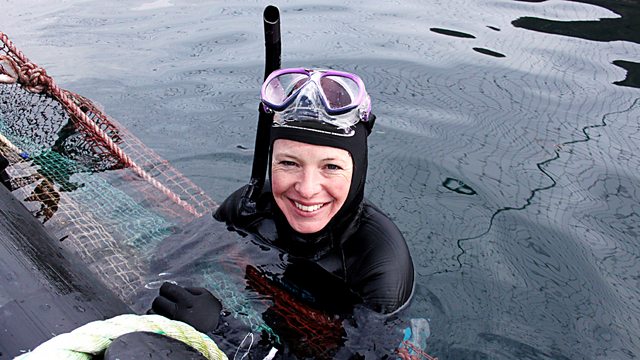
Miranda swims with the fishes. | 0:01:54 | 0:01:56 | |
The Scottish salmon industry spawned a business worth around half a billion pounds. | 0:01:58 | 0:02:03 | |
But how did they crack the secret of farming a wild sea fish? | 0:02:03 | 0:02:07 | |
And Mark's on a rollercoaster ride under... | 0:02:09 | 0:02:12 | |
Ahhh...! | 0:02:12 | 0:02:14 | |
Way! | 0:02:14 | 0:02:15 | |
..and across the deadly tides of the Severn Estuary. | 0:02:15 | 0:02:19 | |
The story of how it was eventually crossed | 0:02:20 | 0:02:23 | |
is one of extraordinary ingenuity, | 0:02:23 | 0:02:27 | |
and also explosive tragedy. | 0:02:27 | 0:02:30 | |
We're here to explore what becomes of the coast | 0:02:31 | 0:02:34 | |
when rivers and seas collide. | 0:02:34 | 0:02:37 | |
I'm starting my estuary odyssey a pebble's throw | 0:02:42 | 0:02:46 | |
from Edinburgh on the Firth of Forth. | 0:02:46 | 0:02:49 | |
The scale of this seaway is staggering, | 0:02:51 | 0:02:53 | |
it's impossible to take the whole thing in. | 0:02:53 | 0:02:57 | |
What I could really do with is something tall to climb up. | 0:02:59 | 0:03:03 | |
So I can get a bird's-eye view. | 0:03:03 | 0:03:05 | |
Only the engineering marvel of the Forth rail bridge | 0:03:11 | 0:03:14 | |
does justice to the sheer spectacle of the estuary. | 0:03:14 | 0:03:18 | |
As we're coming up here | 0:03:19 | 0:03:21 | |
you can see the rivets on this bridge that hold it together. | 0:03:21 | 0:03:24 | |
6.5 million rivets, and every one of them has been painted by hand. | 0:03:24 | 0:03:27 | |
-This is it. -This is it, Nick. Here we are on top of the Forth Bridge. | 0:03:34 | 0:03:38 | |
Up here, right in the middle of the Firth of Forth | 0:03:50 | 0:03:52 | |
you can get a real sense of the huge scale of this estuary. | 0:03:52 | 0:03:58 | |
I can see the Pentland Hills right over there, | 0:03:58 | 0:04:00 | |
there's the dark volcanic bump of Arthur's Seat | 0:04:00 | 0:04:04 | |
rising above the white buildings of Edinburgh. | 0:04:04 | 0:04:08 | |
Looking west, I can see all the way out to the open sea - the North Sea. | 0:04:08 | 0:04:12 | |
And looking inland, in this direction, there's even more. | 0:04:14 | 0:04:17 | |
Here's the Forth road bridge, arching over the water in front of me, | 0:04:20 | 0:04:25 | |
behind it Rosyth naval base, | 0:04:25 | 0:04:27 | |
and in the far distance I can just make out | 0:04:27 | 0:04:30 | |
Grangemouth power station oozing smoke into the sky. | 0:04:30 | 0:04:33 | |
This estuary is so huge that even from this incredible vantage point, | 0:04:37 | 0:04:42 | |
inland it just fades into invisibility. | 0:04:42 | 0:04:46 | |
The only way of actually getting a true sense of its size | 0:04:46 | 0:04:48 | |
is by looking at a map. | 0:04:48 | 0:04:51 | |
This is the mouth of the estuary | 0:04:55 | 0:04:56 | |
marked by this little island, the Isle of May, here. | 0:04:56 | 0:05:00 | |
In the other direction, 60 miles inland, | 0:05:00 | 0:05:04 | |
the water gets less and less salty, gets fresher and fresher, | 0:05:04 | 0:05:08 | |
until you reach Stirling here, where this estuary is born. | 0:05:08 | 0:05:12 | |
Starting at its birthplace, I'm flying the length of the waterway. | 0:05:16 | 0:05:21 | |
Will the change in wildlife help pinpoint the elusive spot where river becomes sea? | 0:05:22 | 0:05:29 | |
My guide's marine ecologist Stuart Clough. | 0:05:29 | 0:05:32 | |
And as we pass over Stirling, | 0:05:34 | 0:05:36 | |
the river's very beautiful seen from above | 0:05:36 | 0:05:39 | |
it's like a huge coiled rope. | 0:05:39 | 0:05:40 | |
You're in classic lower river territory here, erm, | 0:05:40 | 0:05:43 | |
lower fresh water river. | 0:05:43 | 0:05:45 | |
The place where the tide just starts to have its effect. | 0:05:45 | 0:05:48 | |
And even now the mud banks are starting to appear on the side. | 0:05:48 | 0:05:52 | |
And in those you've got all kinds of worms and shellfish | 0:05:52 | 0:05:55 | |
that live within those sediments, and they become food for birds. | 0:05:55 | 0:05:59 | |
It's a fantastic environment. | 0:05:59 | 0:06:01 | |
Is it possible to identify the point at which this river, the Forth, | 0:06:01 | 0:06:04 | |
ceases to be a river | 0:06:04 | 0:06:07 | |
and begins to be sea? | 0:06:07 | 0:06:09 | |
From a biologist's perspective, it's a continuum - | 0:06:09 | 0:06:11 | |
it changes all the time. | 0:06:11 | 0:06:13 | |
On the one hand it's a no-man's land | 0:06:13 | 0:06:15 | |
and on the other hand it's a diverse and rich place with masses of life. | 0:06:15 | 0:06:19 | |
Life is rich where rivers and seas meet. | 0:06:23 | 0:06:26 | |
And where we flock, so does the wildlife. | 0:06:29 | 0:06:33 | |
As we move into saltwater, the big hitters start to surface - | 0:06:36 | 0:06:42 | |
dolphins, seals, | 0:06:42 | 0:06:44 | |
and even whales have all been spotted here. | 0:06:44 | 0:06:47 | |
We're now over the sunlit seaside, aren't we, Stuart? | 0:06:50 | 0:06:53 | |
It's completely changed. | 0:06:53 | 0:06:55 | |
Absolutely, yeah. We're right out in the outer estuary now. | 0:06:55 | 0:06:59 | |
The freshwater influence is a long way behind us, | 0:06:59 | 0:07:01 | |
the beaches are sandy. | 0:07:01 | 0:07:02 | |
If we were down at sea level now | 0:07:02 | 0:07:04 | |
what kind of birds and so on would we be looking at? | 0:07:04 | 0:07:07 | |
Auks - like razorbills and guillemots and puffins. | 0:07:07 | 0:07:10 | |
You've got fulmar, you'll have kittiwakes, you'll have gannets - | 0:07:10 | 0:07:13 | |
real marine species, that you'd never find in the freshwater parts of the estuary. | 0:07:13 | 0:07:18 | |
At the edge of the estuary, | 0:07:21 | 0:07:24 | |
we get a box office view of the gannets of Bass Rock. | 0:07:24 | 0:07:27 | |
This swirling mass makes the most of food from the sea | 0:07:29 | 0:07:33 | |
and shelter from the land. | 0:07:33 | 0:07:35 | |
Where are we now? | 0:07:36 | 0:07:38 | |
We're just adjacent to the Isle of May - | 0:07:38 | 0:07:40 | |
very much the outer limit of the estuary. | 0:07:40 | 0:07:43 | |
We've flown the whole way from the freshwater of a river | 0:07:43 | 0:07:48 | |
to the saltwater of the open sea. | 0:07:48 | 0:07:51 | |
Over an extraordinary diversity of habitats | 0:07:51 | 0:07:54 | |
both human and natural - estuaries are worlds of their own. | 0:07:54 | 0:07:59 | |
Twenty million of us, | 0:08:06 | 0:08:08 | |
one third of the UK's population, live on an estuary. | 0:08:08 | 0:08:13 | |
Their flat shorelines are perfect for building, | 0:08:16 | 0:08:20 | |
so each of these coastal highways comes with its own gatekeeper. | 0:08:20 | 0:08:24 | |
Great cities surge up where mighty rivers plunge into the sea. | 0:08:29 | 0:08:35 | |
It's fitting that the country's capital crowns the most | 0:08:35 | 0:08:39 | |
hard-working waterway of all - the titanic Thames. | 0:08:39 | 0:08:44 | |
For centuries, Londoners have swallowed up the benefits | 0:08:47 | 0:08:50 | |
the estuary brings in. | 0:08:50 | 0:08:53 | |
The sea brought riches from abroad, | 0:08:53 | 0:08:56 | |
and the river supplies two-thirds of the city's drinking water. | 0:08:56 | 0:09:00 | |
But the Victorians found a new job for old Father Thames - | 0:09:02 | 0:09:08 | |
doing their dirty work. | 0:09:08 | 0:09:11 | |
Tessa's getting to grips with a grubby tale of triumph and tragedy. | 0:09:13 | 0:09:19 | |
The power of the tide gave an eminent Victorian engineer | 0:09:20 | 0:09:25 | |
an extraordinary idea - | 0:09:25 | 0:09:27 | |
turn the Thames into a giant self-flushing loo. | 0:09:27 | 0:09:32 | |
The tidal range of the river is huge - around eight metres. | 0:09:34 | 0:09:39 | |
This powerful ebb and flow, gave rise to an ingenious sewer plan. | 0:09:39 | 0:09:46 | |
Release excrement as the tide turns, | 0:09:46 | 0:09:48 | |
and let the outgoing flow flush London's waste way out to sea. | 0:09:48 | 0:09:53 | |
The city's relationship with the sea | 0:09:55 | 0:09:57 | |
spawned a sewer system that was the envy of the world. | 0:09:57 | 0:10:00 | |
Opened in 1865 by the Prince of Wales, this subterranean labyrinth, | 0:10:00 | 0:10:06 | |
elevated its mastermind Joseph Bazalgette | 0:10:06 | 0:10:09 | |
to become a hero of the Victorian age. | 0:10:09 | 0:10:13 | |
Bazalgette's master plan demanded a warren of waste pipes, | 0:10:16 | 0:10:20 | |
a network over 1,000 miles long | 0:10:20 | 0:10:23 | |
to carry the capital's raw sewage out to the Thames. | 0:10:23 | 0:10:27 | |
It took six years to build, constructed so well | 0:10:27 | 0:10:32 | |
it still forms the backbone of London's sewer complex. | 0:10:32 | 0:10:37 | |
Over 300 million bricks placed so precisely | 0:10:37 | 0:10:41 | |
they form water-tight tunnels. | 0:10:41 | 0:10:44 | |
You know how to treat a girl, don't you, Rob? | 0:10:46 | 0:10:49 | |
I do, I take them only to the best spots. | 0:10:49 | 0:10:52 | |
Impressive as this labyrinth is, it's only the means to a watery end. | 0:10:52 | 0:10:57 | |
The city's sewage still needed sweeping out to sea, | 0:10:57 | 0:11:00 | |
so it was piped towards the coast to pass the problem onto the tide. | 0:11:00 | 0:11:05 | |
The muck flowed downstream to arrive at the final | 0:11:05 | 0:11:09 | |
triumph of the entire system, the pumping station at Crossness. | 0:11:09 | 0:11:14 | |
This is staggering! It's like some sort of ballroom. | 0:11:24 | 0:11:28 | |
It's a real indication of the level of pride | 0:11:35 | 0:11:38 | |
they took in their work, the beauty is just breathtaking. | 0:11:38 | 0:11:42 | |
And these huge pumps are even named after members of the royal family. | 0:11:42 | 0:11:48 | |
The pumping stations were the final stage of Balzalgette's grand plan - | 0:11:51 | 0:11:56 | |
they pushed the sewage up into huge reservoirs, | 0:11:56 | 0:11:59 | |
to be stored until the tide began to turn. | 0:11:59 | 0:12:03 | |
When the tide started to ebb, they released the sewage into the Thames just there. | 0:12:08 | 0:12:13 | |
They relied on the surge of seawater to whisk Londoners' muck out of sight and out of mind. | 0:12:13 | 0:12:20 | |
This was Joseph Bazalgette's big tidal flush - | 0:12:20 | 0:12:23 | |
his plan to turn the Thames into one gigantic toilet bowl was complete. | 0:12:23 | 0:12:28 | |
Bazalgette was heralded as the city's saviour. | 0:12:30 | 0:12:34 | |
But is there a skeleton lurking in London's water closet? | 0:12:34 | 0:12:38 | |
Life may have been rosy for those in central London, | 0:12:40 | 0:12:43 | |
but it didn't smell so sweet for those living downstream. | 0:12:43 | 0:12:47 | |
Like a real-life toilet, the Thames is full of U-bends. | 0:12:50 | 0:12:56 | |
The waste wasn't clearing as fast as Bazalgette had imagined, | 0:12:56 | 0:13:00 | |
and the consequences turned out to be devastating. | 0:13:00 | 0:13:04 | |
It's the 3rd of September, 1878, | 0:13:05 | 0:13:08 | |
the pleasure steamer The Princess Alice | 0:13:08 | 0:13:12 | |
is on its way back to London crammed with passengers. | 0:13:12 | 0:13:16 | |
The day-trippers had been enjoying fresh air at the mouth of the estuary, | 0:13:16 | 0:13:20 | |
but returning to the city, near the sewage outlet, | 0:13:20 | 0:13:23 | |
the pleasure steamer was struck by disaster. | 0:13:23 | 0:13:26 | |
It collides with another boat. | 0:13:30 | 0:13:32 | |
Hundreds are flung into the river, many will be drowned. | 0:13:32 | 0:13:37 | |
But it's even worse than that. | 0:13:37 | 0:13:38 | |
Revealing the gruesome fate of those floundering in the estuary | 0:13:41 | 0:13:45 | |
is local historian Joz Joslin. | 0:13:45 | 0:13:48 | |
So the vessel's upended, and hundreds of people are in the water. | 0:13:49 | 0:13:53 | |
Yes. And lots of them are women and children, | 0:13:53 | 0:13:56 | |
and they're screaming, | 0:13:56 | 0:13:58 | |
and unfortunately it's not water that they're in, | 0:13:58 | 0:14:00 | |
they're actually in sewage, so there was no oxygen. | 0:14:00 | 0:14:04 | |
A lot of them died because there was no air to breathe. | 0:14:04 | 0:14:08 | |
So they're either being suffocated or drowning. | 0:14:08 | 0:14:11 | |
Or poisoned. | 0:14:11 | 0:14:13 | |
How revolting. And the majority died? | 0:14:13 | 0:14:15 | |
Yes, the majority died. | 0:14:15 | 0:14:17 | |
They said that every street in the east end of London had lost somebody, | 0:14:17 | 0:14:20 | |
because it was their Sunday school outings that were onboard the vessel. | 0:14:20 | 0:14:25 | |
The pleasure boat sank close to the sewage works, | 0:14:26 | 0:14:28 | |
and the timing could not have been worse. | 0:14:28 | 0:14:32 | |
The Beckton sewage outlet pipe carrying all of North London's waste | 0:14:33 | 0:14:37 | |
had just discharged its stinking load into the river. | 0:14:37 | 0:14:40 | |
Over 600 people choked to death in a toxic soup of human filth. | 0:14:44 | 0:14:49 | |
After the tragedy, | 0:14:54 | 0:14:56 | |
Bazalgette's sewage system came under the spotlight. | 0:14:56 | 0:14:59 | |
Members of the local historical society read the words of their forefathers. | 0:15:01 | 0:15:07 | |
"There had been an accumulation of black, greasy, filth along the shore. | 0:15:07 | 0:15:12 | |
"The filth settles on the steps as the tide goes down." | 0:15:12 | 0:15:16 | |
"The river in hot weather is very bad. | 0:15:16 | 0:15:18 | |
"In some places it smells so bad you cannot stand it." | 0:15:18 | 0:15:22 | |
A commission of inquiry delivered a damning indictment, | 0:15:22 | 0:15:25 | |
concluding "it is neither necessary or justifiable | 0:15:25 | 0:15:29 | |
"to discharge sewage in its crude state into any parts of the Thames". | 0:15:29 | 0:15:36 | |
The Pall Mall Gazette took Bazalgette to task, stating | 0:15:36 | 0:15:40 | |
"the natural man in him, puts off the evil day of having to admit failure". | 0:15:40 | 0:15:45 | |
Luckily for Bazalgette, the muck didn't stick, | 0:15:46 | 0:15:50 | |
but London did pull the plug on his big tidal flush. | 0:15:50 | 0:15:55 | |
In 1887, a new system started. | 0:15:55 | 0:15:59 | |
Now the solid human waste was pumped into vessels like this. | 0:15:59 | 0:16:04 | |
The excrement was shipped out to the open sea and dumped. | 0:16:04 | 0:16:08 | |
They were known locally as Bovril boats, amongst other things. | 0:16:08 | 0:16:12 | |
We used to call them... Well, never mind what we used to call them! | 0:16:12 | 0:16:16 | |
-What did you call them? -No, I'm not saying. | 0:16:16 | 0:16:19 | |
They used to come and moor - they had moorings for them - | 0:16:19 | 0:16:22 | |
and they would take the residue of it. | 0:16:22 | 0:16:24 | |
Cos all the fluids were taken off, | 0:16:24 | 0:16:26 | |
so it was almost solid the stuff | 0:16:26 | 0:16:28 | |
that they took out - human detritus - | 0:16:28 | 0:16:30 | |
so that it wasn't into the river. | 0:16:30 | 0:16:33 | |
Sewage carrying ships didn't just do the dirty work of London - | 0:16:34 | 0:16:39 | |
they were once a common sight on our estuaries, | 0:16:39 | 0:16:42 | |
cleaning up Glasgow, Belfast and other coastal cities. | 0:16:42 | 0:16:46 | |
London's Bovril boats were finally pensioned off in 1998. | 0:16:49 | 0:16:55 | |
Balzalgette's tunnels still bring raw sewage here to the Crossness Works, | 0:16:56 | 0:17:03 | |
but now the solid matter's burnt off to make electricity. | 0:17:03 | 0:17:07 | |
The liquid sewage is treated - | 0:17:09 | 0:17:11 | |
it goes from this... | 0:17:11 | 0:17:13 | |
to this. | 0:17:13 | 0:17:15 | |
And the cleaned-up fluid? | 0:17:15 | 0:17:16 | |
It still gets the big tidal heave-ho, | 0:17:16 | 0:17:19 | |
and is discharged into the Thames, where the river and the sea collide. | 0:17:19 | 0:17:23 | |
Tide and traffic on the Thames flow two ways. | 0:17:35 | 0:17:40 | |
In deep waters at the estuary mouth, ships from around the world | 0:17:43 | 0:17:47 | |
come to unburden themselves on the docks at Sheerness. | 0:17:47 | 0:17:50 | |
But back in the 19th century a group of foreign stowaways | 0:17:53 | 0:17:58 | |
snuck off a ship and never left. | 0:17:58 | 0:18:01 | |
They set-up a secret community within the harbour walls. | 0:18:01 | 0:18:05 | |
This is the des-res of Britain's only colony...of scorpions. | 0:18:06 | 0:18:11 | |
But not the monster kind. | 0:18:14 | 0:18:15 | |
European yellowtail scorpions arrived here from Italy | 0:18:18 | 0:18:21 | |
on a masonry ship some 200 years ago. | 0:18:21 | 0:18:24 | |
Now the offspring of those Italian scorpions | 0:18:27 | 0:18:30 | |
have found a British admirer. | 0:18:30 | 0:18:32 | |
Hi, I'm Bex, and I'm a scorpo-holic. | 0:18:35 | 0:18:38 | |
I've been fascinated by scorpions since I was a teenager | 0:18:38 | 0:18:41 | |
and been hooked ever since. | 0:18:41 | 0:18:42 | |
I'm here to see Britain's only colony of scorpions, | 0:18:44 | 0:18:47 | |
but I've got to wait for the sun to go down. | 0:18:47 | 0:18:50 | |
It's properly dark now, so I'm going to see if I can find some. | 0:18:52 | 0:18:56 | |
I'm using a UV torch, cos scorpions glow under ultraviolet light, | 0:18:56 | 0:19:00 | |
and I think I've just spotted one. | 0:19:00 | 0:19:03 | |
Definitely an adult, probably out looking for something to eat. | 0:19:03 | 0:19:07 | |
It is pretty cool though, isn't it? Having scorpions in the UK. | 0:19:08 | 0:19:11 | |
They are a member of the spider family. | 0:19:13 | 0:19:15 | |
They have eight legs, not six. | 0:19:15 | 0:19:17 | |
They eat woodlice. | 0:19:17 | 0:19:18 | |
They are ambush predators, so they'll just sit and wait, | 0:19:18 | 0:19:21 | |
and then something will come past, | 0:19:21 | 0:19:23 | |
and they'll just jump out and grab it, | 0:19:23 | 0:19:25 | |
and subdue it with their claws rather than stinging it. | 0:19:25 | 0:19:28 | |
They don't generally use their stings, these ones. | 0:19:28 | 0:19:31 | |
Very happy that we found some. | 0:19:35 | 0:19:38 | |
This is a tiny, little, incy one. | 0:19:38 | 0:19:39 | |
He's so cute. But with tininess comes speed! | 0:19:39 | 0:19:43 | |
It's been a great night, we've seen loads of scorpions, | 0:19:48 | 0:19:51 | |
but I think I'll put this one back before... | 0:19:51 | 0:19:55 | |
it legs it. | 0:19:55 | 0:19:56 | |
Bye, little fella. | 0:19:57 | 0:19:58 | |
I think I'll leg it now, too. | 0:20:00 | 0:20:02 | |
We're on a journey to discover what becomes of the coast | 0:20:19 | 0:20:22 | |
when rivers and seas collide. | 0:20:22 | 0:20:24 | |
I'm exploring the Firth of Forth on Scotland's east coast, | 0:20:27 | 0:20:32 | |
where canny folk profited from their prime location - | 0:20:32 | 0:20:36 | |
ideal for seaborne business. | 0:20:36 | 0:20:40 | |
And with rich seams of coal for power, the population boomed. | 0:20:40 | 0:20:45 | |
With more mouths to feed, getting enough fresh food was tricky, | 0:20:45 | 0:20:50 | |
so they looked to the sea to preserve their provisions. | 0:20:50 | 0:20:54 | |
You'll find the evidence at St Monans. | 0:20:56 | 0:20:59 | |
Here, food processing created a curious landscape. | 0:21:04 | 0:21:08 | |
The shore is lined with lots and lots | 0:21:11 | 0:21:15 | |
of very strange grass-covered humps, | 0:21:15 | 0:21:18 | |
and what seems to be a ruined building over there | 0:21:18 | 0:21:21 | |
and up there a stone windmill. | 0:21:21 | 0:21:24 | |
The ruins of industrial activity reveal themselves the more you look. | 0:21:26 | 0:21:31 | |
This land was remodelled by people | 0:21:35 | 0:21:37 | |
making the most of one bounty from the sea | 0:21:37 | 0:21:40 | |
that isn't in short supply - salt. | 0:21:40 | 0:21:43 | |
Before refrigeration, salt was a valuable commodity - | 0:21:45 | 0:21:49 | |
preserving herring landed along the east coast. | 0:21:49 | 0:21:53 | |
Scottish salt was also exported to England, | 0:21:54 | 0:21:58 | |
turning a tasty profit for the salt works. | 0:21:58 | 0:22:01 | |
Those strange hummocks come in sets - each set of hummocks | 0:22:03 | 0:22:08 | |
is the ruins of a pan house. | 0:22:08 | 0:22:09 | |
Inside each of those pan houses | 0:22:10 | 0:22:12 | |
there was an iron pan about 6 metres by 3 metres, | 0:22:12 | 0:22:16 | |
with coal fires beneath it. | 0:22:16 | 0:22:18 | |
Sea water was pumped - probably using this windmill - from the sea | 0:22:18 | 0:22:22 | |
in pipes up to each pan house. | 0:22:22 | 0:22:24 | |
Once it had been boiled off in the pans, you had salt. | 0:22:24 | 0:22:28 | |
A rare film brings the enterprise back to life. | 0:22:31 | 0:22:34 | |
Salt works once flourished along Scotland's east coast. | 0:22:37 | 0:22:42 | |
The last operation at Prestonpans didn't close its doors until 1974. | 0:22:42 | 0:22:48 | |
It was the abundance of coal along this estuary | 0:22:51 | 0:22:55 | |
that made it a good site for boiling up sea water. | 0:22:55 | 0:22:58 | |
A sample of sea water stirs up a mystery, | 0:23:02 | 0:23:04 | |
right at the heart of this forgotten industry. | 0:23:04 | 0:23:07 | |
Out there is the sea full of salt. | 0:23:09 | 0:23:12 | |
And I can certainly taste it. | 0:23:14 | 0:23:16 | |
This little brook running into the sea, | 0:23:16 | 0:23:21 | |
doesn't taste salty, at all. | 0:23:21 | 0:23:23 | |
So, why is freshwater fresh | 0:23:23 | 0:23:27 | |
and why is sea water salty? | 0:23:27 | 0:23:30 | |
It's one of those brilliantly simple infuriating questions | 0:23:34 | 0:23:39 | |
that kids ask - why is the sea salty? | 0:23:39 | 0:23:44 | |
I'm enlisting the help of a grown-up. | 0:23:44 | 0:23:46 | |
Simon Boxall's from the National Oceanography Centre - | 0:23:46 | 0:23:50 | |
he should be able to work it out. | 0:23:50 | 0:23:53 | |
We've all swum in the sea, we know it doesn't taste like freshwater, | 0:23:53 | 0:23:56 | |
Simon, but why is it salty? | 0:23:56 | 0:23:58 | |
You have to go right back to the beginning-stage of the earth, | 0:23:58 | 0:24:01 | |
back several billion years. | 0:24:01 | 0:24:03 | |
And if you go back that far, | 0:24:03 | 0:24:05 | |
the earth was a completely different place - | 0:24:05 | 0:24:07 | |
it was full of volcanic eruptions, there was lots of steam around, | 0:24:07 | 0:24:10 | |
but, also, there was a lot of sodium in the rocks, | 0:24:10 | 0:24:13 | |
and that sodium was being hit by the hydrochloric acid | 0:24:13 | 0:24:16 | |
that was given off by these volcanic vents. | 0:24:16 | 0:24:19 | |
And if we take these two very harmful chemicals... | 0:24:19 | 0:24:21 | |
On the one hand, you've got the element of sodium - very reactive - | 0:24:21 | 0:24:24 | |
and on the other hand, you've got chlorine - very dangerous and very reactive. | 0:24:24 | 0:24:27 | |
You put the two together and you create...sodium chloride. | 0:24:27 | 0:24:31 | |
Which is the sort of thing you sprinkle on your chips. | 0:24:31 | 0:24:33 | |
Certainly isn't harmful, at all. | 0:24:33 | 0:24:35 | |
So you've got this hydrochloric acid pouring out of the volcanic vents, | 0:24:35 | 0:24:39 | |
meeting the sodium hydroxide which is lying around in the rocks on the sea bed | 0:24:39 | 0:24:43 | |
creating this stuff called sodium chloride, which is salt. | 0:24:43 | 0:24:47 | |
These ancient chemical reactions gave birth to our salty seas. | 0:24:47 | 0:24:53 | |
We can create those sort of primordial days. | 0:24:55 | 0:24:58 | |
We can actually take some hydrochloric acid - | 0:24:58 | 0:25:00 | |
the sort of stuff that came out of the vents of the volcanoes. | 0:25:00 | 0:25:03 | |
We've got some dilute sodium hydroxide - | 0:25:03 | 0:25:05 | |
which represents the stuff that was in the rocks. | 0:25:05 | 0:25:08 | |
And between us, if you want to, we can make salt. | 0:25:08 | 0:25:10 | |
We can take these two quite nasty chemicals | 0:25:10 | 0:25:12 | |
and produce something that's really more vital to life in many ways. | 0:25:12 | 0:25:15 | |
This is hydrochloric acid - it's very dilute. | 0:25:15 | 0:25:18 | |
And we're going to pop it into this vessel here. | 0:25:18 | 0:25:20 | |
OK, we're then going to add our sodium hydroxide. | 0:25:22 | 0:25:26 | |
At the moment, basically, the sodium and the chlorine are combining | 0:25:26 | 0:25:30 | |
and giving off heat - can you feel that? | 0:25:30 | 0:25:32 | |
It's warm! Really warm, wow! | 0:25:32 | 0:25:35 | |
We've effectively neutralised that acid, that sodium hydroxide, | 0:25:35 | 0:25:38 | |
and what we have in there now is basically water...and salt. | 0:25:38 | 0:25:42 | |
We've compressed billions of years of the earth's evolution | 0:25:44 | 0:25:49 | |
to make a miniature ocean. | 0:25:49 | 0:25:51 | |
Boiling off our DIY sea water leaves the prize ingredient. | 0:25:51 | 0:25:57 | |
So, here it is, our very own home-made salt. | 0:25:59 | 0:26:03 | |
White crystals that washed wealth in from the sea | 0:26:04 | 0:26:08 | |
to help feed an estuary. | 0:26:08 | 0:26:10 | |
The salty shoreline satisfies our appetite in surprising ways. | 0:26:23 | 0:26:27 | |
On sea marshes in Wales, sheep graze on grass made sturdy by regular salt baths. | 0:26:28 | 0:26:34 | |
This distinctly coastal vegetation gives the lamb a unique flavour. | 0:26:37 | 0:26:41 | |
But to explore the biggest effect our shoreline has on our waistline, | 0:26:44 | 0:26:49 | |
head north to Scotland. | 0:26:49 | 0:26:51 | |
A natural wonder plays out where rivers meet the sea, | 0:26:54 | 0:26:58 | |
like here, at Loch Carron. | 0:26:58 | 0:27:00 | |
Miranda is immersed in a secret life of the salmon. | 0:27:03 | 0:27:08 | |
I'm in the thick of Britain's favourite fish dish. | 0:27:11 | 0:27:14 | |
Our insatiable appetite for salmon | 0:27:14 | 0:27:16 | |
has spawned an industry in the UK | 0:27:16 | 0:27:18 | |
worth around half a billion pounds a year. | 0:27:18 | 0:27:21 | |
But farming these fish is a lot more difficult than you think. | 0:27:22 | 0:27:25 | |
Salmon are challenging to rear in farms because of their extraordinary life cycle. | 0:27:27 | 0:27:32 | |
They're born in freshwater rivers, then migrate to the sea. | 0:27:32 | 0:27:36 | |
To survive in saltwater, a salmon's body goes through radical changes. | 0:27:38 | 0:27:42 | |
That transformation is very tricky to manage in captivity. | 0:27:46 | 0:27:50 | |
To see why, I'm seeking out the wild fish. | 0:27:50 | 0:27:53 | |
Take a winter walk along a salmon river and there might be | 0:27:55 | 0:27:58 | |
delicate little eggs lurking deep in the watery gravel. | 0:27:58 | 0:28:02 | |
So why do salmon out at sea, | 0:28:02 | 0:28:04 | |
bother to come all this way to lay their eggs? | 0:28:04 | 0:28:08 | |
I'm meeting wild salmon expert Bob Kindness. | 0:28:08 | 0:28:11 | |
What a place for the salmon to come back to | 0:28:11 | 0:28:13 | |
and lay their eggs in the gravel here. | 0:28:13 | 0:28:15 | |
They have to be spawned in fresh water | 0:28:15 | 0:28:17 | |
because the eggs would not survive | 0:28:17 | 0:28:19 | |
other than in fresh water - they wouldn't survive in the sea. | 0:28:19 | 0:28:22 | |
So the salmon has to make that journey back from the feeding grounds, | 0:28:22 | 0:28:26 | |
usually back to its home river, | 0:28:26 | 0:28:28 | |
back to the area where it itself was born. | 0:28:28 | 0:28:31 | |
Once hatched, these freshwater fish face a big problem - | 0:28:34 | 0:28:38 | |
they need to get out to sea, where there's more food, | 0:28:38 | 0:28:41 | |
but their bodies are incapable of dealing with saltwater. | 0:28:41 | 0:28:45 | |
A jelly sweet experiment gives us a taste of their challenge. | 0:28:47 | 0:28:50 | |
This tiny jelly bear has a dense sugary body. | 0:28:51 | 0:28:56 | |
Soak him in water overnight and he looks like this... | 0:28:56 | 0:28:59 | |
all swollen up. | 0:28:59 | 0:29:01 | |
This plump bear is our happily hydrated fresh water salmon. | 0:29:01 | 0:29:06 | |
But if I add salt to create sea water, | 0:29:07 | 0:29:11 | |
the fresh water is sucked out of the sweet, and it shrivels. | 0:29:11 | 0:29:16 | |
Death by dehydration is the challenge a salmon faces | 0:29:16 | 0:29:20 | |
going from the river down into the sea. | 0:29:20 | 0:29:22 | |
To avoid dehydration salmon develop two defences, | 0:29:24 | 0:29:28 | |
their scales toughen to stop fresh water leaching out of their body. | 0:29:28 | 0:29:33 | |
Also their kidneys and gills adapt, | 0:29:33 | 0:29:35 | |
so they can cope with life in saltwater. | 0:29:35 | 0:29:38 | |
To see the scale of the transformation | 0:29:40 | 0:29:42 | |
we've anaesthetized two of the fish. | 0:29:42 | 0:29:45 | |
Gosh, you can really see the difference now, side-by-side. | 0:29:46 | 0:29:50 | |
The speckled brown tiddler is a freshwater salmon. | 0:29:50 | 0:29:54 | |
The silver beauty below, just a year older, is ready for the sea. | 0:29:54 | 0:29:58 | |
A salmon can turn around and go back | 0:30:03 | 0:30:06 | |
if its body isn't adapting to life in the seawater, | 0:30:06 | 0:30:09 | |
and some fish take years to make it out to sea. | 0:30:09 | 0:30:12 | |
That's OK in the wild, but how could fish farmers know | 0:30:14 | 0:30:18 | |
when it was safe to move their salmon to saltwater pens? | 0:30:18 | 0:30:22 | |
In the early 1970s, years of experiments finally paid off. | 0:30:24 | 0:30:28 | |
I've got a patent here applied for in 1971. | 0:30:31 | 0:30:35 | |
This is a scientific recipe for the crucial step in the growing of captive salmon. | 0:30:35 | 0:30:41 | |
The "fish equation" says that when the weight of the salmon, W, | 0:30:42 | 0:30:46 | |
times by 100, | 0:30:46 | 0:30:47 | |
divided by its length, L, cubed, | 0:30:47 | 0:30:49 | |
is equal to 0.8 - | 0:30:49 | 0:30:52 | |
it's ready for sea water. | 0:30:52 | 0:30:54 | |
Armed with the power to control nature, | 0:30:56 | 0:30:58 | |
salmon farming in Scotland rapidly became big business. | 0:30:58 | 0:31:02 | |
As the scale of production rose, the price of the fish started to plummet. | 0:31:03 | 0:31:08 | |
'The market shows every sign of expanding as the supply increases, | 0:31:10 | 0:31:13 | |
'and now, salmon is not just to be found in the exclusive fishmongers, | 0:31:13 | 0:31:18 | |
'but can be bought vacuum-packed in the supermarkets.' | 0:31:18 | 0:31:22 | |
Salmon stopped being a treat saved for special occasions, | 0:31:23 | 0:31:26 | |
now it was as cheap as chicken. | 0:31:26 | 0:31:28 | |
So how did fish farmers manage to mimic nature | 0:31:31 | 0:31:35 | |
with their production line process? | 0:31:35 | 0:31:38 | |
The salmon start life in freshwater tanks. | 0:31:38 | 0:31:41 | |
When they're big enough to satisfy the "fish equation" | 0:31:41 | 0:31:44 | |
they're sucked up and piped into trucks. | 0:31:44 | 0:31:47 | |
Trucks take them to boats, boats ferry them to saltwater enclosures | 0:31:51 | 0:31:55 | |
anchored at the sea end of the estuary. | 0:31:55 | 0:31:57 | |
The salmon are kept in these pens for up to 22 months, | 0:32:00 | 0:32:03 | |
but they are quite used to human company, | 0:32:03 | 0:32:05 | |
there are divers who regularly check on the fish | 0:32:05 | 0:32:09 | |
and the nets that hold them in. | 0:32:09 | 0:32:12 | |
The salmon are constantly watched. | 0:32:14 | 0:32:16 | |
CCTV operators check they're eating | 0:32:16 | 0:32:18 | |
and make sure they're not being eaten by seals. | 0:32:18 | 0:32:22 | |
Farmed fish carry more lice than wild ones, | 0:32:23 | 0:32:26 | |
so they're monitored for sickness too. | 0:32:26 | 0:32:29 | |
Our appetite for salmon makes all this effort profitable. | 0:32:32 | 0:32:36 | |
If our demand for these fish is such that we need to farm them, | 0:32:37 | 0:32:41 | |
then salmon pens will become an even more common site | 0:32:41 | 0:32:44 | |
where rivers and seas collide. | 0:32:44 | 0:32:46 | |
We're on a journey around three of our mightiest estuaries. | 0:33:02 | 0:33:06 | |
Where tideways bring bounty from the sea deep inland. | 0:33:09 | 0:33:13 | |
So imagine the potential of connecting two great estuaries | 0:33:17 | 0:33:21 | |
to form one super-highway. | 0:33:21 | 0:33:23 | |
That unifying vision excited the imagination of merchants | 0:33:25 | 0:33:30 | |
in the Firth of Forth. | 0:33:30 | 0:33:33 | |
In 1768, businessmen began to build their own waterway - | 0:33:33 | 0:33:38 | |
an epic canal joining the Forth to another great estuary, the Clyde. | 0:33:38 | 0:33:44 | |
What those early entrepreneurs couldn't know | 0:33:48 | 0:33:50 | |
was that their scheme to connect two estuaries would, | 0:33:50 | 0:33:53 | |
one day lead to a revolution in fibre-optic communication. | 0:33:53 | 0:33:58 | |
The story starts with an extraordinary discovery | 0:34:03 | 0:34:05 | |
on the waterway some 180 years ago. | 0:34:05 | 0:34:09 | |
Let's go back to that fateful day in 1834. | 0:34:10 | 0:34:14 | |
Young engineer John Scott Russell - this is him later in life - | 0:34:14 | 0:34:18 | |
was on the towpath of this canal. | 0:34:18 | 0:34:20 | |
Russell was watching a barge, | 0:34:22 | 0:34:24 | |
when suddenly its bow wave detached from the front of the boat | 0:34:24 | 0:34:29 | |
and sped off on its own. | 0:34:29 | 0:34:30 | |
It was a solitary hump of travelling water. | 0:34:32 | 0:34:35 | |
The engineer would become obsessed | 0:34:36 | 0:34:39 | |
trying to understand the solitary wave through mathematics. | 0:34:39 | 0:34:44 | |
But on first sighting, he had to act fast. | 0:34:44 | 0:34:47 | |
Russell jumped on his horse and gave chase to the wave. | 0:34:47 | 0:34:51 | |
Normally, waves peter out or break-up, | 0:34:53 | 0:34:56 | |
but this mysterious wave retained its shape and sped onwards. | 0:34:56 | 0:35:01 | |
After a chase of about two miles | 0:35:01 | 0:35:03 | |
the solitary wave still showed no signs of petering out. | 0:35:03 | 0:35:08 | |
Eventually it escaped Russell's pursuit altogether. | 0:35:08 | 0:35:12 | |
Russell would have recognised that this peculiar wave was | 0:35:12 | 0:35:16 | |
similar to the Severn bore. | 0:35:16 | 0:35:18 | |
That solitary wave is produced | 0:35:23 | 0:35:25 | |
when the tide collides with the River Severn, | 0:35:25 | 0:35:28 | |
sending a surge of seawater up the narrow funnel | 0:35:28 | 0:35:32 | |
of the Bristol Channel. | 0:35:32 | 0:35:34 | |
Not unlike the narrow channel of the canal. | 0:35:34 | 0:35:37 | |
So Russell experimented with canal-shaped water tanks. | 0:35:38 | 0:35:43 | |
Mathematician Chris Eilbeck thinks he can recreate Russell's | 0:35:43 | 0:35:47 | |
solitary wave. | 0:35:47 | 0:35:48 | |
-Keep our fingers crossed. -I'm dying to see one! | 0:35:49 | 0:35:52 | |
You can see the wave there. | 0:35:56 | 0:35:57 | |
Look at that! | 0:35:57 | 0:35:58 | |
-You got it first time. -Yeah. | 0:35:58 | 0:36:00 | |
Just a hump of water on its own. | 0:36:00 | 0:36:01 | |
You can feel the force of it when it hits the plate. | 0:36:01 | 0:36:04 | |
It's gone all the way back again. | 0:36:04 | 0:36:05 | |
They're amazingly stable it'll keep going for miles. | 0:36:05 | 0:36:08 | |
The canal's dimensions were perfect for keeping the wave stable, | 0:36:09 | 0:36:14 | |
deep enough for the wave not to steepen too sharply and break, | 0:36:14 | 0:36:18 | |
but shallow enough that it didn't flatten out. | 0:36:18 | 0:36:21 | |
Amazingly, these waves remain self-contained and intact, | 0:36:23 | 0:36:27 | |
even when they collide. | 0:36:27 | 0:36:29 | |
Three, two, one - go! | 0:36:29 | 0:36:31 | |
After the collision, they just re-appear on the other side. | 0:36:34 | 0:36:37 | |
Chris, are you saying, the waves didn't just bounce off each other | 0:36:37 | 0:36:40 | |
but went through each other? | 0:36:40 | 0:36:42 | |
Yes, that's correct. | 0:36:42 | 0:36:43 | |
They go through each other and re-appear on the other side. | 0:36:43 | 0:36:46 | |
-Undiminished? -Yes, and mathematically exact. | 0:36:46 | 0:36:49 | |
Unbelievable. | 0:36:49 | 0:36:51 | |
These remarkable packets of travelling energy have been christened solitons. | 0:36:55 | 0:37:00 | |
Now is the time to scale our experiment up. | 0:37:01 | 0:37:04 | |
Let's try and re-create the full wonder of the soliton wave | 0:37:05 | 0:37:09 | |
on this 800ft long straight section of Scottish canal. | 0:37:09 | 0:37:13 | |
But it won't be easy. | 0:37:17 | 0:37:19 | |
The wave John Scott Russell chased back in 1834, | 0:37:20 | 0:37:24 | |
was created when a horse-drawn boat came to a sudden stop, | 0:37:24 | 0:37:28 | |
releasing its bow wave. | 0:37:28 | 0:37:30 | |
We're trying a more modern approach | 0:37:32 | 0:37:34 | |
a motor boat loaded with people to provide ballast, and to bear witness. | 0:37:34 | 0:37:39 | |
Rachel, you're at the front of the boat here with some top hats. | 0:37:40 | 0:37:44 | |
You're clearly expecting something to happen. What are the hats for? | 0:37:44 | 0:37:48 | |
We've got the hats as a tribute to John Scott Russell | 0:37:48 | 0:37:51 | |
who discovered the first soliton wave, | 0:37:51 | 0:37:53 | |
we're all going to be throwing them into the air with joy | 0:37:53 | 0:37:55 | |
when we re-create it, is the plan. | 0:37:55 | 0:37:57 | |
I'm very impressed by your optimism. | 0:37:57 | 0:37:59 | |
Solitons are rare, not easily produced. | 0:38:01 | 0:38:05 | |
The boat must gain enough speed to form a sizeable bow wave | 0:38:05 | 0:38:09 | |
then come to a sudden stop. | 0:38:09 | 0:38:12 | |
Hopefully, that'll release a soliton. | 0:38:12 | 0:38:15 | |
If it does, I'm going to chase it, just like Russell, | 0:38:17 | 0:38:20 | |
only I'll be racing it on foot, not on horseback. | 0:38:20 | 0:38:23 | |
I've run up mountains, and I've run a few marathons, | 0:38:25 | 0:38:28 | |
but I've never run against a wave before, | 0:38:28 | 0:38:31 | |
I'm not sure I'm going to have to. | 0:38:31 | 0:38:32 | |
Oh, my god! | 0:38:40 | 0:38:41 | |
Well, I beat it over a few hundred metres, but it's still going. | 0:39:11 | 0:39:17 | |
And I'm not going to be able to keep going as long as that wave. | 0:39:17 | 0:39:21 | |
-ALL: -Hurray! | 0:39:21 | 0:39:23 | |
John Scott Russell designed special boats to ride his wave | 0:39:25 | 0:39:29 | |
at high speed along canals. | 0:39:29 | 0:39:32 | |
But sadly most people preferred a new form of transport - the railway. | 0:39:33 | 0:39:38 | |
Russell waved goodbye to his bright idea. | 0:39:38 | 0:39:42 | |
True to its nature though the soliton wasn't finished. | 0:39:43 | 0:39:48 | |
Today the solitary waves first seen on this canal | 0:39:50 | 0:39:54 | |
aren't only found in water - they travel as light. | 0:39:54 | 0:39:58 | |
Scientists have created soliton waves from tiny pulses of light. | 0:40:04 | 0:40:09 | |
Fired down the next generation of fibre optic cables, | 0:40:11 | 0:40:14 | |
the self-sustaining waves can carry communications | 0:40:14 | 0:40:18 | |
for thousands of miles - | 0:40:18 | 0:40:20 | |
travelling on endlessly between continents, | 0:40:20 | 0:40:24 | |
just as John Scott Russell's wave ran on out of sight of me. | 0:40:24 | 0:40:28 | |
-So his day has come. -His day has finally come. | 0:40:30 | 0:40:33 | |
And if you were to meet him now, what would you say to him? | 0:40:33 | 0:40:36 | |
I would tell him that his idea has really come of age, | 0:40:36 | 0:40:38 | |
and everybody talks about him, everybody talks about the soliton. | 0:40:38 | 0:40:42 | |
It's a really big thing in science, so he'd be delighted, I think. | 0:40:42 | 0:40:46 | |
-A satisfied scientist. -Yes. | 0:40:46 | 0:40:48 | |
On a journey around our estuaries we've arrived at the mighty Severn. | 0:41:01 | 0:41:06 | |
Here the Atlantic Ocean surges in to collide | 0:41:07 | 0:41:11 | |
with Britain's longest river. | 0:41:11 | 0:41:14 | |
The Severn estuary has a staggering rise of tidal water, | 0:41:14 | 0:41:18 | |
some 15 metres, in all. | 0:41:18 | 0:41:21 | |
The sea swirls in strange patterns here. | 0:41:25 | 0:41:28 | |
And its currents would wash the bodies of wrecked sailors | 0:41:31 | 0:41:34 | |
to the same spot again and again - | 0:41:34 | 0:41:36 | |
the village of Brean. | 0:41:39 | 0:41:41 | |
Those unknown souls delivered to the doorstep of Brean needed burial - | 0:41:48 | 0:41:54 | |
a sorrowful ritual remembered in song. | 0:41:54 | 0:41:58 | |
Folk singer and storyteller June Tabor recalls the Brean Lament. | 0:41:58 | 0:42:03 | |
The first thing that strikes you about being here, | 0:42:06 | 0:42:09 | |
it's timeless. | 0:42:09 | 0:42:11 | |
It could be any time between now and 200 years ago. | 0:42:11 | 0:42:15 | |
And the old timbers of this ship | 0:42:15 | 0:42:18 | |
going nowhere ever again. | 0:42:18 | 0:42:21 | |
The men who were on this ship - | 0:42:21 | 0:42:24 | |
did they survive? | 0:42:24 | 0:42:26 | |
# The waters they washed them ashore | 0:42:31 | 0:42:36 | |
# Ashore | 0:42:36 | 0:42:38 | |
# And they never will sail the seas no more | 0:42:40 | 0:42:45 | |
# We led them along by the churchyard wall | 0:42:47 | 0:42:52 | |
# And all in a row we buried them all. # | 0:42:52 | 0:42:59 | |
The song The Brean Lament describes | 0:43:01 | 0:43:04 | |
what happened quite commonly along this coast | 0:43:04 | 0:43:09 | |
when bodies were washed up. | 0:43:09 | 0:43:12 | |
You have to give them a burial, but not in the main churchyard - | 0:43:12 | 0:43:17 | |
in a separate sailors' graveyard. | 0:43:17 | 0:43:21 | |
It was quite strongly believed along this stretch of coast | 0:43:24 | 0:43:28 | |
that the sea might decide to reclaim their bodies as its own. | 0:43:28 | 0:43:33 | |
They didn't want the dead of the village being taken at the same time. | 0:43:33 | 0:43:40 | |
And, possibly as a way of appeasing the sea, | 0:43:40 | 0:43:46 | |
the sailors' boots were buried below the tide line, | 0:43:46 | 0:43:51 | |
so the sea would have something to take. | 0:43:51 | 0:43:54 | |
# We led them along by the churchyard wall | 0:43:56 | 0:44:03 | |
# Where all in a row we buried them all | 0:44:03 | 0:44:10 | |
# But their boots we buried below the tide | 0:44:12 | 0:44:20 | |
# On Severnside. # | 0:44:24 | 0:44:29 | |
The Severn estuary used to pose a fearsome challenge | 0:44:42 | 0:44:45 | |
on any journey between England and Wales. | 0:44:45 | 0:44:49 | |
The two countries were divided by this massive tear in our coastline. | 0:44:50 | 0:44:55 | |
Avoiding it meant a diversion deep inland. | 0:44:56 | 0:45:00 | |
Even so, only hardy travellers would brave the deadly waters. | 0:45:01 | 0:45:06 | |
Today, a concrete solution spans this vast channel. | 0:45:13 | 0:45:17 | |
But conquering the Severn was a bold venture fraught with peril, | 0:45:19 | 0:45:24 | |
as Mark is about to discover. | 0:45:24 | 0:45:26 | |
Dashing over the estuary from Wales to England commuters take | 0:45:28 | 0:45:32 | |
the elegant crossings their lives depend on for granted. | 0:45:32 | 0:45:37 | |
But imagine a world before this bridge was possible. | 0:45:39 | 0:45:42 | |
A world without steel cables, | 0:45:42 | 0:45:45 | |
without reinforced concrete, | 0:45:45 | 0:45:47 | |
when the sea reigned supreme. | 0:45:47 | 0:45:51 | |
That was a challenge faced by the Victorians to cross the River Severn. | 0:45:51 | 0:45:56 | |
The formidable collision of river and sea facing the early engineers | 0:46:01 | 0:46:06 | |
can still be experienced. | 0:46:06 | 0:46:08 | |
It's one of the most dangerous seaways in the world, | 0:46:10 | 0:46:12 | |
and I'm just a little bit excited. | 0:46:12 | 0:46:14 | |
The Severn Area Rescue Association is going to pit me against the ebb tide. | 0:46:18 | 0:46:22 | |
Cast off! | 0:46:25 | 0:46:28 | |
The power of the tide here is just extraordinary! | 0:46:28 | 0:46:31 | |
As the tide goes out it's like a maelstrom. | 0:46:37 | 0:46:41 | |
The waters were an immense challenge, | 0:46:41 | 0:46:45 | |
but by the 1840s crossing the river by boat was old hat. | 0:46:45 | 0:46:49 | |
An irresistible new force was spreading across Britain - | 0:46:53 | 0:46:56 | |
the railways. | 0:46:56 | 0:46:58 | |
Come hell or high water, | 0:46:58 | 0:47:00 | |
estuaries weren't going to stand in the way of progress. | 0:47:00 | 0:47:04 | |
The great Victorian engineer Isambard Kingdom Brunel | 0:47:08 | 0:47:12 | |
is a hero of mine - he'd already managed to cross the Avon gorge | 0:47:12 | 0:47:16 | |
with a mighty suspension bridge. | 0:47:16 | 0:47:18 | |
When his railway came to Bristol, he wanted to cross into South Wales, | 0:47:18 | 0:47:23 | |
and planned an even bigger suspension bridge. | 0:47:23 | 0:47:25 | |
Here are the preliminary sketches. | 0:47:25 | 0:47:27 | |
The biggest problem was the sheer scale of the span | 0:47:28 | 0:47:32 | |
that Brunel required - over 1,000 feet. | 0:47:32 | 0:47:36 | |
He left a little note in his notebook | 0:47:38 | 0:47:41 | |
which says "Is 1,100ft practicable?" | 0:47:41 | 0:47:44 | |
Brunel's bridge was never built, | 0:47:48 | 0:47:51 | |
but if taking trains over the water defeated the best brain of the age, | 0:47:51 | 0:47:56 | |
how about going underneath? | 0:47:56 | 0:47:59 | |
A tunnel - was that the answer? | 0:48:01 | 0:48:04 | |
Digging deep to create a railway under the water - | 0:48:04 | 0:48:08 | |
this was very bold, big thinking. | 0:48:08 | 0:48:12 | |
This is one of the original drawings of the tunnel from around 1887, | 0:48:13 | 0:48:18 | |
and you can see how the track comes down underneath the deepest part | 0:48:18 | 0:48:23 | |
of the Bristol channel here in The Shoots, | 0:48:23 | 0:48:25 | |
and gradually up to the Welsh side. | 0:48:25 | 0:48:28 | |
So what we've got here is around seven miles of railway track. | 0:48:28 | 0:48:32 | |
That passage under the estuary is now a vital link | 0:48:34 | 0:48:38 | |
between England and Wales. | 0:48:38 | 0:48:41 | |
Carrying over 250 trains a day. | 0:48:41 | 0:48:44 | |
Passengers are oblivious to a catastrophe that nearly sank | 0:48:47 | 0:48:51 | |
the tunnel before the first train ran, | 0:48:51 | 0:48:54 | |
and is a problem that still lurks below. | 0:48:54 | 0:48:58 | |
So here we go, I've been granted access to a shadowy water world, | 0:49:03 | 0:49:08 | |
few get to see. | 0:49:08 | 0:49:10 | |
It's great - we're just coming into the cutting, | 0:49:12 | 0:49:14 | |
the portal's ahead, and we're about to go under the sea. | 0:49:14 | 0:49:17 | |
Ah! Way! | 0:49:23 | 0:49:25 | |
Isn't that fantastic! | 0:49:25 | 0:49:27 | |
We're heading for the deepest point in the tunnel. | 0:49:29 | 0:49:32 | |
Just 50ft above us millions of gallons of water | 0:49:36 | 0:49:39 | |
are swirling around - the River Severn and the sea are in full flow. | 0:49:39 | 0:49:45 | |
Keeping the water out here is hard enough, | 0:49:45 | 0:49:49 | |
but can you imagine if there was a flood down here? | 0:49:49 | 0:49:52 | |
With an estuary hanging over their heads, | 0:49:54 | 0:49:57 | |
engineers knew there'd be seepage of seawater, | 0:49:57 | 0:50:01 | |
but it was freshwater that nearly drowned the project. | 0:50:01 | 0:50:05 | |
Nobody expected this - a raging torrent! | 0:50:08 | 0:50:10 | |
They'd broken through to an underground spring. | 0:50:13 | 0:50:17 | |
In October, 1879, water began to pour into the tunnel. | 0:50:18 | 0:50:23 | |
The workers fled for their lives. | 0:50:25 | 0:50:27 | |
The disaster struck when a shaft dug on the Welsh coast | 0:50:30 | 0:50:34 | |
cut into an underground river deep below the surface. | 0:50:34 | 0:50:38 | |
For four years the engineers made desperate attempts | 0:50:41 | 0:50:45 | |
to block the freshwater spring, but every effort proved futile. | 0:50:45 | 0:50:50 | |
And it's been flooding in at this alarming rate ever since. | 0:50:53 | 0:50:57 | |
If they couldn't stop the spring water, they'd have to live with it. | 0:50:59 | 0:51:03 | |
The only solution were pumps, massive ones like this | 0:51:06 | 0:51:09 | |
that pump the water out as fast as it comes in, right up to the surface. | 0:51:09 | 0:51:14 | |
Leighton Jenkins helps keep the tracks dry today. | 0:51:17 | 0:51:22 | |
So what would happen if the pumps actually failed? | 0:51:22 | 0:51:24 | |
Every second counts, | 0:51:24 | 0:51:26 | |
as soon as the pumps stop we'd have to inform the control | 0:51:26 | 0:51:29 | |
within 10 minutes to shut the tunnel itself, | 0:51:29 | 0:51:32 | |
and within 20 minutes we've got water coming up through the tracks, | 0:51:32 | 0:51:36 | |
so every second absolutely counts. | 0:51:36 | 0:51:37 | |
But have they ever failed? | 0:51:37 | 0:51:39 | |
No, not as far as I know, no. Not while I'm on a shift anyway. | 0:51:39 | 0:51:42 | |
The railways had proved irresistible, | 0:51:45 | 0:51:47 | |
with rival Victorian companies vying for routes, | 0:51:47 | 0:51:52 | |
by the time it was finished the tunnel already had a competitor. | 0:51:52 | 0:51:56 | |
In 1879, trains had started to roll over the estuary, | 0:52:01 | 0:52:07 | |
but the bridge's sturdy uprights - | 0:52:07 | 0:52:09 | |
always an obstacle to shipping - would ultimately prove its downfall. | 0:52:09 | 0:52:14 | |
Do you see, that's a tower where the railway bridge once crossed | 0:52:17 | 0:52:23 | |
the Severn estuary. | 0:52:23 | 0:52:25 | |
I've got a photograph that shows the stanchions | 0:52:25 | 0:52:28 | |
marching across the river - now totally destroyed. | 0:52:28 | 0:52:32 | |
The raging waters where river and sea smash together | 0:52:36 | 0:52:40 | |
would deliver a fatal blow to the rail bridge. | 0:52:40 | 0:52:43 | |
In October, 1960, the Arkendale carrying oil, | 0:52:47 | 0:52:53 | |
and the Wastdale laden with petrol | 0:52:53 | 0:52:56 | |
were heading for combustible collision. | 0:52:56 | 0:53:01 | |
The Arkendale was carried in by the surging tide. | 0:53:01 | 0:53:05 | |
That powerful current would drive it into the Wastdale | 0:53:05 | 0:53:10 | |
on a foggy night at Sharpness Docks. | 0:53:10 | 0:53:14 | |
As Alan Hayward knows. | 0:53:14 | 0:53:16 | |
They were coming up river intending to come into the docks here, | 0:53:17 | 0:53:21 | |
but they were accidentally swept past. | 0:53:21 | 0:53:23 | |
And then they collided and became in effect stuck together. | 0:53:24 | 0:53:28 | |
Disabled ships in thick fog, | 0:53:30 | 0:53:32 | |
carrying 600 tonnes of inflammable cargo | 0:53:32 | 0:53:36 | |
at the mercy of a swirling sea, propelled them to disaster. | 0:53:36 | 0:53:41 | |
They were desperate to separate from each other, | 0:53:43 | 0:53:46 | |
fighting by steering in different directions | 0:53:46 | 0:53:49 | |
but it just didn't work, | 0:53:49 | 0:53:50 | |
and they only had about four minutes before | 0:53:50 | 0:53:53 | |
they would reach the railway bridge. | 0:53:53 | 0:53:55 | |
The rail bridge across the Severn loomed out of the fog, | 0:53:56 | 0:54:00 | |
a collision with the ships carrying oil and petrol was now inevitable. | 0:54:00 | 0:54:05 | |
A lot of sparks would have been created | 0:54:11 | 0:54:13 | |
which ignited the petrol in one of the vessels. | 0:54:13 | 0:54:16 | |
The fuel of course spilt out over the river, | 0:54:19 | 0:54:21 | |
so the whole river became a mass of flame. | 0:54:21 | 0:54:24 | |
First mate Percy Simmonds was aboard one of the tankers. | 0:54:27 | 0:54:31 | |
His son Chris was 13 at the time. | 0:54:31 | 0:54:34 | |
I try to imagine that night and what he was going through, | 0:54:34 | 0:54:37 | |
and it must have been just terrible with the flames and everything. | 0:54:37 | 0:54:40 | |
I'm just sure he was determined to make it across this river somehow | 0:54:40 | 0:54:44 | |
and make it back to us. | 0:54:44 | 0:54:47 | |
Daylight and a low tide revealed wrecks of the fuel tankers, | 0:54:48 | 0:54:52 | |
smouldering on a sandbank. | 0:54:52 | 0:54:56 | |
Soon the first body was found. | 0:54:56 | 0:54:59 | |
They identified the body there, | 0:54:59 | 0:55:01 | |
and they you know let Mum know that, yeah, it was definitely Perce. | 0:55:01 | 0:55:06 | |
Chris's father Percy died along with four others | 0:55:07 | 0:55:11 | |
on that terrible evening. | 0:55:11 | 0:55:13 | |
The damaged bridge was too expensive to repair, it was demolished. | 0:55:13 | 0:55:19 | |
But each day, when the tide recedes, scars of tragedy are revealed. | 0:55:19 | 0:55:25 | |
Out there of course are two hulks buried now in the sands, | 0:55:25 | 0:55:29 | |
that have been washed over by countless tides. | 0:55:29 | 0:55:31 | |
But they're still there. They're there as monuments. | 0:55:31 | 0:55:34 | |
They're here as a reminder to all of us. | 0:55:34 | 0:55:37 | |
It's immensely humbling | 0:55:41 | 0:55:43 | |
to be next to such a vast body | 0:55:43 | 0:55:46 | |
of brooding water, | 0:55:46 | 0:55:48 | |
even on a calm day like this. | 0:55:48 | 0:55:51 | |
One can feel the power where rivers and sea collide. | 0:55:51 | 0:55:57 | |
Britain's mighty estuaries | 0:56:08 | 0:56:10 | |
have pushed engineers to breaking point and beyond. | 0:56:10 | 0:56:14 | |
In Scotland, there's a salty graveyard of overreaching ambition - | 0:56:16 | 0:56:21 | |
the Tay. | 0:56:21 | 0:56:23 | |
This immense river disgorges more water into the sea | 0:56:28 | 0:56:31 | |
than the Thames and Severn combined. | 0:56:31 | 0:56:34 | |
In the shadow of today's rail crossing, is a spine of stumps. | 0:56:35 | 0:56:39 | |
The footings of the first Tay Bridge. | 0:56:42 | 0:56:45 | |
On a stormy night in December, 1879, it collapsed - | 0:56:46 | 0:56:52 | |
60 passengers died. | 0:56:52 | 0:56:54 | |
And so did the myth of infallible Victorian engineers. | 0:56:58 | 0:57:03 | |
The blame was put on designer Thomas Bouch, lax maintenance, | 0:57:05 | 0:57:10 | |
and poor iron work. | 0:57:10 | 0:57:11 | |
Hard lessons learned just down the coast on the Firth of Forth. | 0:57:15 | 0:57:19 | |
Following the disaster at the Tay Bridge | 0:57:25 | 0:57:28 | |
that designer's plans for this crossing were thrown out. | 0:57:28 | 0:57:32 | |
The Forth rail bridge was beefed up | 0:57:32 | 0:57:34 | |
into a massive cantilevered skeleton built, not of iron, but steel. | 0:57:34 | 0:57:42 | |
This bridge is really a memorial, a masterpiece in steel, | 0:57:42 | 0:57:46 | |
to the poor souls who lost their lives in the Tay Bridge tragedy. | 0:57:46 | 0:57:50 | |
Surging waters urge us on to fresh endeavours. | 0:57:56 | 0:58:00 | |
And we're not alone in finding creature comforts | 0:58:02 | 0:58:06 | |
around the fringes of our great seaways. | 0:58:06 | 0:58:09 | |
The tide brings in the bounty that makes our estuaries brim with vitality. | 0:58:11 | 0:58:16 | |
Safe havens that offer boundless prospects. | 0:58:24 | 0:58:30 | |
Where rivers collide with the sea our coast comes alive, | 0:58:30 | 0:58:34 | |
and opportunity awaits. | 0:58:34 | 0:58:37 | |
Subtitles by Red Bee Media Ltd | 0:58:40 | 0:58:43 |