The Workers' Coast Coast
Similar Content
Browse content similar to The Workers' Coast. Check below for episodes and series from the same categories and more!
Transcript
| Line | From | To | |
|---|---|---|---|
This is Coast. | 0:00:13 | 0:00:15 | |
All around us, every day, bustling and bursting with activity, our shoreline never sleeps. | 0:00:49 | 0:00:56 | |
The coast is in a state of constant commotion, | 0:00:59 | 0:01:03 | |
kept moving by an army of unsung heroes. | 0:01:03 | 0:01:07 | |
This is their story - not only workers of today, | 0:01:11 | 0:01:15 | |
but also the hard grafters of yesteryear. | 0:01:15 | 0:01:19 | |
A journey to celebrate those who helped build Britain. | 0:01:19 | 0:01:23 | |
We'll discover the secrets of our sea power. | 0:01:24 | 0:01:27 | |
Can Tessa cast perfectly round cannonballs like the workers of old? | 0:01:30 | 0:01:35 | |
So the moment of truth, no pressure. | 0:01:35 | 0:01:38 | |
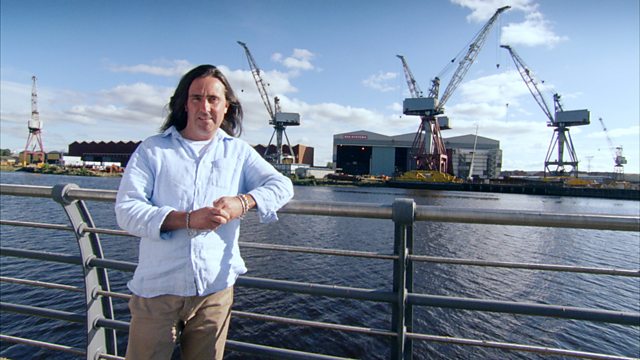
In great shipyards on the Clyde, | 0:01:42 | 0:01:44 | |
when workers fought to save their community, their leader became a legend. | 0:01:44 | 0:01:51 | |
He stood up to proclaim a manifesto for the workers' resistance. | 0:01:51 | 0:01:55 | |
-There will be no bevvying. -Hear, hear! | 0:01:55 | 0:01:57 | |
In the grand tradition of our life-saving services, | 0:01:59 | 0:02:03 | |
Miranda volunteers for an animal rescue squad. | 0:02:03 | 0:02:06 | |
We're constantly learning more about how to protect our valuable sea life. | 0:02:06 | 0:02:10 | |
And to reveal how resorts were built on hard work, | 0:02:12 | 0:02:15 | |
Ian stages a remarkable show, booking superstar performers from 100 years ago. | 0:02:15 | 0:02:22 | |
For one night only, Edwardian Britain has got seaside talent! | 0:02:22 | 0:02:26 | |
Welcome, to the Workers' Coast. | 0:02:31 | 0:02:34 | |
Our east coast is ideal to explore working endeavour, past and present. | 0:02:40 | 0:02:46 | |
I'm heading for the Humber but beginning on the Tyne. | 0:02:48 | 0:02:52 | |
Newcastle-upon-Tyne prospered thanks to its coastal connections. | 0:02:53 | 0:02:58 | |
The early workers who built the wealth of Newcastle shifted countless tonnes of coal, | 0:03:03 | 0:03:09 | |
but coal's no longer king. | 0:03:09 | 0:03:12 | |
These days, the traffic is different. | 0:03:12 | 0:03:15 | |
For most of us, parking up at the coast is the end of a journey. | 0:03:19 | 0:03:23 | |
But for these brand new cars, it's the beginning of a global adventure. | 0:03:24 | 0:03:29 | |
Every two weeks on the Tyne a massive car conveyor arrives. | 0:03:32 | 0:03:37 | |
Then, time is money. The port's workers go into overdrive. | 0:03:39 | 0:03:44 | |
The challenge is to park a couple of thousand of these cars | 0:04:01 | 0:04:06 | |
on that ship as fast as the drivers can get them on. | 0:04:06 | 0:04:10 | |
To get a steer on the challenge, I'm cadging a lift with Derek Lay. | 0:04:12 | 0:04:16 | |
It's like an aircraft hanger, isn't it? It's absolutely massive. | 0:04:18 | 0:04:22 | |
I've been on cross-Channel car ferries but this is in a league of its own. | 0:04:28 | 0:04:31 | |
Vast! | 0:04:32 | 0:04:34 | |
With 14 decks, there's room for almost 8,000 cars. | 0:04:34 | 0:04:39 | |
It's packed very tightly. | 0:04:39 | 0:04:41 | |
Parking must be swift and exact. | 0:04:43 | 0:04:46 | |
I've got to ask you, have you ever dinked a car, Derek? | 0:04:48 | 0:04:51 | |
In the past! | 0:04:51 | 0:04:53 | |
Mysterious hand signals appear to be more important than mirrors. | 0:04:55 | 0:04:59 | |
And it's my turn next. | 0:05:01 | 0:05:03 | |
With some 700,000 cars a year on the move, I can't stop the traffic. | 0:05:07 | 0:05:12 | |
So before I'm let loose, they've got a lesson lined up for me. | 0:05:12 | 0:05:17 | |
Even though I'm more of a walker than a driver, | 0:05:18 | 0:05:21 | |
I reckon I'm pretty handy behind the wheel, | 0:05:21 | 0:05:23 | |
but this is going to test my parallel parking to the limits. | 0:05:23 | 0:05:27 | |
My instructor's Jonathan Small. | 0:05:31 | 0:05:33 | |
-That's really accurate, isn't it? -Yeah, yeah. -So what are the main hand signals? | 0:05:33 | 0:05:38 | |
The hand signals are, straight ahead, full lock left hand down, full lock right hand down. | 0:05:38 | 0:05:43 | |
And when it's only small movements we'll just use a finger. | 0:05:43 | 0:05:46 | |
We'll turn half a turn left or right. | 0:05:46 | 0:05:49 | |
He's coming in and as soon as he gets close in, I take over control, bring the car in tight, | 0:05:49 | 0:05:54 | |
-which is 10 centimetres between the cars, each time you're stopping dead. -It is close. | 0:05:56 | 0:06:01 | |
-That's close, isn't it? -It is close. | 0:06:03 | 0:06:05 | |
A little bit nerve-wracking getting used to it at the time, | 0:06:05 | 0:06:07 | |
but as long as you put your faith and trust in me, we'll have no problem. | 0:06:07 | 0:06:12 | |
-I tell you what, Derek... -Take it nice and easy. | 0:06:12 | 0:06:14 | |
I feel more nervous now than I did when I took my driving test. | 0:06:14 | 0:06:18 | |
Just follow his signals all the time. Don't look at anything else. Just watch his hand signals. | 0:06:20 | 0:06:25 | |
Straight back. Straight back. Stop. | 0:06:25 | 0:06:28 | |
-I've got to turn. -And just keep going straight back. | 0:06:30 | 0:06:33 | |
That car next door's like a hair's breadth away. | 0:06:33 | 0:06:36 | |
It's OK. You've got plenty of space. | 0:06:36 | 0:06:38 | |
That's it. | 0:06:40 | 0:06:41 | |
Well, I think I've got the hang of precision parking in a car park, | 0:06:42 | 0:06:47 | |
but now I've got to do it on deck seven of a gigantic car-carrying ship. | 0:06:47 | 0:06:51 | |
Up the ramp. | 0:06:58 | 0:07:00 | |
Now, where's my leadsman? | 0:07:06 | 0:07:08 | |
-You just went a bit too far there. -I did, didn't I? | 0:07:14 | 0:07:17 | |
He's pointing left now, can you see his hand? | 0:07:17 | 0:07:20 | |
Keep going left. | 0:07:20 | 0:07:22 | |
Watch his hand, don't watch what's on the left. He can see that. | 0:07:22 | 0:07:26 | |
I've stalled. What about that? | 0:07:26 | 0:07:29 | |
I've got a queue forming up because I've stalled. | 0:07:29 | 0:07:32 | |
Straight back. Concentrate. | 0:07:32 | 0:07:34 | |
That's it. | 0:07:34 | 0:07:36 | |
Phew! The eagle has landed. | 0:07:37 | 0:07:39 | |
This is pretty stressful. | 0:07:47 | 0:07:49 | |
Those flashing lights mean the taxi's waiting to take me back to pick up another car. | 0:07:49 | 0:07:53 | |
When I'm not holding it up, a stream of steel flows from our shore. | 0:08:08 | 0:08:13 | |
Four out of five cars we make, we ship overseas. | 0:08:14 | 0:08:18 | |
That's well over one million motors a year. | 0:08:18 | 0:08:22 | |
These precision parkers have helped put the North East | 0:08:28 | 0:08:32 | |
into pole position for vehicle exports. | 0:08:32 | 0:08:35 | |
But the Tyne isn't our only carport. | 0:08:43 | 0:08:46 | |
There's queuing traffic all around the British coast. | 0:08:46 | 0:08:49 | |
In an age of instant communication at our fingertips, | 0:08:53 | 0:08:57 | |
bulk cargo is still very much a hands-on business. | 0:08:57 | 0:09:01 | |
Driven by the tides, the wealth of Britain washes through our ports. | 0:09:01 | 0:09:07 | |
We'd all be poorer if it wasn't for our coastal workers | 0:09:07 | 0:09:11 | |
keeping us connected to the wider world. | 0:09:11 | 0:09:14 | |
The sea brings great benefits, opening up new markets. | 0:09:18 | 0:09:22 | |
But business can also seep away overseas. | 0:09:22 | 0:09:26 | |
Mighty coastal enterprises have suffered spectacular falls. | 0:09:27 | 0:09:32 | |
But one gang of shipbuilders threatened with the scrapheap | 0:09:32 | 0:09:35 | |
vowed to carry on regardless. | 0:09:35 | 0:09:37 | |
In 1971, a proud industry was brought back from the brink on the River Clyde. | 0:09:39 | 0:09:45 | |
Neil's exploring how ordinary folk become legends. | 0:09:47 | 0:09:51 | |
40 years ago, it seemed ship-building here | 0:09:53 | 0:09:56 | |
was sleepwalking into oblivion. | 0:09:56 | 0:09:59 | |
But the workers thought otherwise. | 0:10:00 | 0:10:02 | |
The Clyde once gave birth to the world's greatest ships. | 0:10:06 | 0:10:10 | |
# There's big Tam O'Hara With his burning gear | 0:10:10 | 0:10:15 | |
# The plumber and the plater And the engineer | 0:10:15 | 0:10:18 | |
# There's young Willie Wylie With his welding rod | 0:10:18 | 0:10:22 | |
# They're waiting at the ready For the backroom nod. # | 0:10:22 | 0:10:26 | |
But by the early 1970s, | 0:10:26 | 0:10:29 | |
ship-building on the upper Clyde was in crisis. | 0:10:29 | 0:10:32 | |
There was competition from the Far East, | 0:10:34 | 0:10:36 | |
poor labour relations and bad management. | 0:10:36 | 0:10:39 | |
So Clydeside had to go cap-in-hand to successive governments for cash. | 0:10:41 | 0:10:46 | |
Until, in 1971, a shock announcement. | 0:10:47 | 0:10:51 | |
Public funding was to be axed. | 0:10:53 | 0:10:55 | |
6,000 shipbuilders stood to lose their jobs. | 0:10:56 | 0:10:59 | |
Then, one worker made a speech that shook the world. | 0:11:01 | 0:11:04 | |
The man was shop steward Jimmy Reid. | 0:11:04 | 0:11:07 | |
He stood up in front of a mass meeting of shipbuilders | 0:11:07 | 0:11:11 | |
to proclaim a manifesto for the workers' resistance. | 0:11:11 | 0:11:15 | |
There will be no hooliganism. | 0:11:15 | 0:11:18 | |
There will be no vandalism. There will be no bevvying. | 0:11:18 | 0:11:22 | |
Hear, hear! | 0:11:22 | 0:11:24 | |
Because the world is watching us. | 0:11:24 | 0:11:27 | |
Jimmy Reid wasn't calling for a strike. | 0:11:28 | 0:11:30 | |
The big idea was exactly the opposite. | 0:11:30 | 0:11:33 | |
Not a walk-out, but a work-in! | 0:11:33 | 0:11:35 | |
Keep working whatever the bosses said. | 0:11:35 | 0:11:38 | |
Shame the Government into saving the shipyards. | 0:11:38 | 0:11:41 | |
We are taking over the yards because we refuse to accept | 0:11:42 | 0:11:46 | |
that faceless men, or any group of men in Whitehall or anywhere else, | 0:11:46 | 0:11:51 | |
can take decisions that devastate our livelihood with impunity. | 0:11:51 | 0:11:54 | |
They're not on! | 0:11:54 | 0:11:56 | |
So, was the work-in that Jimmy Reid announced | 0:11:56 | 0:12:00 | |
the saviour of ship-building here on the Clyde? | 0:12:00 | 0:12:04 | |
Is the legend of that heroic struggle all that it seems? | 0:12:04 | 0:12:07 | |
# There is power in our union. # | 0:12:07 | 0:12:12 | |
When Jimmy Reid passed away in 2010, | 0:12:12 | 0:12:15 | |
shipbuilders stood to pay their respects | 0:12:15 | 0:12:19 | |
and so did famous sons of the Clyde. | 0:12:19 | 0:12:22 | |
I loved Jimmy Reid, and he loved me back and he told me. | 0:12:23 | 0:12:28 | |
And I am going to miss him terribly. | 0:12:28 | 0:12:32 | |
Reid's reputation on Clydebank was immortalised | 0:12:34 | 0:12:37 | |
by his 'No bevvying, work-in' speech in 1971. | 0:12:37 | 0:12:41 | |
By his side was fellow shop steward, Bobbie Dickie. | 0:12:42 | 0:12:45 | |
Whose idea was the work-in? | 0:12:46 | 0:12:49 | |
I would credit Jimmy Reid for introducing the work-in. | 0:12:49 | 0:12:52 | |
The joint shop stewards are absolutely unanimous. | 0:12:52 | 0:12:57 | |
We're going to fight this. | 0:12:57 | 0:12:58 | |
Jimmy didn't feel there was any alternative. | 0:12:58 | 0:13:01 | |
If we went on strike there was a possibility of them | 0:13:01 | 0:13:03 | |
just shutting the gates and putting a padlock on it. | 0:13:03 | 0:13:06 | |
If we'd had a sit-in, they would just leave us sitting in. | 0:13:06 | 0:13:09 | |
So it was important that the work continued in the yard | 0:13:09 | 0:13:12 | |
and that was the reason why we decided on a work-in. | 0:13:12 | 0:13:15 | |
Their revolutionary plan? | 0:13:18 | 0:13:20 | |
Start a fighting fund and pay those made redundant | 0:13:20 | 0:13:24 | |
to carry on building the ships already ordered. | 0:13:24 | 0:13:27 | |
The workers claimed they were in charge of the shipyards. | 0:13:29 | 0:13:32 | |
Nobody and nothing will come in | 0:13:32 | 0:13:35 | |
and nothing will go out without our permission. | 0:13:35 | 0:13:39 | |
Redundancies began, but most were still being paid by the yards | 0:13:40 | 0:13:45 | |
to work normally building ships, even in receivership. | 0:13:45 | 0:13:49 | |
So what did the man who was actually running the shipyards | 0:13:51 | 0:13:55 | |
make of power to the people? | 0:13:55 | 0:13:57 | |
Hello, Sir Robert. | 0:13:58 | 0:13:59 | |
They were all my employees, | 0:13:59 | 0:14:01 | |
including of course the senior shop stewards. | 0:14:01 | 0:14:05 | |
Jimmy Reid, of course, was the visionary and a gifted orator obviously | 0:14:06 | 0:14:10 | |
who commanded the huge public support for the whole exercise. | 0:14:10 | 0:14:15 | |
Acting as the liquidator, Robert Smith plotted a rescue plan, working with the union. | 0:14:15 | 0:14:21 | |
Isabel Dickie was one of those made redundant | 0:14:24 | 0:14:27 | |
but paid to work on by the fighting fund. | 0:14:27 | 0:14:29 | |
When I saw all the letters coming in and the support we were getting, | 0:14:31 | 0:14:34 | |
I mean it was fabulous, it really was. | 0:14:34 | 0:14:37 | |
£450,000 and that was 40 years ago. It was wonderful. | 0:14:37 | 0:14:42 | |
With the work-in in full swing, ships were still taking shape, | 0:14:49 | 0:14:54 | |
while Jimmy Reid spoke up for the workers. | 0:14:54 | 0:14:57 | |
There's a terrible philosophy flying about the now, | 0:14:59 | 0:15:02 | |
that men and families and communities should follow work | 0:15:02 | 0:15:07 | |
and the work shouldn't be brought to communities. | 0:15:07 | 0:15:11 | |
Did you think you would win? | 0:15:15 | 0:15:17 | |
Yes. Yes, we thought we would win because we were getting support from all over the country, | 0:15:17 | 0:15:22 | |
and even support from countries abroad. | 0:15:22 | 0:15:25 | |
Oh, the red roses and the cheque for £500. | 0:15:25 | 0:15:28 | |
That came from John Lennon and Yoko. | 0:15:28 | 0:15:30 | |
One of the shop stewards said, "That's £500 from Lennon." | 0:15:30 | 0:15:34 | |
He said, "I thought he was dead." | 0:15:34 | 0:15:36 | |
"No, he's not dead, this is John Lennon. You know, the singer." | 0:15:36 | 0:15:39 | |
"Oh! I thought it was Lenin. You know, the Russian." | 0:15:39 | 0:15:42 | |
-That Lenin! -That Lenin! | 0:15:42 | 0:15:44 | |
After some eight months of struggle, the publicity paid off. | 0:15:50 | 0:15:54 | |
In February 1972, there was a startling announcement. | 0:15:55 | 0:15:59 | |
More money would be made available to keep the yards going. | 0:15:59 | 0:16:02 | |
# There is power in our union. # | 0:16:02 | 0:16:07 | |
It was seen by some as a Government climb-down | 0:16:08 | 0:16:11 | |
that the work-in had been a success. | 0:16:11 | 0:16:13 | |
It was the making of a Clydeside legend. | 0:16:13 | 0:16:16 | |
John Brown's, the yard that built The Queen Mary and the QEII, | 0:16:20 | 0:16:23 | |
was reprieved after the work-in, | 0:16:23 | 0:16:26 | |
sold to an American oil rig company. | 0:16:26 | 0:16:28 | |
Does the man who helped broker that deal, liquidator Robert Smith, | 0:16:30 | 0:16:35 | |
think the work-in won the day? | 0:16:35 | 0:16:38 | |
I don't think so. | 0:16:38 | 0:16:40 | |
Erm... | 0:16:40 | 0:16:42 | |
I believe that the solution that was eventually achieved | 0:16:42 | 0:16:45 | |
would actually have been achieved... | 0:16:45 | 0:16:48 | |
..six months earlier, without the work-in. | 0:16:50 | 0:16:54 | |
The solution Robert and the unions arranged | 0:16:58 | 0:17:01 | |
to sell John Brown's shipyard lasted for nearly 30 years. | 0:17:01 | 0:17:05 | |
It closed in 2001. | 0:17:05 | 0:17:07 | |
Even so, there are still around 4,000 people | 0:17:13 | 0:17:16 | |
busy making warships on the Clyde | 0:17:16 | 0:17:19 | |
and it's become received wisdom they owe their jobs to the work-in. | 0:17:19 | 0:17:24 | |
The first of a new tactic on behalf of workers. | 0:17:25 | 0:17:29 | |
But there's a problem with the popular account | 0:17:32 | 0:17:35 | |
that the work-in saved ship-building on Clydeside. | 0:17:35 | 0:17:38 | |
The two surviving large yards weren't under threat of closure in the 1971 announcement. | 0:17:40 | 0:17:45 | |
Job losses, yes. But closure? No. | 0:17:47 | 0:17:51 | |
How do you account for the legend, the way that it has been perceived? | 0:17:52 | 0:17:57 | |
There was a huge popular appeal in the work-in movement. | 0:17:57 | 0:18:02 | |
A lot of people agree that it was a myth, | 0:18:02 | 0:18:06 | |
but it was a marvellously successful myth. | 0:18:06 | 0:18:09 | |
I don't dispute that. | 0:18:09 | 0:18:11 | |
# Thank you, Dad, for all your skill | 0:18:11 | 0:18:16 | |
# But the Clyde is a river That'll no stand still. # | 0:18:17 | 0:18:21 | |
How are we to untangle the twists and turns of the work-in? | 0:18:24 | 0:18:27 | |
To me, it's a story about ordinary people finding a voice, | 0:18:30 | 0:18:35 | |
to argue that communities should count for something on the balance sheet. | 0:18:35 | 0:18:40 | |
And that's why this story will always matter | 0:18:40 | 0:18:43 | |
to the folk who live beside this river. | 0:18:43 | 0:18:45 | |
Traditional jobs have ebbed away from our coast. | 0:18:55 | 0:18:59 | |
Generations dreamt of the isolated life of the lighthouse keeper, | 0:19:02 | 0:19:07 | |
a profession lost to history. | 0:19:07 | 0:19:09 | |
But the automated lights and their houses still need the human touch. | 0:19:10 | 0:19:15 | |
As they know on the Isle of Wight. | 0:19:16 | 0:19:19 | |
It's not just the light beam that sailors spy out. | 0:19:25 | 0:19:28 | |
The house itself is a navigation aid. | 0:19:30 | 0:19:32 | |
So they need a splash of colour to stand out. | 0:19:34 | 0:19:37 | |
To take on the towering task, | 0:19:39 | 0:19:42 | |
a specialist team of daredevil decorators is led by Alan Brooks. | 0:19:42 | 0:19:47 | |
I've been painting lighthouses now for about ten years. | 0:19:47 | 0:19:50 | |
What we usually do is load the stuff on to the boat. | 0:19:52 | 0:19:55 | |
The water jet, the paint, brushes, rollers, | 0:19:55 | 0:19:58 | |
the ropes, blocks, grinders. | 0:19:58 | 0:19:59 | |
Brings it over, then getting it off the boat is a bit of a problem sometimes. | 0:19:59 | 0:20:04 | |
Humping it up the steps then and we've got the same problem then when we finish, getting it all back. | 0:20:06 | 0:20:12 | |
A bit of a nightmare sometimes unless you've got the weather. | 0:20:12 | 0:20:15 | |
Norfolk was the first one. | 0:20:17 | 0:20:19 | |
I'd done a little bit of work at Strumble Head, Bardsey, that's an island one, | 0:20:19 | 0:20:23 | |
Trwyn Du, Point Lynas, Nash. | 0:20:23 | 0:20:27 | |
There's a few more dotted here and there but only little ones. | 0:20:27 | 0:20:30 | |
I can't even remember them all, like. | 0:20:30 | 0:20:32 | |
What we've got to do is apply two coats of paint to a job. | 0:20:35 | 0:20:39 | |
Where it's blistered, we've got to water jet it off and apply four coats of paint to it. | 0:20:39 | 0:20:43 | |
When it's rusty we've got to put a primer on and another four coats, | 0:20:43 | 0:20:47 | |
just to bring it all up to scratch really. | 0:20:47 | 0:20:49 | |
A special formula this paint. You couldn't buy this off the shelf. | 0:20:51 | 0:20:54 | |
No, it's got to be especially made for this. You see? | 0:20:54 | 0:20:58 | |
I can't even rip it. | 0:20:58 | 0:21:00 | |
It doesn't go on that thick, but it is real strong stuff. | 0:21:00 | 0:21:04 | |
You've got to sweep the brush on, then another dip. | 0:21:05 | 0:21:08 | |
The thicker the better to allow for protection really, | 0:21:08 | 0:21:12 | |
with the elements getting at it all the time | 0:21:12 | 0:21:15 | |
and it's like a landmark for ships as well. | 0:21:15 | 0:21:18 | |
And tourists come here to look at the thing all the time, like. | 0:21:18 | 0:21:21 | |
We decided to use abseilers for all the outside | 0:21:32 | 0:21:34 | |
and all the inaccessible areas where we can't get at. | 0:21:34 | 0:21:37 | |
Got a width of eight or nine feet to swing you see. So it's OK. | 0:21:45 | 0:21:50 | |
They're all right. Funny some of them, especially the Scousers, like. | 0:21:50 | 0:21:54 | |
Am I allowed to say that?! | 0:21:54 | 0:21:56 | |
I'm on one of your windows. Good job I done there. | 0:21:56 | 0:22:00 | |
What? Paint the glass, missed the frame! | 0:22:00 | 0:22:02 | |
Yeah, they're funny. Good bunch of boys they are. | 0:22:02 | 0:22:05 | |
Alan? He's Welsh, grumpy, | 0:22:05 | 0:22:08 | |
and he doesn't know what he's doing really. | 0:22:08 | 0:22:11 | |
No, he's all right, Alan. | 0:22:11 | 0:22:13 | |
The biggest problem we've got with lighthouses is weather. | 0:22:13 | 0:22:16 | |
It's been cancelled a few times because the sea conditions haven't been right. | 0:22:16 | 0:22:20 | |
We wouldn't have been able to land. Waves are too high and all that. | 0:22:20 | 0:22:23 | |
It's nice to do a good job on there, get on the boat and look back | 0:22:30 | 0:22:33 | |
and see you've done a nice job, like, you know, | 0:22:33 | 0:22:36 | |
and it does give you a bit of satisfaction when you finish it. | 0:22:36 | 0:22:39 | |
Coastal workers turn their hands to many trades. | 0:22:52 | 0:22:56 | |
That's the way to do it. | 0:22:56 | 0:22:58 | |
Sometimes, it's a struggle to scratch a living on the margin. | 0:23:00 | 0:23:04 | |
Even so, a generous spirit thrives. | 0:23:08 | 0:23:11 | |
A noble tradition of life-saving volunteers. | 0:23:11 | 0:23:15 | |
And the rescue services don't only save people around our shore. | 0:23:18 | 0:23:22 | |
As day breaks at Exmouth, a strange sight. | 0:23:24 | 0:23:27 | |
An emergency is unfolding. These bags are pretend dolphins and whales. | 0:23:40 | 0:23:46 | |
They aren't being laid out for fun. This is planning for the worst. | 0:23:46 | 0:23:50 | |
A specialist marine SWAT team is summoned to the beach. | 0:23:50 | 0:23:54 | |
Can you put a text out, please, to all Devon and Cornwall medics? | 0:23:54 | 0:23:58 | |
Thanks a lot. Cheers. Bye. | 0:23:58 | 0:24:00 | |
Miranda is responding to the distress call. | 0:24:01 | 0:24:04 | |
By day I'm a trained zoologist, | 0:24:06 | 0:24:08 | |
but I've also volunteered for another part-time job. | 0:24:08 | 0:24:10 | |
For the last five or so years, I've been signed up to help save sea mammals in distress, | 0:24:10 | 0:24:15 | |
and as you can see, there's a small army of us | 0:24:15 | 0:24:18 | |
marine mammal medics dotted around the coast. | 0:24:18 | 0:24:21 | |
In fact, there's around 2,500 of us constantly on call for a stranding emergency. | 0:24:21 | 0:24:26 | |
And we're a varied bunch! | 0:24:26 | 0:24:28 | |
-I'm a chartered surveyor. -I work in care, I've got a care home. | 0:24:28 | 0:24:32 | |
-Self-employed carpenter. -Veterinary nurse. -I work as a production assistant. | 0:24:32 | 0:24:36 | |
British Divers Marine Life Rescue train some 400 volunteers a year. | 0:24:36 | 0:24:40 | |
This is a mass stranding exercise, keeping the creatures alive | 0:24:40 | 0:24:45 | |
until the tide comes in to get them back to sea. | 0:24:45 | 0:24:50 | |
These pretend dolphins are the exact weight and size of the real thing. | 0:24:50 | 0:24:54 | |
Now, they may just look like a bag filled with water, | 0:24:54 | 0:24:58 | |
but for the purposes of the exercise we have to treat them like real animals. | 0:24:58 | 0:25:02 | |
And you can immediately see how heavy they are | 0:25:02 | 0:25:05 | |
and how difficult they are to handle. | 0:25:05 | 0:25:07 | |
Getting to grips with dolphin and whale strandings is a big issue. | 0:25:09 | 0:25:15 | |
Around 600 of these mammals a year need help. | 0:25:15 | 0:25:18 | |
Some make headline news. | 0:25:18 | 0:25:21 | |
Like the whale discovered in the Thames in 2006. | 0:25:22 | 0:25:26 | |
And in 2011, a pod of around 60 pilot whales was floundering | 0:25:27 | 0:25:32 | |
on the Scottish coast. Rescuers managed to save over 40 animals. | 0:25:32 | 0:25:37 | |
One of the team leaders is organising our exercise - Stephen Marsh. | 0:25:40 | 0:25:44 | |
Whales and dolphins have always stranded, | 0:25:44 | 0:25:47 | |
but are we just more aware of it now or are numbers on the increase? | 0:25:47 | 0:25:51 | |
We think that some strandings may well be increasing | 0:25:51 | 0:25:53 | |
but animals will strand naturally as well. | 0:25:53 | 0:25:55 | |
You can have one animal that is ill and because they're all very, very gregarious, | 0:25:55 | 0:26:00 | |
they may well bring the whole of the pod in, so we work from the bottom up if you like, | 0:26:00 | 0:26:04 | |
sort of saying, what's wrong with this animal? | 0:26:04 | 0:26:07 | |
Is it in a fit state to go back? | 0:26:07 | 0:26:08 | |
Let's give it first aid until a vet can come along and make that decision. | 0:26:08 | 0:26:12 | |
Time is of the essence. | 0:26:12 | 0:26:15 | |
The longer a dolphin's out of the water, the less likely it'll survive. | 0:26:15 | 0:26:19 | |
It might seem a bit comical, but training for a marine mammal rescue is a serious business. | 0:26:20 | 0:26:25 | |
The animals' plight begs a simple question. | 0:26:25 | 0:26:28 | |
Why are dolphins so utterly helpless on land, when being out of the water | 0:26:28 | 0:26:34 | |
doesn't pose a problem for other marine mammals like seals? | 0:26:34 | 0:26:37 | |
To find out, we need to strip the animals to their bare bones. | 0:26:37 | 0:26:42 | |
This is the skeleton of a seal. | 0:26:55 | 0:26:57 | |
We've got the skull, quite a long neck, | 0:26:57 | 0:26:59 | |
and then these front limbs which are very powerful, strong front flippers, | 0:26:59 | 0:27:04 | |
and these are what it uses to manoeuvre itself on land. | 0:27:04 | 0:27:07 | |
And when it's lumbering up and down the beach, | 0:27:07 | 0:27:10 | |
the seal's internal organs are protected by quite a strong rib cage | 0:27:10 | 0:27:14 | |
and the breast bone is quite strong and thick as well. | 0:27:14 | 0:27:18 | |
This is the skeleton of a common dolphin. | 0:27:23 | 0:27:25 | |
The ribs are much more fragile | 0:27:25 | 0:27:28 | |
and the breastbone here is much thinner than that of a seal's. | 0:27:28 | 0:27:32 | |
If a dolphin and whale finds itself stranded on the beach, | 0:27:32 | 0:27:36 | |
often it can't bear its own weight and it can suffocate. | 0:27:36 | 0:27:40 | |
And the front limbs have been modified | 0:27:40 | 0:27:42 | |
to make these pectoral fins, which are great when the dolphin's moving | 0:27:42 | 0:27:46 | |
through the water but absolutely useless if it's stranded on a beach. | 0:27:46 | 0:27:50 | |
The differences between dolphins and seals evolved millions of years ago. | 0:27:52 | 0:27:56 | |
The fins and tails of whales and dolphins have become so perfectly adapted to the sea, | 0:28:00 | 0:28:05 | |
that they need a hand from volunteers like us when stranded. | 0:28:05 | 0:28:10 | |
We've got two dolphins that we're ready to re-float, but because of the sun and the wind | 0:28:10 | 0:28:15 | |
we've got tarpaulins to protect them from the sun, a windbreak to protect them from the wind. | 0:28:15 | 0:28:19 | |
Just trying to keep them as cool and as calm as possible before we can get them down to the sea. | 0:28:19 | 0:28:24 | |
Now the tide's turned, we can try to master | 0:28:24 | 0:28:27 | |
the delicate operation of returning a distressed animal to its home. | 0:28:27 | 0:28:32 | |
Wow. There we go. It's that easy. | 0:28:36 | 0:28:39 | |
Now discard. One person hold on to that. Form a line. | 0:28:39 | 0:28:42 | |
Form a line straight across here now. | 0:28:42 | 0:28:44 | |
Try and discourage them. Go on, off you go. Go away. We don't want to see you again. | 0:28:44 | 0:28:48 | |
Strandings are obviously really sad events, | 0:28:54 | 0:28:57 | |
but thanks to the great work of teams of volunteers | 0:28:57 | 0:29:01 | |
and professionals, we're constantly learning more | 0:29:01 | 0:29:04 | |
about how to protect our valuable sea life. | 0:29:04 | 0:29:06 | |
And off they go. | 0:29:08 | 0:29:09 | |
We're celebrating the workers of our shores. | 0:29:16 | 0:29:19 | |
The east coast of Britain is dotted with industrious communities. | 0:29:23 | 0:29:27 | |
They strike out across the sea to earn a crust. | 0:29:30 | 0:29:33 | |
Men who know the price to be paid for landing fish. | 0:29:35 | 0:29:38 | |
But this harsh life on rolling seas | 0:29:42 | 0:29:45 | |
relies on the support of those back on land. | 0:29:45 | 0:29:48 | |
I'm in search of forgotten workers | 0:29:50 | 0:29:53 | |
who kept our biggest fishing fleet afloat. | 0:29:53 | 0:29:56 | |
We've arrived in Grimsby. | 0:29:57 | 0:29:59 | |
This harbour used to be crammed with trawlers. | 0:30:03 | 0:30:06 | |
At the high watermark of the North Sea Fleet, | 0:30:06 | 0:30:09 | |
some 300 fishing vessels worked out of Grimsby. | 0:30:09 | 0:30:13 | |
Magnificent vessels like this were a floating workplace, | 0:30:14 | 0:30:18 | |
doing business in the wild North Sea. | 0:30:18 | 0:30:22 | |
The crew scoured the seas for cod and haddock, | 0:30:23 | 0:30:27 | |
fish that had to be kept fresh for weeks. | 0:30:27 | 0:30:31 | |
They needed ice, lots of it. | 0:30:31 | 0:30:33 | |
A challenge the early trawler men had to crack. | 0:30:33 | 0:30:36 | |
We take ice for granted these days, but go back 150 years | 0:30:38 | 0:30:42 | |
and refrigeration as we know it didn't exist. | 0:30:42 | 0:30:46 | |
To preserve fish in the mid 19th century, | 0:30:47 | 0:30:50 | |
Grimsby had to rely on ice collected in winter from frozen ponds. | 0:30:50 | 0:30:55 | |
For the trawling fleet to expand, | 0:30:58 | 0:31:00 | |
they had to look further afield to chill their catch. | 0:31:00 | 0:31:04 | |
Boats were dispatched to Norway's frozen north. | 0:31:09 | 0:31:13 | |
But man-made ice on demand would be even better. | 0:31:16 | 0:31:20 | |
This grand building houses a freezing machine | 0:31:24 | 0:31:27 | |
constructed on a massive scale. | 0:31:27 | 0:31:31 | |
This is an ice factory! | 0:31:31 | 0:31:33 | |
Built in 1901, the Grimsby Ice Factory | 0:31:36 | 0:31:39 | |
supplied the port's trawlers for nearly a century. | 0:31:39 | 0:31:42 | |
My guide is Mike Sonley, | 0:31:42 | 0:31:44 | |
who was the last man out when the factory closed its doors in 1990. | 0:31:44 | 0:31:50 | |
This precious film was shot just two weeks before production ceased. | 0:31:51 | 0:31:56 | |
Today, it looks very different. | 0:31:59 | 0:32:01 | |
This is Mike's first visit back to his old workplace. | 0:32:03 | 0:32:07 | |
Heartbreaking. I just can't believe it. | 0:32:11 | 0:32:14 | |
A lump comes in your throat, definitely. | 0:32:14 | 0:32:18 | |
A real shame. How did that finish up there? | 0:32:18 | 0:32:21 | |
It was immaculate. You could just eat your dinner off the floor. | 0:32:21 | 0:32:25 | |
It was spotless. | 0:32:25 | 0:32:26 | |
I suppose the ice factory was totally essential for the port, for the trawlers. | 0:32:26 | 0:32:31 | |
We'd come out here at 4:00am and there'd be 20 wagons out there | 0:32:31 | 0:32:35 | |
waiting for 20 tonnes of ice each. | 0:32:35 | 0:32:37 | |
It was a fantastic company to work for. | 0:32:37 | 0:32:40 | |
When this machinery sprang into action, the ice palace came alive. | 0:32:45 | 0:32:49 | |
These massive engines were used to compress ammonia gas. | 0:32:51 | 0:32:55 | |
How did that compressed gas produce up to a thousand tonnes of ice a day? | 0:32:55 | 0:33:01 | |
Chemist Mark Lorch has the answer. | 0:33:04 | 0:33:06 | |
The first step is really just to get a gas and compress it. | 0:33:08 | 0:33:12 | |
Now, you can feel that's cold. | 0:33:12 | 0:33:15 | |
As it comes out it expands and in the process cools down because all the molecules | 0:33:15 | 0:33:19 | |
are much further apart now. They're not able to bash into each other quite so much. | 0:33:19 | 0:33:23 | |
That chilling effect is the principle behind all sorts of refrigeration, | 0:33:24 | 0:33:28 | |
including your domestic fridge and freezer. | 0:33:28 | 0:33:31 | |
The next step then is to show you how we can make ice with this simple set-up. | 0:33:31 | 0:33:35 | |
Pour this briny water into here, and what we need to do is to squirt some of this pressurised liquid, | 0:33:35 | 0:33:41 | |
which will be very cold when it releases, through this coil here | 0:33:41 | 0:33:44 | |
and in so doing, this whole coil will cool down, | 0:33:44 | 0:33:49 | |
the salty water will cool down. | 0:33:49 | 0:33:52 | |
But salty water will go below zero degrees centigrade before it freezes. | 0:33:52 | 0:33:57 | |
So, if we then take our tube of fresh water, | 0:33:57 | 0:34:00 | |
put that in there, this tube will freeze. | 0:34:00 | 0:34:03 | |
Because the brine has a lower freezing point than fresh water, | 0:34:03 | 0:34:06 | |
it will cool this fresh water in here pretty quickly and that will turn to ice. | 0:34:06 | 0:34:10 | |
Yeah, that's the hope, yeah. | 0:34:10 | 0:34:12 | |
So we just need to wait for that to freeze. | 0:34:12 | 0:34:14 | |
We're minus two, heading for minus three degrees in there now. | 0:34:14 | 0:34:19 | |
-There you go. -It's solid. -There you go, ice on the dockside. | 0:34:21 | 0:34:25 | |
This cooling method, scaled up to an industrial process, powered the ice factory. | 0:34:27 | 0:34:33 | |
It started with piping in the fresh water to be frozen. | 0:34:33 | 0:34:38 | |
-That there came down. -All these nozzles... | 0:34:38 | 0:34:42 | |
Came down all in one go, so they filled every pan with water. | 0:34:42 | 0:34:45 | |
-So the fresh water came out of these pipes, filled those pans... -That's correct. | 0:34:45 | 0:34:49 | |
So these metal boxes was where the ice actually formed. | 0:34:49 | 0:34:53 | |
That's it. Just the same as when you put your ice cubes in a fridge. | 0:34:53 | 0:34:56 | |
But where was the brine that chilled this fresh water? | 0:34:56 | 0:34:59 | |
Below the pans. If you took all the pans out, it would be just one gigantic swimming pool. | 0:34:59 | 0:35:03 | |
So you've got hundreds of these metal pans full of fresh water, | 0:35:03 | 0:35:07 | |
they get filled up here and they get pushed by gigantic rams | 0:35:07 | 0:35:10 | |
through the brine from one end of this hall to the other. | 0:35:10 | 0:35:14 | |
And by the time the pans had got to the far end, the water's turned to ice. | 0:35:14 | 0:35:18 | |
It took 27 hours for the pans to reach the far side of the building, | 0:35:18 | 0:35:22 | |
gradually being chilled on their journey | 0:35:22 | 0:35:25 | |
through the super-cooled brine beneath the floorboards. | 0:35:25 | 0:35:28 | |
So the pans have travelled the full length of the hall, and they've emerged this end and turned into ice. | 0:35:29 | 0:35:35 | |
That's correct. Then the crane comes along with the hooks, picks it up, | 0:35:35 | 0:35:38 | |
drops it in the thaw tank, which is warm water. | 0:35:38 | 0:35:41 | |
As soon as your ice pops up out here in moulds, it's into the cradle then. | 0:35:41 | 0:35:45 | |
The cradle's balanced with seven and a half tonnes of ice. | 0:35:45 | 0:35:48 | |
It tips over, slides down, all on to the floor, like. You know. | 0:35:48 | 0:35:51 | |
Then you fed the ice on to the conveyor into this crusher in the far end here. | 0:35:54 | 0:35:59 | |
So for the ice factory this is the very end of the process, | 0:35:59 | 0:36:02 | |
because what's falling out the bottom of the crusher is crushed ice ready for the trawlers. | 0:36:02 | 0:36:06 | |
That's it, and it takes it up there and on to that conveyor out there and into the ships. | 0:36:06 | 0:36:12 | |
The empty trays travelled back to the start of the cycle | 0:36:13 | 0:36:17 | |
to be filled again with fresh water. | 0:36:17 | 0:36:19 | |
But as Grimsby's fishing fleet dwindled, | 0:36:20 | 0:36:23 | |
fewer workers were waiting at the end of the line for ice. | 0:36:23 | 0:36:26 | |
The factory doors closed in 1990. | 0:36:27 | 0:36:30 | |
And what was it like that day that you left here, | 0:36:32 | 0:36:34 | |
the last man to be in here and lock the door for the last time? | 0:36:34 | 0:36:38 | |
Well, I can't explain it. | 0:36:39 | 0:36:41 | |
It was like if you'd lost somebody you know in your family really. | 0:36:41 | 0:36:44 | |
And it was heartbreaking. | 0:36:46 | 0:36:48 | |
And now to see it like this. | 0:36:50 | 0:36:52 | |
There's not much market for ice these days in Grimsby harbour, | 0:37:04 | 0:37:07 | |
but it's still doing brisk business. | 0:37:07 | 0:37:09 | |
The busiest boats now are those coming and going to service offshore wind farms in the North Sea. | 0:37:13 | 0:37:19 | |
Workers adapting to our changing coast. | 0:37:21 | 0:37:23 | |
New technology driving new opportunities. | 0:37:26 | 0:37:29 | |
It's an old, old story around our shores. | 0:37:29 | 0:37:33 | |
The Royal Navy has often been at the vanguard of innovation. | 0:37:34 | 0:37:38 | |
Fine ships have always needed skilled workers. | 0:37:39 | 0:37:43 | |
Those backroom boffins have given our sailors the edge in battle | 0:37:44 | 0:37:48 | |
since the days of wooden warships. | 0:37:48 | 0:37:51 | |
Back then, the Navy's cannonballs flew truer than those of our enemies. | 0:37:52 | 0:37:58 | |
Their deadly accuracy was largely due to a secret ingredient | 0:38:04 | 0:38:09 | |
we used to make our shot perfectly round. | 0:38:09 | 0:38:12 | |
A rare mineral used to manufacture precision cannonballs | 0:38:15 | 0:38:19 | |
was mined near Whitehaven. | 0:38:19 | 0:38:21 | |
Tessa is on the mineworkers' trail. | 0:38:28 | 0:38:31 | |
I'm going back over 200 years to the time of Nelson's Navy. | 0:38:32 | 0:38:36 | |
At the Battle of Trafalgar, HMS Victory alone | 0:38:39 | 0:38:42 | |
fired over 2,500 rounds of heavy iron shot. | 0:38:42 | 0:38:47 | |
At war with Napoleon, the Navy needed lots of ammunition. | 0:38:52 | 0:38:56 | |
Maritime historian Gareth Cole knows the numbers. | 0:38:57 | 0:39:01 | |
I have here a couple of receipts which show just how many cannonballs | 0:39:01 | 0:39:05 | |
were sent to the ordnance by various companies. | 0:39:05 | 0:39:07 | |
-We've got one here for 100,000 cannonballs. -100,000? | 0:39:07 | 0:39:10 | |
100,000 in one delivery, which cost about £8,500. | 0:39:10 | 0:39:15 | |
Considerable amounts of cash are being parted. | 0:39:15 | 0:39:18 | |
It was. Over the course of about a 30-year period, | 0:39:18 | 0:39:20 | |
over the French Revolution and Napoleonic wars, the ordnance spent about £10 million on the Navy, | 0:39:20 | 0:39:25 | |
which is about £1 billion in today's money. | 0:39:25 | 0:39:28 | |
Foundries could make a mint from Government contracts. | 0:39:31 | 0:39:34 | |
But they had their work cut out. | 0:39:34 | 0:39:37 | |
The Navy wasn't easy to please. | 0:39:37 | 0:39:39 | |
There's more to cannonballs than meets the eye. | 0:39:40 | 0:39:43 | |
To fly true and hit the intended target, | 0:39:43 | 0:39:45 | |
they have to be as round and as smooth and as perfect as possible. | 0:39:45 | 0:39:50 | |
Making cannonballs in large quantities and of high quality | 0:39:51 | 0:39:55 | |
pushed the limits of early engineers. | 0:39:55 | 0:39:59 | |
But Britain had a secret ingredient for success. | 0:39:59 | 0:40:02 | |
In the lofty hinterland beyond Whitehaven harbour | 0:40:02 | 0:40:06 | |
lay a precious mineral with a purity unmatched anywhere else on Earth. | 0:40:06 | 0:40:11 | |
Miners working in the hills near here | 0:40:13 | 0:40:15 | |
discovered a very, very rare substance called plumbago. | 0:40:15 | 0:40:19 | |
The plumbago mines were so valuable to the military, | 0:40:19 | 0:40:22 | |
they had them protected by an act of Parliament in 1752. | 0:40:22 | 0:40:27 | |
This is the act and it says, | 0:40:27 | 0:40:30 | |
"Plumbago has been necessary for diverse useful purposes | 0:40:30 | 0:40:35 | |
"and more particularly in the casting of bombshells, | 0:40:35 | 0:40:37 | |
"round shot and cannonballs." | 0:40:37 | 0:40:40 | |
To appreciate why the plumbago miners were so important, | 0:40:46 | 0:40:50 | |
we need to find out what plumbago actually is | 0:40:50 | 0:40:52 | |
and how it helped cast cannonballs. | 0:40:52 | 0:40:54 | |
So we're going to make our own. Old-style! | 0:40:54 | 0:40:57 | |
The trade secrets of cannonball casting were lost as the industry dwindled. | 0:40:59 | 0:41:04 | |
But foundry man Andrew Laing is trying to turn back time. | 0:41:04 | 0:41:08 | |
The plumbago was a secret process. | 0:41:12 | 0:41:14 | |
You coat the mould with the plumbago to make it nice and smooth | 0:41:14 | 0:41:17 | |
when the casting is removed, and this is what we call casting strip | 0:41:17 | 0:41:21 | |
and so there's no sand sticking to the actual casting. | 0:41:21 | 0:41:24 | |
The effect it has in the mould is a bit like buttering a baking tray. | 0:41:24 | 0:41:27 | |
It slips out at the end. | 0:41:27 | 0:41:29 | |
Plumbago powder stopped the cast iron cannonballs sticking, even when red-hot. | 0:41:29 | 0:41:36 | |
Nothing else was such a good lubricant, and only we had the best. | 0:41:36 | 0:41:41 | |
You're smoothing it in with your finger there. | 0:41:41 | 0:41:44 | |
-Yeah, we're just sleeking it up. -And that's to help it ease out. | 0:41:44 | 0:41:48 | |
And again to make the ball as smooth as possible. | 0:41:48 | 0:41:50 | |
When it's being fired. So will I have a go at doing that? Fill in the gouge. | 0:41:50 | 0:41:55 | |
Plumbago is common today. We know it as graphite or pencil lead. | 0:41:55 | 0:41:59 | |
But some 200 years ago, high-grade plumbago was rare. | 0:42:00 | 0:42:05 | |
Whitehaven was close to the only mine for the precious element. | 0:42:05 | 0:42:09 | |
Hidden in the surrounding hills. | 0:42:12 | 0:42:14 | |
A treasure map of Borrowdale points the way | 0:42:19 | 0:42:22 | |
to what was, for centuries, the world's purest source of plumbago. | 0:42:22 | 0:42:27 | |
This land conceals that secret of our sea power. | 0:42:28 | 0:42:32 | |
A silver-grey substance, | 0:42:32 | 0:42:34 | |
workers clawed their way underground to extract. | 0:42:34 | 0:42:38 | |
I've got permission to explore their labyrinth of tunnels | 0:42:38 | 0:42:42 | |
in search of an abandoned plumbago seam. | 0:42:42 | 0:42:46 | |
My guide's Paul Witheridge. | 0:42:46 | 0:42:48 | |
Let's go and explore! | 0:42:49 | 0:42:51 | |
# And every day you're in this place You're two days nearer death | 0:42:51 | 0:42:55 | |
# But you go. # | 0:42:55 | 0:42:58 | |
# Well a process man am I And I'm telling you no lie | 0:42:58 | 0:43:03 | |
# I work and breathe Among the fumes. # | 0:43:03 | 0:43:06 | |
I'm glad I've got Paul with me because I wouldn't have a clue how to get back. | 0:43:06 | 0:43:09 | |
# And there's poison in the air | 0:43:09 | 0:43:12 | |
# There's a lousy smell that smacks of hell and dust all in me hair. # | 0:43:12 | 0:43:16 | |
-OK, we're here, this is it. -You can see how it's been cut away. | 0:43:17 | 0:43:21 | |
You imagine, this is a big place that we're stood in here. | 0:43:21 | 0:43:24 | |
This would have been a real bonanza find for them. | 0:43:24 | 0:43:27 | |
So if I touch that, it's going to be like the surface of a pencil, is it? | 0:43:27 | 0:43:30 | |
-Feels like pencil lead. Give it a good rub and you're going to find... There you go. -Oh, yeah, look at that! | 0:43:30 | 0:43:35 | |
There you have it. Plumbago. A pretty ordinary-looking grey mineral. | 0:43:39 | 0:43:43 | |
But once a precious commodity of the British Empire, | 0:43:43 | 0:43:46 | |
key to the success of our navy, and vital for the men who made cannonballs. | 0:43:46 | 0:43:53 | |
# And every day you're in this place You're two days nearer death | 0:43:53 | 0:43:57 | |
# But you go. # | 0:43:57 | 0:44:00 | |
Plumbago was hard to get, and working with it was a closely guarded commercial secret. | 0:44:01 | 0:44:06 | |
We haven't a manual for casting cannonballs and we're nowhere near a foundry. | 0:44:06 | 0:44:11 | |
Can we manage it on the quayside? | 0:44:11 | 0:44:13 | |
-Which one have we got? -Any one. -Go on. Go on. | 0:44:15 | 0:44:18 | |
That's it. | 0:44:19 | 0:44:21 | |
So, the moment of truth. | 0:44:23 | 0:44:24 | |
Will our graphite lining, in other words the plumbago, | 0:44:24 | 0:44:28 | |
have delivered a perfectly formed smooth cannonball? No pressure. | 0:44:28 | 0:44:32 | |
Oh, it's a disaster! There isn't one. | 0:44:37 | 0:44:41 | |
It's not run. The metal's chilled. | 0:44:41 | 0:44:44 | |
The sea breeze cooled my molten iron so quickly, it didn't flow into the mould. | 0:44:44 | 0:44:51 | |
Of course, you did cast it! | 0:44:51 | 0:44:53 | |
But these wily lads have left nothing to chance. | 0:44:56 | 0:44:59 | |
They've brought cannonballs cast in their foundry. | 0:44:59 | 0:45:02 | |
Half the mould with plumbago, half without. | 0:45:02 | 0:45:05 | |
You can see the surface finish on that one, the effects of the plumbago. | 0:45:07 | 0:45:11 | |
Yeah, you can immediately. I mean, this is smooth, | 0:45:11 | 0:45:14 | |
and on this side it's a very sandy feeling. | 0:45:14 | 0:45:18 | |
A real magic ingredient, | 0:45:18 | 0:45:20 | |
and quite sobering to think we didn't even get off step one today. | 0:45:20 | 0:45:24 | |
Clearly, I wouldn't make a living from cannonballs. | 0:45:26 | 0:45:29 | |
But then, the bottom fell out of the market a while ago. | 0:45:29 | 0:45:32 | |
Early in the 19th century, plumbago from near here | 0:45:34 | 0:45:37 | |
started to fall in value as other sources were discovered overseas. | 0:45:37 | 0:45:42 | |
Local miners had to find new uses for their graphite, in other words plumbago, | 0:45:42 | 0:45:47 | |
and turned it into pencil leads. | 0:45:47 | 0:45:49 | |
Swords into plough shares. | 0:45:49 | 0:45:51 | |
Cannonballs into pencils. | 0:45:51 | 0:45:53 | |
Heading south from the Cumbrian mountains, rock rolls into sand. | 0:46:00 | 0:46:05 | |
We've reached the pleasure palace of Blackpool. | 0:46:12 | 0:46:16 | |
Fun for some means jobs for others. | 0:46:20 | 0:46:23 | |
This is the shoreline with the largest concentration of workers dedicated to leisure. | 0:46:25 | 0:46:31 | |
The resort owes its existence to entertainers. | 0:46:32 | 0:46:35 | |
From the earliest days, stars of stage and screen, | 0:46:36 | 0:46:40 | |
treading the boards brought in the crowds, and their cash. | 0:46:40 | 0:46:45 | |
Those performers with mighty pulling power have Ian intrigued. | 0:46:46 | 0:46:50 | |
"Garlic bread, it's the future. I've tasted it." | 0:46:51 | 0:46:56 | |
That's Peter Kay. He's as northern as Blackpool rock. | 0:46:56 | 0:46:59 | |
"I'm playing all the right notes, but not necessarily in the right order." | 0:46:59 | 0:47:04 | |
Eric Morcambe, of course. | 0:47:04 | 0:47:07 | |
Blackpool honours the stellar names of the stage | 0:47:07 | 0:47:10 | |
with this comedy carpet, but they're not just being nice, it's good business. | 0:47:10 | 0:47:14 | |
Booking the best talent meant that Blackpool was booming 100 years ago | 0:47:14 | 0:47:17 | |
and those hard-working entertainers from a century back | 0:47:17 | 0:47:20 | |
were true superstars of the Edwardian era. | 0:47:20 | 0:47:23 | |
But how would they get on today? | 0:47:23 | 0:47:25 | |
When Ma said, "Percy, fie for shame." | 0:47:25 | 0:47:27 | |
To put their material to the test, we've engaged our own troupe of top talent. | 0:47:27 | 0:47:32 | |
Tribute acts to performers who once packed in the punters | 0:47:34 | 0:47:38 | |
and commanded a king's ransom to perform. | 0:47:38 | 0:47:41 | |
Now appearing 100 years on, | 0:47:41 | 0:47:43 | |
Coast presents, at great expense, the vivacious Vesta Tilley. | 0:47:43 | 0:47:47 | |
The lovable 'Little Tich'. | 0:47:50 | 0:47:51 | |
For one time only, Edwardian Britain's Got Seaside Talent. | 0:47:53 | 0:47:57 | |
To draw tourists into the growing resort, | 0:48:01 | 0:48:03 | |
Blackpool needed to attract the best talent working in Britain. | 0:48:03 | 0:48:07 | |
That meant building lavish theatres | 0:48:09 | 0:48:11 | |
to lure the stars away from the London stage. | 0:48:11 | 0:48:13 | |
Nothing exemplifies the ambition and glamour of Blackpool's theatre land better than The Grand. | 0:48:17 | 0:48:22 | |
This is the venue where we'll stage our century-old talent show | 0:48:26 | 0:48:29 | |
to see if those performers can still work a crowd today. | 0:48:29 | 0:48:33 | |
And to tell me more about our Edwardian acts, | 0:48:36 | 0:48:39 | |
we've booked a Blackpool legend. | 0:48:39 | 0:48:41 | |
By Jove, folks, what a beautiful day. | 0:48:44 | 0:48:47 | |
What a beautiful day for jumping off the top of Blackpool tower, | 0:48:47 | 0:48:50 | |
holding your grannies' corsets over your head and saying, "How's this for skydiving?". | 0:48:50 | 0:48:55 | |
What a beautiful theatre. What a plumbtious place. What a grand theatre. | 0:48:55 | 0:48:59 | |
-Get to Barnsley! -I've been heckled, I'll sort him out. | 0:48:59 | 0:49:04 | |
-Who are you, sir, and where are you from? -I'm Ian McMillan from Barnsley. | 0:49:04 | 0:49:07 | |
-Not Barnsley. -Aye. -Oh, Barnsley. | 0:49:07 | 0:49:09 | |
Remember the Good Companions? "Never again to Barnsley." Are you really from Barnsley? | 0:49:09 | 0:49:13 | |
-I am. -It's nice of you to take the blame. | 0:49:13 | 0:49:16 | |
This is probably the most beautiful theatre in Britain. | 0:49:18 | 0:49:22 | |
This was a Frank Matcham theatre. He was the great theatre architect. | 0:49:22 | 0:49:26 | |
He did about 120 theatres all over Britain, | 0:49:26 | 0:49:28 | |
but this is the most beautiful and it has been absolutely lovingly restored to its magnificence. | 0:49:28 | 0:49:34 | |
And what do you think it is about Blackpool? Why is Blackpool such a great place? | 0:49:34 | 0:49:39 | |
Blackpool is the greatest show town in the world. | 0:49:39 | 0:49:43 | |
It was in Edwardian times and it is today. | 0:49:43 | 0:49:46 | |
I was always very lucky. I lived up the road here in Mrs Diggen's. | 0:49:47 | 0:49:51 | |
Mrs Diggen's dignified digs. No dogs, 30 shillings a week, all in, one bed, use of cruets. | 0:49:51 | 0:49:56 | |
She used to change the sheets every spring. | 0:49:56 | 0:49:59 | |
Some of those old stars like Vesta Tilley and Little Tich. | 0:50:02 | 0:50:04 | |
What was it about them that made them so attractive to audiences? | 0:50:04 | 0:50:08 | |
There were no films, no television, no radio. | 0:50:08 | 0:50:11 | |
Entertainment was really in the music hall and in the theatre and they were the superstars. | 0:50:11 | 0:50:16 | |
They all had great, wonderful personalities. | 0:50:16 | 0:50:19 | |
That's what really makes an artist. | 0:50:19 | 0:50:21 | |
It's not what they do, it's how they do it. | 0:50:21 | 0:50:23 | |
So, let's see how they DO do it. | 0:50:23 | 0:50:26 | |
Let's begin with the diva of drag. I'm talking about Vesta Tilley. | 0:50:33 | 0:50:38 | |
APPLAUSE | 0:50:38 | 0:50:41 | |
# The ladies have blessed them | 0:50:44 | 0:50:47 | |
# Now we love them, every one | 0:50:47 | 0:50:50 | |
# We praise them and we toast them. # | 0:50:50 | 0:50:53 | |
Vesta Tilley dressed up as a masher | 0:50:53 | 0:50:55 | |
and a masher was a dandy or a man about town. | 0:50:55 | 0:50:58 | |
That was sort of probably her most famous act. | 0:50:58 | 0:51:01 | |
# Angels | 0:51:01 | 0:51:04 | |
# Angels | 0:51:04 | 0:51:07 | |
# Angels without wings. # | 0:51:07 | 0:51:10 | |
She was a woman wearing trousers. | 0:51:10 | 0:51:12 | |
Now, you didn't very often get the opportunity to see a woman wearing trousers, | 0:51:12 | 0:51:17 | |
so I'm sure there was an element of excitement at her silhouette. | 0:51:17 | 0:51:22 | |
I would say her act was very much directed towards the men in the audience, | 0:51:25 | 0:51:29 | |
but she got a lot of love letters from women, | 0:51:29 | 0:51:33 | |
married women who really did convince themselves that she was a young man. | 0:51:33 | 0:51:38 | |
APPLAUSE | 0:51:40 | 0:51:42 | |
I want to find out more about this cross-dressing star | 0:51:44 | 0:51:47 | |
of the Edwardian era, and more about her Blackpool audience. | 0:51:47 | 0:51:51 | |
I'm meeting historian Fern Riddell. | 0:51:51 | 0:51:54 | |
-Hello, Fern. -Hi, Ian. -Now, she portrayed toffs and swells, | 0:51:54 | 0:51:58 | |
so why would this have appealed to this working class audience? | 0:51:58 | 0:52:01 | |
Well, it was this whole idea of seeing how the other-half lived. | 0:52:01 | 0:52:05 | |
That was why they went to the music halls. | 0:52:05 | 0:52:07 | |
For the glitz and the glamour. | 0:52:07 | 0:52:09 | |
They didn't have access to the gossip magazines that we have today. | 0:52:09 | 0:52:12 | |
That's why they got so excited by it, and especially by Vesta. | 0:52:12 | 0:52:15 | |
-She really was paid a vast amount of money, wasn't she? -She really was. | 0:52:15 | 0:52:18 | |
You can see here in the admissions book from 1912 | 0:52:18 | 0:52:21 | |
that she's paid £300 for her weekly performance, | 0:52:21 | 0:52:25 | |
which in comparison to the male comedian underneath her, he only got £45. | 0:52:25 | 0:52:29 | |
If we think of this in terms of modern day, it was around £20,000. | 0:52:29 | 0:52:34 | |
The equivalent of 20 grand a week elevated Vesta Tilley | 0:52:38 | 0:52:41 | |
to the premier league of performers. | 0:52:41 | 0:52:43 | |
Our other hard-working Edwardian entertainer was a little guy | 0:52:46 | 0:52:49 | |
whose remarkably big boots take some filling and polishing. | 0:52:49 | 0:52:54 | |
Will his novelty act still shine today? | 0:52:56 | 0:52:58 | |
Let's imagine we're in The Grand Theatre Blackpool 100 years ago. | 0:53:00 | 0:53:03 | |
Please welcome a man small in stature but with a big heart. | 0:53:03 | 0:53:06 | |
Let's have a big round of applause for Little Tich. | 0:53:06 | 0:53:09 | |
APPLAUSE | 0:53:09 | 0:53:11 | |
Little Tich was a 4' 6" music hall performer | 0:53:16 | 0:53:18 | |
who became one of the biggest live stars. | 0:53:18 | 0:53:20 | |
He had a number of acts but was best known for the big boot dance, | 0:53:22 | 0:53:27 | |
where he'd wear 28-inch long boots. | 0:53:27 | 0:53:29 | |
# I've always had the mania Since the day that I was born | 0:53:29 | 0:53:32 | |
# To study in the act of Terpsichore | 0:53:32 | 0:53:36 | |
# I was always dancing mad And I would practice night and morn | 0:53:36 | 0:53:40 | |
# To gently shuffle On our kitchen floor. # | 0:53:40 | 0:53:45 | |
Little Tich appealed to the working classes | 0:53:45 | 0:53:48 | |
because it was a little guy taking the mick out of the upper classes. | 0:53:48 | 0:53:51 | |
He'd dress up as gas inspectors, politicians and even royalty. | 0:53:51 | 0:53:55 | |
APPLAUSE | 0:54:00 | 0:54:02 | |
Putting bums on seats by booking the biggest stars to perform in palatial surroundings. | 0:54:13 | 0:54:19 | |
It was a business model that proved just the ticket for Blackpool. | 0:54:19 | 0:54:23 | |
Year in, year out, workers wanting a break from the mill towns nearby | 0:54:23 | 0:54:27 | |
would flood in with holiday cash burning a hole in their pockets. | 0:54:27 | 0:54:32 | |
They would get onto an early train. They'd arrive at 7:00am, | 0:54:36 | 0:54:40 | |
and they'd go straight on to the beachfront and start dancing. | 0:54:40 | 0:54:43 | |
-So was anything allowed then? -Drunkenness, yes, was accepted. | 0:54:43 | 0:54:46 | |
It was kind of taken that when you had large groups of working class people | 0:54:46 | 0:54:50 | |
they would want to spend their money on beer and have a good time and be able to be free. | 0:54:50 | 0:54:55 | |
Once they'd done the seafront and downed a few ales, | 0:54:56 | 0:54:59 | |
generations of workers loved to end the day with a sing-song. | 0:54:59 | 0:55:03 | |
So let's finish with a great seaside anthem, written almost 100 years ago. | 0:55:05 | 0:55:10 | |
"I do like to be beside the seaside." | 0:55:10 | 0:55:12 | |
# I do like to be beside the seaside | 0:55:12 | 0:55:16 | |
# Oh, I do like to be beside the sea | 0:55:16 | 0:55:20 | |
# I do like to stroll Along the prom, prom, prom | 0:55:20 | 0:55:24 | |
# Where the brass bands play Tiddly-om-pom-pom | 0:55:24 | 0:55:28 | |
# Just let me be beside the seaside | 0:55:28 | 0:55:32 | |
# I'll be beside myself with glee | 0:55:32 | 0:55:35 | |
# And there's lots of girls beside I should like to be beside | 0:55:35 | 0:55:39 | |
# Beside the seaside Beside the sea. # | 0:55:39 | 0:55:44 | |
APPLAUSE | 0:55:44 | 0:55:46 | |
Being beside the seaside wasn't a get-away for many hard-pressed coastal folk. | 0:56:17 | 0:56:22 | |
It was a harsh life for manual workers in the docks. | 0:56:24 | 0:56:27 | |
But there was dignity in labour with splendid surroundings. | 0:56:29 | 0:56:33 | |
The port of Grimsby marked its workers' achievements with a mighty tower. | 0:56:36 | 0:56:41 | |
Close up, it's quite a sight. | 0:56:44 | 0:56:47 | |
It was completed in 1852 | 0:56:47 | 0:56:49 | |
and it's a copy of a beautiful tower in the Italian town of Sienna. | 0:56:49 | 0:56:54 | |
But like everything else in this port, | 0:56:54 | 0:56:56 | |
their tower had to work for a living. | 0:56:56 | 0:56:58 | |
The pretty brick facade conceals the building's true function. | 0:57:00 | 0:57:04 | |
It's a giant water tower. | 0:57:04 | 0:57:07 | |
Wow! This is even more monumental on the inside. | 0:57:11 | 0:57:14 | |
This pipe here used to pump water way up the tower to a huge holding tank. | 0:57:14 | 0:57:19 | |
The water was then released down this pipe here | 0:57:19 | 0:57:22 | |
which fed hydraulic pumps that worked the lock gates | 0:57:22 | 0:57:26 | |
and the cranes in the harbour. | 0:57:26 | 0:57:28 | |
One thing that's missing from the tower though is a lift. | 0:57:30 | 0:57:34 | |
That means walking up the biggest spiral staircase I've ever seen! | 0:57:34 | 0:57:38 | |
The workers' coast is hard work. | 0:57:43 | 0:57:46 | |
A million bricks built the tower and it takes 450 steps to climb it. | 0:57:46 | 0:57:52 | |
I hope the view's worth it. | 0:57:52 | 0:57:54 | |
The mammoth efforts of labourers to remodel our shore unfolds below. | 0:57:57 | 0:58:02 | |
The Grimsby Tower doesn't disappoint. | 0:58:05 | 0:58:08 | |
This monument in brick may have been paid for by the great and the good, | 0:58:10 | 0:58:15 | |
but it was built by ordinary folk. | 0:58:15 | 0:58:18 | |
The skills, the endeavours of such unsung heroes, | 0:58:18 | 0:58:21 | |
are written all around our shores. | 0:58:21 | 0:58:24 | |
This is the workers' coast. It's our coast. Let's celebrate it. | 0:58:24 | 0:58:29 | |
Subtitles by Red Bee Media Ltd | 0:58:55 | 0:58:57 |