Albert Einstein Dara O Briain's Science Club
Similar Content
Browse content similar to Albert Einstein. Check below for episodes and series from the same categories and more!
Transcript
| Line | From | To | |
|---|---|---|---|
Welcome, now as you can see we are joined tonight by an audience, as | :01:27. | :01:33. | |
ever, chosen for their cuss yosity, I will be say theing that by chat | :01:33. | :01:38. | |
to go our guests, Helen Czerski, Alok Jha, what are you speaking | :01:38. | :01:44. | |
about? Massive experiments are they worth it. Gravitational waves | :01:44. | :01:48. | |
travelling before us now. Marcus Brigstocke, how are you? I'm happy | :01:48. | :01:52. | |
you said expert guests and included me. Expert guests and Marcus | :01:52. | :01:57. | |
Brigstocke, how are you? A bit of balance in me! What are you talking | :01:57. | :02:02. | |
about tonight? Nothing. That is a big issue in physics. We will also | :02:02. | :02:07. | |
be saying hi to Mark Miodownik, he will be doing an experiment in a | :02:07. | :02:12. | |
few moments. What better way to kick off Science Club than | :02:12. | :02:16. | |
concentrating on Einstein, a man who changed our understanding of | :02:16. | :02:24. | |
the universe, with his thinking about time, gravity, his thinking | :02:24. | :02:28. | |
still goes on now. We like to look at things from as many different | :02:28. | :02:32. | |
angles as we can. Alok Jha asks the difficult questions about funding | :02:32. | :02:36. | |
big physics experiments. Are you implying we shouldn't fund things | :02:36. | :02:40. | |
that have some sort of immediate application. Absolutely. Following | :02:40. | :02:45. | |
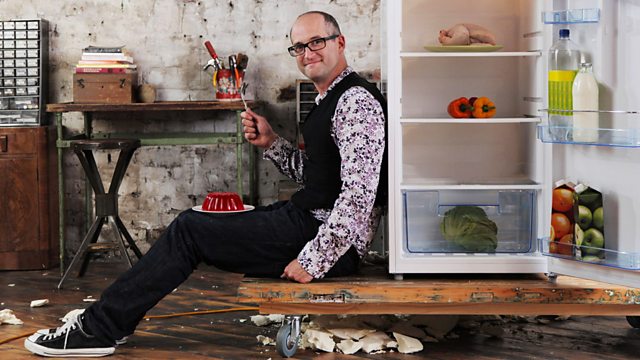
in Einstein's footsteps, Mark Miodownik pulls a fridge to pieces. | :02:45. | :02:48. | |
And comedian, Marcus Brigstocke, gets a crash course in the concept | :02:48. | :02:52. | |
of nothing. When I think of nothing in space, I think of literally | :02:52. | :02:57. | |
nothing, a blank space, you know, Nick Clegg's political future! | :02:57. | :03:02. | |
also ask is it possible to measure the speed of light using cheese on | :03:02. | :03:08. | |
toast. It will all make sense as we go on. You can get exclusive pics | :03:08. | :03:14. | |
and helpful Daoudyles which the web sieltd -- doodle on the website. | :03:15. | :03:19. | |
Here is background on Einstein. The story of physic, is, for the most | :03:19. | :03:23. | |
part, a tale of ever-increasing confidence. | :03:23. | :03:31. | |
In the early 1600, an Italian got the ball rolling, by measuring and | :03:31. | :03:36. | |
observing balls rolling, Galileo also turned pendulum, and dropped | :03:36. | :03:40. | |
different-sized objects off the leaning tower of Pisa to see what | :03:40. | :03:45. | |
would happen. Despite upsetting the Pope, apparently he made God cross, | :03:45. | :03:49. | |
his work became the rock on which modern physics is found. | :03:49. | :03:53. | |
Later, free from angry Popes, Isaac Newton moved things on by | :03:53. | :03:58. | |
abandoning balls and embracing apples. Why, he wondered, did they | :03:58. | :04:05. | |
always fall downwards, not sideways or up? By 1687 he had an answer. It | :04:05. | :04:09. | |
was a force called gravity, which worked on balls and apples. And | :04:09. | :04:14. | |
planets, holding them in nice, predictable orbits around the sun. | :04:14. | :04:19. | |
In the 1800s, James Clerk Maxwell cast his eye over more mysteries, | :04:19. | :04:23. | |
he showed how electricity and magnetisim are related, and can be | :04:23. | :04:29. | |
combined as one force, electromagnetisim. | :04:29. | :04:33. | |
Physics, it seemed, had mastered the universe. All that was left was | :04:33. | :04:41. | |
to plug a few remaining hole. But by 1900 the holes were getting | :04:42. | :04:44. | |
bigger. The latest discoveries didn't build on the old ones, | :04:44. | :04:49. | |
things like X-rays and radioactivity were just plain weird | :04:49. | :04:54. | |
and in a cad way. Lord Kelvin saw dark clouds hanging over the | :04:54. | :05:00. | |
subject. Then, in 1905, a Swiss Patten clerk started a full on | :05:00. | :05:05. | |
storm. 26-year-old Albert Einstein tore up the script. First he | :05:05. | :05:10. | |
claimed life is a kind of wave, but also comes in packet, particles. In | :05:10. | :05:15. | |
the same year he published his famous equation, e=mc2. It says | :05:15. | :05:19. | |
that mass and energy are equivalent. If that wasn't shocking enough, he | :05:19. | :05:22. | |
released the mind-blowing results of a thought experiment. Hold on to | :05:22. | :05:26. | |
your heads. It starts with the assumption that the speed of light | :05:26. | :05:31. | |
in a vacuum is constant. Now imagine that someone watches a | :05:31. | :05:35. | |
spaceship flying very fast. They would see a ship's clock running | :05:35. | :05:40. | |
slower than their own watch. And the ship will actually shrink in | :05:40. | :05:45. | |
size. But for the astronauts inside, all would be normal. Einstein said | :05:45. | :05:49. | |
that time and space can change, they are relative, depending on who | :05:49. | :05:54. | |
is observing them. This is special relativity. | :05:54. | :05:58. | |
His ideas shattered traditional physics, he had opened a door on to | :05:58. | :06:03. | |
the weird world of the quantum. Where cats can be both alive and | :06:03. | :06:07. | |
dead, where God plays dice and where everything is uncertain. | :06:07. | :06:12. | |
His famous equation, led to nuclear energy, without special relativity, | :06:12. | :06:16. | |
the Large Hadron Collider would be pointless. | :06:16. | :06:21. | |
General relativity predicted both black holes, and the Big Bang. An | :06:21. | :06:25. | |
idea now endorsed by both church and science. Galileo would have | :06:25. | :06:28. | |
been pleased. Well done Albert. | :06:28. | :06:32. | |
Our main guest tonight, not only understands Einstein's they arey, | :06:32. | :06:40. | |
but is building on them to advance our knowledge even further. She's a | :06:40. | :06:47. | |
professor of fisks and astronomy, and studies the black holes and the | :06:48. | :06:52. | |
way objects distort the space conten yum. | :06:52. | :06:57. | |
Welcome Janna Levin. How are you. | :06:57. | :07:01. | |
We're a century on from those initial discoveries of Einstein, | :07:01. | :07:05. | |
surely he's old news by now? know, the theory is pretty | :07:05. | :07:09. | |
complicated, it takes a long time to work out solutions, just because | :07:09. | :07:14. | |
Einstein said something like space time is curved, gravity is a curved | :07:14. | :07:17. | |
space time, doesn't mean we immediately know all the | :07:17. | :07:20. | |
implication of that. How much of a revolution is it all the things he | :07:20. | :07:24. | |
was saying? It was incredibly revolutionary, he re-thought the | :07:24. | :07:29. | |
whole way we view the world. It was, in some sense, kind of | :07:30. | :07:37. | |
unprecedented change in par dime and world view. We measured briefly | :07:37. | :07:43. | |
an icon, he was the world's view of what a scientist was? It is hard | :07:43. | :07:50. | |
sometimes to understand why Einstein became so famous, it isn't | :07:50. | :07:53. | |
because so many people grasp or think about the ideas on daily | :07:53. | :07:57. | |
basis. It was probably also the concept that the mind could triumph, | :07:57. | :08:01. | |
in a time when maybe the world wasn't doing so well after two | :08:01. | :08:06. | |
world wars, and a lot of economic strive. And the hair didn't hurt? | :08:06. | :08:12. | |
The hair was awesome! He became very, very celebrated at the time, | :08:12. | :08:16. | |
turning up on red carpets? really is the hugeest thing you can | :08:16. | :08:21. | |
point to. In the 100 years since, and in 3900 years since Newton, | :08:21. | :08:26. | |
there is no question that what Einstein is that big, it is not | :08:26. | :08:30. | |
exaggerated.S What the fundamental, if you had to pick of all the | :08:30. | :08:34. | |
things he tore up, what is the most fundamental change? We no longer | :08:34. | :08:39. | |
think of space and time as absolute, time is not some stage on which the | :08:39. | :08:41. | |
events of the universe are unfolding. Ined stead, time is | :08:41. | :08:45. | |
something that depends on where you are in the universe, and if you are | :08:45. | :08:48. | |
near a black hole, or the earth, or how fast you are moving, relative | :08:48. | :08:54. | |
to somebody else. That is a major shift in really how we think about | :08:54. | :09:01. | |
the nature of reality. But, of course, Einstein wasn't just some | :09:01. | :09:06. | |
crazy-haired theorist work on a blackboard, when he wasn't looking | :09:06. | :09:10. | |
at the universe, put his mind to more mundane matters. Mark | :09:10. | :09:17. | |
Miodownik has the story. In the mid-1920s the big problem Einstein | :09:17. | :09:21. | |
was tackling had nothing do with the laws of physics. But, instead, | :09:21. | :09:28. | |
keeping food nicely chilled. Albert, along with his colleague, | :09:28. | :09:34. | |
filed several of their own patents on domestic refrigerators. It | :09:34. | :09:39. | |
worked on the same fundamentals as your fridge at home, and this one | :09:39. | :09:43. | |
here. You can see those principles in action, with this thermal camera, | :09:43. | :09:47. | |
where cool things like my spectacles are much darker than hot | :09:47. | :09:51. | |
things, like my head. As expected, the inside of the fridge is cold, | :09:51. | :09:54. | |
that is because the heat has been removed from everything, including | :09:54. | :10:00. | |
this egg. But where has it gone? The first law of thermodynamics | :10:00. | :10:03. | |
tells you it can't disappear, it has to go somewhere, it comes out | :10:03. | :10:08. | |
the back of the fridge, that is why the back of the fridge is hot. If | :10:08. | :10:13. | |
you leave the fridge door open it won't cool your house down, energy | :10:13. | :10:17. | |
can't be removed, it is just moved. The real genius of the fridge is | :10:17. | :10:22. | |
how the heat gets extracted, that is down to the stuff inside these | :10:23. | :10:30. | |
pipes. The refridgeant. I have some isobutane, exactly what | :10:30. | :10:40. | |
| :10:40. | :10:41. | ||
is in the fridge. Then blow on it, it gets instantly | :10:41. | :10:44. | |
freezing cold. What is happening is the liquid is evaporating, in order | :10:44. | :10:48. | |
to do that, it needs to get heat from somewhere, it is taking it | :10:48. | :10:55. | |
from the lid. Because eyes sow butane has a low boiling -- | :10:55. | :11:00. | |
isobutane has a low boiling point, the cooling process happens, it | :11:00. | :11:04. | |
happens even when you lick the back of your hand. This process goes on | :11:04. | :11:09. | |
inside your fridge, rather than a themable of water, it draws heat | :11:09. | :11:14. | |
from your food. It may be the world's smallest ice-cube, but it | :11:14. | :11:24. | |
| :11:24. | :11:25. | ||
is an ice-cube. In a fridge it happens in a sealed system of tubes, | :11:25. | :11:30. | |
rather than evaporating, it gets recycled. These tubes are the high- | :11:30. | :11:38. | |
pressure side of the fridge, it keeps the fridge in a liquid state. | :11:38. | :11:41. | |
I'm just getting rid of the insulation, this play as very | :11:41. | :11:45. | |
important role in a fridge, the inside needs to remain cold, and | :11:45. | :11:49. | |
the outside, as we have already said, gets hot. It is sucking the | :11:49. | :11:52. | |
heat out of the food, we don't want the two to talk to each other. | :11:52. | :11:58. | |
We are getting through to the inner layer of tubes, the cold side of | :11:58. | :12:07. | |
the fridge. It is pretty cold. What they do, is they allow the | :12:07. | :12:17. | |
| :12:17. | :12:19. | ||
refridge rant, to stay cold. The compresser allows it become a | :12:19. | :12:23. | |
liquid. They brought an experiment into a refrigerator, when they | :12:23. | :12:26. | |
entered people's homes there were problems. Einstein read about a | :12:26. | :12:30. | |
family living in Berlin, two parents and several children, | :12:30. | :12:33. | |
poisoned in their own home, all because the compressor in their | :12:33. | :12:38. | |
fridge had leaked. Accidents like this were becoming increasingly | :12:38. | :12:43. | |
common, because the fuels were toxic or flamable. The death of the | :12:43. | :12:46. | |
family deeply upset Albert. He thought there must be a solution. | :12:46. | :12:50. | |
He set out to redesign the compressor, this is what he came up | :12:50. | :12:55. | |
with. I know it look like a milking machine. It was ingenious, unlike | :12:55. | :13:00. | |
anything that had come before. It used a liquid metal as a pissen to | :13:00. | :13:07. | |
to compress the refrigerant, it was a sealed system, and less likely to | :13:07. | :13:12. | |
leak. It did the same job as a compressor, without any mechanical | :13:12. | :13:16. | |
parts. It never made it to the showroom floor. As the political | :13:16. | :13:20. | |
situation in Europe became frosty, it was harder for Einstein to put | :13:20. | :13:25. | |
his idea into practice. In America a chemist came up with an | :13:25. | :13:34. | |
alternative, safer refrigerant. The doflt of CFCs, he inhaled them to | :13:34. | :13:38. | |
show their safety. They dominated the industry for 70 years and found | :13:39. | :13:43. | |
their way into every home across the world. We know now that CFCs | :13:43. | :13:49. | |
are not toxic to humans, they don't mix very well to the ozone layer, | :13:49. | :13:57. | |
we have gone back to using hazardous refridge ld rants. What | :13:57. | :14:01. | |
happened about Einstein? It never got to the economiesic market, it | :14:01. | :14:11. | |
| :14:11. | :14:13. | ||
did get used in nuclear reactors to cool uranium and plutonium. | :14:13. | :14:19. | |
This will lead us on very nicely to our unsung scientist feeture, our | :14:19. | :14:22. | |
chance to acclaim some of these scientists who have done fantastic | :14:22. | :14:25. | |
work, who wouldn't be with the giants of the field, and maybe we | :14:25. | :14:28. | |
think history needs to get better attention to. As for the fridge | :14:28. | :14:34. | |
itself, it never went into production? It didn't. What | :14:34. | :14:39. | |
happened was that initial the CFCs were cheap and convenient and | :14:39. | :14:43. | |
fitted into the current technology, of a that went, and until we worked | :14:43. | :14:51. | |
out that CFCs were very damaging to the ozone layer. We went back to | :14:51. | :14:56. | |
the poisonous stuff? It is in the modern fridge. It comes to the | :14:56. | :15:01. | |
unsung heros Hall of Fame. We know the big hitters, like Newton, | :15:01. | :15:06. | |
Einstein, Darwin and the Galileos. But, you want to nominate, not | :15:06. | :15:14. | |
Einstein, but...That Fridge was Einstein's fridge, but his friend, | :15:14. | :15:18. | |
Leo Sillard, the student, he have the one that spotted the Nazis were | :15:18. | :15:23. | |
starting to regulate uranium. He wrote to Einstein and said we | :15:23. | :15:26. | |
better tell Roosevelt that a nuclear bomb is possible and the | :15:26. | :15:31. | |
Nazis might get one and we should start one soon. He wrote the letter | :15:31. | :15:35. | |
and Einstein signed t later in life he invented this idea of radiation | :15:35. | :15:42. | |
treatment for cancers. He goes in there. Who would you include? | :15:42. | :15:52. | |
| :15:52. | :15:52. | ||
going to nominate Carl Swarcfield, his legacy isn't as broad, but | :15:52. | :15:57. | |
during World War I he was a German infantry soldier, working on the | :15:57. | :16:02. | |
Russian front. Between gunfire he was reading Einstein's newly | :16:02. | :16:08. | |
published general theory of relativety. He was the first one to | :16:08. | :16:14. | |
really understand that a possible candidate for curving space time | :16:14. | :16:19. | |
was the black hole. He wrote to Einstein and said despite the war | :16:19. | :16:23. | |
and gunfire I wandered through the land of your ideas. Einstein was | :16:23. | :16:27. | |
impressed with this solution and couldn't believe it was done so | :16:27. | :16:32. | |
quickly and elegantly and he helps them to get published. Einstein | :16:32. | :16:36. | |
believes black holes aren't real. This debate wages after Carl's | :16:36. | :16:39. | |
death for decades until people realise that actually the death | :16:39. | :16:42. | |
state of stars are black holes, if they are massive enough. | :16:42. | :16:48. | |
There's Carl. I'm going to add the guy you | :16:48. | :16:54. | |
mentioned, technically not adding him here this is Thomas Midgely. He | :16:54. | :16:58. | |
invented CFCs which revolutionised it, and then destroyed the ozone | :16:58. | :17:01. | |
layer. That was his second invention, what else did he invent? | :17:01. | :17:06. | |
The other thing was leaded petrol. The guy had lead poisoning, he had | :17:06. | :17:11. | |
to recover for ay, and then went back to sold it to the public, by | :17:11. | :17:18. | |
inhaling it in front of TV cameras. Would he be among one of the | :17:18. | :17:21. | |
greatest polluters in the history of the planet? He's the candidate | :17:21. | :17:26. | |
we know of. I'm not putting him there I'm putting him here, they | :17:26. | :17:31. | |
are still there and remembered by history, but we're not going to | :17:31. | :17:36. | |
shift them to the glowing wall there. If there is detail that we | :17:36. | :17:41. | |
haven't covered about Einstein, we have our aftershowers Science Club | :17:41. | :17:43. | |
after the show, physicists will be waiting for your questions. | :17:43. | :17:48. | |
While you are watching, you can get exclusive pictures, surprising | :17:48. | :17:54. | |
facts and helpful doodles by following us. | :17:54. | :17:58. | |
Our universe seems to be made of up stars, planets and gas, that are | :17:58. | :18:02. | |
clumped together. With vast gaps inbetween them, and even at an | :18:02. | :18:06. | |
atomic level it is pretty much all space. When we sent out Marcus | :18:06. | :18:09. | |
Brigstocke, who knows nothing about physic, to make a film for us. It | :18:09. | :18:19. | |
| :18:19. | :18:23. | ||
seems suitable that the question he Like most people, I grew up | :18:23. | :18:28. | |
thinking that space was full of nothing, a vacuum, as empty and | :18:28. | :18:32. | |
cold as George Osborne's smile. You know, it is just the void, with | :18:32. | :18:38. | |
some stars in it and stuff. It turns out that nothing lies at | :18:38. | :18:43. | |
the heart of physics. And figuring out what nothing is has vexed | :18:43. | :18:53. | |
| :18:53. | :18:53. | ||
physicists like professor Jim Alkalilly for decade. What did | :18:53. | :18:56. | |
scientists think was up there before Einstein They thought the | :18:56. | :19:02. | |
whole of the universe was filled with the ether, the stuff that is | :19:02. | :19:06. | |
invisible to us, but allows light travel through. That is the only | :19:06. | :19:10. | |
way they could figure out light could reach us from the stars. | :19:10. | :19:13. | |
think that? That is wrong, Einstein came along and said there is no | :19:13. | :19:19. | |
such thing as the ether, he proved it, that was his theory of | :19:19. | :19:24. | |
relativeity. There is nothingness, Einstein said so? Jimmy's taking me | :19:24. | :19:34. | |
| :19:34. | :19:36. | ||
to space. The nearest thing to space, in this laboratory. | :19:36. | :19:41. | |
M This is a vacuum chamber, you close the door and suck out all the | :19:41. | :19:45. | |
at tomorrows from inside there, to get -- atoms from inside there, and | :19:45. | :19:52. | |
get as close as you can to empty space. You suck out the atoms and | :19:52. | :19:55. | |
inside there is nothing? Firstly, you can't do all of them, but if | :19:55. | :19:59. | |
you could, there is other stuff going on there. The walls are | :19:59. | :20:04. | |
radiating waves, or particles of light, called photons. You can't do | :20:04. | :20:08. | |
it here, but in space, then you can have nothing? Even in deep space | :20:08. | :20:13. | |
there are still particles, photons, flying about. Even if you could get | :20:13. | :20:19. | |
rid of them, if you manage taking two atoms, this far apart, with | :20:19. | :20:24. | |
nothing inbetween them, that nothing isn't complete nothing. If | :20:24. | :20:28. | |
those atoms can feel each other, if the electrons can repel each other, | :20:28. | :20:35. | |
they are exchanging particles. Photons. Empty space always | :20:35. | :20:38. | |
contains something. It is unavoidable. So you can't have | :20:38. | :20:47. | |
nothing? No, nothing doesn't exist. Really? You haven't read Richard | :20:47. | :20:52. | |
Little John's column! Those tripy sounding particles are not alone in | :20:52. | :20:57. | |
the void. Jim reckons there is a whole party going on out there. | :20:57. | :21:02. | |
Empty space is also filled with forces. The force of gravity is | :21:02. | :21:09. | |
something, and Einstein, in 1915, explained how the universe was | :21:09. | :21:12. | |
acting under graphty. He thought gravity was causing everything to - | :21:12. | :21:16. | |
- gravity. He thought gravity was causing everything to collapse in | :21:16. | :21:19. | |
on itself. We now realise that actually the universe is expanding | :21:19. | :21:23. | |
ever more quickly, and the thing we think that's causing that to happen | :21:23. | :21:29. | |
is something else that we think exists in space, something called | :21:29. | :21:33. | |
vacuum energy. To show me this vacuum energy, Jim | :21:33. | :21:38. | |
has borrowed what appears to be an appliance found in every office in | :21:38. | :21:42. | |
the land. I recognise this, because this is a photo copier, isn't it? | :21:42. | :21:52. | |
| :21:52. | :21:55. | ||
Almost. It sound like a photocopier when you witch it on, but this is a | :21:55. | :21:58. | |
sophisticated machine called a cloud chamber. What it does is | :21:58. | :22:03. | |
detect particles. There we go, it is firing up! What you can see in | :22:03. | :22:09. | |
the surface are lines that appear and desappear. Those are particle | :22:09. | :22:13. | |
tracts, particles from outer space come in, they collide with the | :22:13. | :22:18. | |
atmosphere and atom on earth, and prodrues these tracks. What this | :22:18. | :22:22. | |
has to do -- produce these tracks. What this has to do with empty | :22:22. | :22:26. | |
space, even though you have no energy at all, nothing at all, you | :22:26. | :22:31. | |
can still make a pair of particle, an electron and anti-electron. | :22:31. | :22:35. | |
what Jim seems to be telling me, is that the same kind of particles | :22:35. | :22:41. | |
that turn up in the cloud chamber, can pop up everywhere, even in the | :22:41. | :22:44. | |
most distant, barren corner of the universe. When you say nothing, you | :22:44. | :22:47. | |
don't mean the same nothing that I think of when I think of nothing. | :22:47. | :22:52. | |
When I think of nothing in space, I think of literally nothing, a blank | :22:52. | :22:58. | |
space. Nick Clegg's political future. When you say nothing, you | :22:58. | :23:04. | |
know that in any chunk of space, that is a constant state of | :23:04. | :23:09. | |
activity and change? This quantum energy, the quantum fluctuations of | :23:09. | :23:14. | |
these particles being very busy. That looks like it is the | :23:14. | :23:17. | |
explanation for one of these deepest mysteries of physic, which | :23:17. | :23:21. | |
is, what is out there in empty space. What is driving the universe | :23:21. | :23:31. | |
| :23:31. | :23:32. | ||
to make it expand. So, nothing is something, and that | :23:32. | :23:36. | |
something may explain the bizarre observation, that the universe is | :23:36. | :23:40. | |
inflating all around us. And just as it couldn't get any | :23:40. | :23:43. | |
stranger, Jim has left me in the dark with this man, who believes he | :23:43. | :23:48. | |
knows why we live in an expanding Cosmos. | :23:48. | :23:52. | |
When we look How can you tell a picture like this, that the | :23:52. | :23:56. | |
universe is expanding faster and faster. | :23:56. | :24:01. | |
We see the galaxies in those image, using telescopes like this to | :24:01. | :24:05. | |
measure distances to the objects as a function of time. What we can see | :24:05. | :24:11. | |
is the amount of distance per unit time is changing. And the universe | :24:11. | :24:15. | |
is accelerating in its expansion. We think what is driving that is | :24:15. | :24:23. | |
something called dark energy. is, as used by the Dark Lord Darth | :24:23. | :24:28. | |
Vader. Dark energy is a term we use for anything that could be | :24:28. | :24:33. | |
explaining this acceleration of the universe. The most favoured | :24:33. | :24:36. | |
explanation we have is something called vacuum energy. If it carries | :24:37. | :24:41. | |
on being this vacuum energy then it will never stop accelerating, and | :24:41. | :24:45. | |
you will end up with a universe where galaxies are flying apart | :24:45. | :24:50. | |
faster than the speed of light. In about 60 billion years we will have | :24:50. | :24:57. | |
what they call the big rip. If we are right, space itself will start | :24:57. | :25:06. | |
to dismantle. Ladies and gentlemen, Marcus | :25:06. | :25:10. | |
Brigstocke. I want to thank you for doing that | :25:10. | :25:15. | |
film for us, it was probably the least enlightning science film ever | :25:15. | :25:18. | |
made in history, from your face alone it was clear you went in with | :25:18. | :25:24. | |
nothing, and came out with less. mean, I thought, one grows up | :25:24. | :25:28. | |
thinking there is a nothing out there, that there is an empty space, | :25:28. | :25:33. | |
and there isn't, at all. That's all right. But when you see that we are | :25:33. | :25:37. | |
being bombarded by things, all of the time. You know there are forces | :25:37. | :25:42. | |
acting on you, even as a punter and non-scientist like me, you know | :25:42. | :25:46. | |
about that. But actual things, passing through this roof now and | :25:46. | :25:49. | |
hitting us. We're all right, but, you know. They are quite tiny | :25:49. | :25:53. | |
little things, some are passing through us and not hitting us at | :25:53. | :25:57. | |
all. Mostly right through us. many hundreds of thousands of | :25:57. | :26:00. | |
millions are going through my thumb right now, it is happening all the | :26:00. | :26:05. | |
time. How many fields are we sitting in right now? Electric | :26:05. | :26:13. | |
fields, magnetic fields, gravitational field s. The Higgs | :26:13. | :26:17. | |
fields? Presumably. When everybody says this used to be fields, it is. | :26:17. | :26:21. | |
They love. That I learned that, and that the universe will rip itself | :26:21. | :26:25. | |
apart. That was nice, that was a fun thing to learn, that the | :26:25. | :26:28. | |
universe is just gradually going to rip theself apart. Obviously, like | :26:28. | :26:33. | |
all of these things, I really did find it fascinating, it has led to | :26:33. | :26:36. | |
millions and millions of other questions in my mind. I find the | :26:37. | :26:40. | |
whole constant expansion of the universe, the basic first question | :26:40. | :26:46. | |
for me is, well expanding, but into what? I'm stumped by that | :26:46. | :26:50. | |
immediately. Expanding into what? It has been explained into nothing | :26:50. | :26:56. | |
because it is going round and I can't get that. It can be infinite | :26:56. | :27:03. | |
and expanding. Not in here it can't. There isn't room enough. Why not | :27:03. | :27:09. | |
ground this with an emnint scientist, it is an every day | :27:09. | :27:12. | |
problem. How many people have headphones with them at the moment? | :27:12. | :27:17. | |
This is essentially what it is like in your pocket at the moment. Nice, | :27:17. | :27:21. | |
top-quality example. This, why does this happen? It is so frustrating, | :27:21. | :27:24. | |
it drives me crazy. It happens to me all the time. There is fis he | :27:24. | :27:29. | |
cans in that? I would say one way of talking about that is to say | :27:29. | :27:35. | |
that there is many more ways that can be tangled than not be | :27:35. | :27:42. | |
tanninged. Many fewer ways for it to be smooth and untangled. It is | :27:42. | :27:49. | |
entrophy, it says the larger number of ways of doing something is | :27:49. | :27:54. | |
entrophe, the chances are higher to have it knotted. Anyone here, | :27:54. | :28:01. | |
tangled, tangled. That is a mess, to be honest with you. Anyone | :28:01. | :28:08. | |
unhang -- tangled. I keep mine in a pouch! That is to tragic. A little | :28:08. | :28:13. | |
pouch, and they are made of a different thing so they are easier | :28:13. | :28:19. | |
to unknot. This won't work now. hope it doesn't. There we go. My | :28:19. | :28:28. | |
knotless pouch, now who looks foolish! It is still you. | :28:28. | :28:32. | |
What complex mathematics, knot theory? They are knotted in | :28:32. | :28:35. | |
different ways, it is not a magic thing that you put it into the | :28:35. | :28:39. | |
pocket and it comes out the same knot. Knot theory there is a whole | :28:39. | :28:43. | |
branch of mathematics that tries to understand the complexties of the | :28:43. | :28:48. | |
way things become knotted. It can have application for things like | :28:48. | :28:51. | |
quantum gravity, and spring theory. Which are about the foundations of | :28:52. | :28:54. | |
the universe. It is the most frustrating thing, that. Because | :28:54. | :28:58. | |
you think that's just happened without me touching t I put it in a | :28:58. | :29:03. | |
bag or pocket, therefore, when I hold it, there is probably one way, | :29:03. | :29:07. | |
if I get hold of the right bit and pull it, it will come out straight. | :29:07. | :29:12. | |
Never once have a lucked out with that, hence, the poach! It is the | :29:12. | :29:15. | |
same argument why your room gets messier rather than cleaner unless | :29:15. | :29:19. | |
you do something. I have a woman comes in. Adding artificial energy | :29:19. | :29:25. | |
to the system. Cheating! She's not artificial, she's real. Do you pay | :29:25. | :29:30. | |
her through the book, or cash thing? It is a Jimmy Carr | :29:30. | :29:35. | |
arrangement, she's from Guernsey! You might think that Einstein's | :29:35. | :29:39. | |
theory affects you in any way, it is all about planets and space, you | :29:39. | :29:45. | |
are wrong. Here are some numbers. Your head might be only 175cms from | :29:45. | :29:55. | |
| :29:55. | :29:56. | ||
your feet, but time ticks fast up there. 678quadrillionths of a | :29:56. | :30:02. | |
second. By the end of your life, it is 484billionths of a second older | :30:02. | :30:08. | |
than your toes. Say you took a job at the top of the Empire State | :30:08. | :30:13. | |
Building, that is 8.4 hours day, 260 days a year, for 46 years, you | :30:13. | :30:22. | |
would have worked a colossal slight of a second longer than the people | :30:22. | :30:32. | |
| :30:32. | :30:42. | ||
If the sprinter ran 100ms in 9.58 seconds, he would finish six | :30:42. | :30:52. | |
quaddrillionths than those starting If you try to break the land-speed | :30:52. | :31:00. | |
record, then, you would have gained three trillionths of a second. | :31:00. | :31:05. | |
Spend your whole life at that speed and you would half a measure of a | :31:05. | :31:11. | |
second ahead of everyone else. Higher up, as well as going over | :31:11. | :31:17. | |
100-times faster than the eurosta, the International Space Station is | :31:17. | :31:25. | |
over 4 ,000ms above oured head. Spend your entire life up there, | :31:25. | :31:34. | |
and you will be a second younger. Proof that science really can -- | :31:34. | :31:38. | |
415,000 miles above our heads, spend your life up there you will | :31:38. | :31:42. | |
be a second younger. Proof that science can really explain | :31:42. | :31:45. | |
everything. It was discovered by Maxwell that | :31:45. | :31:48. | |
the speed of light drops out of electricity and magnetisim. | :31:48. | :31:51. | |
Suddenly there is this huge discovery that electricity and | :31:52. | :31:54. | |
magnetisim, and these electromagnetic fields are light. | :31:54. | :31:58. | |
If you run at a train, it is coming faster than if you run away from a | :31:58. | :32:02. | |
train. Life is not like that. The fact that it is the same, weather | :32:02. | :32:05. | |
you run towards a light beam or away from a light beam, is so | :32:05. | :32:09. | |
strange that everyone thought it was a wrong result. And what | :32:09. | :32:14. | |
Einstein did was say, actually, I think that's right. Everything we | :32:14. | :32:17. | |
see and every measurement we have made, and all we know about space | :32:17. | :32:21. | |
is because of light? Yes. More or less. Are there other ripples we | :32:21. | :32:26. | |
should be looking at? If we are talking about Einstein, we have to | :32:26. | :32:30. | |
talk about gravitational lifts, the idea that if very massive things | :32:30. | :32:34. | |
were to collide, like two black holes, which is the favourite | :32:34. | :32:37. | |
candidate. That they would cause space to ripple around them, like | :32:37. | :32:42. | |
fish swirling in the pond and the water would ripple. Those waves are | :32:42. | :32:47. | |
in the shape of space, if you were standing beside the black holes you | :32:47. | :32:49. | |
couldn't see them and if they collided you wouldn't know, and | :32:49. | :32:54. | |
then all of a sudden you would be squeezed and stretched as they | :32:54. | :32:59. | |
travel through you, and they travel at the speed of life light. | :32:59. | :33:02. | |
space squeezes and stretches, do you feel yourself squeezing and | :33:02. | :33:07. | |
stretching? If it is strong enough you would. If it is strong enough | :33:07. | :33:10. | |
to overcome the electrochemical bonds that hold you together. | :33:10. | :33:15. | |
are they so elusive? They are so weak, so, you know, I can fight | :33:15. | :33:19. | |
gravity with my little arm, the whole of the earth is pulling on me | :33:19. | :33:23. | |
right now, and I can easily overcome it. Gravity is incredibly | :33:23. | :33:28. | |
weak. So, you need something like two massive black holes smashing | :33:28. | :33:33. | |
together. Even then, it's so incredibly weak by the time it gets | :33:33. | :33:38. | |
to the earth, that for a long time people thought there would never be | :33:38. | :33:42. | |
any hope of actually experimentally getting there. We have yet to? | :33:42. | :33:46. | |
have yet to, but the ambition has been decades in the making and we | :33:46. | :33:50. | |
are on the verge. When scientists such as Newton were coming up with | :33:50. | :33:54. | |
theories they could test them immediate lo. Einstein's ideas were | :33:54. | :33:57. | |
so advanced, he had to wait for the technology to catch up to test his | :33:57. | :34:02. | |
they are hey. They have all been proved correct with one outstanding, | :34:02. | :34:07. | |
that is gravitational waves. We went to see how the hunt for this | :34:08. | :34:15. | |
most elusive of physical effects is progressing. | :34:15. | :34:17. | |
Gravitational waves are really elusive things to detect, because | :34:17. | :34:26. | |
of the effect they have on the world around us. | :34:26. | :34:31. | |
General relativity, predicts that mass gravity can warp space time. | :34:31. | :34:34. | |
And that's what gravitational waves are, they are ripples in the fabric | :34:34. | :34:41. | |
of our universe in space time. So here's the problem, a | :34:41. | :34:45. | |
gravitational wave can be passing through me right now, stretching | :34:45. | :34:49. | |
and squishing the space time around But if it is stretching and | :34:49. | :34:53. | |
squishing what is around me, it is also stretching and squishing me. | :34:53. | :35:01. | |
So the difficulty is, that from my point of view, nothing has changed. | :35:01. | :35:04. | |
The business of catching gravity waves is, therefore, incredibly | :35:04. | :35:09. | |
difficult. It requires big, expensive | :35:09. | :35:19. | |
| :35:19. | :35:23. | ||
experiments. This is the laser interfrometer, | :35:23. | :35:27. | |
wave experiment. It cost $365 million to put together. That makes | :35:27. | :35:34. | |
its boss, the man under pressure to prove instein right. You see two | :35:34. | :35:40. | |
long arms, there is one down there by you and one past me. They are | :35:40. | :35:45. | |
4kms long each, we shine light down a laser down both of the arms and | :35:45. | :35:48. | |
measure the lengths of those arms. We measure the difference between | :35:48. | :35:52. | |
one arm length than the other. gravitational wave came through, | :35:52. | :35:55. | |
here now, what would LIGO do? Imagine it were coming straight | :35:55. | :36:03. | |
down from the sky. It would make one arm a little longer and one | :36:03. | :36:05. | |
shorter, and that would reverse with the in coming gravitational | :36:05. | :36:09. | |
wave. We measure the difference between the two arm, we would see | :36:09. | :36:13. | |
one arm getting longer, the other getting shorter and back and forth, | :36:13. | :36:16. | |
it would trace out the same wave form as the gravitational wave. | :36:16. | :36:23. | |
are using the laser as a ruler, these two arms are giant rulers in | :36:23. | :36:32. | |
space time. That is right. LIGO's 4km arms can detect movement a | :36:32. | :36:35. | |
thousand if diameter of the smallest nucleus. That is looking | :36:35. | :36:39. | |
at the entire width of the Milky Way, and noticing something the | :36:39. | :36:47. | |
size of your thumb move. In 2005, Joe's team set their trap for | :36:47. | :36:50. | |
Einstein's theoretical wave, all they had to do was wait. Before you | :36:50. | :36:53. | |
built this, you must have been able to make predictions about the sorts | :36:53. | :36:57. | |
of waves you thought you would see. Have you, were you right, do you | :36:57. | :37:05. | |
know? We haven't seen, we haven't detected any waves yet. | :37:05. | :37:11. | |
For seven years the detectors have been working. Waiting. For the | :37:11. | :37:19. | |
universe to light up. For LIGO to detect a gravitational wave, it | :37:19. | :37:24. | |
needs a powerful source. A massive collision between neutron | :37:25. | :37:31. | |
stars, or black holes would do it. So would a supernova from a nearby | :37:31. | :37:37. | |
massive star. The resulting gravitational wave would have to be | :37:37. | :37:42. | |
big enough that at its current sensitivity, LIGO, would be able to | :37:42. | :37:49. | |
watch the wave go by. Do you know why haven't you seen | :37:49. | :37:51. | |
anything, you built it because you thought you would see anything, | :37:51. | :37:57. | |
what happened? So, in a particle physics experiment, you shine a | :37:57. | :38:01. | |
beam on to a target, or shine a beam into another beam and you | :38:01. | :38:05. | |
create the events, and then you can count them. We are not a particle | :38:05. | :38:08. | |
physics experiment, nature has to send us the advance, nature has to | :38:08. | :38:12. | |
create the sources. We have estimates about how many of the | :38:12. | :38:15. | |
sources are out that there that we can detect. It was a bit of a long | :38:15. | :38:21. | |
shot that we would be able to see one, with the initial LIGO | :38:21. | :38:26. | |
sensitivity, that is why we have to look for a better detector. | :38:26. | :38:32. | |
isn't giving up yet. LIGO is getting an upgrade, to advanced | :38:32. | :38:37. | |
LIGO. The new optics in Joe's laser rulers, have some of the smoothest | :38:37. | :38:43. | |
surface on earth. The thing about these waves that | :38:43. | :38:47. | |
really gets me, is they are really subltle. We have these great big | :38:47. | :38:52. | |
long arm, and even then to measure the difference in space time, we | :38:52. | :38:55. | |
need it to be really accurate, because it is such a tiny tiny | :38:55. | :38:59. | |
difference. These will make this detector much more sensitive to | :38:59. | :39:02. | |
able to detect even smaller differences? That's right, and it | :39:02. | :39:08. | |
is very pretty, too, isn't it. are stunning. | :39:08. | :39:13. | |
I feel like I'm looking at the cleanest thing I have ever seen. It | :39:13. | :39:19. | |
look atomically perfect. When LIGO's laser is bounced between | :39:19. | :39:24. | |
these flawless optics, Joe will be able to look out for much longer | :39:24. | :39:28. | |
wavelengths. Increasing the sensitivity of the instrument, and | :39:28. | :39:31. | |
allowing a wider range of potential gravitational wave sources to be | :39:31. | :39:41. | |
| :39:41. | :39:43. | ||
seen out there in the universe. We have been joined by Helen, who | :39:43. | :39:46. | |
made that film for us. Helen, they have been seven years looking and | :39:46. | :39:50. | |
they think they won't see anything for five years? They are in the | :39:50. | :39:52. | |
process of upgrading it. This experiment has actually been going | :39:52. | :39:57. | |
on for a long, long time. The idea to test for this started in the 50s, | :39:57. | :40:01. | |
people have been refining their methods, and this last upgrade they | :40:01. | :40:06. | |
think they are going to get it. have two arms heading out at a 90 | :40:06. | :40:10. | |
degree angle, you send light bouncing out 4qms and back again, | :40:10. | :40:14. | |
if that doesn't -- 4kms and back again f that doesn't happen it is | :40:14. | :40:17. | |
because space time has been distorted? You set it up with one | :40:17. | :40:22. | |
laser beam, you split it into two, those are identical. So you send | :40:22. | :40:26. | |
them down identical arms and back. If one of those arms changes length | :40:26. | :40:30. | |
and the other one doesn't, or if both change, when they get back | :40:30. | :40:34. | |
they won't match up any more. You know you have seen a change in | :40:34. | :40:39. | |
space time. They are refining it, in five years they think it will be | :40:39. | :40:42. | |
refine today see something there, or be ready when something arrives? | :40:42. | :40:45. | |
To be ready when something arrives. It could have happened a billion | :40:45. | :40:48. | |
years a we are just sitting here waiting. We have five years | :40:48. | :40:53. | |
relative to a billion, we have to hurry. If there is any detail about | :40:53. | :40:58. | |
special relativity we haven't word, we have our afterhours science club | :40:58. | :41:05. | |
standing by, we have a top physicist standing by to answer | :41:05. | :41:09. | |
your questions. Alok Jha poses a thorny question, can we afford big | :41:09. | :41:14. | |
ticket physics experiment. We try to track down Einstein's brain. | :41:14. | :41:16. | |
One thing you will keep hearing when we discuss this sort of | :41:16. | :41:19. | |
science, is the speed of light being a constant. It is incredibly | :41:20. | :41:22. | |
fundamental to the whole thing. It is a fundamental fact of the | :41:22. | :41:25. | |
universe. As such we should be able to take ownership of that, we | :41:25. | :41:29. | |
should all be able to measure the speed of light. Mark, you were | :41:29. | :41:33. | |
going to show us show. Exactly would presume this is technically | :41:33. | :41:38. | |
done with telescopes and planets? You can do it that way if you want. | :41:38. | :41:42. | |
The big science, whatever way you want. We can do it by making cheese | :41:42. | :41:46. | |
on toast. That is because radio wave, X-rays, and microwaves, are | :41:46. | :41:50. | |
all types of light. Same speed? Same speed. It is not unreasonable | :41:50. | :41:54. | |
to use a microwave to do the experiment. And that brings us to | :41:54. | :41:58. | |
what a wave is. And so, here is a wave, and it's a certain length, | :41:58. | :42:04. | |
that is this wavelength, it goes that length a number of time per | :42:04. | :42:10. | |
second, that is the freakcy s you times the freak -- frequency, you | :42:10. | :42:15. | |
times the frequency by the length. We will put it into the microwave, | :42:15. | :42:20. | |
I can't touch the cheese. This is genuinely a fun thing to do around | :42:20. | :42:23. | |
a cheese phobic person is wave cheese in their general area. This | :42:23. | :42:28. | |
is not a childhood thing? It is actually disturbing. You actually | :42:28. | :42:32. | |
have a problem with it? I have always had it. I should have been | :42:32. | :42:36. | |
more sensitive to, that generally this show is cool with that kind of | :42:36. | :42:43. | |
stuff, but it is funny to do that. I'm sorry, I'm being insensitive. | :42:43. | :42:51. | |
That goes in. Put that in the Mick crow wave. It is non-standard | :42:51. | :42:54. | |
because we have small wooden blocks? We have taken the thing out | :42:54. | :42:59. | |
that goes round. Because when the wave is bouncing back and forth in | :42:59. | :43:04. | |
this, it gives it hot spots and cold spots. If we get it going. | :43:04. | :43:14. | |
| :43:14. | :43:16. | ||
is a student of physics here? You, fabulous. I'm a this eroatition. | :43:16. | :43:23. | |
You have used a ruler? This side. Here we go. Lovely, that's perfect. | :43:23. | :43:27. | |
You can see the hot spots and it has been left over the cold spot. | :43:27. | :43:33. | |
Should we go for the centre of the piece there. If the theory is | :43:33. | :43:38. | |
correct, it should be half. really aren't good with a ruler, | :43:38. | :43:47. | |
are you! We don't care about the bread. Think of the budget this lab | :43:47. | :43:52. | |
works on. Let's go for 6.5. That means the wavelength. For a | :43:52. | :43:57. | |
microwave that is a fairly big wave. It is micro, though, because it is | :43:57. | :44:06. | |
13cms, which is 0.13 of a meeter. 0.13 of a metre, we we are half way | :44:06. | :44:09. | |
there, what about the frequency? need to make an observation | :44:09. | :44:13. | |
independent of that, otherwise we will have our numbers compounding. | :44:13. | :44:18. | |
Can we not use him, he almost blew it in the first part. I saw the | :44:18. | :44:21. | |
things. What we need is someone who can make an observation on the back | :44:21. | :44:28. | |
of the microwave, so you can see the frequency, could you read that | :44:28. | :44:38. | |
| :44:38. | :44:44. | ||
number? 200 450 -- 2,450 megaherts, that is the frequency, which is | :44:44. | :44:49. | |
2.45X10 to the 9. We have to multiply those two to get to the | :44:49. | :44:53. | |
speed of light. I can tell you are doing that in your head. | :44:53. | :45:02. | |
Rainman. Somebody get a phone out. Do you want me to type it in. | :45:02. | :45:12. | |
| :45:12. | :45:14. | ||
times 2.145. That will be by ten to the eight. 0.3185. That is 3.2 | :45:14. | :45:17. | |
times ten to the eight metres per second. I'm definitely asking this | :45:17. | :45:21. | |
one, does anyone know what the actual speed of light is. We have | :45:21. | :45:31. | |
| :45:31. | :45:34. | ||
19 physics students here. 2.9 792. Not in that detail! To one decimal | :45:34. | :45:43. | |
point it is 3.0 by ten to the eight. 0.2 off. That is remarkable with a | :45:43. | :45:47. | |
simple experiment and get that close. I'm going to test this, if | :45:47. | :45:51. | |
you average it out, if you have someone of those, bread and cheese | :45:51. | :45:55. | |
at home, try it. Send me pictures of cheese on toast, clog up my | :45:55. | :45:59. | |
account with that kind of thing and the average value. Very good, give | :45:59. | :46:05. | |
Mark a round of applause. Einstein did a lot of his here toising with | :46:05. | :46:11. | |
thought experiments, just -- they areising, with thought experiments, | :46:11. | :46:15. | |
technology has caught up with his thinking and allowed us to test the | :46:15. | :46:20. | |
theories, it doesn't come cheap, can we afford some of the huge | :46:20. | :46:29. | |
science experiments. Alok Jha examines the issue. The big ideas | :46:29. | :46:32. | |
in physics need big experiments, whether you want to understand the | :46:32. | :46:36. | |
tiniest fundamental particles, or work out dark matter in the | :46:36. | :46:46. | |
| :46:46. | :47:11. | ||
universe, you need progressively Are the price tags you need for | :47:11. | :47:14. | |
experiments like these on fundamental science, are they just | :47:14. | :47:24. | |
| :47:24. | :47:27. | ||
a bit too high? In Texas, like nearly 15 miles of -- lie nearly 15 | :47:27. | :47:37. | |
| :47:37. | :47:39. | ||
miles of disused tunnels. This was going to be the | :47:39. | :47:42. | |
superconducting, supercollider. But after ten years work, Congress | :47:42. | :47:52. | |
| :47:52. | :47:53. | ||
pulled the plug on all funding. Project director Roy watched $2 | :47:53. | :47:58. | |
billion come to nothing. How much bigger would this have | :47:58. | :48:04. | |
been compared to the large hide dron collider? Basic skiez is three | :48:04. | :48:12. | |
times larger the hide dron collider at SERN. Why did it try up? A new | :48:12. | :48:16. | |
President, the Cold War had ended. Congress needed to control spending, | :48:16. | :48:24. | |
as now, it needed a symbol for its responsiveness to the issue. We | :48:24. | :48:27. | |
became a spectacular version of that symbol. I have no doubt, had | :48:27. | :48:32. | |
we continued on the plan we were on, that we would have discovered the | :48:32. | :48:42. | |
| :48:42. | :48:55. | ||
Higgs a decade ago, or more. In the UK, Sir David King was | :48:55. | :49:01. | |
Government science adviser to the Blair administration. He questions | :49:01. | :49:05. | |
whether megaprojects like the recent quest for the Higgs boson | :49:05. | :49:09. | |
will ever repay their investment. The theory of the Higgs boson has | :49:09. | :49:15. | |
been around for 40 years plus, new discoveries, which will take us in | :49:15. | :49:20. | |
new directions are yet to emerge from SERN. Are you implying we | :49:20. | :49:24. | |
shouldn't fund things that have some sort of immediate or medium- | :49:24. | :49:28. | |
term application? Absolutely. Why limit ourselves to particle physics. | :49:28. | :49:31. | |
We have a whole range of challenges ahead of us in the 21st century. | :49:32. | :49:37. | |
And the question is, whether we should now divert funds into | :49:37. | :49:41. | |
meeting some of these other challenges. Energy technology, for | :49:41. | :49:48. | |
example, brain science, are we funnelling enough if into research | :49:49. | :49:52. | |
over Malaria. There are all these issues around the world where I see | :49:52. | :49:55. | |
a shortage of funding. This very exciting physics we are talking | :49:55. | :49:59. | |
about now has to be played against all these other demands in the | :49:59. | :50:07. | |
research field. You can see Sir David's point, we are in the middle | :50:07. | :50:11. | |
of a global recession, is it really right to divert so much money away | :50:11. | :50:15. | |
from these big problems, and into something like fundamental physics, | :50:16. | :50:24. | |
where, frankly, sometimes it is hard to see what the point is. | :50:24. | :50:34. | |
| :50:34. | :50:35. | ||
But there is another way to pursue physics, that is quite affordable. | :50:35. | :50:38. | |
The perimeter institute at Waterloo in Canada, is devoted to the | :50:38. | :50:48. | |
cheapest form of science, pure theory. | :50:48. | :50:52. | |
Every day dozens of the world's finest minds are paid to come | :50:52. | :50:59. | |
together and make like Einstein. They sit, and they think. | :50:59. | :51:04. | |
Neil is director of the institute. Do you think that Theoretical | :51:04. | :51:10. | |
Physicists have a bit of an image problem. You assume Theoretical | :51:10. | :51:15. | |
Physicists are slightly strange, don't like to talk to people. | :51:15. | :51:22. | |
Bang Theory. For example! Yes. Theoretical physics has this | :51:22. | :51:25. | |
reputation because, and to some extent it is deserved. There are | :51:25. | :51:29. | |
many strange people who to it. You have to be incredibly focused, | :51:29. | :51:37. | |
incredibly driven, have a lot of hutzpah to imagine you know what | :51:37. | :51:42. | |
happened at the Big Bang. theoretical fistics is so hard to | :51:42. | :51:45. | |
grasp, how can you know if this work gets any worthwhile results? | :51:45. | :51:49. | |
It is very hard to predict the impact of the kind of discoveries | :51:49. | :51:53. | |
being made here. The one thing I would predict with some confidence, | :51:53. | :51:58. | |
is that an entire institute like this, will, in ten or 20 or 30 | :51:58. | :52:04. | |
years be judged on the discovery of one person, who discovers something | :52:04. | :52:09. | |
completely unexpected, which changes our picture of nature, and | :52:09. | :52:13. | |
which has spin-off which we cannot now foresee. That sounds great, why | :52:13. | :52:20. | |
don't you put even more money into theoretical physic, do you ever get | :52:20. | :52:26. | |
jealous at places like at the Large Hadron Collider, they have billions | :52:26. | :52:32. | |
to do their experiments, do you ever think you wish you had some of | :52:32. | :52:37. | |
their cash? I never get jealous of experimentalists, in my view, they | :52:37. | :52:40. | |
are busy with all the technical challenge of the they arey, we have | :52:40. | :52:43. | |
to focus all of our energise on developing theories, to the point | :52:43. | :52:47. | |
they can be tested. So there is extremely strong interaction | :52:47. | :52:50. | |
between theory and experiment. And I would say, the pointless thing | :52:50. | :53:00. | |
| :53:00. | :53:02. | ||
would be to support one without the other. You have to have both. | :53:02. | :53:06. | |
bizarre art imitating life fact, that film you just saw is the most | :53:06. | :53:10. | |
expensive film we have made in the entire series! The beneficiary of | :53:10. | :53:20. | |
that, Alok Jha, it can't get more and more expensive? It will, the | :53:20. | :53:22. | |
next generation of particle colliders, the reason all the | :53:22. | :53:25. | |
countries work together, all the countries in the world, because it | :53:25. | :53:29. | |
is so expensive. Billions of pounds and dollars to do this stuff, the | :53:29. | :53:32. | |
next generation will be even more expensive, because they want to be | :53:32. | :53:37. | |
more sensitive, get to even Tyneier scales to check the sorts of don | :53:37. | :53:44. | |
tinyier scales to check the sort of things that Janna and others want | :53:44. | :53:50. | |
to know about. With SERN people want to talk about the Worldwide | :53:50. | :53:55. | |
Web? Medical scanners, Worldwide Web, all comes from the technology | :53:55. | :54:00. | |
to examine the particles in extreme amounts. These things have repaid | :54:00. | :54:06. | |
investment we have made times over. Do we fetishise particle physics, | :54:06. | :54:12. | |
saying they are answers to unlock the universe, we used phrases like | :54:12. | :54:15. | |
changing the view of the universe. It is an easy sell this kind of | :54:16. | :54:20. | |
physic, do we put too much into it? Could you look at it like this, | :54:20. | :54:24. | |
particle physics and these extreme experiments, even in cosmologyy, | :54:24. | :54:27. | |
they are like venture capital, you shouldn't put all your money into | :54:27. | :54:30. | |
it, but they are the things that will inspire the next generation of | :54:30. | :54:33. | |
people. They are the things that might have the amazing results you | :54:33. | :54:36. | |
can use in energy technology, something of the future, but is | :54:36. | :54:40. | |
also good to know this stuff. not asking you to talk your field | :54:40. | :54:45. | |
out of money. Do we have a tepbtd tendency, is it an easy result -- | :54:45. | :54:51. | |
tendency, is it an easy result to talk people into a cheque? If you | :54:51. | :54:57. | |
look explanations about the Higgs people talk about the discovery of | :54:57. | :55:01. | |
Higgs at the Large Hadron Collider where it was discover. People have | :55:01. | :55:05. | |
to hear it ten or 15 times, it is not an easy sell. There is the case | :55:05. | :55:11. | |
that we have this natural human instinct to ask questions about our | :55:11. | :55:16. | |
origin, and where we stand in the universe, and what are these | :55:16. | :55:21. | |
elaborate systems. It is simply impossible to quench that. You work | :55:21. | :55:26. | |
in material, predominantly, Mark, given a cheque for a billion, what | :55:26. | :55:32. | |
would you do, would it revolutionise the field? Energy is | :55:32. | :55:35. | |
our biggest problem at the moment, making energy without heating the | :55:35. | :55:39. | |
world. We have the technology that will do the job, solar cells, | :55:39. | :55:44. | |
material science came up for solar cells, we could have solar cells on | :55:44. | :55:48. | |
every roof, why not do it. Because we haven't decided as a culture to | :55:48. | :55:52. | |
go for that goal. We have political things, cheap oil, nuclear power, | :55:52. | :55:56. | |
we have people fighting for wind. But we should just go for solar, | :55:56. | :55:59. | |
the stuff is raining down from the sky. You just have to collect it | :55:59. | :56:05. | |
and we're done, no more digging for oil, no more nuclear waste, just | :56:05. | :56:09. | |
collect the stuff. We can do it, give us the money. We have a clever | :56:09. | :56:12. | |
science interested audience, in the current climate can we justify | :56:12. | :56:21. | |
spending this amount of money on big ticket science experiments plus | :56:22. | :56:27. | |
for yes, and minus for no. It is rigged. Anyone who is a student of | :56:27. | :56:30. | |
physics or involved in physics leave your hand up and the rest put | :56:30. | :56:33. | |
your hands down. Interesting enough, the physics people aren't sure they | :56:33. | :56:38. | |
want the cash at all. I'm going to give it to yes, in | :56:38. | :56:42. | |
this room, for what that's worth would be in favour of that. That | :56:42. | :56:46. | |
seems to be about an 80/20 split in that. Of course these debates | :56:46. | :56:51. | |
continue on-line all the time. You can check our Twitter account. | :56:51. | :56:58. | |
Join in with the hashtag. Sorry, we have vt, if you ever want | :56:58. | :57:05. | |
to see Einstein's brain, this is it. That is the brain that came up with | :57:05. | :57:13. | |
all the stuff that was on there. That is the man examining the brain, | :57:13. | :57:18. | |
enormously closely. This is interesting, Einstein died in 1955, | :57:18. | :57:25. | |
the on-call pathologist, decided we have this amazing guy, what makes | :57:25. | :57:28. | |
him like that, he took the brain without any permission. He didn't | :57:28. | :57:32. | |
publish any papers and he lost his job because of it. Not because he | :57:32. | :57:36. | |
stole Einstein's brain. No, that's fine? But because he couldn't | :57:36. | :57:41. | |
publish papers as a result. Because he didn't do good research | :57:41. | :57:45. | |
afterwards. That is an undignified way to end. Fabulous, Einstein's | :57:45. | :57:47. | |
brain. Some people did see experiments on the brain to find | :57:47. | :57:54. | |
out what it was about it that might have been clever. They found that | :57:54. | :58:00. | |
the parital lobe, at the front, was 20% bigger than normal, he was much | :58:00. | :58:03. | |
cleverer than everyone else. That is how we know he was clever | :58:03. | :58:06. | |
because that bit of the brain was bigger. Scientists will work it out | :58:06. | :58:11. | |
that was the truth. We are nearing the end of the show. Thank you to | :58:11. | :58:18. | |
our reporters, Helen, Alok and Mark. A round of applause. And, our | :58:18. | :58:24. | |
wonderful guest, Marcus Brigstocke, and of course, Janna Levin. Which | :58:25. | :58:28. | |
only leaves to us reason out what we have learned here tonight, the | :58:28. | :58:34. | |
lessons are multiple. Cheese is constant throughout the universe, | :58:34. | :58:38. | |
physics is becoming too expensive we will never know what it really | :58:38. | :58:42. | |
means. The biggest thing is, don't steal brain, I'm always stressing t | :58:42. | :58:46. |